
TANZANIA · ECONOMY
Key Facts
- The company Vodacom Tanzania, a mobile and M-Pesa money firm, trades on the Dar es Salaam Stock Exchange.
- The profit Six-month net profit rose 182.7% to 117.8 billion shillings (about US$44 million).
- The cause Lower depreciation lifted profit; underlying EBITDA (profit before depreciation and interest) rose 26.6%.
- The business Revenue rose 19% to about US$407 million, and customers grew 17% to 29.2 million.
- The outlook The company expects low double-digit service revenue growth over the medium term.
Vodacom Tanzania’s profit nearly tripled as its mobile-money business kept growing fast. The company more than doubled its operating profit in the six months to 30 September 2026, helped by lower depreciation after last year’s network costs.
The company, a unit of Vodacom Group and Vodafone Group, published the figures in its interim results filed with the Dar es Salaam Stock Exchange. Net profit after tax reached 117.8 billion shillings (about US$44 million at 2,649.98 shillings per dollar, the 5 November 2026 market close).
What Happened
Net profit after tax rose 182.7% from 41.7 billion shillings (about US$16 million) a year earlier, and earnings per share rose to 52.54 shillings from 18.56. The net profit margin, meaning profit as a share of revenue, widened to 10.9% from 4.6%.
Revenue grew 19.0% to 1.08 trillion shillings (about US$407 million), and service revenue, which excludes handset sales, grew 20.8%. EBITDA, a measure of operating profit before interest, tax, depreciation and amortisation, rose 33.1% to 425.8 billion shillings (about US$161 million), a margin of 39.5%.
What Drove the Jump
Operating profit more than doubled, up 126.9% to 239.0 billion shillings (about US$90 million). Depreciation and amortisation, the yearly write-down of equipment and licences, fell 13.0% because the year before included accelerated depreciation on equipment replaced in the network-modernisation programme.
Excluding those prior-year costs and currency effects, the company says underlying EBITDA grew 26.6% and underlying operating profit grew 31.0%. So the growth is real, though the headline jump is flattered by the lower base.
Net finance costs rose 54.3% to 60.4 billion shillings (about US$23 million), mainly because of higher lease liabilities. The effective tax rate was 34.06%, down from 37.08% a year earlier.
Mobile Money, Data and Voice
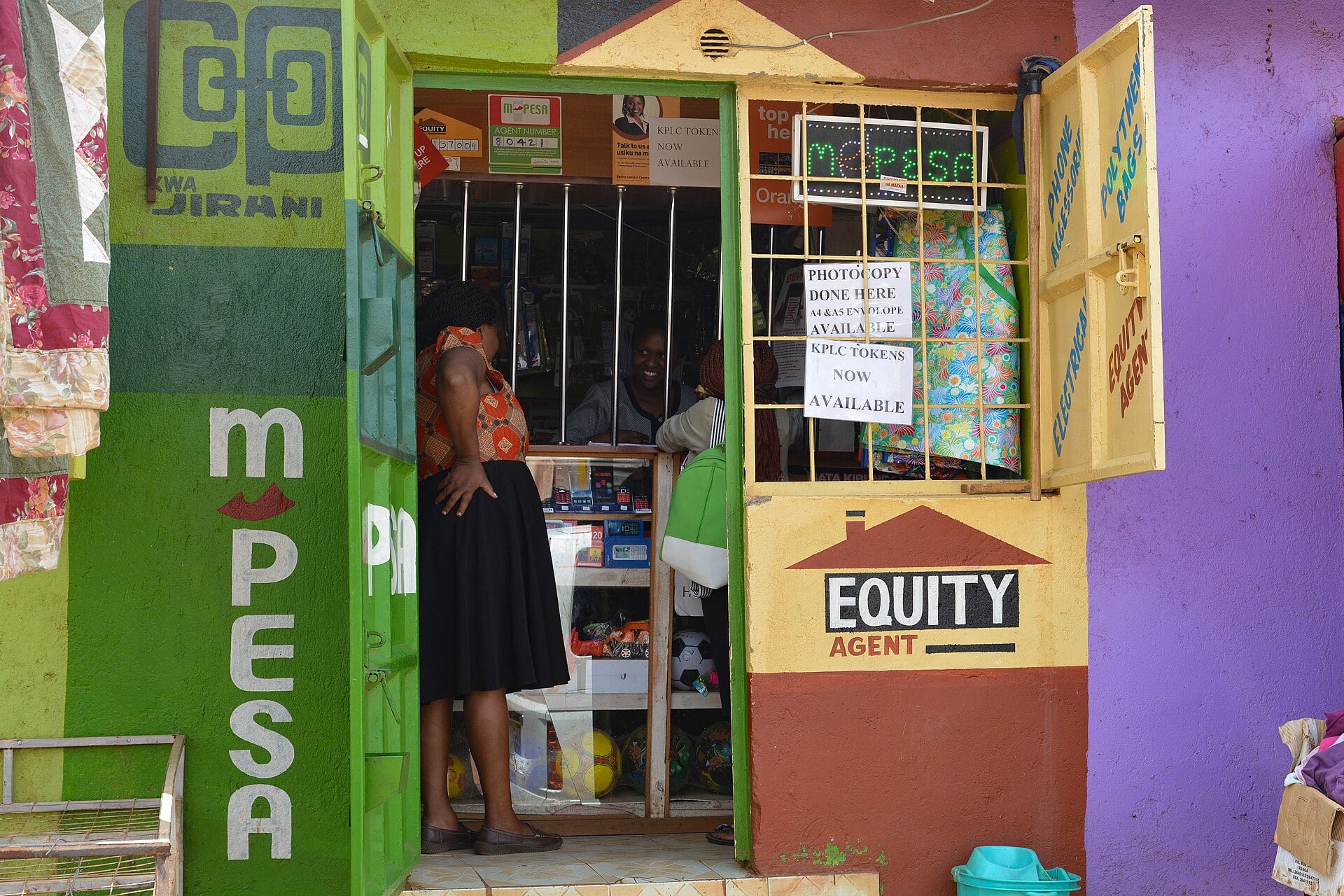
M-Pesa revenue rose 26.2% to 443.3 billion shillings (about US$167 million), and customers of the service grew 14.1%. Transaction values and volumes each rose by nearly 40%, the company says.
Mobile data revenue rose 24.6% to 319.2 billion shillings (about US$120 million), as smartphone users grew 15.3% and data traffic grew 19.2%. Voice revenue rose only 5.5% to 174.5 billion shillings (about US$66 million).
Customers, Cash and Debt
On the company’s own count, customers rose 17.0% to 29.2 million. Using the definition of the Tanzania Communications Regulatory Authority, the national telecoms regulator, Vodacom had 38.6 million subscribers on 30 June 2026.
Capital spending jumped to 246.0 billion shillings (about US$93 million) from 150.8 billion shillings (about US$57 million), as Vodacom upgraded its radio network and expanded 4G and 5G coverage. Operating free cash flow, the cash left after running costs and investment, rose 64.3% to 90.3 billion shillings (about US$34 million).
Net debt rose 43.7% to 609.3 billion shillings (about US$230 million), mainly because lease liabilities rose 41.7% to 972.6 billion shillings (about US$367 million). Net debt stood at 1.4 times EBITDA, against 1.3 times a year earlier.
What It Means for You
If you hold Vodafone or Vodacom Group shares, this unit shows how fast mobile money and data are growing in East Africa. For anyone following Tanzania’s economy, the filing is a hard number on mobile payments, with M-Pesa payments growing nearly 40% in both value and volume.
Chief Executive Philip Besiimire said the company enters the second half with strong momentum. The company expects low double-digit service revenue growth over the medium term, with capital spending of 13% to 16% of revenue.
What Is Not Known
It is not known how much of the profit jump will repeat once the lower depreciation is part of next year’s base. The company gives no profit forecast for the second half.
The filing also does not say whether competition or regulation could squeeze margins from here. The company says only that it stays mindful of competitive and economic pressures.
More: Tanzania news in English, every day from The Rio Times. Read also who runs Tanzania's economy.
Frequently Asked Questions
What Is Vodacom Tanzania?
It is a Tanzanian mobile phone and M-Pesa mobile-money company listed on the Dar es Salaam Stock Exchange. Its immediate parent is Vodacom Group Limited and its ultimate parent is Vodafone Group Plc.
How Much Profit Did Vodacom Tanzania Make in Six Months?
Net profit after tax was 117.8 billion shillings (about US$44 million) for the six months to 30 September 2026. A year earlier it was 41.7 billion shillings (about US$16 million).
Why Did Profit Jump So Much?
Operating profit more than doubled partly because depreciation fell 13.0%, as last year’s figure included accelerated depreciation on replaced network equipment. Excluding those one-off costs and currency effects, the company says EBITDA grew 26.6%.
What Is M-Pesa?
M-Pesa is a mobile-money service that lets people send money, pay bills and save using a phone. In Tanzania Vodacom runs it, and its revenue rose 26.2% to 443.3 billion shillings (about US$167 million).
Sources: Vodacom Tanzania PLC, interim condensed consolidated financial results for the period ended 30 September 2026 (Dar es Salaam Stock Exchange disclosure), November 2026; exchange rate: market close of 5 November 2026 (2,649.98 shillings per US dollar).
Editorial responsibility: Matthias Camenzind, Editor-in-Chief · Editorial standards · Report an error