VENEZUELA · MEDIA
Key Facts
- —The country Venezuela, a South American country of about 28.5 million people in 2025 (World Bank), has state-run channels, a few private broadcasters and a young online press.
- —Press freedom Reporters Without Borders ranked Venezuela 159th of 180 countries in its 2026 index, with a score of 30.48, one place better than in 2025.
- —State media The government runs the television channels VTV and TVes, Radio Nacional de Venezuela, the news agency AVN and the newspaper Correo del Orinoco, and backs teleSUR.
- —Blocked sites As of 8 October 2026, the monitor VE sin Filtro counted 143 blocked domains, including 24 news sites such as El Nacional and La Patilla.
- —Journalists On 14 January 2026, 19 of 24 detained journalists and press workers were freed; on 2 October the press union named two who still faced court cases.
- —Prediction markets Polymarket gives a 9.5% chance that Venezuela schedules a presidential election by 31 December (21 October, 12:36 p.m. ET).
Venezuela media matter to US readers because oil, sanctions and a possible election are reported through a press that is still partly controlled. The state runs many channels and radio stations, while the independent press works mostly online, often from exile.
Since US forces seized Nicolás Maduro on 3 January 2026, the government has freed jailed journalists and unblocked some sites.

Venezuela Media at a Glance, Three Camps
Venezuela media fall into three camps: state outlets, private broadcasters and newspapers, and independent news sites that work mostly online. The country had about 28.5 million people in 2025, according to the World Bank.
About 76.7% of Venezuelans used the internet in 2024, the World Bank’s latest figure. Much of the news now reaches people on phones.
Two events set the 2026 picture. US forces seized Maduro on 3 January, and a double earthquake hit Caracas and the coastal state of La Guaira on 24 June.
Delcy Rodríguez, sworn in as acting president on 5 January 2026, now leads a government in talks with part of the opposition. A third round opened on 14 October 2026, Infobae reported.
The constitution protects free expression in Article 58, but Reporters Without Borders says no effective policies exist to protect it. For the wider political story behind Venezuela media, see our guide to Venezuela explained and the Venezuela hub.
State Media and the Government Message
The government runs a public media system led by the Ministry of Communication and Information.
Miguel Ángel Pérez Pirela, a philosopher and writer, was named to head it in January 2026. He was still minister on 25 September 2026, according to Diario Las Américas.
The ministry’s website links to the main government outlets. They include the channels VTV and TVes, Radio Nacional de Venezuela, the news agency AVN, the paper Correo del Orinoco and YVKE Mundial radio.
teleSUR, a Caracas-based channel backed by several governments, also appears on the ministry’s list.
State media carry the official line of chavismo, the movement founded by the late president Hugo Chávez that has governed Venezuela since 1999. Reporters Without Borders says Maduro continued the “media hegemony” policy he inherited from Chávez.
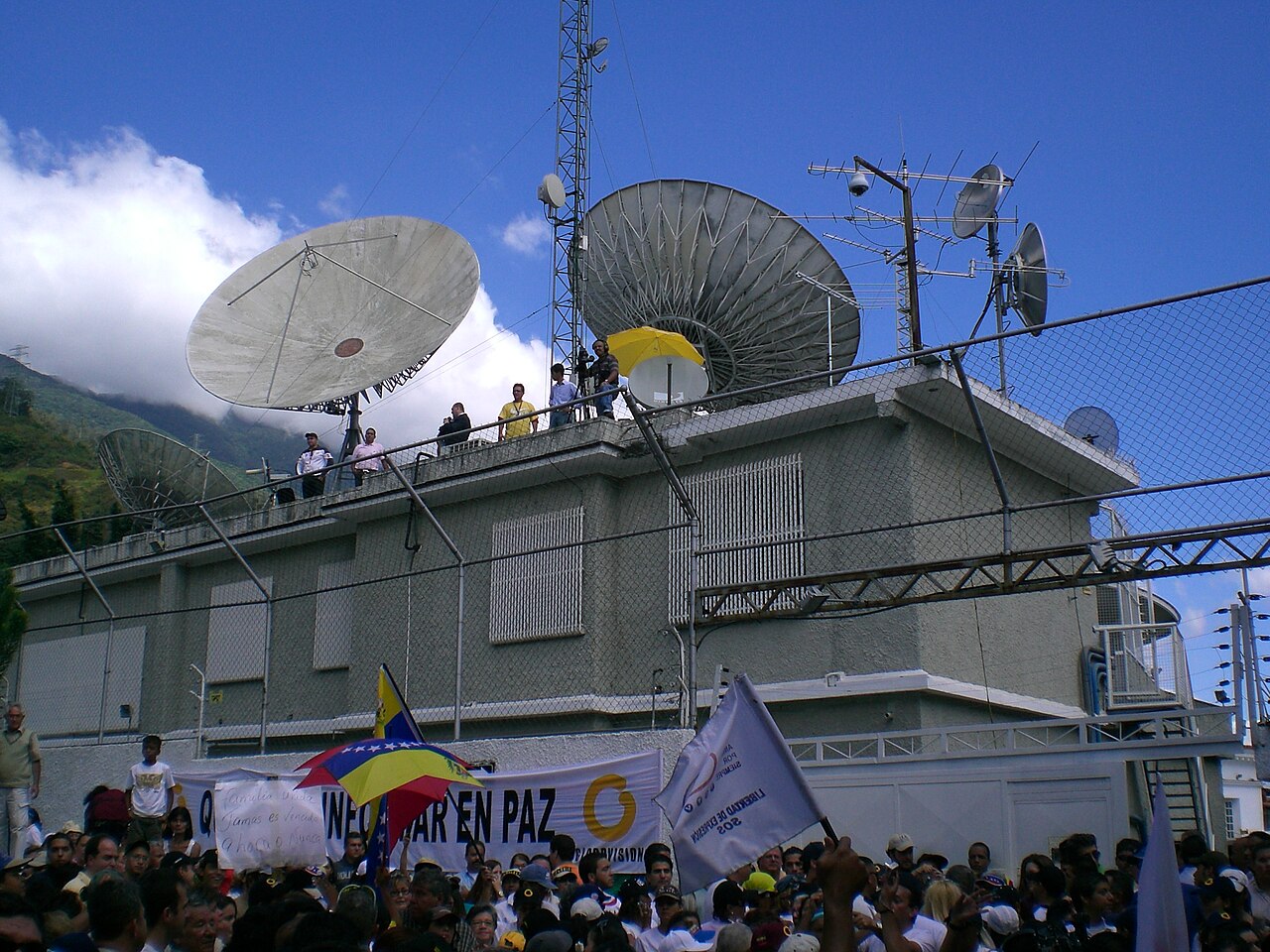
Venevisión briefly aired opposition leader María Corina Machado in January 2026. Diosdado Cabello, a leading chavista figure, then warned the channel on VTV, Espacio Público recorded.

Private Television and Radio
Venevisión is a long-running private channel. Diego Cisneros founded it in 1961, and the family’s Cisneros Organization, based in Miami, was still linked to it in 2023, according to El Estímulo.
Its prime-time newscast, Noticias Venevisión, put anchors Luis Olavarrieta and Shirley Varnagy back on air on 13 April 2026. The telecoms regulator Conatel had ordered radio network Unión Radio to take them off the air in October 2025.
Televen, another private channel, launched an investigative programme, Código 360, in 2026. Espacio Público describes it as the first of its kind on a private open-signal channel in many years.
Globovisión is still owned by businessman Raúl Gorrín, whom Espacio Público describes as having documented ties to chavismo.
The warning case is RCTV, once a leading private channel. Chávez announced in December 2006 that its licence would not be renewed, and it went off the air on 27 May 2007.
The Inter-American Court of Human Rights later found that the closure violated free expression, Espacio Público noted.
Radio Under Licence Pressure
Radio is the hardest-hit sector. Espacio Público counts more than 300 radio stations closed between 2003 and 2025.
In early 2026 three more went silent, according to Runrunes. They were Impacto 105.3 FM in Táchira, Urbana 94.3 FM in Miranda and Rítmica 104.1 FM in Carabobo.
Espacio Público calls Unión Radio the network most exposed to licence pressure.
Newspapers and Who Owns Them
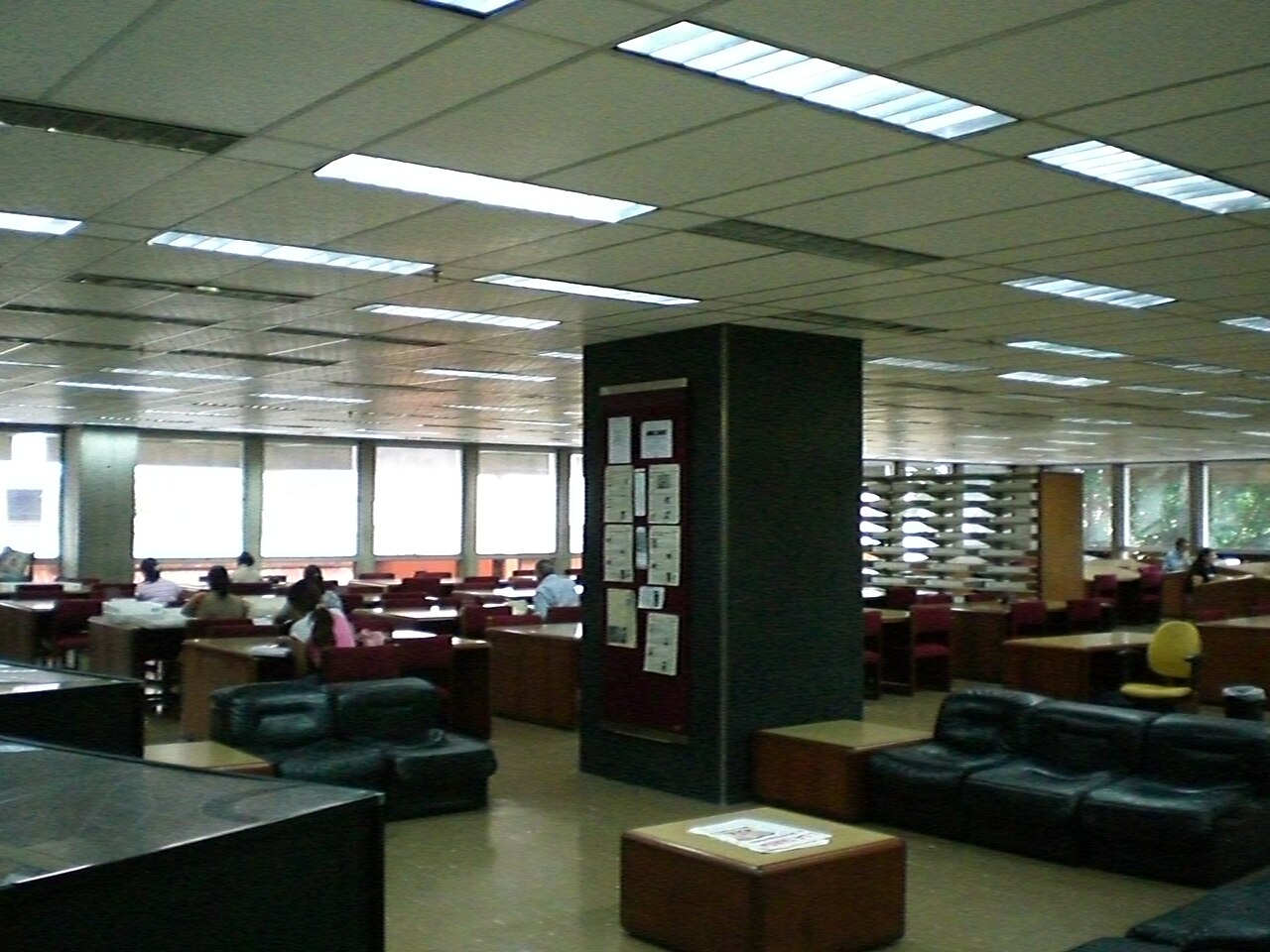
The print press has shrunk sharply. The Inter American Press Association, a group of publishers, says more than 100 newspapers have disappeared since 2013.
It links the losses to the state paper-import monopoly, hyperinflation and court penalties.
El Nacional, a Caracas daily, stopped its daily print edition in December 2018 after 75 years and now publishes online. Its president and editor, Miguel Henrique Otero, handed the association’s report on 1999-2026 abuses to opposition negotiator Dinorah Figuera on 26 August 2026.
In April 2021 the Supreme Court ordered El Nacional to pay US$13.3 million to Cabello, then a deputy. The Committee to Protect Journalists reported the ruling.
In February 2022 a court handed Cabello the paper’s headquarters after a judicial auction, according to Blu Radio. Two other Caracas dailies changed hands in the 2010s.
Últimas Noticias, formerly Cadena Capriles, was sold in 2013 to a holding led by British businessman Robert Hanson. The reported price at the time was about US$98 million, El Estímulo wrote.
El Universal, a Caracas daily, was sold in July 2014 to Epalisticia, a Spanish firm that would not name its investors. The price was under US$22 million, and the Committee to Protect Journalists reported that critical columnists were dismissed afterwards.
Independent Digital Outlets
Independent journalism now lives online. Reporters Without Borders says some of these outlets operate from exile or with teams outside the country.
Efecto Cocuyo, El Pitazo, Runrunes, Crónica Uno, El Estímulo, Caraota Digital and TalCual are digital outlets that report on politics, courts and daily life. Armando.info is known for investigations into business and power, including reports on the family of Rodríguez.
La Patilla, a news site blocked since 2018, is edited by Rory Branker. He was arrested on 20 February 2025, freed on 4 February 2026 and acquitted by a court on 2 October 2026, El Diario reported.
On 17 September 2026 Conatel ordered internet providers to restore access to several news portals. VE sin Filtro, a digital-rights monitor, found at least 10 outlets reachable again, including Efecto Cocuyo, El Pitazo, Runrunes and Crónica Uno.
A second group followed on 25 September, when Rodríguez ordered a further unblocking after a report from the talks table. TalCual counted 34 sites, among them TalCual itself, Analítica, Espacio Público, IPYS Venezuela, Signal and X.
- Still blocked by all providers on 8 October 2026: Armando.info, El Nacional, La Patilla, NTN24, Infobae, PBS and VPItv.
- Domains blocked fell from about 200 in early September to 143 on 8 October, according to VE sin Filtro.
- Unblocking is uneven: 45 domains were open on every provider measured, and 71 on at least one.
Press Freedom, the Hate Law and the Courts
Reporters Without Borders ranked Venezuela 159th of 180 countries in 2026, with a score of 30.48, against 160th and 29.21 in 2025. Its political indicator placed the country 170th.
The main legal tool is the Law Against Hate, approved in 2017 by the Constituent Assembly, a body then controlled by Maduro’s government. It sets prison terms of 10 to 20 years for spreading hate messages, Efecto Cocuyo reported.
The rights group Foro Penal counts at least 927 people accused of inciting hatred since 2017, with six still in detention. Reporters Without Borders puts the number of people sanctioned at about 80, including 17 journalists and media outlets.
By late September 2026 Delcy Rodríguez had asked the National Assembly, led by Jorge Rodríguez, to remove the prison terms. Press unions want full repeal, since critics say fines for social networks and licence withdrawal for broadcasters would remain.
Jorge Rodríguez, who heads the legislature, said in February 2026 that the law had been misused and that reform was very likely. Read our profile of Jorge Rodríguez for his role in the talks.
Arrests, Releases and Open Cases
On 5 January 2026 the press union SNTP recorded at least 14 journalists held for two to 10 hours in Caracas, many from foreign outlets. Officers searched their phones and equipment, according to Factchequeado.
On 14 January the government freed 19 of 24 detained journalists and press workers. The SNTP says they left prison under court restrictions.
On 2 October the SNTP named Jonathan Carrillo and Carlos Julio Rojas as still facing proceedings. Our report on six journalists facing charges tracks these cases.
The CNP, the journalists’ association of Caracas, recorded 134 attacks on the press between January and July 2026, mostly intimidation, blocked coverage and arbitrary detentions.
Social Media, Messaging and Internet Access
The social network X was blocked in August 2024, after that July’s presidential election. Digitel, a mobile operator, reopened it on 19 March 2026, Espacio Público recorded, and Conatel’s 25 September order covered it too.
After the 24 June earthquakes, Produ wrote, social networks became the country’s de facto newscast. Free calls and messages from the phone companies Movistar and Digitel helped information flow.
VPNs, tools that hide a user’s location, remain restricted. VE sin Filtro counted 31 blocked VPN and anti-censorship domains on 8 October 2026.
On 9 October 2026 Conatel formally licensed SpaceX’s Starlink satellite internet in the Ku band. Starlink had given out more than 1,600 connection kits during the earthquake response, according to the US Embassy in Caracas, as Efecto Cocuyo reported.
Working conditions weigh on newsrooms. A union survey found that almost 70% of press workers hold more than one job, El Nacional reported.
What Prediction Markets Say
On Polymarket, bets give a 9.5% chance that Venezuela schedules a presidential election by 31 December 2026 (21 October, 12:36 p.m. ET). That contract has drawn about US$149,000 in bets, and the whole event about US$641,000.
On Kalshi, an exchange regulated by the US CFTC, bets give a 1% chance of an election before 1 January 2027. The odds are 17% before 1 June 2027 (21 October, 12:36 p.m. ET), and these are bets, not polls.
Media access sits inside that timetable. The third round of talks, opened on 14 October, covers Supreme Court appointments and guarantees for political participation, Infobae reported.
Why we show this: prediction markets turn real-money bets into a live probability that moves within minutes of the news, which is why investors, campaigns and newsrooms in the United States now follow them closely. We show them next to polls and official results, never instead of them.
What It Means for US Readers
For US investors and oil buyers, Venezuelan state outlets give the official line on licences and deals. Independent sites such as Efecto Cocuyo and Armando.info are the better guide to contracts and courts, but some remain blocked inside the country.
For travellers and reporters, foreign correspondents were detained or deported in January 2026, and officers searched phones. See our guide to Venezuela security before planning any trip.
For anyone tracking the transition, Venezuela media access is a clear test. Watch whether Conatel publishes its block list and whether the Law Against Hate is repealed, alongside the election timetable.
What Is Not Known
No public register shows who owns most private outlets in October 2026. The latest published accounts of the sales of Últimas Noticias and El Universal date from 2013 and 2014.
Conatel has not published the list of domains it blocked or lifted, and unions say the criteria are unclear. It is not known whether the remaining 143 domains will be released.
It is also unknown whether the National Assembly will repeal the Law Against Hate or only soften it. No presidential election date has been set, and there is no confirmation that closed radio stations have regained their frequencies.
Frequently Asked Questions
What are the main news channels in Venezuela?
The state runs VTV, TVes and the regional channel teleSUR. Private channels include Venevisión, Televen and Globovisión, as of October 2026.
Who owns Globovisión and Venevisión?
Espacio Público says businessman Raúl Gorrín owns Globovisión and has documented ties to chavismo. The Cisneros family founded Venevisión in 1961 and was still linked to it in 2023.
Is the press free in Venezuela?
Not fully. Reporters Without Borders ranked Venezuela 159th of 180 countries in 2026, and the press union says more space exists since January but it remains fragile.
Which Venezuelan news sites are blocked?
On 8 October 2026 VE sin Filtro found Armando.info, El Nacional, La Patilla, NTN24, Infobae, PBS and VPItv blocked by all providers. Efecto Cocuyo, El Pitazo and Runrunes were unblocked in September.
Are journalists in prison in Venezuela?
Reporters Without Borders listed one journalist detained as of its latest update. The SNTP says 19 of 24 detained press workers were freed on 14 January 2026, and two journalists still face court proceedings.
Is X available in Venezuela?
Largely yes. A block began in August 2024, Digitel reopened X on 19 March 2026 and Conatel’s 25 September 2026 order covered it, while VPNs remain blocked.
What is the Law Against Hate?
It is a 2017 law that sets prison terms of 10 to 20 years for spreading hate messages. Acting president Delcy Rodríguez has asked the National Assembly to remove those prison terms, but unions want repeal.
Sources: Reporters Without Borders: Venezuela country page and 2026 World Press Freedom Index, 2026-10-21; World Bank: Venezuela population and internet users, 2026-10-08; Ministry of Communication and Information (MIPPCI), 2026-09-21; Espacio Público: censorship and self-censorship in Venezuela 2026, 2026-06-12; Espacio Público: 19 years since the end of RCTV, 2026-05-27; VE sin Filtro via Runrunes: 143 domains and 24 news sites blocked, 2026-10-08; Efecto Cocuyo: selective unblocking of news portals, 2026-09-18; El Diario: SNTP asks Conatel to publish list of unblocked outlets, 2026-09-17; Efecto Cocuyo: Law Against Hate reform proposal, 2026-10-04; El Nacional: CNP and SNTP report on press freedom, 2026-08-23; El Nacional: Inter American Press Association report, 2026-08-26; Factchequeado: journalists detained in Venezuela, 19 of 24 freed, 2026-01-20; El Diario: Rory Branker acquitted, 2026-10-02; Efecto Cocuyo: Conatel authorises Starlink, 2026-10-09; Infobae: third round of the dialogue table, 2026-10-15; TalCual: the 34 sites Conatel ordered unblocked, 2026-09-26; Efecto Cocuyo: Foro Penal figures on the Law Against Hate, 2026-09-30; Diario Las Américas: second group of portals unblocked, 2026-09-25; Produ: social networks and the 24 June earthquake, 2026-07-01; El Estímulo: Grupo Cisneros and Venevision, 2023-12-31; El Estímulo: the owner of Ultimas Noticias, 2014-11-08; Committee to Protect Journalists: El Nacional ruling, 2021-04-20; Committee to Protect Journalists: El Universal sale, 2014-12-30; Blu Radio: El Nacional headquarters handed to Diosdado Cabello, 2022-02-07.
Editorial responsibility: Matthias Camenzind, Editor-in-Chief · Editorial standards · Report an error
Expat Guide to Venezuela
What The Rio Times publishes for foreigners who live in or move to Venezuela.
Start here
- Venezuela Security and Crime Explained 2026
- Healthcare in Venezuela for Expats: Clinics, Insurance and the Private Option
- Taxes in Venezuela for Expats: What Foreigners Pay During the Transformation
- Venezuela Visa and Residency 2026, Entry Rules and Steps
Understand Venezuela
Rotate for Best Experience
This report is optimized for landscape viewing. Rotate your phone for the full experience.
You've reached your free article limit
Subscribe to The Rio Times for unlimited access to our news, expat and nomad guides and market intelligence on Latin America and Africa.
Expat Guide to Venezuela
What The Rio Times publishes for foreigners who live in or move to Venezuela.
Start here
- Venezuela Security and Crime Explained 2026
- Healthcare in Venezuela for Expats: Clinics, Insurance and the Private Option
- Taxes in Venezuela for Expats: What Foreigners Pay During the Transformation
- Venezuela Visa and Residency 2026, Entry Rules and Steps
Understand Venezuela