VENEZUELA · RELIGION
Key Facts
- —The country Venezuela is an oil-rich South American country on the Caribbean coast, home to roughly 30 million people in 2023 and a deeply Catholic culture.
- —Main faiths The United States estimates that up to 96 percent of Venezuelans are Catholic, while evangelical leaders put Protestants at 17 to 20 percent. The true Catholic share is probably lower.
- —New saints Pope Leo XIV made Dr José Gregorio Hernández and Mother Carmen Rendiles the country’s first two saints on 19 October 2025.
- —Big festival The Divina Pastora procession in Barquisimeto on 14 January 2026 drew nearly 4 million people, by the estimate of many of the faithful.
- —Church and state A 1964 agreement with the Vatican governs ties between the state and the Catholic Church, including state funding for Church-run schools.
- —Prediction markets Polymarket gives an 8.5% chance that Venezuela schedules a presidential election by 31 December (22 October, 10:24 a.m. ET).
- —Power Index Venezuela ranks 13th of 14 in The Rio Times Latin America Power Index, with 27.0 points (October 2026 edition).
Venezuela religion matters to US readers because the Catholic bishops are one of the national voices that speak openly on elections and political prisoners. Churches are also among the groups delivering aid to families after the double earthquake of 24 June 2026.
This guide explains who believes what, which festivals fill the streets and why faith shapes both daily life and politics.

Venezuela Religion at a Glance, a Mostly Catholic Country
Venezuela religion is mostly Roman Catholic, though the mix is wider than it was a generation ago. The US State Department’s 2023 religious freedom report says up to 96 percent of the population is Catholic, based on the latest official statistics.
The same report warns that growing evangelical and non-believing communities have probably cut that share. It puts the population at 30.5 million in mid-2023, though about 8 million people have left Venezuela since 2015.
The Evangelical Council of Venezuela, the main body of Protestant churches, estimates that 17 to 20 percent of Venezuelans are Protestant. Most of them belong to evangelical churches.
A Pew Research Center survey of Latin America, done in 2013 and 2014, found that one in seven Venezuelans was a former Catholic. That was before the migration wave of the following decade.
Smaller groups add to the picture. The State Department’s 2023 report lists Latter-day Saints, Jehovah’s Witnesses, Muslims, Jews and Buddhists.
The Catholic Church, Its Bishops and the State
The Venezuelan Episcopal Conference, known by its Spanish initials CEV, is the body of the country’s Catholic bishops. Its president is Archbishop Jesús González de Zárate of Valencia, who opened the conference’s 126th plenary assembly in October 2026, Vida Nueva reported.
Raúl Biord Castillo is the archbishop of Caracas and was due to lead the saints’ anniversary Mass there on 19 October 2026, El Diario reported. Cardinal Baltazar Porras, 82 in October 2026, is his retired predecessor and one of the Church’s best-known voices.
Church and state are bound by a 1964 concordat, a treaty with the Vatican. According to the State Department’s 2023 report, it provides state funding for Catholic-run schools, although the report says officials paused some of that funding.
The constitution guarantees religious freedom, as long as worship does not break public morality or public order. Every religious group must register with the Directorate of Justice and Religion in the Interior Ministry to gain legal status.
Catholic chaplains serve in the armed forces, and an agreement allows catechists to prepare children for First Communion in public schools. The State Department’s 2023 report says officials did not always honour that agreement.
Saints and Devotions, From the Doctor of the Poor to Coromoto
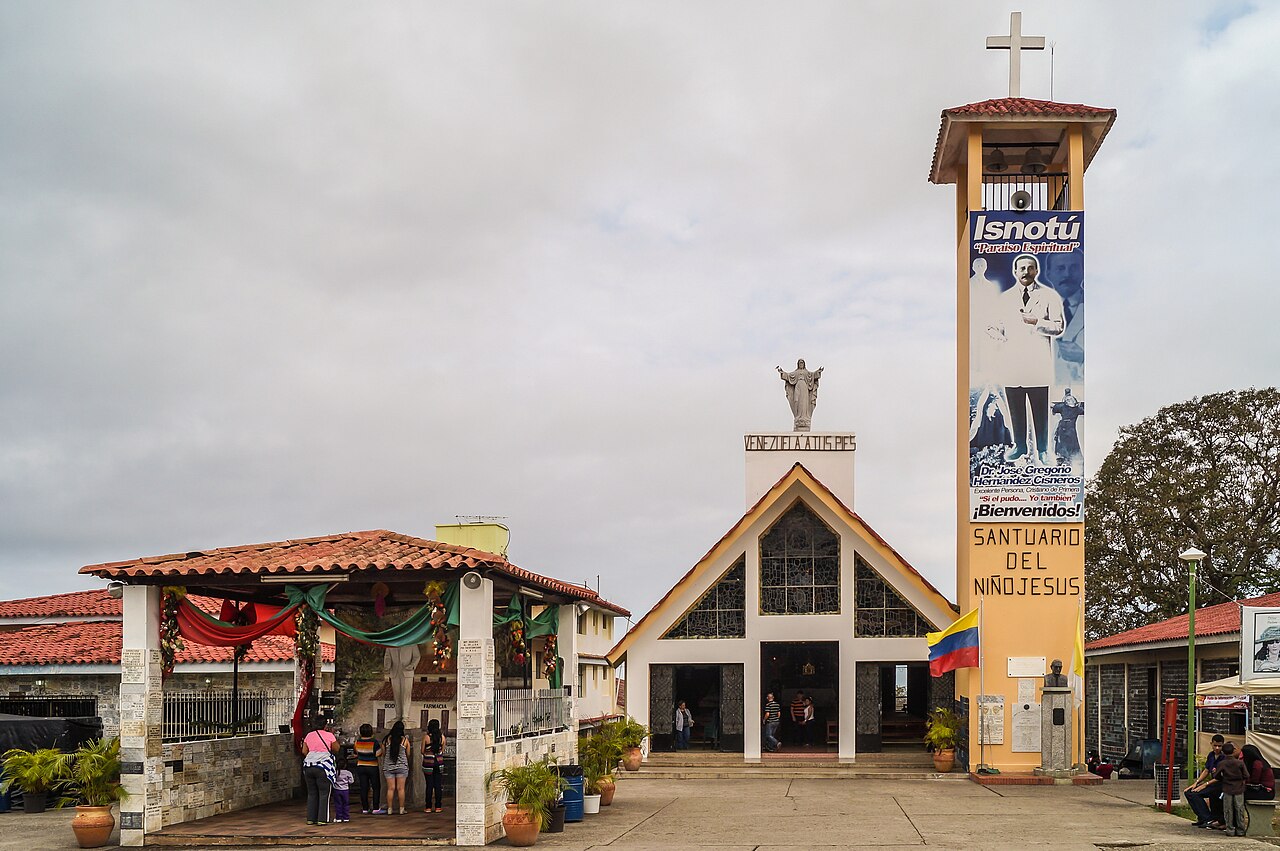
On 19 October 2025, Pope Leo XIV canonised Dr José Gregorio Hernández and Mother Carmen Rendiles in St Peter’s Square. They became Venezuela’s first two saints, Vatican News reported.
Hernández was a physician and teacher born in Isnotú, in the Andean state of Trujillo. He died in Caracas in 1919 and is remembered as the “doctor of the poor”, El Diario wrote.
Rendiles was born in Caracas in 1903 and died in 1977. She founded the Servants of Jesus, a religious order, and was declared blessed in 2018.
The government declared 19 and 20 October 2025 non-working days for the canonisation. Archbishop Biord Castillo told Vatican News that the two saints “cross all barriers” of politics, society and the economy.
Venezuela’s patron saint is Our Lady of Coromoto, honoured in Guanare in Portuguesa state. Pope John Paul II, in a 1996 homily at the new national shrine there, said her presence has accompanied Venezuelans since 8 September 1652.
A Coromoto Jubilee Year, held every 25 years, began on 8 September 2026 with a Guanare Mass led by Archbishop Polito Rodríguez, Diario Primicia reported.
Festivals and Pilgrimages That Fill the Streets
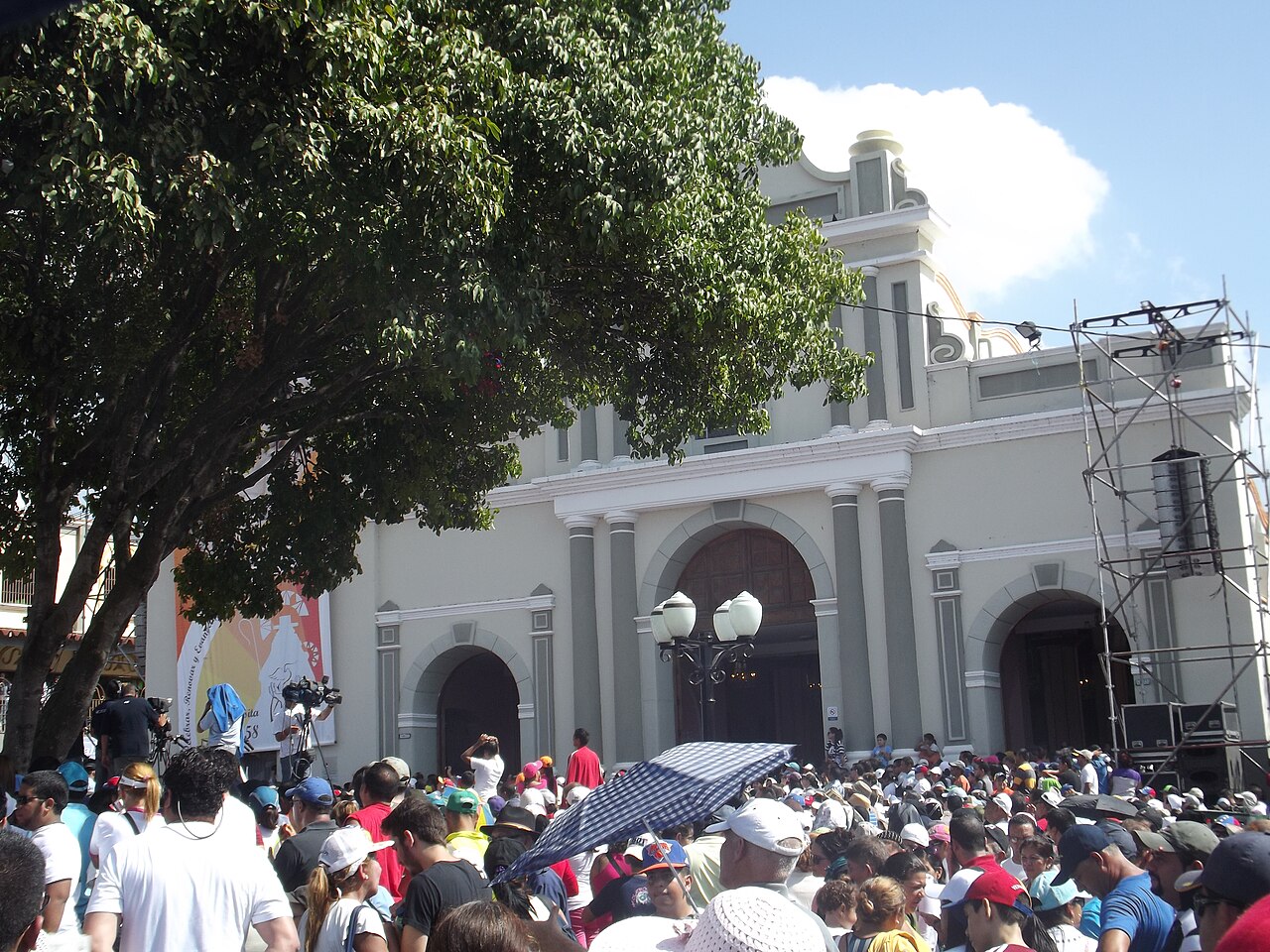
The Divina Pastora procession in Barquisimeto, the main city of Lara state, is described by Church media as the largest in Venezuela. On 14 January 2026, its 168th edition drew almost 4 million people along a route of more than 7 kilometres, El Nacional reported.
That figure comes from many of the faithful, not from an official count. The archbishop of Barquisimeto, Polito Rodríguez Méndez, used the occasion to ask for the release of all political prisoners, ADN Celam reported.
In Caracas, thousands follow the Nazarene of St Paul on Holy Wednesday, a procession of about 5 kilometres through the city centre. The 2026 procession took place on 1 April, El Diario reported.
On the central coast, masked men called the Dancing Devils perform at Corpus Christi, a Catholic feast honouring the Eucharist. UNESCO put the Dancing Devils on its list of intangible cultural heritage in 2012.
UNESCO says the dancers move backwards in penitence while a Church official carries the Blessed Sacrament. At the climax the devils surrender to it.
Our Lady of Coromoto is celebrated each 8 September, and in 2026 faithful marked 374 years since her appearance.
Evangelicals, Jews, Muslims and Other Faiths
Evangelical churches are the largest non-Catholic group in Venezuela religion. The Evangelical Council of Venezuela, founded in 1973, marked its 53rd anniversary on 19 June 2026, Diario Cristiano reported.
In Pew’s survey, Venezuelan Protestants were about four times as likely as Catholics to attend services weekly, at 67 percent against 17 percent. Pew found that 71 percent of Protestants paid a tithe, a tenth of income to their church, against 18 percent of Catholics.
The Jewish community is small and mostly lives in Caracas. The Jewish confederation CAIV estimates it at 10,000 people, down from about 30,000 in 1999, the State Department’s 2023 report says.
Muslim leaders estimate 100,000 to 150,000 followers, mostly Sunni and mostly of Lebanese, Palestinian, Syrian and other Arab descent. They live largely on Margarita Island and in Caracas, Valencia and Maracaibo.
The State Department’s 2023 report cites a Christian research agency estimate of at least 48,000 Buddhists, mostly ethnic Chinese. A Venezuelan Interreligious Forum brings Catholic, evangelical and Jewish representatives together to discuss human rights.
María Lionza and the Afro-Indigenous Traditions
Many Venezuelans practise a folk faith alongside church life. The best known is the cult of María Lionza, a spirit linked to nature, whose followers climb the Sorte mountain near Chivacoa in Yaracuy state.
Her busiest dates are Holy Week and 12 October. On 12 October 2025, the Culture Ministry registered the cult in the national register of intangible cultural heritage, Correo del Caroní reported.
Culture Minister Ernesto Villegas, who signed the registration, called it a “party, ceremony and ritual” that expresses the worldview of the country’s native peoples. He gave no count of followers, and none is available.
Santería and Spiritism are also part of Venezuela religion, and the State Department’s 2023 report says many follow them together with Christianity. The mix shows how Catholic saints, African rites and Indigenous beliefs blend in daily practice.
Faith and Politics, the Bishops Under Pressure
The Church has long been a critic of whoever governs Caracas. In January 2023, Diosdado Cabello, a ruling-party leader, called the bishops a hierarchy that “has historically turned its back on the people”.
The State Department’s 2023 report says Jorge Rodríguez, who led the pro-government National Assembly in 2023, called bishops “devils in cassocks” that month. The bishops’ calls for fair elections and the release of prisoners have continued since.
Nicolás Maduro was captured on 3 January 2026, and Delcy Rodríguez has led the government since. On 4 January, Pope Leo XIV said the good of the “beloved Venezuelan people” must prevail over any other consideration.
On 9 February 2026, the CEV demanded free elections, the full release of political prisoners and a broad amnesty law, El Nacional reported. It also called for credible electoral and judicial bodies and for detailed results of the July 2024 presidential vote.
On 4 May 2026 the bishops met Pope Leo XIV in the Vatican, EWTN reported. González de Zárate said there was “continuity among the political actors”, and a February amnesty law that benefited 8,616 people has stalled.
At the October 2026 assembly he said Maduro’s capture came because no common path was found and an outside actor had to step in. He added that Venezuelans should become “agents in building our destiny”, not recipients of benefits from the government or foreign powers.
How Faith Shapes Daily Life and Disaster Relief
Venezuela religion runs through ordinary life, from baptisms and First Communions to saints’ festivals. In Pew’s survey, 77 percent of Venezuelans showed a middle level of religious commitment, below the high level in Pew’s scale.
Pew also found that majorities or pluralities of Venezuelans wanted religious leaders to have some or large influence in politics. That helps explain why bishops are heard on public affairs.
On 24 June 2026, two strong earthquakes hit Venezuela. La Guaira, a coastal state less than 30 kilometres from Caracas, suffered most, and Vatican News reported at least 30 damaged parish churches in Caracas.
Pope Leo XIV sent 100,000 euros (about US$112,000) in emergency aid through the Church’s apostolic almoner. At the October 2026 assembly, Cáritas Venezuela, the Church’s aid agency, presented its tenth bulletin on the emergency response, according to the CEV.
Rodríguez moved the official start of Christmas to 1 November, El Nacional reported on 20 October 2026. Cardinal Porras called the move a manipulation that distracts from shortages.
What Prediction Markets Say
Polymarket gives an 8.5% chance that Venezuela schedules a presidential election by 31 December (22 October, 10:24 a.m. ET). That contract had about US$152,000 in trading, within a wider election event of about US$644,000, and its price slipped 1.0 point over 24 hours.
The bishops have called for free elections since February 2026. The market suggests traders see little chance of a date being set this year.
Why we show this: prediction markets turn real-money bets into a live probability that moves within minutes of the news, which is why investors, campaigns and newsrooms in the United States now follow them closely. We show them next to polls and official results, never instead of them.
What It Means for US Readers
Venezuela religion matters in practice because churches are among the channels through which aid reaches families. Cáritas Venezuela, the Catholic Church’s aid agency, reported on its earthquake response to the bishops in October 2026.
The Vatican’s voice also matters for Washington’s Venezuela policy. The Pope’s call on 4 January 2026 to put Venezuelans first signalled that the Holy See is watching any transition closely.
Travellers should know that Holy Week, 8 September and 12 October bring crowds and processions in many places. For Venezuelans in the United States, the new saints and the Divina Pastora tie their homes to towns in Lara and Trujillo.
What Is Not Known
Venezuela has no official count of religions, so the Catholic share is an estimate. The US figure of up to 96 percent rests on older official statistics, and the real number is probably lower.
Crowd figures for festivals come from organisers and the faithful, not from independent counts. The number of damaged churches after the June 2026 earthquakes has not been published in full.
It is also unknown whether the Church and the government will move closer or apart if an election date is set. Neither the bishops nor the government has said what role the Church would play in a transition.
Frequently Asked Questions
What is the main religion in Venezuela?
Venezuela religion is mainly Roman Catholic, and the US State Department estimated in 2023 that up to 96 percent of Venezuelans are Catholic. That figure is probably lower now because evangelical churches have grown.
How big is the evangelical community in Venezuela?
The Evangelical Council of Venezuela estimates that 17 to 20 percent of Venezuelans are Protestant, most of them evangelical. In Pew’s survey, Protestants attended services far more often than Catholics.
Who are Venezuela’s saints?
Dr José Gregorio Hernández and Mother Carmen Rendiles became Venezuela’s first saints on 19 October 2025. Hernández was a physician born in Isnotú, and Rendiles founded the Servants of Jesus.
What is the biggest religious festival in Venezuela?
The Divina Pastora procession in Barquisimeto is the largest, with nearly 4 million people estimated on 14 January 2026. Holy Week, the Nazarene of St Paul in Caracas and Coromoto in Guanare on 8 September also draw large crowds.
Who is María Lionza?
María Lionza is a spirit at the centre of a folk cult that gathers on the Sorte mountain in Yaracuy state. In October 2025 the government registered the cult as national intangible cultural heritage.
Does Venezuela have religious freedom?
The constitution protects religious freedom, and groups must register with the Interior Ministry. The State Department’s 2023 report says groups generally enjoyed freedom if they refrained from criticising Maduro-aligned figures, and some clergy faced verbal attacks.
Where do the Catholic bishops stand on politics in 2026?
The bishops’ conference has demanded free elections, the release of all political prisoners and a broad amnesty. President Jesús González de Zárate said in October 2026 that hopes raised by the January change were fading.
Sources: US State Department: 2023 Report on International Religious Freedom, Venezuela, 2026-10-22; Pew Research Center: Religion in Latin America, survey of 2013-2014, 2026-10-22; Vatican News: bishops on the canonisation of José Gregorio Hernández and Carmen Rendiles, 2026-10-22; Vatican News: Pope Leo XIV Angelus appeal on Venezuela, 4 January 2026, 2026-10-22; Vatican News: Archbishop of Caracas on the June 2026 earthquake, 2026-10-22; Pope John Paul II homily at the Coromoto shrine, Guanare, 10 February 1996, 2026-10-22; Venezuelan Episcopal Conference: third day of the 126th plenary assembly, 2026-10-22; UNESCO: Venezuela’s Dancing Devils of Corpus Christi, 2026-10-22; Vida Nueva: Venezuelan bishops open their 126th assembly, 2026-10-21; El Nacional: Divina Pastora procession, January 2026, 2026-01-15; El Nacional: bishops’ conference statement of 9 February 2026, 2026-02-09; EWTN News: Venezuelan bishops meet Pope Leo XIV, 2026-07-07; Correo del Caroní: María Lionza cult registered as cultural heritage, 2025-10-14; Diario Primicia: Coromoto anniversary and Jubilee Year, 8 September 2026, 2026-09-08; El Diario: saints one year after canonisation, 19 October 2026, 2026-10-19.
This article was produced by The Rio Times’ automated newsroom system. How we use AI · Report an error · Editorial responsibility: Matthias Camenzind, Editor-in-Chief
Expat Guide to Venezuela
What The Rio Times publishes for foreigners who live in or move to Venezuela.
Start here
- Venezuela Security and Crime Explained 2026
- Healthcare in Venezuela for Expats: Clinics, Insurance and the Private Option
- Taxes in Venezuela for Expats: What Foreigners Pay During the Transformation
- Venezuela Visa and Residency 2026, Entry Rules and Steps
Understand Venezuela
Rotate for Best Experience
This report is optimized for landscape viewing. Rotate your phone for the full experience.
You've reached your free article limit
Subscribe to The Rio Times for unlimited access to our news, expat and nomad guides and market intelligence on Latin America and Africa.
Expat Guide to Venezuela
What The Rio Times publishes for foreigners who live in or move to Venezuela.
Start here
- Venezuela Security and Crime Explained 2026
- Healthcare in Venezuela for Expats: Clinics, Insurance and the Private Option
- Taxes in Venezuela for Expats: What Foreigners Pay During the Transformation
- Venezuela Visa and Residency 2026, Entry Rules and Steps
Understand Venezuela