URUGUAY · FOREIGN PLAYERS
Key Facts
- The country A South American country of about 3.4 million people that lives on exports of beef, pulp and soy to China, Europe and Brazil.
- Biggest buyer China bought US$3.49 billion of Uruguayan goods in 2025, 26% of exports, ahead of Brazil, the European Union and the United States.
- Trade deal The EU-Mercosur interim trade agreement has applied provisionally since 1 May 2026, and Uruguay was the first Mercosur country to approve it.
- Pulp UPM of Finland and Montes del Plata, founded by Arauco of Chile and Stora Enso, can make about 4.8 million tonnes of pulp a year.
- Biggest bet Spain’s Solaria agreed on 14 October 2026 to invest US$5.7 billion in data centers and solar power, which the government calls its largest ever.
- United States The United States paid US$878 million for Uruguayan beef in 2025, the most of any buyer, and takes most of its technology-service exports.
- Lenders The World Bank approved US$300 million on 14 September 2026, and an International Monetary Fund mission finished its yearly visit on 24 September 2026.

Foreign powers and investors in Uruguay, as of October 2026, are led by China, which bought US$3.49 billion of Uruguayan goods in 2025, followed by the European Union, whose trade deal with the Mercosur bloc has applied provisionally since 1 May 2026, and by the United States, the largest buyer of Uruguayan beef by value. Pulp producers from Finland, Chile and Sweden, a Spanish energy company with a US$5.7 billion data-center plan announced on 14 October 2026, and lenders such as the World Bank and the International Monetary Fund (IMF) complete the picture in a country of about 3.4 million people.
Who Matters Most at a Glance
Uruguay is a small, open economy of about 3.4 million people, according to World Bank data, and its foreign ties run through trade, pulp, energy and multilateral lenders as of October 2026. The World Bank says growth moderated to 1.8% in 2025 and is expected to slow to 1.6% in 2026, with inflation at 3.6% in 2025.
Uruguay exported US$13.49 billion of goods in 2025, the highest level in a decade, the national export and investment promotion agency Uruguay XXI reports. Beef was the top product at US$2.68 billion, followed by cellulose pulp at US$2.31 billion and soy.
China, the Biggest Buyer
China bought about US$3.49 billion of Uruguayan goods in 2025, or 26% of the total, and supplied US$2.97 billion of imports, also about 26%, Uruguay XXI reports. It took 46% of cellulose pulp exports, worth US$1.1 billion, 86% of soy exports and US$724 million of beef.
President Yamandú Orsi made a state visit to China from 1 to 7 February 2026, and on 3 February the two governments issued a joint declaration deepening their comprehensive strategic partnership, first established in November 2023. In it Uruguay reaffirmed its adherence to the one-China principle, and both sides voiced the hope that talks on a free trade agreement between Mercosur, the bloc of Argentina, Brazil, Paraguay and Uruguay, and China can begin.
The declaration also records that Chinese companies take part in building Uruguay’s 5G network, under what Uruguay calls technological neutrality, and that the two sides signed a memorandum on industrial investment. They are negotiating an update of their 1993 investment protection treaty, the declaration says.
The Agriculture Ministry said on 7 August 2026 that Chinese health authorities had suspended the Tacuarembó beef plant from exporting to China from 6 August after finding a veterinary drug residue above the limit, the second such finding at the plant in 2026. On 11 August the ministry said China had reinstated the Rosario plant, which had been suspended since 31 October 2023 because it stopped producing.
The European Union and Mercosur
The EU and Mercosur signed a partnership agreement and an interim trade agreement on 17 January 2026, the European Commission says, and the interim agreement has applied provisionally since 1 May 2026. Uruguay’s Senate approved the text unanimously on 25 February and the Chamber of Deputies backed it with 91 votes among 93 deputies present on 26 February, making Uruguay the first Mercosur country to approve it, the Foreign Ministry says.
Foreign Minister Mario Lubetkin said in early September 2026 that tariff preferences and quotas had produced a net gain of more than US$27 million for Uruguay between 1 May and the end of August. On 23 October he put the gain at more than US$40 million through 30 September and estimated that it could reach US$100 million after the first 12 months.
The EU was the third-largest destination for Uruguayan goods in 2025 at US$1.84 billion and the third-largest source of imports at US$1.56 billion, Uruguay XXI reports. Beef sales to the EU jumped about 60% to US$596 million, while cellulose pulp sales fell about 29% to US$687 million.
Brazil was the second destination for Uruguayan goods in 2025 at US$1.96 billion and the second source of imports at US$2.73 billion, while Argentina ranked fifth as a destination at US$549 million and fourth as a source at US$1.31 billion. Orsi took over the pro tempore presidency of Mercosur in July 2026, the Presidency says.
The United States, Beef, Services and Diplomacy
The United States was the largest buyer of Uruguayan beef by value in 2025, paying US$878 million, up 48% and equal to 33% of beef export value. Total goods exports to the United States reached about US$1.55 billion, up around 30% and 12% of the total, while imports from the United States were US$628 million, about 5%.
Uruguay XXI says exports of information and communication technology services reached US$1.35 billion in 2024 and that the United States took 82% of them in 2023. The agency counted total services exports of US$6.95 billion in 2024, about 30% of all exports.
The US Commerce Department’s country guide, published in January 2024, says the United States had the fifth-largest stock of foreign direct investment in Uruguay in 2023, with 6% of the total, and that about 230 US companies employ more than 25,000 Uruguayans. The guide adds that the Investment Promotion Law grants foreign investors income tax exemptions of up to 10 years depending on project size, and that Uruguay has a dozen free trade zones.
The US embassy in Montevideo is led by Ambassador Lou Rinaldi, whom the Senate confirmed on 1 August 2025, with Chris Andino as deputy chief of mission, the embassy’s website says. The State Department rates Uruguay Level 2, exercise increased caution, because of crime, in an advisory dated 28 July 2026.
Pulp Producers from Finland, Chile and Sweden
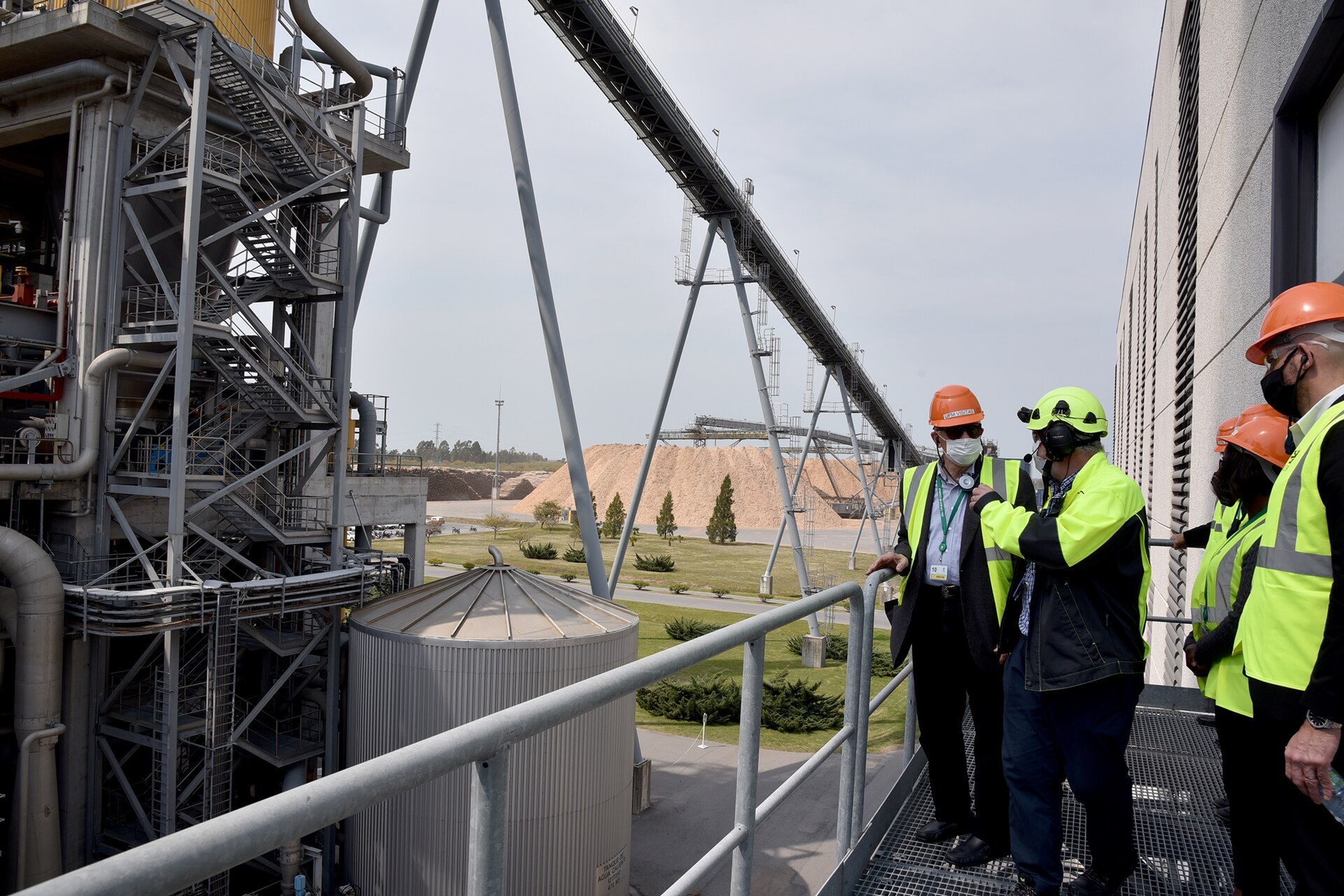
UPM of Finland opened its Fray Bentos mill in 2007 with a capacity of 1.3 million tonnes of pulp a year, and its Paso de los Toros mill began operating in April 2023 with 2.1 million tonnes after a total investment of US$3.47 billion. Montes del Plata, founded by Arauco of Chile and Stora Enso of Sweden and Finland, began operating in Colonia in 2014 with 1.4 million tonnes.
With all three plants running, installed pulp capacity is about 4.8 million tonnes a year, and cellulose pulp earned US$2.31 billion in 2025, 17% of goods exports. The forestry sector directly employs about 19,300 workers, Uruguay XXI says, and pulp leaves the country through three free trade zones.
UPM says its Paso de los Toros mill supplies 10% of electricity generation in Uruguay and its Fray Bentos mill 6%. Uruguay XXI adds that Montes del Plata feeds about 80 megawatts into the state grid.
Spanish Energy, Data Centers and Free Zones
President Orsi signed an agreement on 14 October 2026 with the Spanish company Solaria Energía y Medio Ambiente for a 500-megawatt data-center park, a US$5.7 billion investment that the Presidency calls the largest in Uruguay’s history. The plan combines US$5.5 billion for data centers with US$200 million for 350 megawatts of solar generation, and it will operate under the free-zone regime in Canelones, San José and Florida.
The first phase, due by 2029, would create 3,100 construction jobs, and the full project would provide 1,500 permanent jobs, the Presidency says. Solaria has operated solar plants in Young and Mercedes that sell power to the state utility UTE for almost a decade.
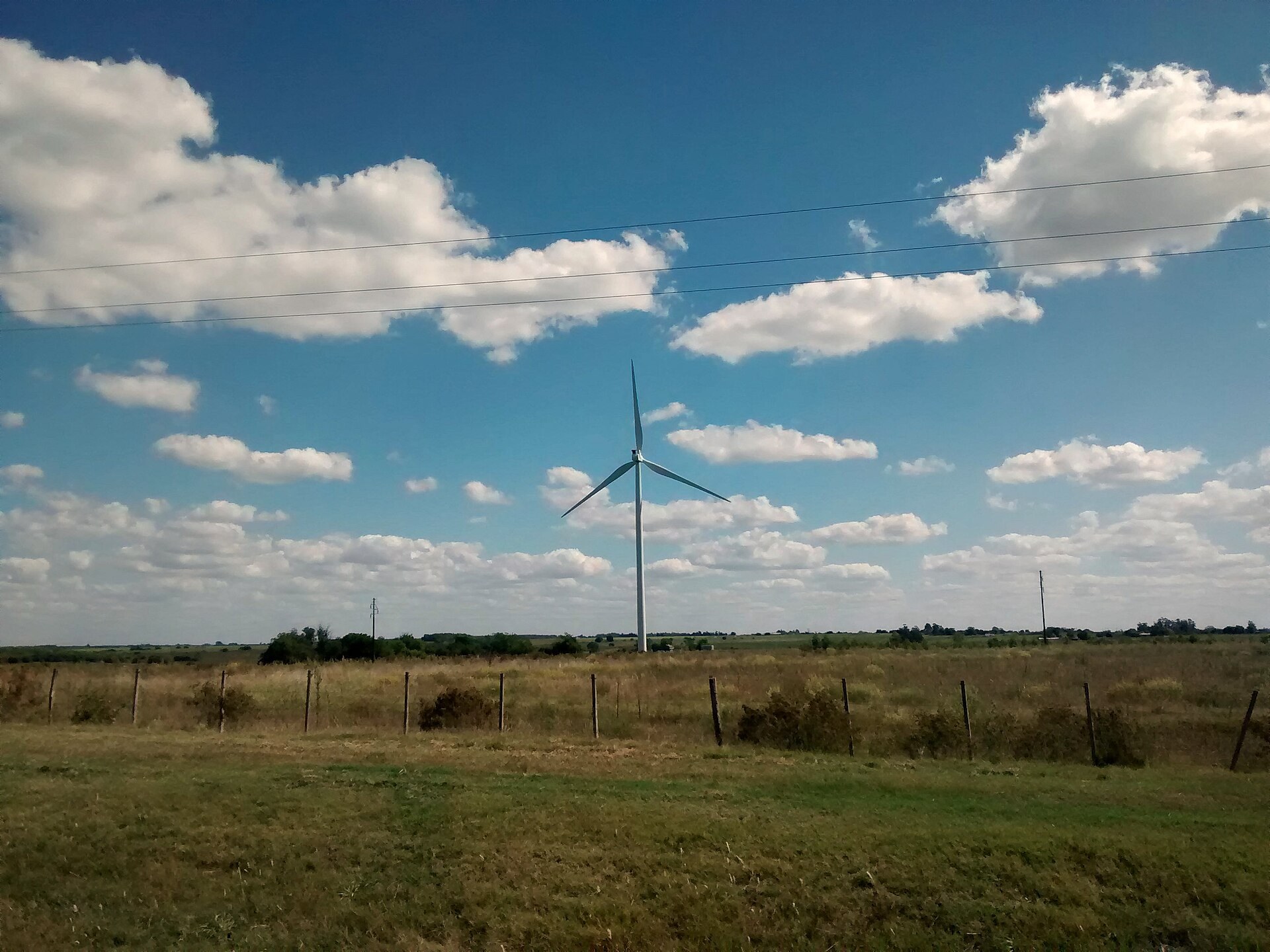
Orsi said Uruguay’s electricity mix is almost 100% renewable and that fiber-optic penetration is 94% across the country, arguments he made to investors. Google’s global head of government affairs, Karan Bhatia, met him on 23 September 2026 in New York and said the company’s Firmina and Tannat submarine cables are already installed in Uruguay.
Ports and Investment Disputes
Uruguay and the Chilean port company Neltume Ports agreed on 4 September 2026 to end an arbitration at ICSID, the World Bank Group’s investment dispute center, in which the company sought an estimated US$600 million, and Deputy Secretary of the Presidency Jorge Díaz said Uruguay assumed no liability and will pay no compensation. Díaz said a second case involving Atco, a Canadian group that is a shareholder in Montecon, was still being resolved.
On 28 October 2026 the Paris Court of Appeal upheld an arbitral award in Uruguay’s favor and rejected a US$3.536 billion claim linked to the Aratirí mining project, which the Presidency calls the largest claim the country has faced. Díaz said the ruling makes about US$4.5 million in costs enforceable against the claimants, plus a US$300,000 penalty.
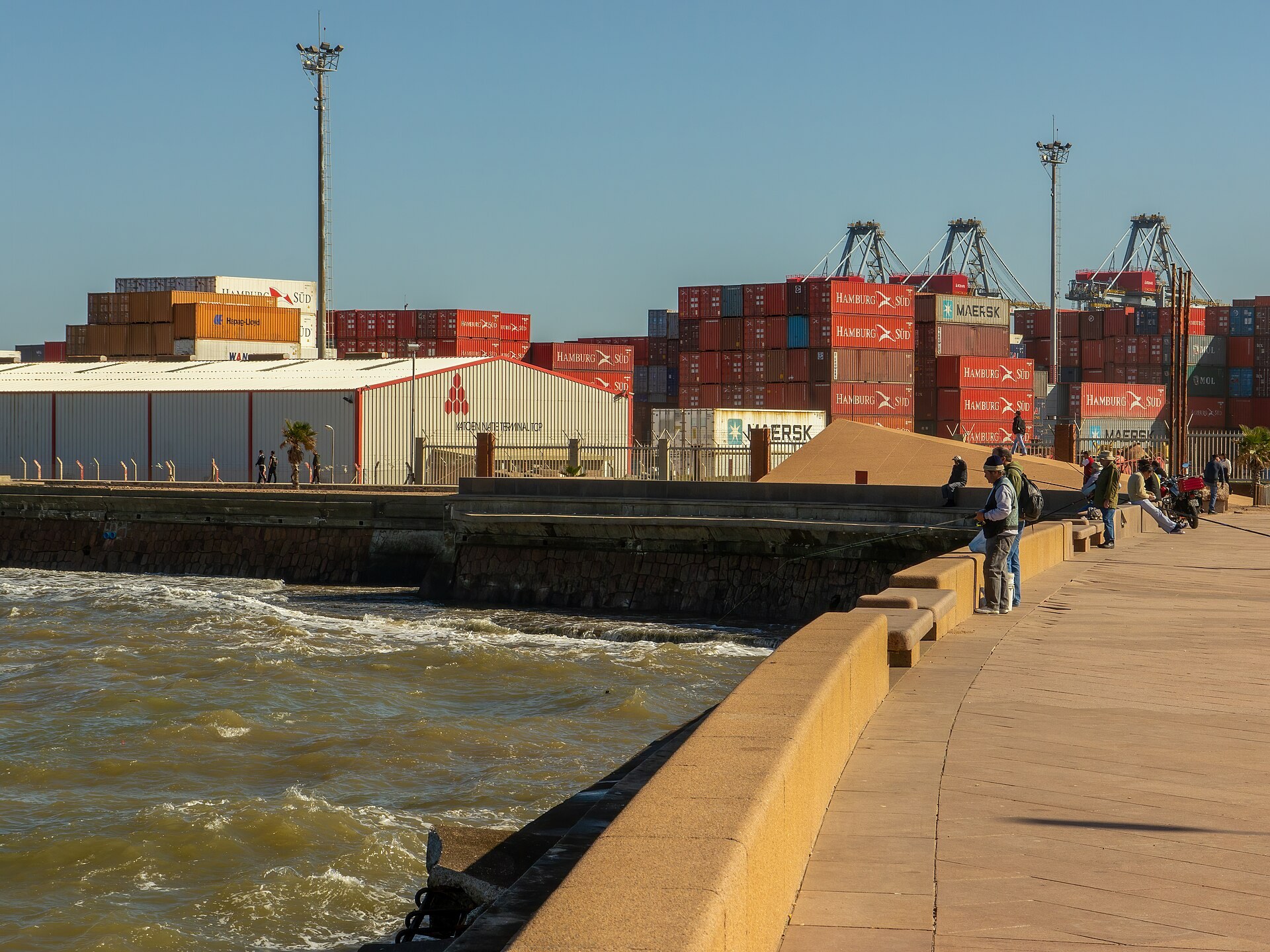
The National Ports Administration says the ports of Montevideo and Nueva Palmira handle 62% of the value of exports and that it earned a surplus of US$57 million in 2025, up 32%. Its president, Pablo Genta, said in September 2026 that containers in transit from Paraguay fell 23% in 2025.
Lenders and Other Partners
An International Monetary Fund mission led by Raphael Espinoza finished its 2026 Article IV mission to Uruguay, part of the regular annual check of a member’s economy, on 24 September 2026. The Presidency’s summary of the mission’s statement says the IMF projects growth of 1.3% in 2026 because of drought effects on agriculture, sees risks tilted to the downside, says ample liquidity reserves and favorable borrowing conditions limit short-term risks, and expects public debt to stay broadly stable over the medium term.
The World Bank’s board approved US$300 million of financing for Uruguay on 14 September 2026 to support reforms on private investment, jobs and fiscal sustainability, the bank says. The supported actions include ratifying the trade agreement with the European Union, simplifying customs procedures and applying international rules for taxing large multinational firms.
The board of CAF, the Development Bank of Latin America and the Caribbean, held its 190th ordinary meeting in Montevideo on 1 October 2026 under Economy Minister Gabriel Oddone as pro tempore president. India’s ambassador Binoy George presented credentials on 7 September 2026, and Lubetkin called him the first Indian ambassador in the history of relations between the two countries.
What It Means for US Readers
For travelers, the State Department rates Uruguay Level 2, exercise increased caution, because of crime, which it says is most common in Montevideo, Canelones, Maldonado and Rivera, in an advisory dated 28 July 2026. Violent crime occurs across the country, so travelers should check the current advisory before booking.
For importers and restaurants, the United States bought US$878 million of Uruguayan beef in 2025, so US meat buyers are direct customers of the country’s biggest export. For investors, the Commerce guide cites income tax exemptions and free trade zones, and US buyers take most of the technology services that Uruguay sells abroad, as of October 2026.
For policy, China is the largest buyer, the EU deal is in provisional force and the United States is the largest beef buyer by value, so decisions in Beijing, Brussels and Washington all reach Uruguay’s farms and mills. Related reading includes the explainers on Uruguay and who runs its economy, the report on the Solaria data-center deal, the story of the China beef suspension and the Uruguay hub.
What Is Not Known
As of October 2026 it is not known how Mercosur will split the EU import quotas among its members, because the foreign ministers could not agree in early September and instructed technicians to keep working. It is also not known when talks on a Mercosur-China free trade agreement will begin, since the 3 February 2026 joint declaration states only an aspiration for a start.
It is not known whether the second dispute involving Atco and Montecon will end the way the Neltume case did, since the Presidency’s latest statement of 29 October 2026 speaks of an ongoing negotiation. It is also not known which companies will rent space in the Solaria data-center park, because the Presidency’s announcement names no tenants.
Frequently Asked Questions
Who is Uruguay’s biggest foreign trading partner?
China is Uruguay’s biggest buyer, taking about US$3.49 billion of its goods in 2025, or 26% of exports. Brazil, the European Union and the United States follow.
What does the EU-Mercosur deal mean for Uruguay?
The interim trade agreement has applied provisionally since 1 May 2026, and Uruguay was the first Mercosur country to approve it, on 26 February 2026. Foreign Minister Lubetkin says tariff preferences and quotas had produced more than US$40 million by 30 September.
Which foreign companies run Uruguay’s pulp mills?
UPM of Finland runs the Fray Bentos and Paso de los Toros mills, while Montes del Plata was founded by Arauco of Chile and Stora Enso. Together the three plants can make about 4.8 million tonnes of pulp a year.
What is the Solaria investment?
Spain’s Solaria agreed on 14 October 2026 to build a 500-megawatt data-center park and 350 megawatts of solar power for US$5.7 billion. The Presidency calls it the largest investment in Uruguay’s history.
Does the United States matter to Uruguay’s economy?
The United States is the largest buyer of Uruguayan beef by value, at US$878 million in 2025, and takes most of the country’s technology-service exports. It is the fourth-largest destination for Uruguayan goods overall.
Is Uruguay safe for US travelers in 2026?
The State Department rates Uruguay Level 2, exercise increased caution, because of crime, in an advisory dated 28 July 2026. Crime is most common in Montevideo, Canelones, Maldonado and Rivera.
Sources: World Bank, Uruguay country overview, October 2026; World Bank, US$300 million financing for Uruguay, 14 September 2026; World Bank, population, total, Uruguay, 2025; US Commerce Department, Uruguay Country Commercial Guide, January 2024; US Embassy in Uruguay; State Department travel advisory feed; European Commission, EU-Mercosur trade relations page; European Commission, provisional application, 30 April 2026; Uruguay XXI, Foreign Trade Annual Report 2025; Uruguay XXI, Services Trade Annual Statistics 2024; Uruguay XXI, Forestry Sector Report 2026; Foreign Ministry, parliamentary approval of the EU-Mercosur agreement, 26 February 2026; Foreign Ministry, start of provisional application, 1 May 2026; Uruguay-China joint declaration, 3 February 2026; Agriculture Ministry, Tacuarembó plant suspension, 7 August 2026; Agriculture Ministry, Rosario plant reinstated, 11 August 2026; Presidency, EU-Mercosur gains and Mercosur ministers, early September 2026; Presidency, Foreign Minister on EU-Mercosur gains, 23 October 2026; Presidency, Mercosur presidency and EU agreement, 21 October 2026; Presidency, Solaria investment, 14 October 2026; Presidency, meeting with Google, 23 September 2026; Presidency, end of the Neltume arbitration, 4 September 2026; Presidency, Aratirí ruling, 29 October 2026; Presidency, National Ports Administration results, 23 September 2026; Presidency, IMF Article IV mission, 24 September 2026; Presidency, 80 years with the World Bank, 14 September 2026; Presidency, CAF board meeting, 1 October 2026; Presidency, Indian ambassador, 7 September 2026; UPM Fray Bentos mill page; UPM Paso de los Toros mill page; Montes del Plata, company page.
This article was produced by The Rio Times’ automated newsroom system. How we use AI · Report an error · Editorial responsibility: Matthias Camenzind, Editor-in-Chief
Expat Guide to Uruguay
What The Rio Times publishes for foreigners who live in or move to Uruguay.
Start here
- Best Places to Live in Uruguay for Expats 2026, Ranked
- Cost of Living Punta del Este 2026: Half Again Above Montevideo
- Uruguay vs Paraguay for Expats in 2026: Cheap Living or a Tax Holiday
- Uruguay Residency Visa Rules and the 12 Percent Tax on Foreign Income
City guides
Coming up in Uruguay
- Antel Campus Party Hits Montevideo, Uruguay 30–31 Oct 30 Oct
- Soy Luna Plays Montevideo on 17 November 2026 17 Nov
- El Plan de la Mariposa Montevideo, Uruguay: Antel Arena Debut on 19 November 19 Nov
- Copa Libertadores Final 2026: Date, Time, TV and Tickets 28 Nov
Understand Uruguay