Uruguay Welcomes Retiree Residency as Foreign Pensions Face No Fixed Minimum
Guides · Uruguay
—The stakes. Uruguay offers foreign retirees direct permanent legal residence through rentista and pensionado income categories.
—The income rule. No statutory minimum exists in law, but authorities typically expect around USD 1,500 monthly for a single applicant.
—The health angle. Older applicants can join private mutualistas for roughly USD 70 to 200 monthly, with small co-payments per consultation.
—The tax side. New residents benefit from a tax holiday on foreign-sourced income, including foreign pensions, for a defined initial period.
—The long view. Permanent residence opens a path to citizenship after several years, with Uruguay prized for banking, safety and social stability.
Uruguay remains one of Latin America’s most orderly retirement destinations, but its real draw is procedural clarity rather than bargain pricing. For foreigners who can document steady foreign pension or passive income, the country converts that paper trail into permanent legal residence without a single statutory income threshold.

The Legal Architecture Behind Retiree Residency
Uruguay does not maintain a separate retirement visa inside its immigration law. Retirees apply for Residencia Legal Permanente, the country’s standard permanent legal residence.
The governing framework is Ley 18.250 and Decreto 394/009, administered through the government portal gub.uy. Applications fall under means of life categories rather than age or employment status.
Two categories dominate for older foreigners. The rentista route covers people living on passive income such as rents, dividends, investment returns or annuities.
The jubilado, pensionado or pensionista route covers those receiving a lifelong foreign pension. This includes US Social Security, foreign state pensions and private annuity plans.
Both routes lead to permanent residence. There is no language, education, profession or age requirement imposed on applicants.
How the Rentista Income Category Works
A rentista must demonstrate stable, recurring passive income from abroad sufficient to support themselves and any dependants in Uruguay.
Proof is formalised through a Uruguayan public notary, known as an escribano, in a certificación de ingresos. The certificate states the applicant’s rentista status, income source, nominal monthly amount and how funds arrive in Uruguay.
Supporting documents typically include rental agreements, bank or investment statements and evidence of consistent receipt over six to twelve months. Everything must be apostilled and translated.
No fixed statutory minimum exists. Immigration authorities evaluate means of life case by case.
Practitioner guidance from 2023 to 2026 often cites around USD 1,500 monthly for a single applicant and USD 2,500 for a couple as realistic levels. Some historical guidance mentions figures around USD 700 monthly as administrative minimums that can change.
The Pensionado Route for Foreign Social Security Recipients
The pensionado category suits retirees receiving a lifelong pension from a foreign government or recognised private fund.
Applicants submit official pension award letters confirming the monthly amount and permanent nature of the benefit, along with pay stubs and bank statements showing regular deposits.
A Uruguayan notarial income certificate summarises the pension and explains how funds will be received locally. All foreign documents require apostille and Spanish translation.
In law, no minimum pension amount is specified. A documented pension of any size can qualify.
In practice, authorities generally expect around USD 1,500 monthly for a single retiree, with higher amounts for couples. Some expat guidance notes that USD 700 to 800 monthly has historically been accepted as sufficient, but current criteria must be checked.
The Core Application Procedure Step by Step
Most nationalities enter Uruguay visa-free for up to 90 days. The application begins online through a gub.uy account under the Residencia Legal Permanente procedure.
Government fees are denominated in Unidades Indexadas (UI), a unit adjusted for inflation. Applicants provide a valid passport, photo and criminal record certificates from their origin country and any country where they resided at least six months in the past five years.
Civil status documents such as birth and marriage certificates must also be apostilled and translated. Proof of income arrives through the notarial certification and financial records.
Health requirements include a carné de salud from a provider authorised by the Ministry of Public Health, following a basic medical exam. Uruguay also validates vaccination records and issues a local vaccination certificate under Decree 136/2018.
Applicants attend a migration interview known as the audiencia with original documents and biometric data collection. After approval, the cédula de identidad, Uruguay’s national ID card, opens health enrolment, bank accounts and daily formalities.
Mutualistas and Health Coverage for Older Applicants
Uruguay’s National Integrated Health System, called SNIS, is funded through FONASA and includes public and private non-profit providers.
The public network is run by ASSE, the Administración de los Servicios de Salud del Estado. Emergency and urgent care at ASSE hospitals is guaranteed by law to any person in the country, regardless of residency or insurance status.
Legal residents can affiliate with ASSE cheaply or free depending on income. Some sources report full ASSE coverage for a retired expat at around USD 60 to 80 monthly, typically without co-payments.
Private non-profit hospital plans are called mutualistas, formally known as IAMCs. Members pay a monthly fee for access to that hospital’s full network of clinics, specialists, diagnostics and surgeries.
Monthly fees for non-employed retirees typically range from USD 70 to 200 depending on age and provider. Co-payments per doctor visit or test often fall between UYU 150 and 350, roughly USD 4 to 9.
Age Limits and Pre-Existing Condition Rules
ASSE imposes no age or pre-existing condition restrictions for enrolment. It acts as a safety net ensuring nobody is left without coverage.
Mutualistas can set their own rules. Each provider decides on age limits and pre-existing condition handling.
Waiting periods for specific pre-existing conditions may range from three to twelve months. A basic medical interview or exam is often required before joining.
Enrolment requires legal residency status, a passport or cédula, and proof of residency. Care typically comes without deductibles or lifetime caps.
The predictability of small co-payments makes mutualistas attractive to older foreigners. Premiums rise with age but remain moderate compared to US private insurance.
Cost of Living in Montevideo, Punta del Este and Colonia
Uruguay is a mid-cost retirement destination rather than a bargain one. Montevideo, the capital, offers the widest services and infrastructure but at the highest everyday cost.
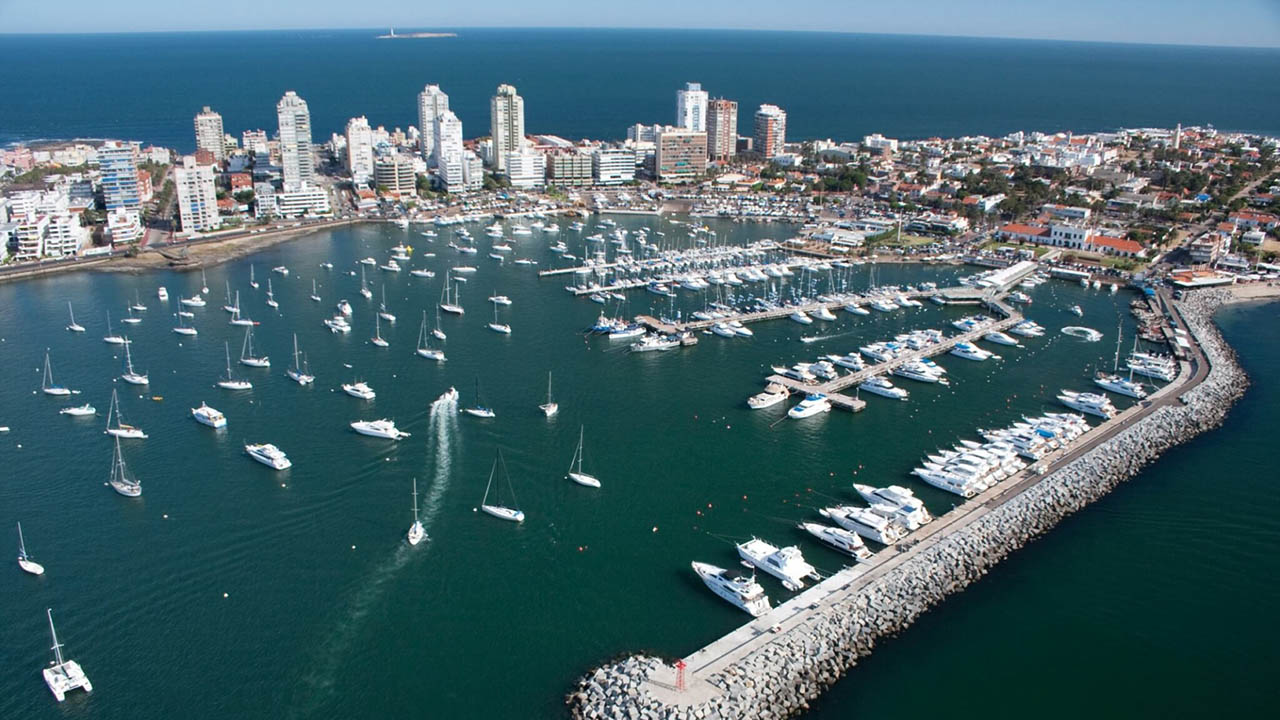
Punta del Este is a seasonal resort city with premium housing prices, especially in summer. Colonia del Sacramento is smaller and quieter, with lower living costs than the capital.
Rentista income benchmarks reflect local costs. The commonly cited USD 1,500 monthly for a single person covers rent, food, transport and basic health membership in all three locations with differing comfort levels.
Couples are generally advised to expect around USD 2,500 monthly. This amount supports a middle-class standard without extreme luxury.
Food, utilities and imported goods can be expensive by Latin American standards. Fuel and electricity are notable cost items.
The Tax Holiday and Treatment of Foreign Pensions
New residents benefit from a tax holiday on foreign-sourced income, including foreign pensions and investment returns. The exemption applies for a defined initial period of residence.
This makes Uruguay attractive for retirees who want to bring foreign assets without immediate local taxation. The holiday covers income generated outside the country, not domestic Uruguayan income.
Foreign pensions are generally not taxed during this initial window. After the holiday period, specific tax treatment depends on the applicable regime.
Uruguay also offers a separate benefit for retirees under Ley 16.340. Demonstrating around USD 1,500 monthly foreign pension or passive income plus a USD 100,000 investment in Uruguayan real estate or government securities held for ten years qualifies for duty-free household imports and passport-related benefits.
The USD 100,000 investment requirement belongs to this special retiree benefit, not to basic permanent residence itself.
Safety, Stability and Climate
Uruguay is widely regarded as one of Latin America’s safest and most politically stable countries. Its institutions function predictably, which matters for long-term relocation.
The banking system is reliable by regional standards. The legal framework around property and contracts is respected.
The climate is temperate with four distinct seasons. Winters are mild compared to northern Europe or the US Midwest, while summers can be warm and humid.
Montevideo has an oceanic-influenced climate with moderate rainfall. Punta del Este is cooler in summer due to coastal winds; Colonia is milder and less humid.
This stability underpins Uruguay’s appeal for retirees seeking predictability rather than adventure.
Expat Community and Daily Integration
Uruguay hosts a small but established expat community, concentrated in Montevideo’s coastal neighbourhoods, Punta del Este and Colonia.
The community is less concentrated than in Panama or Costa Rica. Integration tends to require basic Spanish, though English is present in tourist areas and professional services.
Foreign retirees often cluster around shared services: bilingual lawyers, notaries, accountants and real estate agents. Networks of fellow nationals ease the initial bureaucracy.
Social life centres on local clubs, cultural events and coastal activities. Uruguayans are generally reserved but welcoming once relationships form.
The depth of integration depends heavily on language effort. Daily life in markets, public offices and hospitals runs in Spanish.
Path to Permanent Residence and Citizenship
The rentista and pensionado routes already lead to permanent legal residence. Some sources describe an initial permit converting to permanent status once presence and compliance are established.
Permanent residents receive the cédula de identidad, the foundational document for health enrolment, banking and property rental or purchase.
Citizenship is possible after several years of lawful residence. Uruguay has historically been generous with naturalisation compared to many countries.
Applicants must demonstrate ties to the country, basic Spanish ability and lawful residence under immigration or civil law provisions. The exact requirements depend on the legal route chosen.
Uruguayan citizenship also grants access to the Mercosur residence framework, potentially easing mobility within South America.
Connected Coverage
Uruguay Risks US Assistance over Cuba Medical Missions
Copa Libertadores Final 2026: Montevideo Date, Tickets, Favorites and Travel Guide
Uruguay Airline Incentive Pays US$20 for Every Extra Tourist
The Big Picture
Latest developments
- Uruguay Halts Brazil Poultry on Bird Disease — 25 October 2026
- Uruguay to Change 5-Year Police Record Rule — 24 October 2026
- Uruguay Unemployment Rate Dips to 7.1% — 24 October 2026
- Pope Leo Uruguay Tickets Sell Out in 3 Hours — 23 October 2026
This article was produced by The Rio Times’ automated newsroom system. How we use AI · Report an error · Editorial responsibility: Matthias Camenzind, Editor-in-Chief
Expat Guide to Uruguay
What The Rio Times publishes for foreigners who live in or move to Uruguay.
Start here
- Best Places to Live in Uruguay for Expats 2026, Ranked
- Cost of Living Punta del Este 2026: Half Again Above Montevideo
- Uruguay vs Paraguay for Expats in 2026: Cheap Living or a Tax Holiday
- Uruguay Residency Visa Rules and the 12 Percent Tax on Foreign Income
City guides
Coming up in Uruguay
- Camilo in Montevideo, Uruguay: Colombia's Pop Star at the Antel Arena on October 28, 2026 28 Oct
- Antel Campus Party Hits Montevideo, Uruguay 30–31 Oct 30 Oct
- Soy Luna Plays Montevideo on 17 November 2026 17 Nov
- El Plan de la Mariposa Montevideo, Uruguay: Antel Arena Debut on 19 November 19 Nov
Understand Uruguay