Uganda at Heart of East African Oil Battle Between Lamu and Tanga Ports
Uganda · ENERGY
Key Facts
—EACOP route: The East African Crude Oil Pipeline runs 1,443 kilometres from Uganda’s Lake Albert oilfields to Tanzania’s Tanga port, with a peak capacity of 246,000 barrels per day.
—Tanga hub plan: Uganda and Tanzania signed a non-binding understanding with Vitol Bahrain to develop a regional energy hub at Tanga, with reported investment claims around US$20 billion.
—Lamu refinery vision: Media reports indicate Aliko Dangote is pursuing a refinery project tied to Lamu, with cited figures around US$17 billion and 700,000 barrels per day of capacity.
—Route shift: Uganda initially explored a Kenya route to Lamu before choosing Tanzania’s Tanga in 2016, citing lower projected transport tariffs and better security conditions.
—TotalEnergies stake: The French energy major holds 62 percent of EACOP, making it the dominant international player in Uganda’s upstream oil development and export infrastructure.
—Uganda’s reserves: Uganda’s recoverable oil reserves are put at about 1.7 billion barrels recoverable, out of an estimated 6.5 billion barrels of oil in place.
Uganda is not simply choosing a port for its crude exports. The East African oil battle has evolved into a contest between two competing regional power systems, one anchored at Tanga and the other at Lamu, each with its own financing, refinery ambitions, and geopolitical backers.
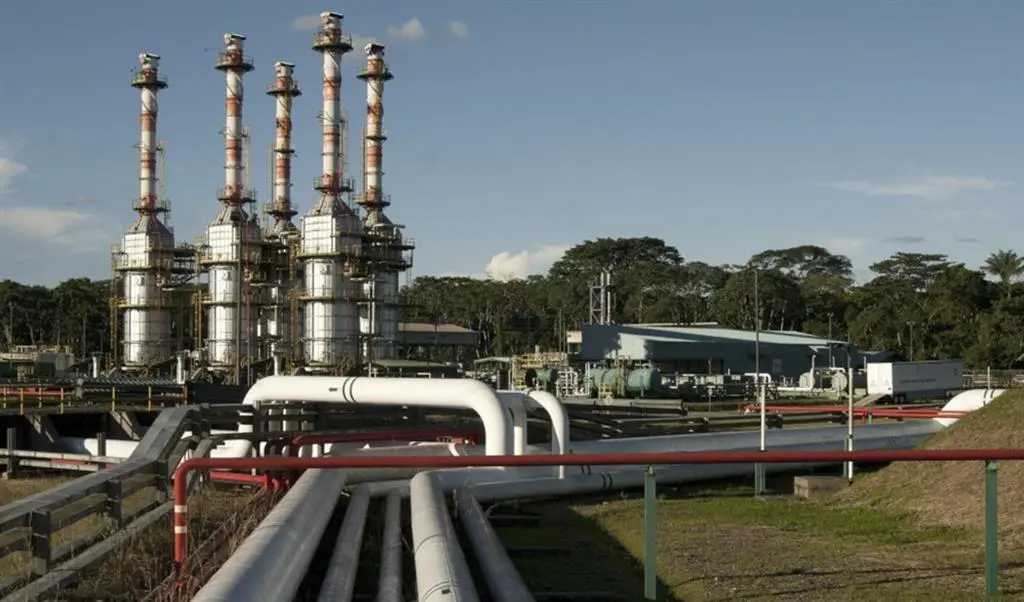
How Uganda ended up at the centre of the East African oil battle
Uganda’s commercially viable oil discoveries in the Lake Albert basin, first reshaping regional politics in 2006, set the stage for a decade-long tussle over export routes. By 2014, Uganda had signed a deal with international oil firms including Total, Tullow, and China National Offshore Oil Corporation (CNOOC) around export infrastructure and refining plans.
The following year, Uganda and Kenya agreed on a pipeline concept pointing toward Lamu, the original export direction. That understanding unravelled quickly, and in 2016 Uganda publicly chose the Tanzania route, citing Tanga port’s operational advantages and lower projected transport tariffs.
The shift became definitive in 2017 when the Uganda-Tanzania pipeline arrangement replaced the Kenya option as the new route framework. In 2020, Total acquired Tullow’s stake in Uganda’s oil fields, reinforcing the link between upstream ownership and the Tanga export corridor.
The Tanga ecosystem takes shape with Vitol and US$20 billion
The East African Crude Oil Pipeline (EACOP) is a heated crude pipeline stretching 1,443 kilometres from Lake Albert to Tanga, designed to move up to 246,000 barrels per day. First-oil timing has been repeatedly pushed back and remains tied to completion milestones in 2026.
A new layer has now been added. Reports say Uganda and Tanzania have signed a non-binding understanding with Vitol Bahrain to develop a Tanga regional energy hub, with investment claims around US$20 billion, including refinery, storage, jetties, and export infrastructure.
TotalEnergies holds 62 percent of EACOP, making the French major the dominant international player in both upstream Uganda oil development and the export pipeline. Vitol’s involvement matters because commodity traders can turn ports into financing-and-distribution platforms, not just physical terminals.
Why Lamu still matters in the East African oil battle
Lamu remains central to the wider regional contest because it sits inside Kenya’s LAPSSET corridor logic and symbolises Kenya’s attempt to become a major Indian Ocean logistics node. Even after Uganda shifted to Tanga for crude export, Lamu stays relevant for Kenya’s own pipeline ambitions and future fuel import routes.
Media reports indicate Aliko Dangote is still pursuing a major refinery idea tied to Lamu, with cited figures around US$17 billion and 700,000 barrels per day. The exact status and site confirmation remain less certain in available reporting than the Tanga hub plans.
The contest is no longer just about Uganda’s export route. It is now Tanga versus Lamu as competing downstream ecosystems, each trying to capture refining margins, storage revenues, and regional fuel distribution networks.
The power politics behind the pipeline choice
Uganda wants to monetise oil while reducing dependence on a single neighbour and improving bargaining power over transit, tariffs, and downstream processing. Tanzania gains from becoming a coastal energy gateway, deepening its strategic relevance in regional trade and infrastructure.
Kenya risks losing transit rents and regional energy use if Lamu is bypassed by the fastest-moving oil value chain. Dangote brings private African industrial capital into a contest usually dominated by states and majors, which raises the stakes around who captures refining margins.
The most consistent explanation across reporting for Uganda’s Tanzania choice is route economics. Tanzania’s Tanga option was repeatedly presented as cheaper or comparable in overall cost, with lower tariff assumptions and fewer technical complications than the Kenya route.
Great-power capital and the new scramble for East Africa
France is present through TotalEnergies, whose dominant EACOP stake links the project to European energy capital and upstream control. China entered the story through CNOOC in Uganda’s upstream consortium, making the project part of broader competition among external capital blocs.
The United Kingdom appears historically through Tullow, which helped shape the early Kenya-Uganda pipeline concept before its stake was sold to Total. The Middle East is visible through trading and logistics capital such as Vitol Bahrain, which can connect East African ports to global product flows and financing networks.
The route choice is a classic case of infrastructure geopolitics. Whoever controls the corridor can influence export timing, tariff capture, fuel flows, and regional dependency, a pattern that fits squarely within the dynamics covered by Africa: The New Scramble.
What to watch as 2026 unfolds
EACOP is nearing the end stage of construction, with completion and commercial start-up expected to overlap during 2026. The non-binding Tanga hub understanding with Vitol must still be converted into firm commitments, financing agreements, and construction timelines.
On the Lamu side, the Dangote refinery proposal remains a media-reported ambition rather than a confirmed project with clear site selection and financial close. The United States and European climate-policy ecosystem add another layer of uncertainty, because EACOP has been one of Africa’s most controversial fossil-fuel projects, drawing sustained challenges that affect bankability and insurance risk.
Uganda is arbitrating between two competing regional power systems. One centres on Tanga, backed by Uganda’s oil export needs, Tanzania’s coast, and trading capital such as Vitol. The other centres on Lamu, where Kenya hopes to preserve corridor relevance and where Dangote-linked downstream ambitions could still create a rival energy pole.
More: Kenya news in English, every day from The Rio Times.
Frequently Asked Questions
Why did Uganda choose Tanga over Lamu for its oil pipeline?
Uganda chose Tanzania’s Tanga port in 2016 because of lower projected transport tariffs, better security conditions, and fewer technical complications compared to the Kenya route to Lamu.
What is the US$20 billion Tanga energy hub plan?
Uganda and Tanzania signed a non-binding understanding with Vitol Bahrain to develop a regional energy hub at Tanga, including refinery, storage, jetties, and export infrastructure.
Does the Lamu corridor still have a future in East African oil?
Yes, Lamu remains relevant for Kenya’s own pipeline ambitions, fuel import routes, and a potential Dangote-linked refinery project reported at around US$17 billion and 700,000 barrels per day.
Connected Coverage
For deeper context on how infrastructure corridors are reshaping the continent’s power dynamics, read Africa: The New Scramble.
Sources
This article was produced by The Rio Times’ automated newsroom system. How we use AI · Report an error
LatAm Markets: Live Signals → — real-time movers, turnover leaders and FX across Latin America.
Read More from The Rio Times