Bangladesh faces significant unrest, especially among its youth, due to Prime Minister Sheikh Hasina’s oppressive regime.
Recent student protests began against the job quota system but have escalated into a broader uprising against the government.
The regime’s response has been extremely brutal. Security forces have used lethal and less-lethal weapons against unarmed protesters, resulting in hundreds of deaths and thousands of injuries.
The Regime and Its Oppressiveness
Sheikh Hasina’s government, in power since 2009, faces accusations of authoritarianism, corruption, and misuse of state machinery to maintain power.
Allegations of vote-rigging have marred the last three general elections. The regime has been accused of stifling dissent and extrajudicially killing opposition activists.
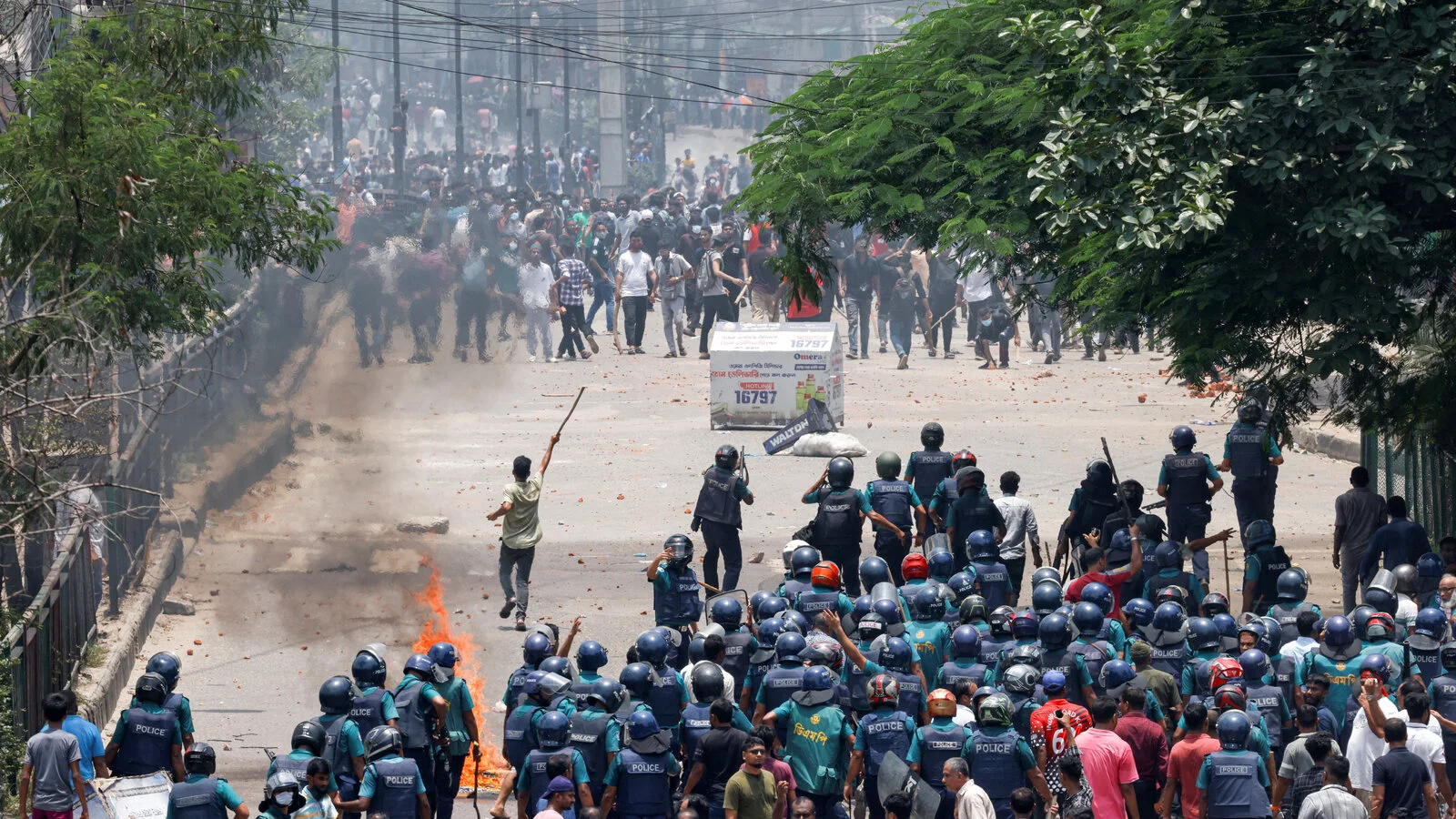
The crackdown on recent student protests has included arbitrary arrests, enforced disappearances, and torture of detainees.
The judiciary, controlled by the regime, has failed to provide justice, further worsening the situation.
Legitimization of the Regime
The legitimacy of Hasina‘s regime must be considered questionable. The 2014 general election, boycotted by major opposition parties, was marked by low voter turnout and allegations of electoral fraud.
The ruling party’s victory in this and subsequent elections has faced wide criticism for lacking credibility and fairness.
The government’s actions during the recent protests have further eroded its legitimacy. Many citizens now view it as an authoritarian regime rather than a democratic government.
A Brewing Storm Among the Youth
University students have spearheaded Bangladesh’s youth protests, initially challenging the job quota system but now demanding an end to what they call Hasina’s dictatorial rule.
The brutal crackdown on peaceful protesters has galvanized support from various segments of society.
University teachers, parents, artists, and lawyers have joined the movement, turning the student protests into a broader people’s uprising.
Potential for Civil Uprising
The likelihood of a full-scale civil uprising in Bangladesh is increasing. The government’s heavy-handed response has intensified the protests, with more citizens joining the movement against the regime.
If the government continues to ignore the demands of the protesters and resorts to violence, the situation could escalate into a larger conflict.
Historical precedents show that sustained repression often leads to greater resistance and the potential for civil unrest.
Alternatives to the Current Government
The main opposition parties in Bangladesh include the Bangladesh Nationalist Party (BNP) and Jamaat-e-Islami (JEL).
However, the regime’s crackdown has severely weakened these parties, with many leaders arrested or banned from political activities. Despite this, there is a growing call for a change in leadership.
The opposition, supported by civil society and international observers, could potentially form a coalition to challenge the ruling party in future elections. This is possible if they can ensure a free and fair electoral process.
A Narrative
The current narrative in Bangladesh is one of resistance against oppression. The youth-led protests symbolize a broader struggle for democracy and justice in the face of authoritarianism.
The government’s brutal tactics have only strengthened the resolve of the protesters. They are determined to fight for their rights and freedoms.
In conclusion, Bangladesh is at a critical juncture. The oppressive actions of the Hasina regime have sparked a powerful movement for change, led by the nation’s youth.
The potential for a civil uprising is real. The future of the country depends on the ability of its people to overcome the current regime and establish a government that respects democratic principles and human rights.
This article was produced by The Rio Times’ automated newsroom system. How we use AI · Report an error
Read More from The Rio Times