Bangladesh’s Political Crisis Culminates in Military Takeover
After fifteen tumultuous years in power, Prime Minister Sheikh Hasina stepped down amidst escalating protests. Her dramatic departure led to a military intervention.
The crisis reached its zenith on Sunday. Protests resulted in nearly 100 deaths, marking one of the deadliest days of civil unrest.
General Waker-Uz-Zaman addressed the nation on state television. He declared Hasina’s resignation and the military’s decision to establish an interim government.
“The country has suffered tremendously; it’s time to stop the violence and heal,” he announced. He promised improvements after his announcement.
The general plans to consult with the president about forming an interim government. He has already engaged with the main opposition parties and civil society members.
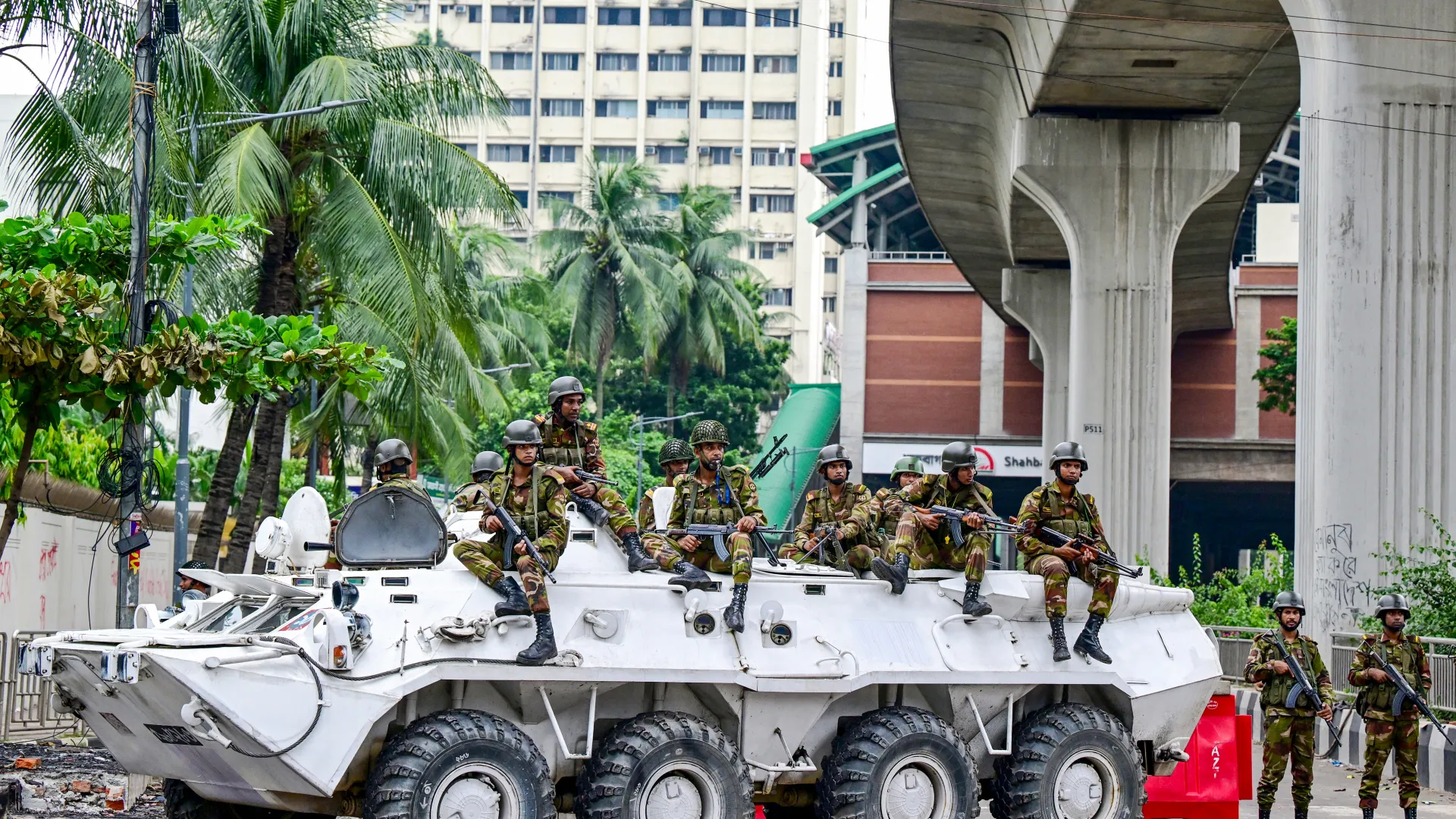
He excluded Hasina’s Awami League. His military career spans nearly four decades. This includes two terms as a UN peacekeeper and a stint in the Prime Minister’s office.
The Unfolding Crisis in Dhaka
On the ground, the mood was a mix of chaos and jubilation. Crowds surged through the streets of Dhaka. Hundreds breached the gates of Hasina’s official residence.
The protestors’ fervor was palpable. They dismantled a statue of Hasina’s father, Sheikh Mujibur Rahman, Bangladesh’s revered independence hero.
The security forces had previously backed Hasina. They seemed overwhelmed by the scale of the protests. These originated from opposition to civil service job quotas.
The demonstrations rapidly evolved into a broader call for Hasina to resign. The intense violence on that Sunday was a stark escalation. Previous weeks of protests had already claimed hundreds of lives.
Amidst this backdrop, Bangladesh’s military declared a need for an emergency government back in January 2007. Hasina has navigated through these challenges since her return to power in 2009.
She had recently won a fourth consecutive election in January. However, her tenure was marred by accusations from human rights groups. They accused her of using state power to suppress dissent and eliminate opposition.
As the country teeters on the brink of potential recovery or further discord, the world watches closely. The military’s interim leadership faces the colossal task of restoring order and justice.
Citizens of Bangladesh yearn for stability and governance. They want governance that upholds their rights and dignity.
The unfolding events will test the resilience of its institutions. The fortitude of its people in striving for a democratic and equitable society will also be tested.
This article was produced by The Rio Times’ automated newsroom system. How we use AI · Report an error
Read More from The Rio Times