SOUTH AFRICA · FOREIGN POWERS
Key Facts
- —The country South Africa, led by President Cyril Ramaphosa, trades with the US and Europe while sitting in the BRICS club with China and Russia.
- —Biggest investor The European Union, as a bloc, holds 46% of the foreign direct investment stock in South Africa, according to the EU’s diplomatic service.
- —Biggest trade partner China, among single countries. South African exports to China reached US$12.4 billion in 2024, according to a trade ministry official.
- —The US feud More than 600 US companies operate in South Africa, says the American Chamber of Commerce, yet Pretoria has rebuked the US ambassador three times in 2026.
- —US tariff Since late July 2026, many South African goods face a 12.5% US tariff; oranges, macadamia nuts and platinum-group metals are among the exempt items.
- —Trade perks AGOA, the US law granting duty-free access, was extended to December 2028 in September 2026; the list of eligible countries can change before January 2027.
- —Prediction markets Polymarket bets give a 59.6% chance that South Africa’s annual inflation in December 2026 tops 5.0% (10 October 2026, 9:21 a.m. ET).
South Africa foreign relations matter to US investors: Washington is feuding with Pretoria, China leads its trade and Europe its investment.
This guide explains who brings money, warships, loans and aid to South Africa, and what each one wants back. For more country coverage, see our South Africa hub.

Who Counts as a Foreign Player in South Africa
Foreign players come in six groups: governments, companies, lenders, aid donors, charities and South Africans abroad. Each group brings something different, and each expects something in return.
The government in Pretoria is led by President Cyril Ramaphosa, leader of the African National Congress (ANC). Our guide to who holds power in South Africa explains the parties and the people in charge.
Foreign money has become harder to win. According to World Bank balance-of-payments data, net foreign direct investment inflows fell from US$9.2 billion in 2022 to US$2.3 billion in 2024.
In 2025 the figure turned negative, at minus US$2.2 billion. In plain terms, foreign direct investors took out more money than they put in during that year.
The United States and the Trade Feud
The United States is South Africa’s most turbulent partner. More than 600 US companies operate in the country, according to the American Chamber of Commerce in South Africa, Business Day reported.
Relations broke down in 2025. On 7 February 2025, President Donald Trump signed an executive order ordering US agencies to halt aid to South Africa.
The same order told US agencies to promote the resettlement of Afrikaners as refugees. Afrikaners are a white, Afrikaans-speaking minority, and the order claims they face government-sponsored race-based discrimination.
The claim is widely disputed, with no evidence that the government has targeted Afrikaners, the news site IOL reported in June 2026. Washington expelled South Africa’s ambassador, Ebrahim Rasool, in March 2025 after he criticised Trump’s MAGA movement.
Pretoria’s ambassador in Washington is now Roelf Meyer, a former minister who helped negotiate South Africa’s move to democracy. He presented his credentials to Trump in May 2026, News24 reported.
In September 2026, Meyer said South Africa wanted to keep talking despite new US visa restrictions on South African officials. Washington has not named the officials concerned, Business Day reported.
Tariffs and AGOA
On 31 July 2025, a White House order set a 30% tariff on South African goods under an emergency-powers law. In February 2026, the US Supreme Court ruled that this law does not allow the president to impose tariffs.
Most South African goods then fell back to a universal 10% US rate, the business site BusinessTech reported in April 2026.
In late July 2026, the US Trade Representative imposed a 12.5% tariff on many South African goods under Section 301, a US trade law. It said South Africa does not ban imports made with forced labour, SAnews, the state news agency, reported.
Cars and car parts, which already face separate US duties, are excluded, as are items such as macadamia nuts, oranges and platinum-group metals. The trade ministry has since announced plans for its own ban on goods made with forced labour.
AGOA, the African Growth and Opportunity Act, is a US law that lets eligible African countries sell many goods to the US duty-free. In September 2026, Trump signed a funding law that extends AGOA to December 2028.
About 22% of South African exports to the US benefit from AGOA, BusinessTech reported.
Solidarity, a South African trade union, warned that the country’s place is not guaranteed. The list of eligible countries can change before January 2027.
A Combative Ambassador
Leo Brent Bozell III, a conservative media critic and Trump supporter, arrived as US ambassador in February 2026. Ramaphosa formally accepted his credentials on 8 April 2026.
By the end of September 2026, the foreign ministry had issued an unprecedented third formal rebuke, or démarche, against him in nine months. The ministry is the Department of International Relations and Cooperation (DIRCO), led by Minister Ronald Lamola.
The latest rebuke followed his public criticism of South Africa’s empowerment policies, Business Day reported. He also named farm murders as a sticking point for Washington.
Those policies, known as Black Economic Empowerment (BEE), set Black ownership targets for companies. A September 2026 US State Department report called them a significant compliance burden for US firms, Business Day reported.
The Citizen, a Johannesburg daily, quoted Bozell as saying billions of dollars from American firms are ready to go into mining. He said that money remains on hold because of the ownership rules.
Europe Is the Biggest Investor
The European Union is the quiet heavyweight. The European External Action Service (EEAS), the EU’s diplomatic service, calls the bloc South Africa’s biggest trading partner and largest foreign investor.
The EEAS puts the EU’s share of foreign direct investment stock in South Africa at 46%. In 2024, EU goods made up 23% of South Africa’s imports, and the EU took 18% of its exports.
That makes Brussels the anchor of South Africa foreign trade and investment, even as Washington and Beijing grab the headlines.
At a Cape Town summit on 13 March 2025, South Africa and the EU agreed to negotiate a Clean Trade and Investment Partnership. The EU also announced a €4.7 billion (about US$5.3 billion at October 2026 rates) Global Gateway investment package.
Global Gateway is the EU’s worldwide programme for infrastructure investment. The package mixes €303 million (about US$340 million) in EU grants with €4.4 billion (about US$4.9 billion) in loans from European lenders.
It concentrates on the just energy transition, South Africa’s planned shift away from coal, plus connectivity infrastructure and the local medicines industry.
In return, Brussels wants investment openings in clean energy, raw materials and green hydrogen. Those three areas are the focus of the partnership talks, according to the EEAS.
China, Russia and the BRICS Club
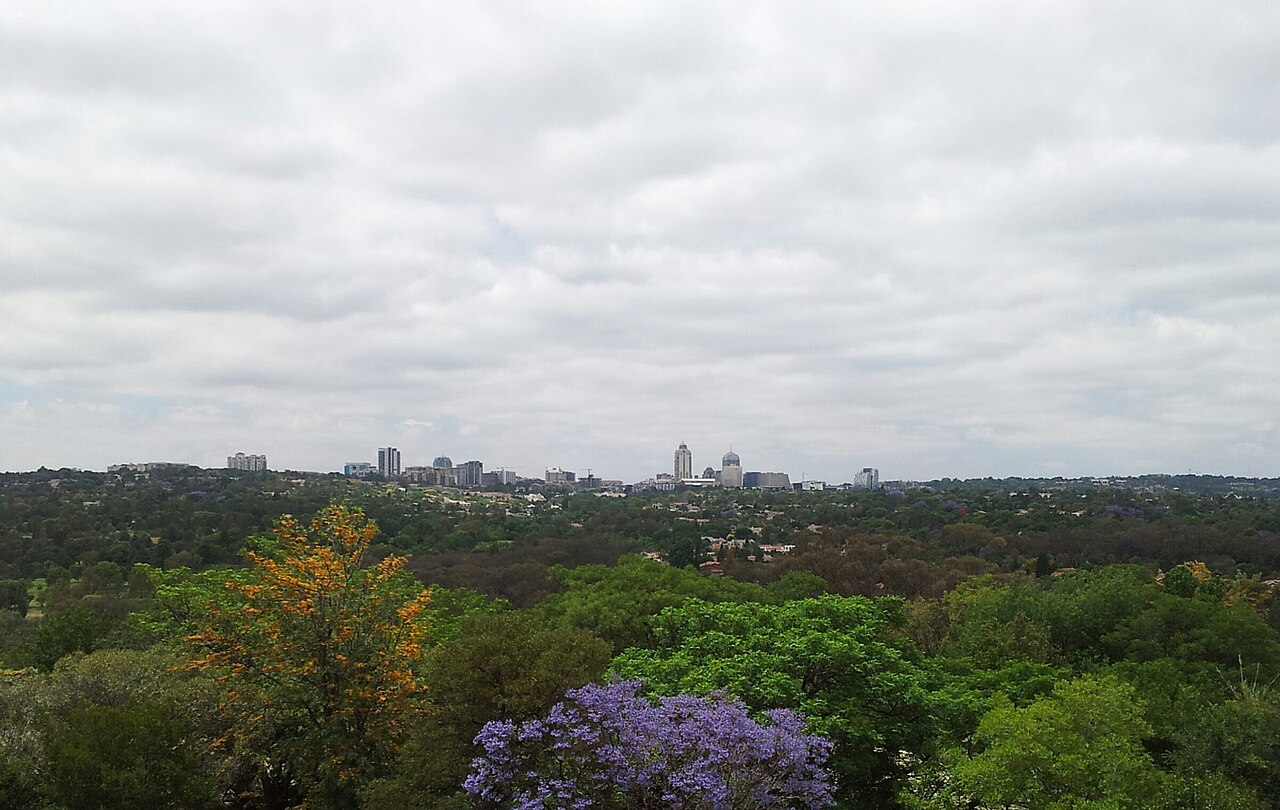
China is South Africa’s largest trading partner among single countries, according to Business Unity South Africa (Busa), a national business federation. A senior official at the trade ministry put South African exports to China at US$12.4 billion in 2024.
Speaking in September 2025, the same official put China’s exports to South Africa at about US$21 billion. Mineral products made up 93% of South Africa’s exports to China, Engineering News reported.
China’s ambassador said in September 2025 that China had invested more than US$13.2 billion in direct investment in South Africa. He said that investment had created more than 26,000 jobs.
Chinese investors in South Africa include the electronics maker Hisense and the carmakers BAIC and FAW, Engineering News reported. Our guide to South Africa geopolitics covers the wider contest between the big powers.
South Africa belongs to BRICS, a club of large emerging economies with Brazil, Russia, India and China. The five countries set up the New Development Bank in 2015.
Warships in Simon’s Town
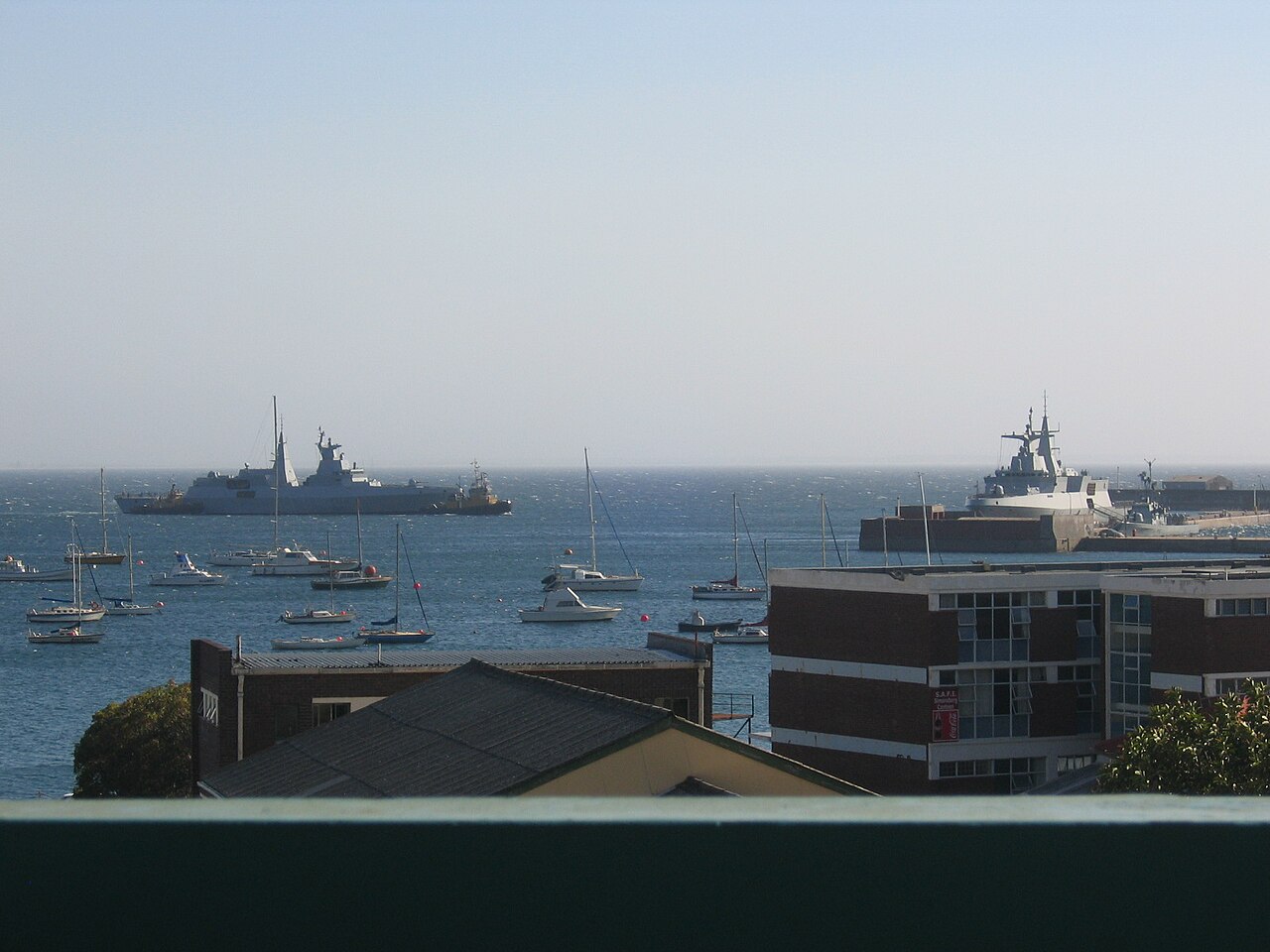
In January 2026, South Africa hosted Will for Peace, a China-led naval exercise based at Simon’s Town near Cape Town. The drill was set for 9 to 16 January.
Chinese warships and an Iranian vessel docked at Simon’s Town beforehand, and navy officials expected Russian ships, EWN reported. The Mercury, a Durban newspaper, noted that India and Brazil were not taking part.
The South African National Defence Force (SANDF) said the drill focused on the safety of shipping. Experts quoted by The Mercury warned that it could damage trade ties with Washington and Brussels.
The Lenders Behind Power, Ports and Rail
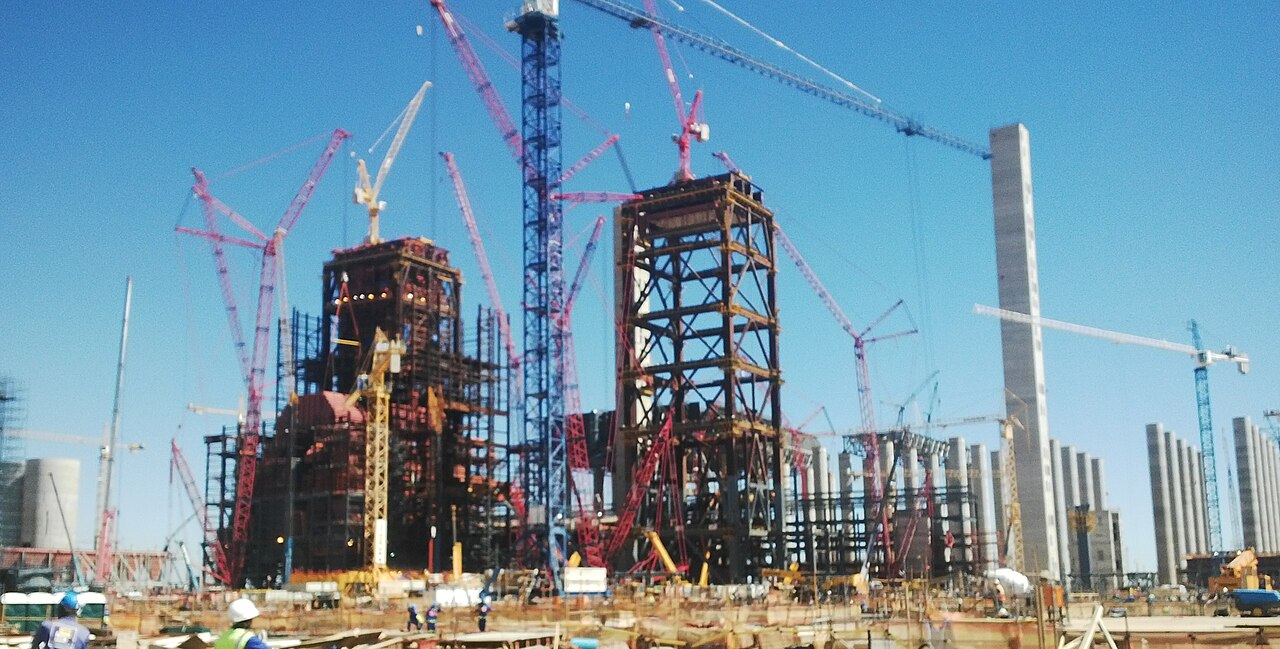
South Africa’s state companies need large sums, and lenders now tie their money to reforms around them. Eskom, the state power utility, and Transnet, which runs freight rail and ports, sit at the centre.
In July 2026, the government signed a US$1.5 billion development policy loan with the World Bank. It runs for 15 years with a three-year grace period, SAnews reported.
The money supports reforms in electricity, freight and logistics, plus water and sanitation. In return, the World Bank ties its money to agreed policy reforms rather than single projects.
The International Monetary Fund (IMF), the Washington-based lender to governments, regularly reviews South Africa’s economy. Its board last did so in an Article IV consultation on 9 February 2026.
The New Development Bank, set up by the five BRICS founders in 2015, offers another channel of loans. It funds infrastructure and sustainable development projects in member countries.
Aid Donors, Health Funders and NGOs
Health aid shows the cost of the rift most clearly. PEPFAR, the US anti-HIV programme, put an estimated US$400 million a year into South Africa’s HIV work for more than two decades, IOL reported.
In June 2026, the US State Department confirmed it had started a phased withdrawal of PEPFAR funding to South Africa. The country has about eight million people living with HIV, the most of any nation.
The state pays for 90% of its HIV medicines, with 10% from the Global Fund, a Geneva-based health financier, the health department said. It argued that PEPFAR mainly supported the wider HIV programme rather than the supply of medicines.
The health department said a UN high-level meeting in New York on 22-23 June 2026 would take up the funding gap.
The FW de Klerk Foundation, which carries on the legacy of the late former president, wrote to Trump in June 2026. It urged him to reverse the PEPFAR cuts.
The Diaspora and Money Sent Home
In family remittances, South Africa sends out more than it receives. World Bank data show personal remittances paid out of the country reached US$1.13 billion in 2025.
Remittances received by South Africa came to about US$1.0 billion in 2025. In other words, more money leaves South Africa through family transfers than arrives.
Our guide to South Africa and its neighbours explains its ties with Zimbabwe, Mozambique, Lesotho and other neighbours.
The order’s refugee clause for Afrikaners adds a politically charged strand to the South African diaspora in the US.
What Prediction Markets Say
On Polymarket, bets give a 59.6% chance that South Africa’s annual inflation in December 2026 tops 5.0% (10 October 2026, 9:21 a.m. ET). That price moved 6.8 points lower in the previous 24 hours.
The 4.4% to 4.7% band trades at 12.5%, and 4.7% to 5.0% at 10.2%. The market has drawn about US$79,000 in total bets.
The market resolves on the Statistics South Africa report due on 20 January 2027. The statistics office put annual inflation at 4.4% in August 2026, up from 4.3% in July.
For foreign investors, higher inflation means the South African Reserve Bank, the central bank, may keep interest rates high. That moves the rand and bond returns.
Our report on the record petrol price outlook explains one pressure on prices.
Why we show this: prediction markets turn real-money bets into a live probability that moves within minutes of the news, which is why investors, campaigns and newsrooms in the United States now follow them closely. We show them next to polls and official results, never instead of them.
What It Means for US Readers
For US investors, South African mining, banking and consumer companies trade on the Johannesburg Stock Exchange. The political risk now comes as much from Washington as from Pretoria.
For US importers, AGOA decides whether many South African goods avoid normal US import duties. A separate 12.5% tariff has applied to many South African goods since July 2026.
For anyone following South Africa foreign policy, the key test is whether Pretoria can keep Washington, Beijing and Brussels on side at once. See our guide to who runs South Africa’s economy and our profile of Cyril Ramaphosa.
What Is Not Known
Washington has not said whether South Africa will stay on the AGOA list after January 2027. Nor is it known whether a South African ban on goods made with forced labour would lower the 12.5% US tariff.
The names of the South African officials hit by US visa restrictions have not been made public. The size of the US mining investment that Bozell says is on hold has not been published.
Official figures for the full impact of the PEPFAR withdrawal on HIV clinics have not been released. Nobody yet knows whether the New Development Bank or Europe will fill the gap left by US aid.
Frequently Asked Questions
Who is the biggest foreign investor in South Africa?
The European Union as a bloc. According to the EU’s diplomatic service, EU investors hold 46% of the foreign direct investment stock in South Africa.
Is China South Africa’s largest trading partner?
Among single countries, yes. Business Unity South Africa calls China its largest trading partner, and a trade ministry official put South African exports to China at US$12.4 billion in 2024.
What tariff does the US charge on South African goods?
Since late July 2026, many South African goods face a 12.5% US tariff under Section 301, a US trade law. An earlier 30% tariff fell after the US Supreme Court ruled against emergency-powers tariffs in February 2026.
Is South Africa still in AGOA?
Yes, as of September 2026. A US law signed that month extended AGOA to December 2028, but the list of eligible countries can change before January 2027.
Why did the US cut aid to South Africa?
A February 2025 executive order halted aid, citing South Africa’s 2024 Expropriation Act, its genocide case against Israel and its ties with Iran. PEPFAR HIV funding is being phased out.
Does South Africa hold military exercises with China and Russia?
Yes. In January 2026 it hosted the China-led Will for Peace naval drill off Simon’s Town, with Chinese and Iranian ships and expected Russian participation.
Who is the US ambassador to South Africa?
Leo Brent Bozell III, a conservative media critic, took up the post in February 2026. South Africa’s foreign ministry formally rebuked him three times in nine months, the latest at the end of September 2026.
Sources: White House: Addressing Egregious Actions of the Republic of South Africa, 2025-02-07; White House: Further Modifying the Reciprocal Tariff Rates, 2025-07-31; EEAS: The European Union and South Africa, 2025; World Bank Open Data: South Africa FDI and remittances, 2026-10-08; Statistics South Africa: CPI August 2026, 2026-09-23; SAnews: SA, World Bank sign US$1.5bn loan, 2026-07-21; IMF: South Africa country page, 2026-02-09; New Development Bank: About NDB, 2026; Business Day: Pretoria keeps talks open after rebuking US ambassador, 2026-10-01; The Citizen: Bozell, billions in investment at risk, 2026-10-06; BusinessTech: US extends AGOA for South Africa, 2026-09-03; EWN: South Africa accepts US envoy’s credentials, 2026-04-08; EWN: Chinese, Iranian warships in South Africa for exercises, 2026-01-08; Engineering News: South Africa-China ties at ninth trade fair, 2025-09-23; BusinessTech: South Africa facing down another disaster (tariffs, AGOA), 2026-04-23; The Mercury: Naval drills with Russia, China risk US, EU trade fallout, 2026-01-09; EWN: UN high-level meeting on South Africa’s PEPFAR funding cuts, 2026-06-21; The Presidency: President Ramaphosa congratulates Navi Pillay, 2026-10-09; IOL: FW de Klerk Foundation and HIV funding cuts, 2026-06-21; US Supreme Court: Learning Resources, Inc. v. Trump, 2026-02-20; SAnews: SA to continue engagement with US on tariffs, 2026-07-27; News24: Meyer says SA wants to continue talking despite downturn in US ties, 2026-09-16; News24: Roelf Meyer becomes SA’s new ambassador to US, 2026-05-21; EWN: Roelf Meyer reflects on his return to public service as US ambassador, 2026-07-16; SABC News: ANC volunteers must work hard to grow voter support, Ramaphosa, 2026-10-09.
This article was produced by The Rio Times’ automated newsroom system. How we use AI · Report an error · Editorial responsibility: Matthias Camenzind, Editor-in-Chief
Rotate for Best Experience
This report is optimized for landscape viewing. Rotate your phone for the full experience.
You've reached your free article limit
Subscribe to The Rio Times for unlimited access to our reporting from across Africa.