
GUIDES · SOUTH AFRICA
Key Facts
- —The country South Africa is a constitutional democracy of nine provinces led by President Cyril Ramaphosa. Statistics South Africa (Stats SA) put its population at 63.52 million at mid-2026.
- —Population groups Black African 81.7%, coloured 8.4%, white 7.1% and Indian/Asian 2.7% of residents in the 2026 mid-year estimates.
- —Languages Twelve official languages since South African Sign Language was added in July 2023. isiZulu is the most spoken home language, at 24.4% in Census 2022.
- —Age About 25.6% of people are under 15 and 10.7% are 60 or older (mid-2026). The median age was 28 in Census 2022.
- —Migrants Census 2022 counted more than 2.4 million international migrants. About 86% came from SADC neighbours, 45.5% of those from Zimbabwe.
- —US link About 156,000 South Africa-born people lived in the United States in 2024 (US Census Bureau). Washington’s refugee ceiling for fiscal 2027 is 17,500, primarily Afrikaners.
The South Africa population reached 63.52 million at mid-2026, according to Statistics South Africa, the national statistics office. It is a young, mostly urban and deeply plural society with four official population groups and twelve official languages. For US readers, these numbers shape labour markets, consumer demand and migration politics. They also explain a refugee programme that runs from Pretoria to American cities.
How Many People Live in South Africa
Stats SA published its 2026 mid-year population estimates on 30 July 2026. They put the population at 63,522,380, up 759,980 people on 2025. The office estimates annual growth of 1.20% between 2025 and 2026, and says 50.9% of residents are female.
The last full count, Census 2022, used the night of 2 to 3 February 2022 as its reference point. It found 62,027,503 people, up from 51.7 million in 2011. It was the country’s first digital census, using face-to-face, online and telephone interviews.
United Nations figures run slightly higher. World Bank data, drawn from the UN’s World Population Prospects, put the 2025 population at 64.7 million. The gap reflects different models and assumptions, especially about migration, so both numbers are best read as ranges rather than exact headcounts.
The population is getting older, slowly. Stats SA estimates the fertility rate at 2.12 children per woman in 2026, down from 2.78 in 2008. Life expectancy at birth is 65.5 years for men and 71.0 years for women. About 7.8 million people live with HIV, roughly 12.3% of the population.
The Four Population Groups and Their Origins
Official statistics sort South Africans into four population groups. The framework dates from apartheid and is still used to track change. The 2026 estimates break down as follows.
- Black African: 51.92 million people, or 81.7%. This group includes Zulu, Xhosa, Pedi, Tswana, Sotho, Tsonga, Swazi, Venda and Ndebele speakers.
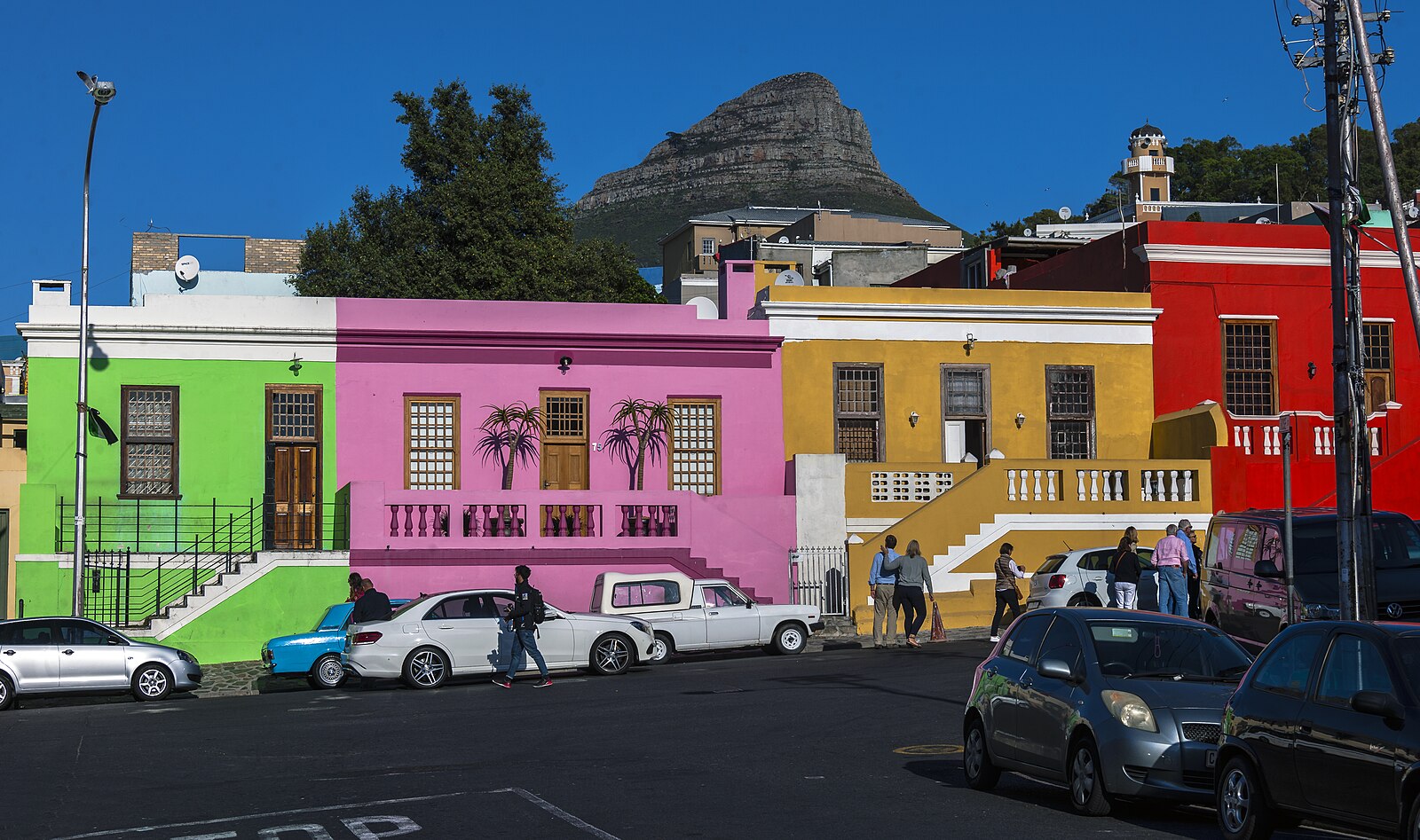
- Coloured: 5.36 million, or 8.4%. A South African term for people of mixed Khoekhoe, San, African, Asian and European ancestry. Islam is more common here, at 6.9%, than among black or white South Africans.
- White: 4.52 million, or 7.1%. Afrikaans and English speakers, and the only group with net emigration in Stats SA estimates.
- Indian/Asian: 1.72 million, or 2.7%. Largely descendants of indentured labourers brought to Natal from India from 1860, plus newer arrivals from India, Bangladesh and Pakistan.
The deepest roots belong to the Khoekhoen, who were pastoralists along the coast, and the San, who were hunter-gatherers. The government’s official history notes that modern humans have lived at the southern tip of Africa for more than 100,000 years. Bantu-speaking farming and herding communities later spread from the eastern lowlands to the Highveld.
European settlement began when the Dutch East India Company set up a station at Table Bay, now Cape Town, in 1652. Under apartheid, the state carved out 10 black homelands. After the first democratic election in April 1994, nine new provinces replaced the four old provinces and those homelands.
The shares are shifting. The white share fell from 8.9% in 2011 to 7.3% in Census 2022, while the black African share rose to 81.4%. Stats SA estimates that net white emigration was 94,898 people between 2021 and 2026.
Twelve Official Languages
South Africa has twelve official languages. South African Sign Language became the twelfth in July 2023, joining eleven spoken languages. Census 2022 recorded the language each household speaks most often. The picture is far more varied than English signage suggests.
- isiZulu 24.4%, isiXhosa 16.3% and Afrikaans 10.6%, the three largest.
- Sepedi 10.0%, English 8.7%, Setswana 8.3% and Sesotho 7.8%.
- Xitsonga 4.7%, siSwati 2.8%, Tshivenda 2.5% and isiNdebele 1.7%.
- Shona, a Zimbabwean language that is not official, at about 1.2% nationally and 2.0% in the Western Cape.
Language maps closely onto geography. Four in five people in KwaZulu-Natal speak isiZulu at home, and 81.8% in the Eastern Cape speak isiXhosa. Sesotho dominates the Free State and Setswana the North West, each above 70%.
Afrikaans is the leading home language in the Western Cape, at 41.2%, and in the Northern Cape, at 54.6%. Its overall share has fallen from 14.5% in 1996. English is widely used in business and public life, even though fewer than one in ten households speak it at home.
Faith in a Largely Christian Country
Census 2022 found that 85.3% of South Africans identify as Christian. Traditional African religion follows at 7.8%, and 2.9% report no religious affiliation. Islam stands at 1.6%, Hinduism at 1.1% and Judaism at 0.1%.
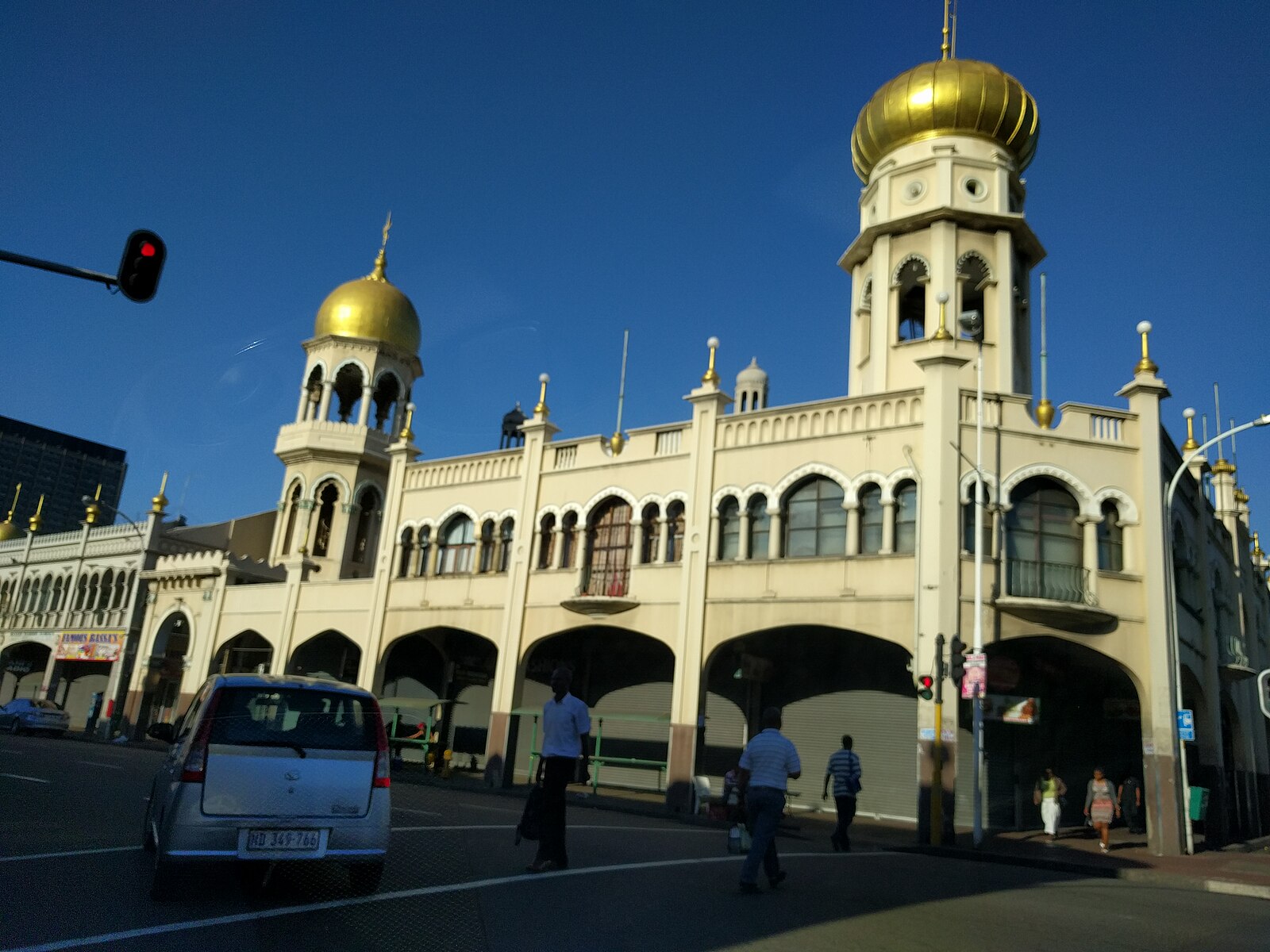
Faith varies by region and group. Christianity is lowest in KwaZulu-Natal, at 74.9%. The province also has the highest shares of traditional African religion (13.6%) and Hinduism (4.2%). The Western Cape has the largest Muslim share, at 5.2%.
Among Indian/Asian South Africans, 37.9% are Hindu, 33.6% Christian and 24.5% Muslim. Among black Africans, 9.5% follow traditional African religion, often alongside Christian practice.
Where People Live
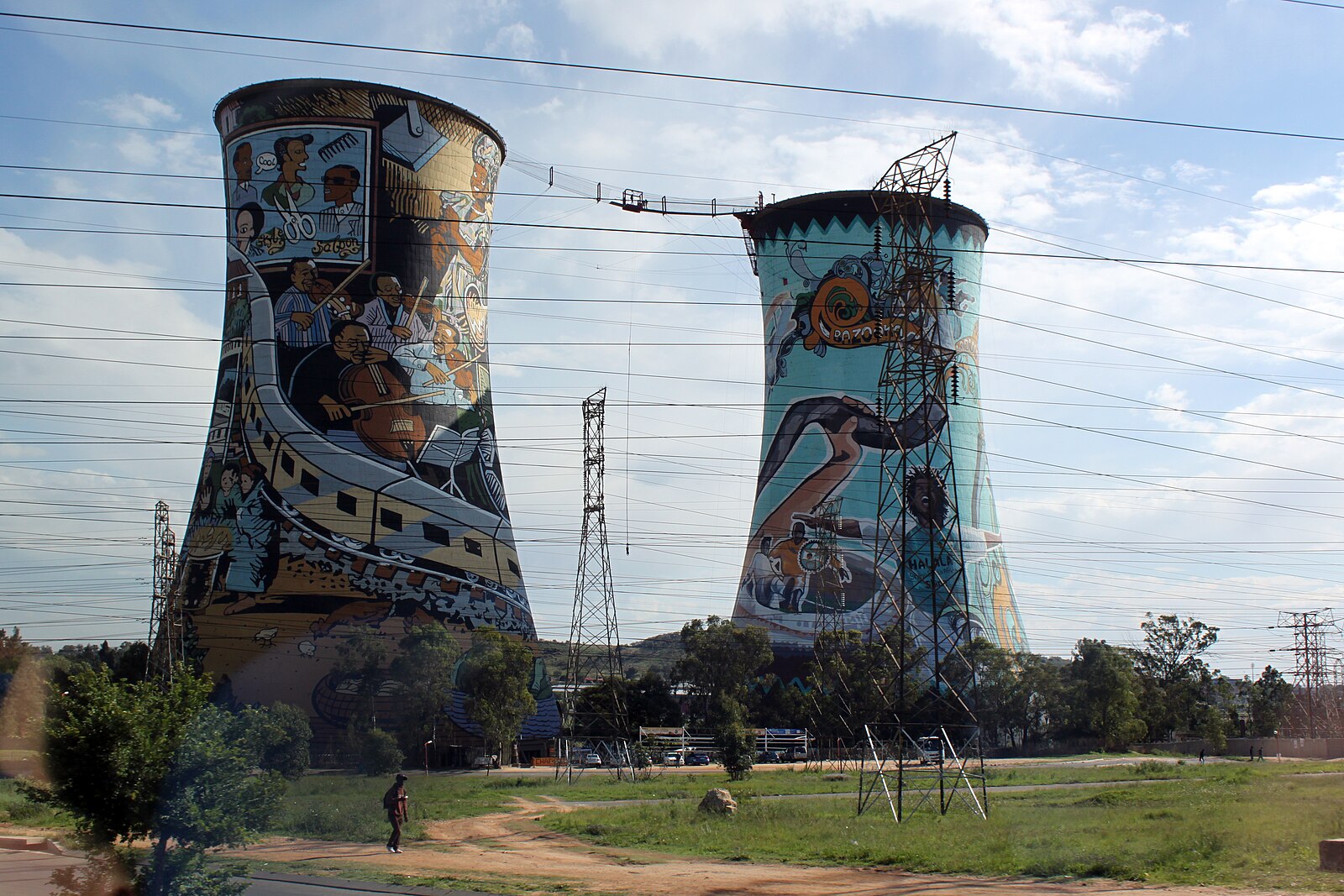
Gauteng, the small inland province around Johannesburg and Pretoria, holds about 16.30 million people, or 25.7% of the total. KwaZulu-Natal, on the east coast around Durban, follows with 12.28 million, or 19.3%. The Northern Cape is the emptiest, with about 1.38 million people, or 2.2%.
People keep moving towards the economic core. Stats SA estimates that Gauteng received about 1.42 million migrants between 2021 and 2026, and the Western Cape about 500,000. Census 2022 showed the Eastern Cape, Limpopo, KwaZulu-Natal and the Free State losing people to other provinces.
World Bank data, based on UN urbanisation estimates, put the urban share at about 64% in 2025. Rural provinces are younger: children under 15 make up 31.0% of Limpopo’s population and 29.6% of the Eastern Cape’s.
Migration In and Out
Census 2022 counted more than 2.4 million international migrants, just above 3% of the population. About 86% came from the Southern African Development Community (SADC), the regional bloc of southern African states.
- Zimbabwe: 1,012,059 people, or 45.5% of migrants from the region.
- Mozambique: 416,564 people.
- Lesotho: 227,770 people.
- Malawi: 198,807 people.
- United Kingdom: 61,282 people, the largest group from outside Africa.
Half of all international migrants, 50.2%, live in Gauteng, and about 16% in the Western Cape. Stats SA estimates net international migration of 883,807 people between 2021 and 2026. Black African arrivals made up most of the inflow, while more white South Africans left than arrived.
Stats SA also notes that several African countries repatriated citizens in May and June 2026. Most were irregular migrants, and the government deported others. That points to a slowdown in net migration that later estimates will need to confirm.
How Groups Live Together
History still shapes the map. Stats SA itself notes that, “given our history of geographical disaggregation by ethnic and tribal backgrounds,” each province has a dominant language. Big cities such as Johannesburg are where the groups mix most, because migrants from every province and abroad settle there.
Inequality remains high. World Bank data put South Africa’s Gini index, a standard measure of income inequality, at 54.1 in 2022. Gaps in income, land and jobs still track population group, which is why the categories remain politically sensitive.
The sharpest tension in recent years has been between South Africans and African migrants. In October 2026, anti-immigrant protests turned violent in Durban. The South African National Defence Force (SANDF), the country’s military, was deployed in the city centre, SABC News reported. The unrest followed a Home Affairs asylum directive that was later withdrawn.
Race also runs through relations with Washington. The US runs a refugee route for Afrikaners under Executive Order 14204, and Pretoria objects to its premise. The Department of International Relations and Cooperation (DIRCO) is South Africa’s foreign ministry. In October 2025 it said the claim of a “white genocide” is “widely discredited and unsupported by reliable evidence.”
What It Means for US Readers
- Investors: A median age of 28 means a large working-age population and a growing consumer base. It also means heavy pressure on jobs, schools and housing, which drives policy risk.
- Businesses: Gauteng holds a quarter of the people and most of the formal economy. Customer service in isiZulu, Sesotho or Afrikaans can matter as much as English outside the main cities.
- Travellers: English works in hotels, airports and cities. Protests over migration turned violent in Durban in October 2026, so check local news before travel.
- Migration and policy: About 156,000 South Africa-born people lived in the US in 2024, according to the Census Bureau’s American Community Survey. The White House set a fiscal 2027 refugee ceiling of 17,500, to be primarily allocated to Afrikaners under Executive Order 14204.
- Expats: Half of all international migrants live in Gauteng and about 16% in the Western Cape. Census 2022 counted 61,282 UK-born residents, the largest group born outside Africa.
Connected Coverage
South Africa Politics Explained, Who Holds Power in 2026
Foreign Powers and Investors in South Africa 2026
South Africa Culture, the Key Figures to Know in 2026
South Africa and Its Neighbours in Southern Africa
What Is Not Known
- The exact number of irregular migrants. Stats SA says its migration systems cannot fully count people crossing land borders.
- How far the 2026 repatriations and deportations will reduce net migration in next year’s estimates.
- How many Afrikaners will actually be admitted to the US under the fiscal 2027 ceiling, and how many will apply.
- Whether the next census will keep the four apartheid-era population groups in their current form.
Frequently Asked Questions
What is the population of South Africa in 2026?
Statistics South Africa estimated the population at 63.52 million at mid-2026, up 759,980 on 2025. Census 2022 counted 62,027,503 people.
What are the main ethnic groups in South Africa?
Official statistics use four population groups. In 2026 black Africans made up 81.7%, coloured people 8.4%, white people 7.1% and Indian/Asian people 2.7%.
How many official languages does South Africa have?
Twelve. South African Sign Language became the twelfth in July 2023. isiZulu is the most spoken home language at 24.4%, followed by isiXhosa at 16.3% and Afrikaans at 10.6%.
What is the main religion in South Africa?
Christianity. Census 2022 found 85.3% identify as Christian, 7.8% follow traditional African religion, 1.6% are Muslim and 1.1% Hindu.
How many migrants live in South Africa?
Census 2022 counted more than 2.4 million international migrants, just above 3% of the population. About 86% came from SADC states, and 45.5% of those from Zimbabwe.
How many South Africans live in the United States?
About 156,000 South Africa-born people lived in the US in 2024, according to the US Census Bureau. The fiscal 2027 US refugee ceiling of 17,500 is primarily allocated to Afrikaners.
Sources: Stats SA, Mid-year population estimates 2026 (P0302), https://www.statssa.gov.za/publications/P0302/P03022026.pdf; Stats SA, Census 2022 statistical release, https://census.statssa.gov.za/assets/documents/2022/P03014_Census_2022_Statistical_Release.pdf; World Bank population data, https://data.worldbank.org/indicator/SP.POP.TOTL?locations=ZA; World Bank urban population, https://data.worldbank.org/indicator/SP.URB.TOTL.IN.ZS?locations=ZA; World Bank Gini index, https://data.worldbank.org/indicator/SI.POV.GINI?locations=ZA; South African Government, History, https://www.gov.za/about-sa/history; US Census Bureau, ACS 2024 table B05006, https://data.census.gov/table?q=B05006&y=2024; Federal Register, Presidential Determination on Refugee Admissions for FY2027, https://www.federalregister.gov/documents/2026/10/02/2026-20318/presidential-determination-on-refugee-admissions-for-fiscal-year-2027; DIRCO, Statement on the US Special Refugee Programme, https://dirco.gov.za/statement-on-the-us-special-refugee-programme/; SABC News, SANDF deployed in Durban CBD, https://www.sabcnews.com/sabcnews/sandf-deployed-in-durban-cbd-after-voilent-protests/; The Presidency, https://www.thepresidency.gov.za/. All accessed 11 October 2026.
This article was produced by The Rio Times’ automated newsroom system. How we use AI · Report an error · Editorial responsibility: Matthias Camenzind, Editor-in-Chief