South Africa Culture, the Key Figures to Know in 2026

SOUTH AFRICA · CULTURE
Key Facts
- —The country About 63.1 million people in mid-2025, with 12 official languages.
- —The music Tyla won Best African Music Performance Grammys in 2024 and 2026.
- —The books Nadine Gordimer and J.M. Coetzee won Nobel literature prizes, 1991 and 2003.
- —The sport The Springboks hold a record four Rugby World Cup titles.
- —The heritage UNESCO lists 12 South African World Heritage properties, as of October 2026.
- —For US readers Trevor Noah hosted the Grammys six times, the last in 2026.
Grammy winners, Nobel novelists and world-champion teams: a guide to the people behind South Africa’s cultural reach.
South Africa culture reaches Americans through music, comedy, books and sport far more than through politics. A fairly small group of artists, writers, athletes and festivals carries much of that reach.
This guide names the key figures as of October 2026 and what they say about a country still working through its history. Daily news is in the Rio Times South Africa section.
How South Africa Culture Took Shape
South Africa had an estimated 63.1 million people in mid-2025, according to Stats SA, the national statistics office. That is close to a fifth of the US population.
The government lists 12 official languages, from isiZulu, isiXhosa and Sepedi to Afrikaans, English and South African Sign Language. Many South Africans speak several of them, and song lyrics and film dialogue often mix languages.
History shapes almost every scene in this guide. Apartheid, the system of legal racial segregation imposed from 1948, censored artists and drove many of them into exile.
Democracy arrived with the 1994 election that made Nelson Mandela president. Much of today’s culture still argues with that past, celebrates the transition or tries to move beyond it.
Culture policy sits with Gayton McKenzie, Minister of Sport, Arts and Culture since 3 July 2024, according to the government directory. He leads the Patriotic Alliance, a smaller party in the multiparty government of national unity.
UNESCO, the United Nations cultural agency, lists 12 World Heritage properties in South Africa as of October 2026. They include Robben Island, where Mandela was jailed, and a set of Nelson Mandela legacy sites added in 2024.
Who holds political power is explained in South Africa politics explained. The companies and tycoons behind the media and entertainment business appear in who runs South Africa’s economy.

Music, From Mbaqanga to Amapiano and Tyla
Music is the country’s loudest cultural export, and its modern story runs through township genres. Mbaqanga is a jive style of the 1960s, and maskandi is Zulu guitar music with fast picking.
In the 1960s the singer Miriam Makeba and the trumpeter Hugh Masekela built careers in the United States while in exile. Masekela’s instrumental Grazing in the Grass topped the US pop chart in 1968.
In 1986 the Zulu choir Ladysmith Black Mambazo reached American homes through Paul Simon’s album Graceland. The group, founded by Joseph Shabalala, sings isicathamiya, a soft a cappella style from KwaZulu-Natal.
After 1994 came kwaito, a slowed-down house sound that young Black South Africans in the townships made their own. Durban later produced gqom, a dark, drum-heavy electronic style.
Amapiano, the dominant sound of the 2020s, grew out of townships around Johannesburg and Pretoria in the 2010s. It blends deep house, jazz and kwaito over a booming bass line called the log drum.
Its best-known global face is Tyla, a singer from Johannesburg. The Recording Academy, which runs the Grammys, lists her as the first winner of Best African Music Performance, for Water in 2024.
She won the category again in 2026 with Push 2 Start, after Nigeria’s Tems took it in 2025. No other artist has won it twice.
Other names to know include the house DJ Black Coffee and the amapiano producers Kabza De Small and DJ Maphorisa.
For live music in the Zulu heartland, see what to do in Durban in October 2026, from maskandi to mbaqanga.
Writers Who Explained the Country to the World
Two South African-born writers have won the Nobel Prize in Literature, according to the Nobel Foundation. Nadine Gordimer won in 1991 and J.M. Coetzee in 2003.
Gordimer, who died in 2014, wrote novels about life under apartheid, and the government banned several of them. Coetzee, who later moved to Australia, wrote Disgrace, a stark novel set in post-apartheid South Africa.
Alan Paton’s Cry, the Beloved Country, published in 1948, introduced many Americans to the country’s racial divide. The same year the National Party won power and began writing apartheid into law.
Damon Galgut won the 2021 Booker Prize for The Promise, according to the Booker Prize Foundation. The novel follows a white family that fails to keep a promise of a house to its Black domestic worker.
Zakes Mda, a novelist and playwright, roots many of his books in the Eastern Cape. The Afrikaans poet Antjie Krog covered the Truth and Reconciliation Commission, which heard apartheid-era crimes, as a radio reporter.
Trevor Noah’s 2016 memoir Born a Crime brought a mixed-race childhood in Soweto to a large American readership. Under apartheid law, his parents’ relationship itself was a crime.
Film, Television and the Screen Industry
Tsotsi, the story of a young Johannesburg gang leader, won the Academy Award for foreign language film at the 2006 ceremony. The Academy credits the film to South Africa.
District 9, a 2009 science-fiction film set in Johannesburg, was directed by South African-born Neill Blomkamp. It earned a Best Picture nomination and showed that local stories could travel.
At home, the SABC, the state-owned public broadcaster, runs free-to-air radio and television in several official languages. Long-running soap operas such as Skeem Saam anchor its schedules.
MultiChoice runs DStv, the main pay-TV service, and said in March 2026 it would close its streaming service Showmax, Business Day reported. DStv’s latest changes are in DStv’s revamped packages.
Netflix has commissioned South African series such as Blood & Water, a teen drama set in Cape Town. That gives local actors and crews a direct route to US screens.
Actors who moved into Hollywood include Charlize Theron, an Oscar winner from Benoni, near Johannesburg. Thuso Mbedu starred in The Underground Railroad, a US series about slavery.
Visual Artists and Museums
William Kentridge, a Johannesburg artist, is known for animated films made from charcoal drawings that he erases and redraws. His work deals with apartheid, memory and the city’s gold-mining past.
Esther Mahlangu is known for the bold geometric patterns of Ndebele house decoration, a tradition passed down by women. In 1991 she painted a BMW art car, taking the style to galleries around the world.
Zanele Muholi, a photographer, makes formal portraits of Black lesbian, gay and transgender South Africans. The work tests the promise of the 1996 Constitution, which bans discrimination on grounds of sexual orientation.
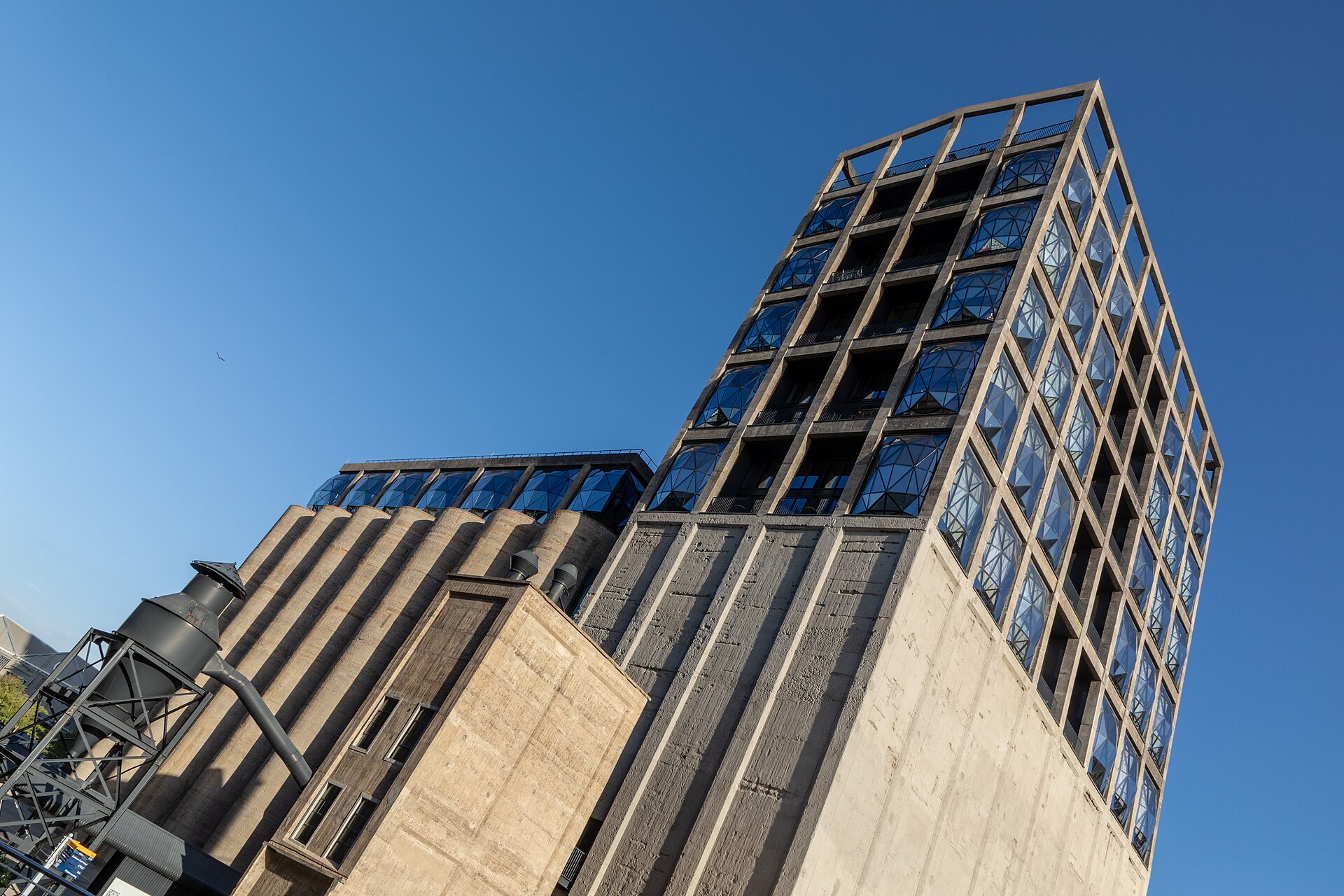
Zeitz MOCAA, a museum of contemporary African art, opened in 2017 in a converted grain silo at Cape Town’s V&A Waterfront. The Johannesburg Art Gallery and the Norval Foundation in Cape Town are other major venues.
Sport Icons and What the Teams Mean
Sport carries unusual political weight in South Africa. During apartheid, international boycotts kept national teams out of most world competitions for decades.
The Springboks, the national rugby team, have won the Rugby World Cup a record four times, in 1995, 2007, 2019 and 2023. Regional outlets such as East Coast Radio reported the fourth title in October 2023.
The 1995 win, at home, ended with Mandela presenting the trophy while wearing a Springbok jersey. Siya Kolisi, the team’s first Black Test captain, lifted the cup in 2019 and again in 2023.
The Proteas, the cricket team, beat Australia at Lord’s in London in June 2025 to win the World Test Championship. Regional media called it the first major global title in 27 years, under captain Temba Bavuma.
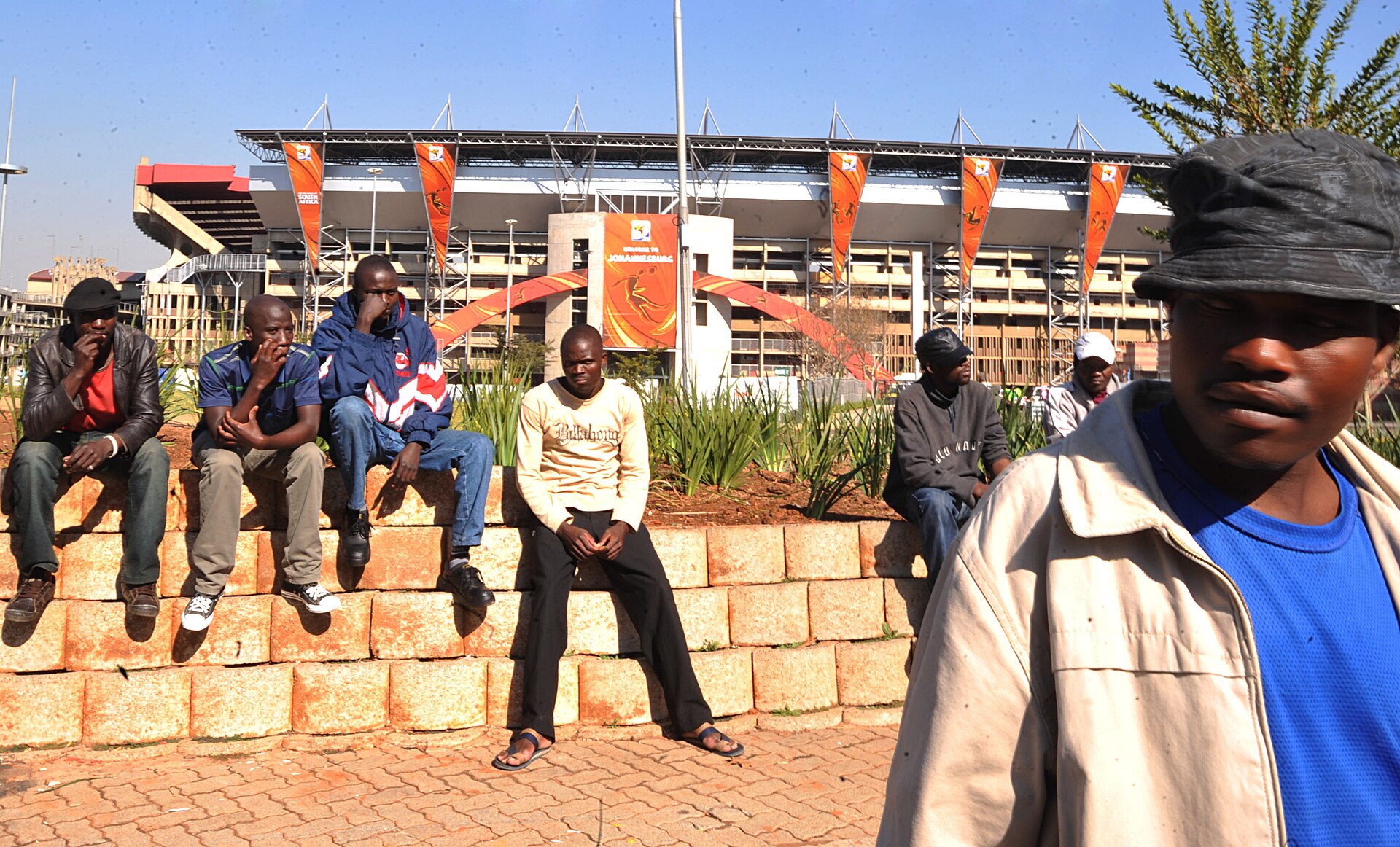
Bafana Bafana, the men’s football team, played the opening match of the 2026 FIFA World Cup. They lost 2-0 to Mexico at Estadio Azteca on Thursday, 11 June 2026, SAnews, the government news agency, reported.
They reached the knockout stage for the first time, then lost 1-0 to co-hosts Canada on Sunday, 28 June 2026, SAnews reported. At club level, Kaizer Chiefs and Orlando Pirates, both founded in Soweto, meet in the Soweto derby.
Rugby sevens returns to Cape Town each December; dates and tickets are in Cape Town Sevens 2026.
Media Figures and Festivals to Know
Trevor Noah, the comedian from Soweto, hosted The Daily Show on the US channel Comedy Central from 2015 to 2022. TimesLIVE and the Sowetan reported that he hosted the Grammys for a sixth and final time in 2026.
At home, the presenter and businesswoman Bonang Matheba and the actor and producer Connie Ferguson are long-running television faces. Both built brands that reach well beyond the screen.
The National Arts Festival in Makhanda, Eastern Cape, describes itself as the country’s most diverse arts festival. It usually runs in late June, the southern winter, and is already taking proposals for 2027.
In Cape Town, the Minstrel Carnival, known in Afrikaans as the Kaapse Klopse, parades through the city around 2 January each year. Its roots lie in the city’s Coloured communities, a South African term for people of mixed heritage.
Heritage Day on 24 September is a public holiday that marks the country’s many cultures. Johannesburg’s celebrations are covered in South Africa Heritage Day Festival 2026.
Other fixtures include the Cape Town International Jazz Festival and the Durban International Film Festival. AfrikaBurn, a desert arts gathering in the Tankwa Karoo, completes the calendar.
What It Means for US Readers
For most Americans, South Africa culture arrives through streaming, the Grammys and sport rather than travel. Tyla’s chart success and Trevor Noah’s US career are the clearest examples.
Visitors can see much of this guide in two cities. Johannesburg has Soweto, Constitution Hill and the Apartheid Museum; Cape Town has Robben Island and Zeitz MOCAA.
Check the US State Department’s South Africa travel page before booking, as safety varies sharply by neighbourhood. Ties between Washington and Pretoria are covered in South Africa geopolitics explained.
What Is Not Known
No single official source publishes audience figures for amapiano streams, local television or festival attendance. Numbers released by labels and platforms are not independently audited.
Most festivals had not announced their 2027 dates as of October 2026.
Frequently Asked Questions
What is South Africa culture best known for?
Abroad, it is best known for music such as amapiano and isicathamiya, Nobel-winning literature and the Springboks rugby team. At home, heritage festivals and sport bring together a country with 12 official languages.
Who is the most famous South African musician today?
Internationally, the singer Tyla is the best-known as of October 2026. The Recording Academy lists her as the winner of Best African Music Performance in 2024 and 2026.
How many official languages does South Africa have?
South Africa has 12 official languages, including isiZulu, isiXhosa, Afrikaans, English and South African Sign Language. The government lists all 12.
Which South African writers won the Nobel Prize?
Nadine Gordimer won the Nobel Prize in Literature in 1991 and J.M. Coetzee won it in 2003. Damon Galgut won the 2021 Booker Prize for The Promise.
What is amapiano?
Amapiano is a dance-music style from the townships around Johannesburg and Pretoria, built on deep house, jazz and a booming log-drum bass. It became the dominant South African sound of the 2020s.
When is the best time to experience South African festivals?
The National Arts Festival in Makhanda usually runs in late June, and Heritage Day falls on 24 September. Cape Town’s Minstrel Carnival parades around 2 January.
Sources: Stats SA, mid-year population estimates 2025; South African Government, South Africa’s people; South African Government, Minister Gayton McKenzie; UNESCO World Heritage Centre, South Africa; Recording Academy, Best African Music Performance; Nobel Prize, Literature 1991; Nobel Prize, Literature 2003; Booker Prize Foundation, 2021; Academy of Motion Picture Arts and Sciences, 78th Academy Awards; National Arts Festival; SAnews, Heartbreak for Bafana Bafana; SAnews, Brave Bafana bow out; Business Day, MultiChoice to close Showmax; TimesLIVE, Trevor Noah; East Coast Radio, Springboks; TimesLIVE, Proteas; News24, Tyla (all accessed 9 October 2026).
This article was produced by The Rio Times’ automated newsroom system. How we use AI · Report an error · Editorial responsibility: Matthias Camenzind, Editor-in-Chief
Part of our ongoing coverage
Africa: The New Scramble — the great-power contest over the continent.