SOUTH AFRICA · NEIGHBOURS
Key Facts
- —The country South Africa sits at the continent’s southern tip and shares about 4,471 km of land border with six countries, one of which it completely surrounds.
- —The neighbours South Africa neighbours Namibia, Botswana, Zimbabwe, Mozambique and Eswatini. Lesotho, a mountain kingdom, lies entirely inside South African territory.
- —Why it matters In 2024 Mozambique alone bought about US$6.6 billion of South African goods, and the six neighbours are its main regional market.
- —What binds them A customs union dating to 1910, a currency zone anchored on the rand, shared rivers, and a regional bloc South Africa has chaired since August 2026.
- —The friction Migration. Census 2022 counted more than 2.4 million people born abroad, most from the region, and 2026 brought anti-migrant protests and a harder government line.
- —For US readers Washington extended AGOA, its duty-free trade scheme for Africa, through 2028, while a 12.5% US tariff has hit many South African goods since July 2026.
South Africa neighbours six countries, and they form its main regional market. For US investors, the neighbourhood is a major market for South African firms and a source of water, power and workers.

Six Neighbours and One Enclave
South Africa’s government lists common boundaries with Namibia, Botswana, Zimbabwe, Mozambique and Eswatini. The sixth neighbour, Lesotho, is landlocked by South African territory in the south-east.
Officials put the land border at roughly 4,471 km as of September 2026. South Africa neighbours four landlocked states, Botswana, Eswatini, Lesotho and Zimbabwe, all on the UN’s list of landlocked developing countries.
Goods, workers and water cross these borders every day. The Border Management Authority, the agency that polices them, was flying drones over Beitbridge, Lebombo, Maseru and Oshoek in September 2026.
Each neighbour has its own political system, and every leader below addressed the UN General Assembly in late September 2026. For the bigger picture, see our South Africa explained guide.
- Namibia: a republic led by President Netumbo Nandi-Ndaitwah. Its capital, Windhoek, hosts the headquarters of the regional customs union described below.
- Botswana: a landlocked republic led by President Duma Boko. Its capital, Gaborone, hosts the headquarters of the Southern African Development Community (SADC).
- Zimbabwe: a landlocked republic led by President Emmerson Mnangagwa. Census 2022 found it was the largest single source of migrants living in South Africa.
- Mozambique: a coastal republic led by President Daniel Chapo. Its capital, Maputo, has a port linked by the N4 toll road to Gauteng, home of Johannesburg and Pretoria.
- Eswatini: a landlocked monarchy headed by King Mswati III, who has chaired SADC’s politics, defence and security body since August 2026.
- Lesotho: a landlocked kingdom inside South Africa, governed by Prime Minister Sam Matekane. Its dams send water to Gauteng.
The Oldest Customs Union and the Rand Zone
South Africa’s closest ties run through the Southern African Customs Union (SACU). Its members are South Africa, Botswana, Eswatini, Lesotho and Namibia.
SACU describes itself as the oldest functioning customs union. It traces its roots to an 1889 customs convention and was formally established in July 1910.
Its current agreement dates from 2002 and took effect in July 2004. It sets a formula for sharing the union’s customs and excise revenue among members.
Those payouts matter for the smaller members’ budgets. The International Monetary Fund (IMF) cited higher SACU revenues in August 2026 when describing Eswatini’s planned deficit of 5.9% of GDP.
A second layer is money itself. The Common Monetary Area (CMA) joins South Africa, Lesotho, Namibia and Eswatini, according to the South African Reserve Bank (SARB).
Lesotho’s loti, Namibia’s dollar and Eswatini’s lilangeni have been pegged at par to the rand since each was introduced. In Namibia, the rand is also legal tender, the Bank of Namibia says.
In practice, the pegged neighbours track decisions taken in Pretoria. SARB raised its main rate by a quarter point to 7.25%, announced on 23 September and effective from 25 September 2026.
Eswatini’s central bank lifted its own rate to 7.00% on 25 September, as covered in our report on the Eswatini rate move. In August, the IMF had told it to calibrate its rate against SARB’s and stand ready to defend the peg.
Botswana is the exception. It withdrew from the rand arrangement in 1975 and runs its own currency, the pula, while staying inside the customs union.
Trade: The Region Buys South African
Mozambique alone bought about US$6.6 billion of South Africa’s goods in 2024, according to UN Comtrade, the United Nations trade database.
The same data put sales to China at about US$12.4 billion and to the United States at about US$8.2 billion.
Traffic in the other direction is far smaller. South Africa bought only about US$4.9 billion from the six in 2024, leaving a regional surplus of close to US$17 billion.
Eswatini was the largest supplier among them, at about US$1.5 billion, ahead of Namibia at about US$1.2 billion. Mozambique sold South Africa about US$1.1 billion, against about US$6.6 billion flowing the other way.
Country by country, South Africa’s 2024 exports to its neighbours looked like this.
- Mozambique: about US$6.6 billion, the most of any neighbour and more than the United Kingdom or Japan bought.
- Botswana: about US$4.3 billion.
- Namibia: about US$3.8 billion.
- Zimbabwe: about US$3.8 billion.
- Eswatini: about US$1.7 billion.
- Lesotho: about US$1.5 billion.
Water From the Lesotho Highlands
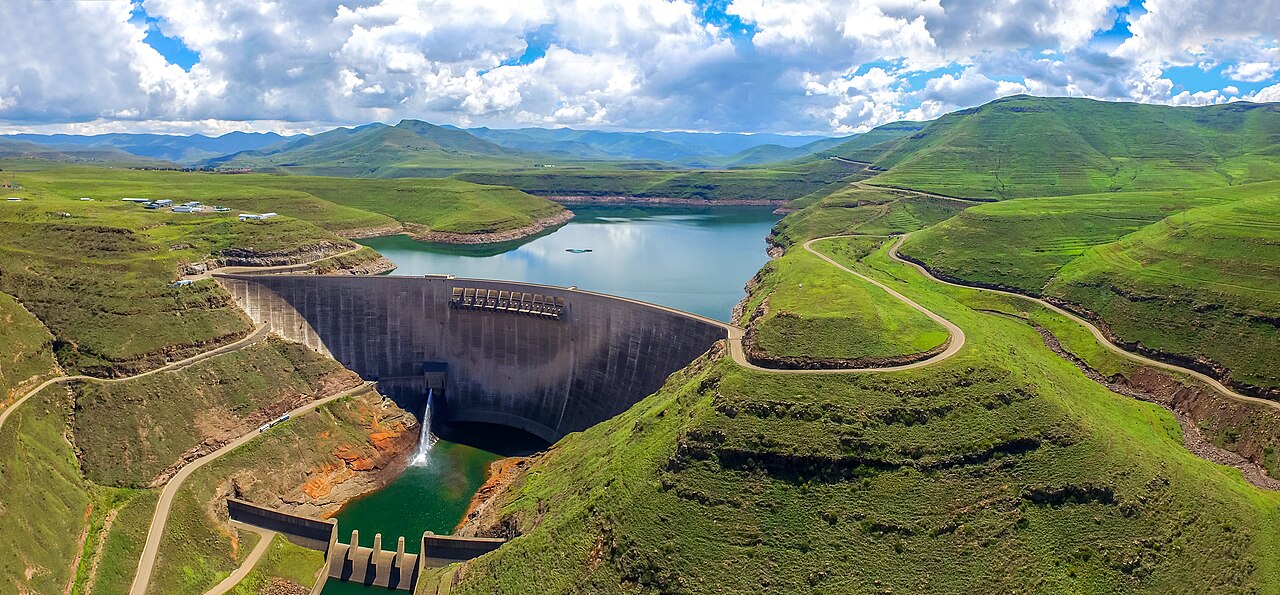
The most striking cross-border deal is about water. The Lesotho Highlands Water Project dates from a 1986 treaty between Lesotho and South Africa.
It supplies water to South Africa’s Gauteng province and generates electricity for Lesotho. The project’s first phase built Katse Dam, a 185-metre concrete wall completed in May 1997.
Water deliveries began in January 1998, and Mohale Dam followed in 2002. On the way south, the water drives the ‘Muela power station, which can generate 72 megawatts.
Deliveries currently run at about 780 million cubic metres a year, according to the Lesotho Highlands Development Authority (LHDA). A second phase, agreed in 2011, is meant to lift that to 1.27 billion cubic metres.
Its centrepiece is Polihali Dam on the Senqu and Khubelu rivers, linked to Katse by a tunnel of about 38 km. Engineering News reported in September 2026 that completion is expected in 2029.
The same report put the long-term cost projection at 53 billion rand (about US$3.2 billion). About 18.9 billion rand (about US$1.1 billion) had been spent.
Those conversions use 16.66 rand to the US dollar on 5 October 2026. For progress on site, see our Polihali update.
Rivers That Draw the Borders
Two big rivers tie South Africa to its neighbours. The Orange flows out of Lesotho’s highlands, where it is called the Senqu.
Its basin covers about 1 million square kilometres across four countries. About 64% lies in South Africa, 25% in Namibia, 8% in Botswana and 3% in Lesotho.
The four share it through the Orange-Senqu River Commission (ORASECOM), a joint body for managing the water.
The Limpopo, in the north, forms the border first with Botswana and then with Zimbabwe. It then crosses Mozambique and empties into the Indian Ocean.
Its basin covers about 408,250 square kilometres. Botswana, Mozambique, South Africa and Zimbabwe manage it through the Limpopo Watercourse Commission (LIMCOM).
LIMCOM’s founding agreement was signed in Maputo in November 2003. A permanent secretariat followed in 2014.
Power Lines, Ports and Corridors
Electricity crosses borders too. SADC governments created the Southern African Power Pool in August 1995, at a summit in South Africa, to share electricity.
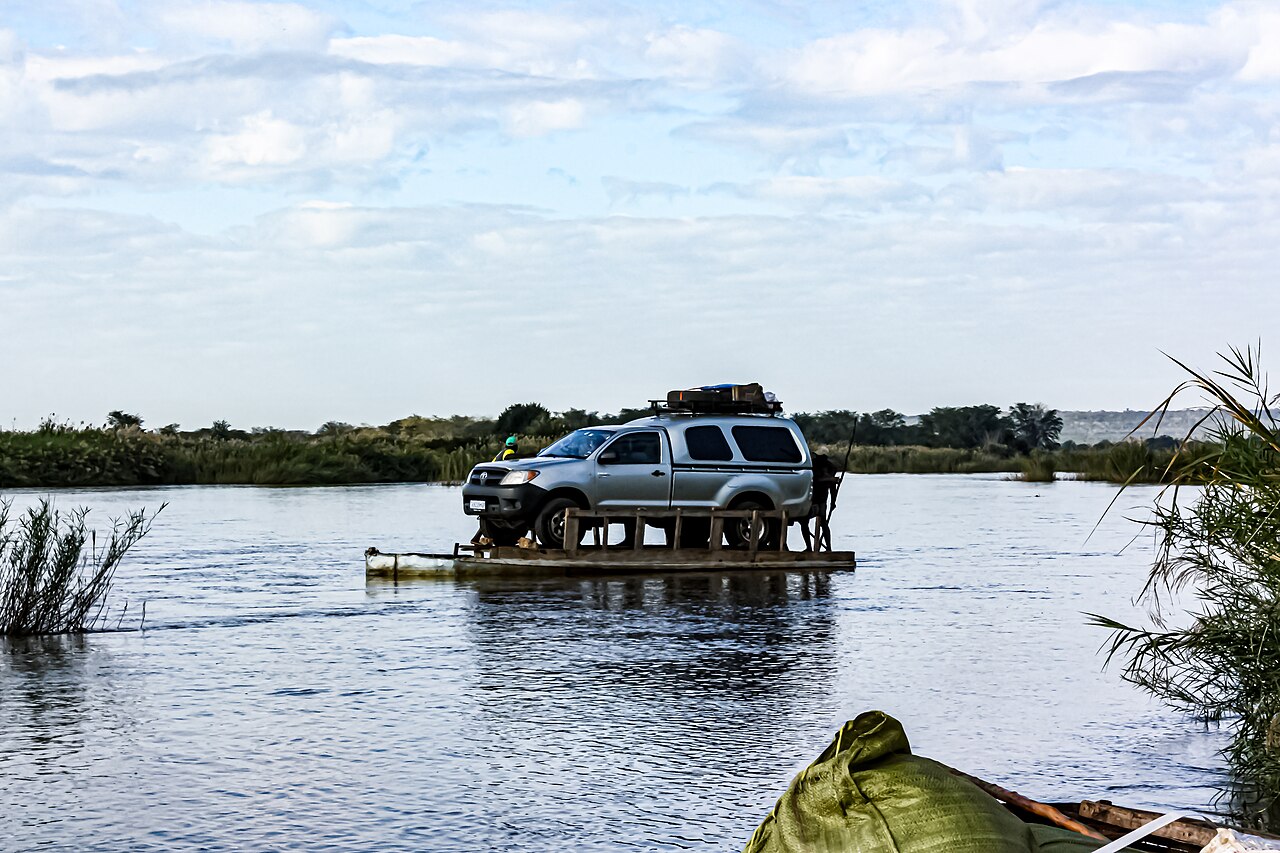
Mozambique’s Cahora Bassa hydroelectric dam on the Zambezi has an installed capacity of 2,075 megawatts. Eskom, South Africa’s state power company, took about two-thirds of the electricity the dam delivered in 2024, according to its operator’s accounts.
Ports are the other half of the story. South Africa’s Sunday Times described Durban in June 2026 as the largest and busiest shipping terminal in sub-Saharan Africa.
According to the same report, Durban handles about 65% of South Africa’s container volumes.
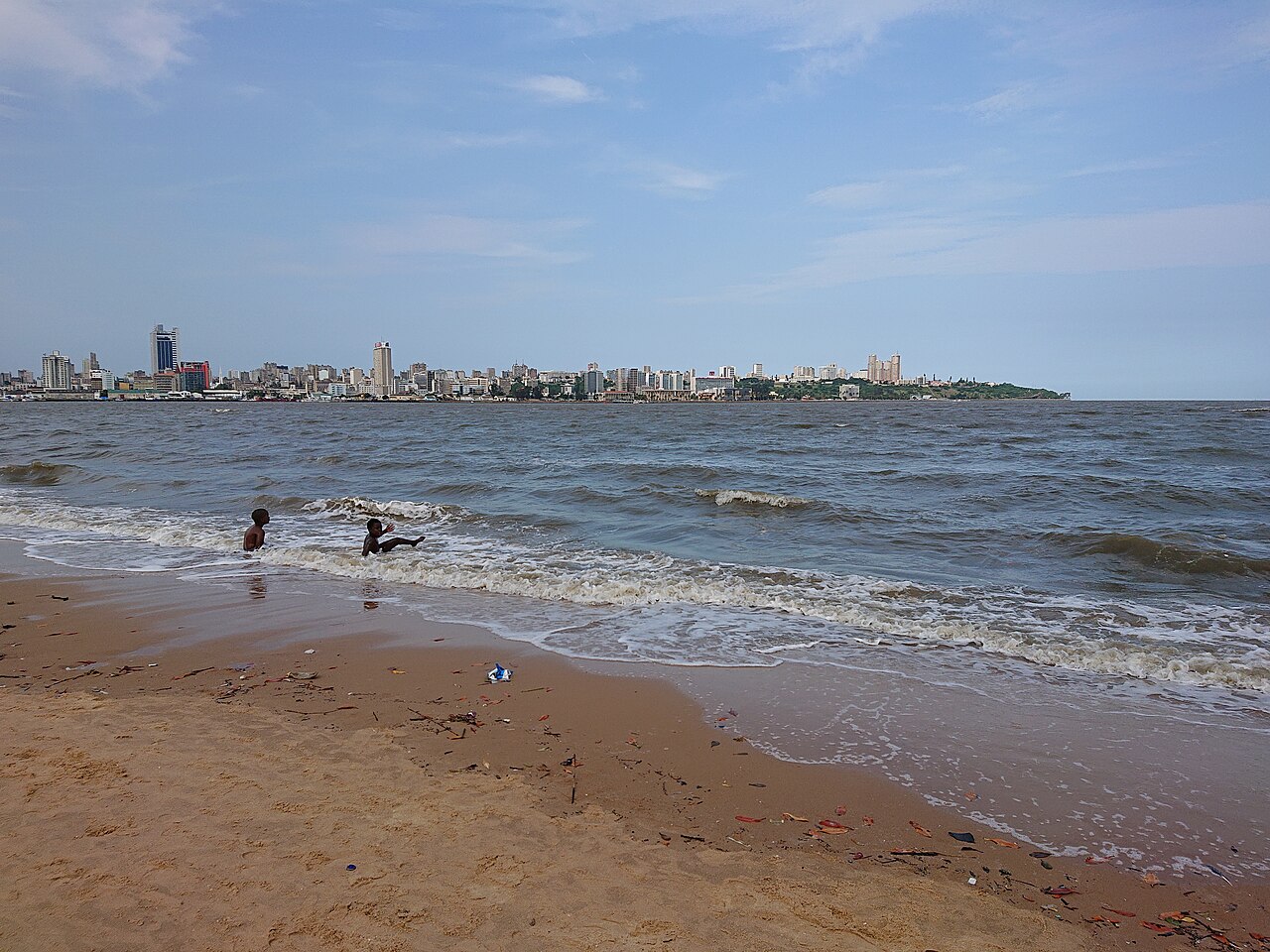
Mozambique’s capital offers a second route to the sea. Maputo’s port, run under concession by the Maputo Port Development Company since April 2003, moved a record 32 million tonnes in 2025.
That was up from 30.9 million tonnes in 2024. The N4 toll route covers about 570 km from Gauteng to Maputo, along what its operator calls the Maputo Corridor.
Migration, the Hardest Neighbourhood Issue
People are the most sensitive link between South Africa and its neighbours. Census 2022 counted more than 2.4 million international migrants, and 86% came from SADC countries.
Zimbabwe was the largest source, with 1,012,059 people, followed by Mozambique with 416,564 and Lesotho with 227,770. Malawi, which does not border South Africa, came next with 198,807.
Permits Under Review
Special exemption permits let many Zimbabweans and Basotho, as Lesotho’s citizens are called, live and work legally. In October 2025 the Home Affairs ministry extended both permits to May 2027.
GroundUp, a South African news site, put the number of Zimbabwean permit holders at about 180,000. The ministry then held nationwide consultations, with written submissions due by 22 June 2026.
A Harder Line in 2026
Anti-migrant protests and attacks pushed migration to the top of the agenda in 2026. In a national address on 7 June 2026, President Cyril Ramaphosa announced dedicated immigration courts and faster deportations.
He also backed a bill allowing quotas on hiring foreign nationals, while saying there was “no space for xenophobia” in the country. Our report on the 30 September migrant deadline follows how one group tried to set its own deadline for deportations.
Government figures released on 8 September 2026 showed 86,596 foreign nationals processed for deportation or repatriation between 14 June and 20 August. South Africa also briefed SADC leaders on its migration policy at their August 2026 summit.
SADC and Where South Africa Leads or Follows
The wider club is the Southern African Development Community (SADC), a 16-member regional bloc based in Gaborone. All six neighbours belong, along with countries such as Angola, Tanzania and the Democratic Republic of Congo.
Ramaphosa took over as SADC chair at the bloc’s 46th summit in Durban on 17 August 2026. Zambia is lined up as the next chair.
The same summit approved an agreement for a single tourist visa, the SADC UniVisa, and called on members to sign it.
At home, Ramaphosa leads a Government of National Unity, a coalition formed in 2024. His African National Congress (ANC) had won 159 of 400 seats and lost its majority.
The Democratic Alliance (DA), the second-largest party with 87 seats, remained part of that coalition as of September 2026. More on the president is in our profile of Cyril Ramaphosa.
Bilateral ties run alongside the bloc. South Africa and Zimbabwe hold a Bi-National Commission, set up in April 2015, which met in Pretoria on 21 August 2026.
Leading and Depending at Once
South Africa leads on money, trade and ports. Its central bank’s decisions ripple through three rand-pegged currencies, and its exporters sell the region far more than they buy.
Yet it also depends on its neighbours. Gauteng draws water from Lesotho, Eskom buys Mozambican hydropower, and Maputo gives South African exporters a second route to the sea.
What It Means for US Readers
For an American investor, the results of South African companies depend partly on demand next door. In 2024 the six neighbours bought more than two and a half times as much from South Africa as the United States.
US trade policy reaches the whole region at once. A law signed on 2 September 2026 extended the African Growth and Opportunity Act (AGOA) through 2028.
AGOA gives qualifying African goods duty-free access to the US market. At the same time, a 12.5% US tariff has applied to many South African goods since 24 July 2026.
The US Trade Representative imposed it under Section 301 of US trade law. Washington cited a failure to ban, and enforce a ban on, imports made with forced labour.
For companies shipping into the region, the Durban and Maputo ports and the N4 corridor are the routes to watch. For ongoing coverage, see our South Africa hub.
What Is Not Known
The future of the Zimbabwean and Lesotho exemption permits after May 2027 has not been settled. By early October 2026, the outcome of the 2026 consultations had not been made public.
Polihali’s 2029 completion date and its final cost remain projections. The long-term cost estimate has already grown more than sixfold since 2008, and higher deliveries to Gauteng depend on the schedule holding.
It is also unclear how quickly SADC members will sign the UniVisa agreement, or when the visa could go on sale.
Finally, the full regional effect of the new US tariff on South African goods is not yet clear. Exporters had worked under the new rate for only a little over two months by early October 2026.
Frequently Asked Questions
Which countries border South Africa?
South Africa neighbours Namibia, Botswana, Zimbabwe, Mozambique and Eswatini. It also completely surrounds Lesotho, an independent mountain kingdom.
Is Lesotho part of South Africa?
No. Lesotho is an independent kingdom with its own government, led by Prime Minister Sam Matekane, and its own currency, the loti, which is pegged at par to the rand.
Can I use South African rand in neighbouring countries?
In Namibia the rand is legal tender alongside the Namibia dollar. Lesotho and Eswatini peg their currencies one-for-one to the rand, while Botswana uses its own currency, the pula.
What is SACU?
The Southern African Customs Union links South Africa, Botswana, Eswatini, Lesotho and Namibia. Under its 2002 agreement, members share customs and excise revenue through an agreed formula.
Who chairs SADC?
South African President Cyril Ramaphosa has chaired the Southern African Development Community since its summit in Durban on 17 August 2026. Zambia is the incoming chair.
How many migrants from neighbouring countries live in South Africa?
Census 2022 counted about 1.01 million people born in Zimbabwe, about 417,000 born in Mozambique and about 228,000 born in Lesotho. Overall, 86% of the more than 2.4 million international migrants came from SADC countries.
How much do neighbouring countries buy from South Africa?
Mozambique alone bought about US$6.6 billion of South African goods in 2024, according to UN Comtrade.
Sources: South African Government, Geography and climate, accessed October 2026; SAnews, Government steps up efforts to secure South Africa’s borders, 8 September 2026; SACU, History, accessed October 2026; SARB, Currency and Exchanges Guidelines for Individuals, January 2026; SARB Working Paper, Monetary Union in Southern Africa, 2007; Bank of Namibia, Exchange control FAQ, accessed October 2026; IMF, Eswatini 2026 Article IV mission, 5 August 2026; SAnews, MPC raises repo rate to 7.25%, 23 September 2026; UN Comtrade, South Africa trade 2024, accessed October 2026; Lesotho Highlands Development Authority, Phase II, accessed October 2026; ORASECOM, Overview of the Orange-Senqu River Basin, accessed October 2026; LIMCOM, Geography of the Limpopo River Basin, accessed October 2026; Hidroeléctrica de Cahora Bassa, Sobre nós, accessed October 2026; Southern African Power Pool, accessed October 2026; Statistics South Africa, Census 2022 Statistical Release, October 2023; The Presidency, Address on migration, 7 June 2026; SADC, Communiqué of the 46th Summit, 17 August 2026; UN General Assembly, 81st session general debate, 25 September 2026; Congress.gov, H.R. 6500 (Public Law 119-103), 2 September 2026; USTR, Forced labor Section 301 action, 23 July 2026; Federal Register, Notice of Actions in Section 301 Investigations (forced labor), 91 FR 47327, 28 July 2026; Engineering News, Lesotho Highlands Water Project Phase II, 25 September 2026; Club of Mozambique, Eskom bought 66% of Cahora Bassa electricity in 2024, 10 July 2025.
This article was produced by The Rio Times’ automated newsroom system. How we use AI · Report an error · Editorial responsibility: Matthias Camenzind, Editor-in-Chief
Rotate for Best Experience
This report is optimized for landscape viewing. Rotate your phone for the full experience.
You've reached your free article limit
Subscribe to The Rio Times for unlimited access to our reporting from across Africa.