Somalia Elects Abdulkadir Mohamed Nur as Speaker of the House of the People
Somalia · POLITICS
Key Facts
—The vote: Abdulkadir Mohamed Nur won the speakership with 142 votes out of 171 ballots cast in Mogadishu on 10 August 2026.
—The opponent: Nur defeated fellow MP Abdulkadir Omar Moallim, known as “Daada,” in a two-candidate race.
—Previous role: Nur was serving as Somalia’s Minister of Ports and Marine Transport immediately before the vote.
—The vacancy: The seat became vacant after Sheikh Adan Mohamed Nur “Madobe” left the role.
—Registration fee: The race entry fees were $168/$188 for locals and $188/$208 for international runners.
—Broader context: The election follows constitutional changes in March 2026 that extended President Hassan Sheikh Mohamud’s term and delayed national elections to 2027.
Somalia’s parliament has elected Abdulkadir Mohamed Nur, the country’s Minister of Ports and Maritime Transport, as the new Speaker of the House of the People, placing a figure with deep ties to the country’s most strategic economic sector at the centre of legislative power during a period of acute institutional strain.
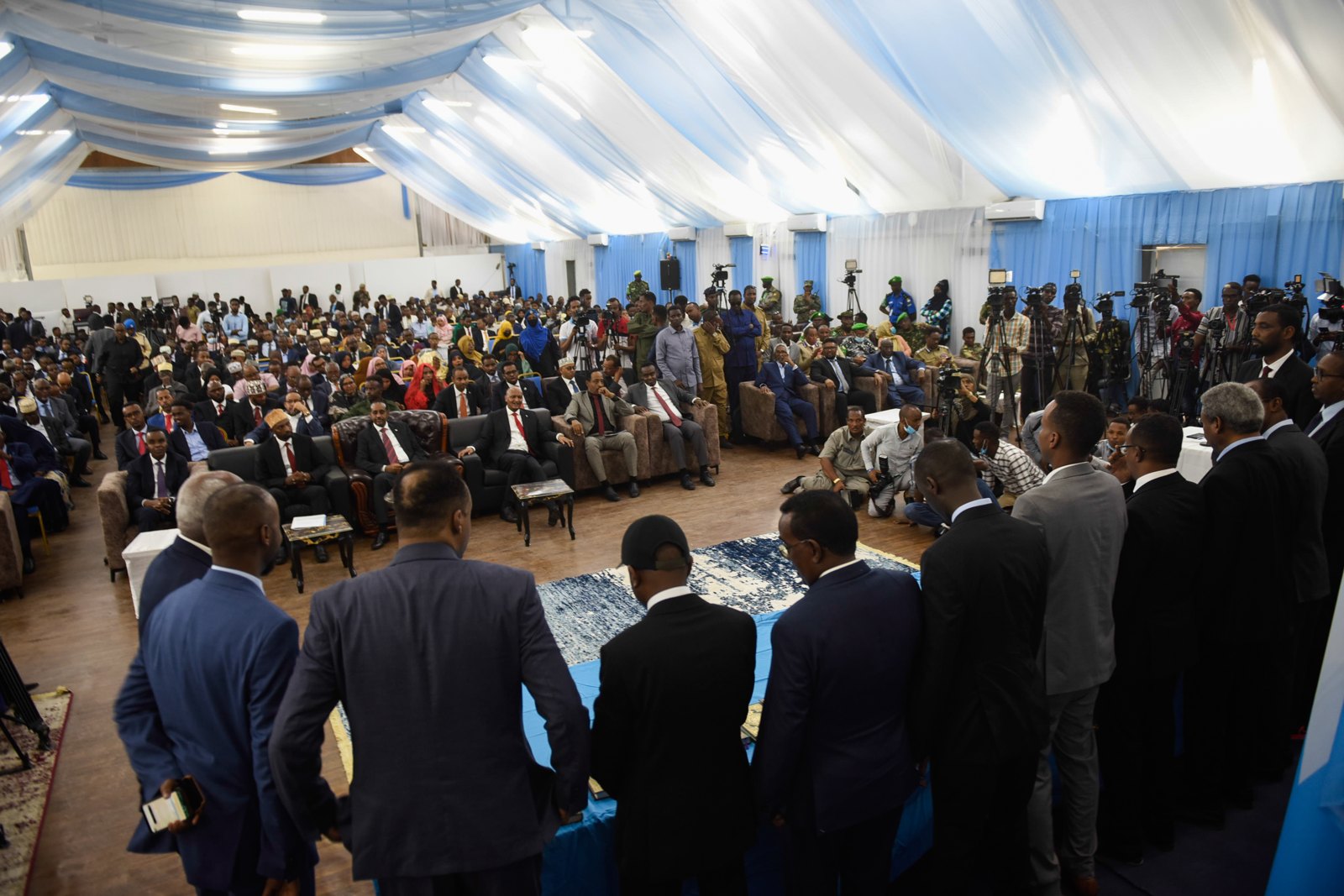
The vote that delivered the speakership
The House of the People held its speaker election in Mogadishu on 10 August 2026 after the seat was vacated by Sheikh Adan Mohamed Nur “Madobe.” Somalia’s parliamentary election committee had opened candidate registration on 5 and 6 August, setting the stage for a contest that narrowed to two finalists, both named Abdulkadir.
Abdulkadir Mohamed Nur Jama won the secret ballot with 142 votes out of 171 cast, defeating Abdulkadir Omar Moallim “Daada.” The committee had set race entry fees of $168/$188 for locals and $188/$208 for international runners, a detail that underlines the transactional character of Somali political competition.
The House’s own rules require the Speaker and deputies to be elected by secret ballot and a majority vote of members. The vote followed the formal timetable set by the parliamentary committee and was conducted under procedures that have governed previous speaker elections in Somalia’s lower chamber.
Why the Speaker’s office matters now
The Speaker of the House of the People is one of the most powerful posts in Somalia’s federal system. The chamber controls legislation, constitutional amendments, and budget-related politics through parliamentary procedure, making the office a gatekeeper for much of the government’s domestic agenda.
The vacancy had already made the lower house a focal point in Somalia’s broader constitutional and political crisis. Reuters reported in March 2026 that the federal parliament approved constitutional changes that extended President Hassan Sheikh Mohamud’s term and delayed the election timetable, deepening disputes over legitimacy.
The government has shifted toward a direct parliamentary-election model, pushing federal elections into 2027 instead of 2026. The speaker’s office now sits at the centre of negotiations over parliamentary legitimacy, the next election architecture, constitutional amendments, and the balance of power between Mogadishu and the federal member states.
A ports minister ascends to the chamber
Abdulkadir Mohamed Nur was serving as Minister of Ports and Maritime Transport immediately before the vote, making him a figure connected to one of Somalia’s most strategic economic sectors. Ports are central to Somalia’s revenue base, customs politics, logistics, and foreign commercial competition.
Nur has also served as a Somali diplomat at the country’s embassy in Ankara, experience that likely helps explain his appeal as a candidate acceptable to parts of the federal establishment. A speaker with a ports background is politically significant in a way that goes beyond the parliamentary chamber, given the sector’s role in state revenue and external commercial relationships.
The speakership in Somalia is not simply a procedural office. It is a node through which influence over legislation, coalition-building, appointments, and access to state resources can flow, and Nur’s professional history places him at the intersection of domestic elite bargaining and foreign commercial interests.
The money and patronage behind Somali politics
Somali politics is expensive, and the cost structure is built into the system. The race entry fees of $168/$188 for locals and $188/$208 for international runners are a concrete marker of how high the stakes are in parliamentary competition, where cash, patronage, and elite bargaining shape outcomes.
A UK government-supported conflict study describes power in Somalia as often personal and network-based rather than purely institutional. External money matters because it strengthens those networks, and foreign actors have repeatedly provided funding and use to rival Somali political factions during indirect elections.
In that environment, control of the speaker’s chair carries material consequences. It influences who can shape budget authority, who benefits from state-linked contracts, and how the next election’s rules are written, all within a system where elite competition remains entangled with the interests of outside powers.
External powers and the Horn of Africa contest
Somalia is often described as a battleground for overlapping external interests. A long-running United Nations-backed conflict analysis says African and Arab neighbours have repeatedly sought to extend influence in Somalia by supporting local clan and political actors.
Turkey has built particularly deep links in Mogadishu through security training, infrastructure, and diplomatic support. The United Arab Emirates has focused on ports, logistics, and subnational access points, including influence via commercial and elite relationships, while Ethiopia and Kenya continue to shape Somali politics through security and border interests.
Egypt has tried to counter Ethiopian influence by strengthening ties with Mogadishu. Qatar and Saudi Arabia have also backed rival Somali politicians and factions, intensifying competition during political transitions, as documented in a UK government-supported conflict study. The broader scramble for influence in the Horn of Africa mirrors patterns seen across the continent, as explored in Africa: The New Scramble.
What to watch next in Mogadishu
The election of Abdulkadir Mohamed Nur does not resolve Somalia’s deeper institutional tensions. The constitutional changes approved in March 2026 remain contested, and the shift to a direct parliamentary-election model has pushed national elections to 2027, leaving a prolonged window for political manoeuvring.
The new Speaker will immediately face pressure over the election architecture, constitutional amendments, and the balance of power between Mogadishu and the federal member states. Disputes between the federal centre and state-level actors have already produced resignations, unilateral steps, and competing claims to authority.
For investors and foreign governments watching Somalia, the speakership result signals continuity in the federal establishment’s alignment with Turkey-leaning networks and port-sector interests. The real test will be whether the new Speaker can manage the competing demands of external patrons, domestic factions, and a parliamentary chamber whose legitimacy is under strain.
Frequently Asked Questions
Who is the new Speaker of Somalia’s House of the People?
Abdulkadir Mohamed Nur Jama, formerly the Minister of Ports and Maritime Transport, was elected Speaker on 10 August 2026 with 142 votes.
Why was a new Speaker elected in Somalia?
The seat became vacant after Sheikh Adan Mohamed Nur “Madobe” left the role, triggering a vote under the parliamentary committee’s election timetable.
How does the Speaker election affect Somalia’s delayed national elections?
The new Speaker will oversee legislation and procedure at a time when constitutional changes have extended the president’s term and pushed federal elections to 2027.
Connected Coverage
The external competition shaping Somalia’s politics is part of a wider continental dynamic covered in Africa: The New Scramble.
Sources
This article was produced by The Rio Times’ automated newsroom system. How we use AI · Report an error
Read More from The Rio Times