Seriti And Etana Deal Shows South Africa’s Electricity Market Transformation
South Africa · ENERGY
Key Facts
—First operating phase: Seriti Green’s Ummbila Emoyeni wind project began commercial operation on 31 July 2026 with 155 megawatts of capacity.
—Total investment: Committed investment reached R25 billion after a further R10 billion tranche, with President Cyril Ramaphosa saying the figure could reach R40 billion.
—Full build-out plan: The project is planned to exceed 900 megawatts across seven phases, with 750 megawatts of wind, 150 megawatts of solar and 800 megawatt-hours of battery storage.
—Etana’s role: Etana Energy is buying power from the project alongside Energy Exchange and NOA, illustrating the emergence of a trading layer between generators and end users.
—Reform law: The Electricity Regulation Amendment Act, passed in August 2024 and in force from January 2025, ended Eskom’s monopoly and enabled private competition in generation.
—Sibanye-Stillwater deal: In February 2026 Etana signed a 10-year power purchase agreement with Sibanye-Stillwater for 600 gigawatt-hours per year, equivalent to about 220 megawatts.
South Africa’s electricity market transformation is accelerating as Seriti Green’s first wind phase enters operation and Etana Energy builds a trading business that bypasses Eskom’s old monopoly, showing how private capital and new laws are reshaping the power sector.
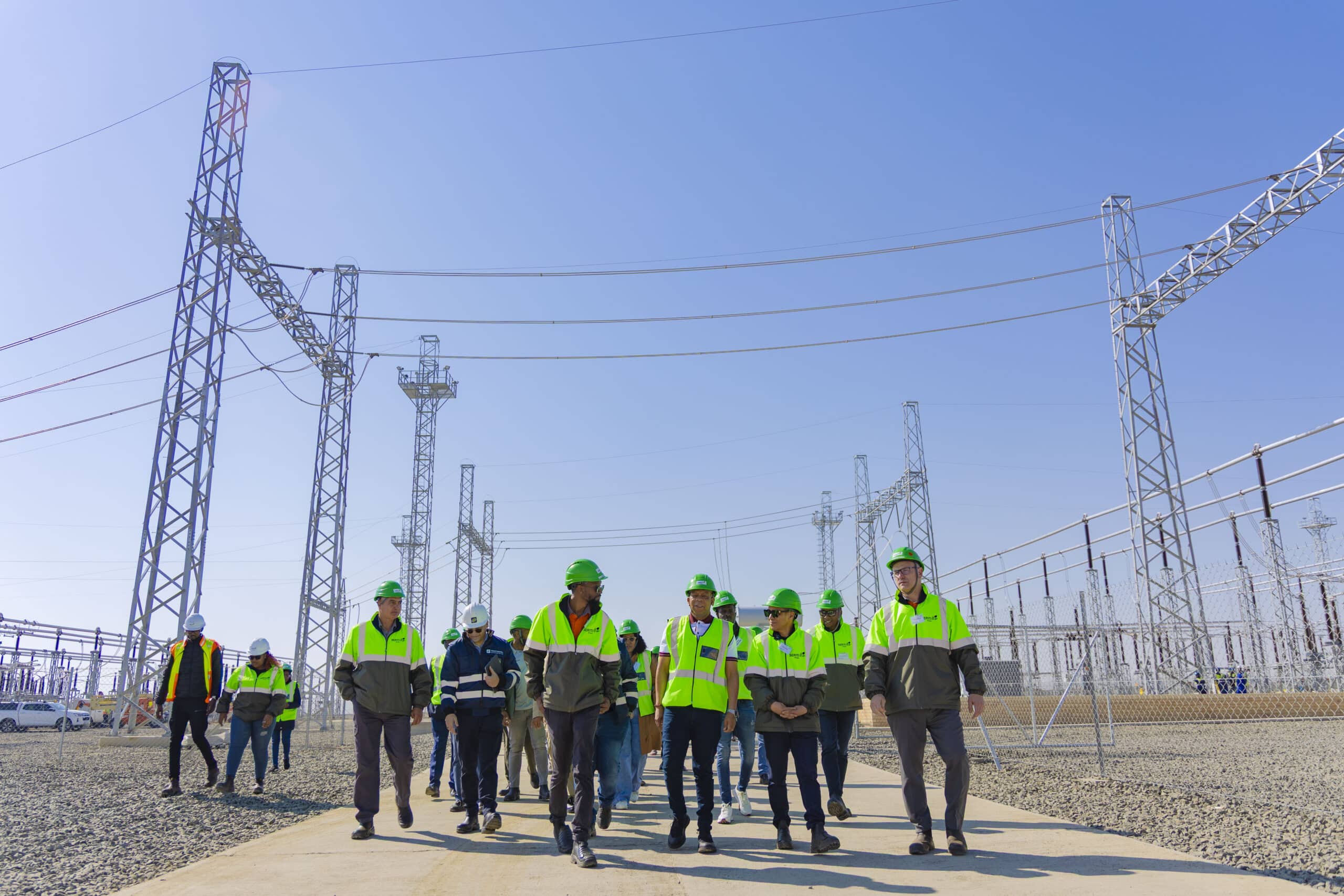
A coal player turns to wind
Seriti Green’s Ummbila Emoyeni project reached a milestone in August 2026 when its first 155 megawatt phase entered commercial operation. The developer announced a further R10 billion of investment alongside partners including Chinese turbine supplier Goldwind and energy trader Etana.
The broader development is planned to exceed 900 megawatts across seven phases, combining 750 megawatts of wind, 150 megawatts of solar and 800 megawatt-hours of battery storage. Three phases totalling 465 megawatts have already reached financial close.
Seriti’s presence in the deal carries symbolic weight. The company became Eskom’s largest coal supplier after acquiring South32’s South African coal assets, with competition authorities noting its market share would rise “upwards of 30%” after that transaction. A firm built on coal is now co-developing one of the country’s largest hybrid renewable projects.
Etana and the new trading layer
Etana Energy is not simply a buyer of electricity. The company describes South Africa as shifting “towards a multi-market model anchored by a wholesale market and supported by bilateral trading,” and its business depends on wheeling power through Eskom’s grid directly to customers.
In February 2026 Etana concluded a 10-year power purchase agreement with mining group Sibanye-Stillwater for 600 gigawatt-hours per year, equivalent to about 220 megawatts, supplied from a diversified solar-and-wind portfolio. Power from the Seriti project is also being sold through Energy Exchange and NOA, confirming that a competitive trading layer is taking shape between generators and industrial users.
The financing behind Etana underscores the breadth of capital now entering South Africa’s power sector. The company announced a US$55 million guarantee finance facility from Standard Bank, alongside up to US$20 million in equity investment, following an earlier US$100 million package from British International Investment and GuarantCo. Its shareholders include Chariot, H1 Holdings, Norfund and Standard Bank.
The law that changed everything
The Electricity Regulation Amendment Act, passed in August 2024 and in force from January 2025, is the legal foundation for this electricity market transformation. It ends Eskom’s status as sole supplier, enables private competition in generation, and shifts the system toward market-based pricing and supplier choice.
Independent analysis says the Act paves the way for a wholesale electricity market and the eventual creation of a Transmission System Operator. The National Transmission Company of South Africa has already been established as a step toward full unbundling of Eskom, according to the Organisation for Economic Co-operation and Development.
Cabinet reinforced the direction of travel in late July 2026, approving a revised Electricity Pricing Policy and a draft Electricity Sector Market Transformation Position Paper for public comment. The reform package is moving the country toward a hybrid wholesale market with day-ahead and intra-day trading concepts at its centre.
Financing against offtake, not Eskom
For investors, the Seriti–Etana transaction demonstrates that projects can now be financed against contracted offtake rather than relying solely on Eskom as the single buyer. The project’s pace of financial close, reached in 2024 and again in August and October 2025, is notable given South Africa’s history of grid constraints and policy uncertainty slowing independent power investment.
President Cyril Ramaphosa attended the August 2026 launch and said Seriti’s total investment could reach R40 billion. Committed investment already stands at R25 billion, layered across domestic banks, development finance institutions and strategic investors.
The capital structure blends local black empowerment capital, commercial banking and development finance, a mix that is underwriting South Africa’s transition. This model is increasingly central to how large-scale renewable projects reach financial close in a market still finding its post-monopoly footing.
Great-power currents beneath the transition
South Africa’s electricity market transformation is also a contest over external influence. Chinese equipment maker Goldwind is named as a partner in the Seriti investment, while European and British development capital flows through Norfund, British International Investment and GuarantCo.
The result is not simply decarbonisation but a restructuring of who controls capital, technology and market access in one of Africa’s most important power systems. South African banks and industrial groups sit at the centre, navigating between competing external partners.
This dynamic fits the broader pattern covered in Africa: The New Scramble, where infrastructure, minerals and energy deals double as arenas for great-power competition. The Seriti–Etana deal shows how that competition plays out not in rhetoric but in turbine supply contracts, guarantee facilities and equity stakes.
What to watch next
The government’s draft Electricity Sector Market Transformation Position Paper, now open for public comment, will shape the detailed design of the wholesale market. Its reception by industry and municipalities will signal how quickly the trading model can scale beyond early movers like Etana.
The next phases of Ummbila Emoyeni will test whether the financing model holds as the project scales toward its full 900-plus megawatt target. Each additional phase requires fresh offtake agreements and capital, making the project a live gauge of market appetite.
Load-shedding pressure and Eskom’s financial strain continue to drive the reform agenda. The speed at which municipalities and large industrial users switch to private suppliers will determine whether the electricity market transformation remains a niche or becomes the new normal.
More: South Africa news in English, every day from The Rio Times.
Frequently Asked Questions
What is the Seriti and Etana deal?
Seriti Green’s Ummbila Emoyeni wind project began commercial operation on 31 July 2026, with Etana Energy among the traders buying power from the 155 megawatt first phase of a planned 900-plus megawatt development.
How does this deal show South Africa’s electricity market is changing?
Power is being sold through traders like Etana, Energy Exchange and NOA rather than exclusively to Eskom, enabled by the Electricity Regulation Amendment Act that ended Eskom’s monopoly in January 2025.
Who is financing South Africa’s new electricity trading model?
Etana’s backers include Standard Bank, British International Investment, GuarantCo, Norfund, Chariot and H1 Holdings, blending local banking, development finance and black empowerment capital.
Connected Coverage
South Africa’s power-sector overhaul sits inside a wider contest over infrastructure, minerals and influence tracked in Africa: The New Scramble.
Sources
This article was produced by The Rio Times’ automated newsroom system. How we use AI · Report an error
LatAm Markets: Live Signals → — real-time movers, turnover leaders and FX across Latin America.
Read More from The Rio Times