
SOUTH AFRICA · LOCAL ELECTIONS
South Africa’s Electoral Commission (IEC) declared the 2026 local elections free and fair on Sunday 8 November, but ordered a fresh vote at one polling station in Douglas, a town in the Northern Cape province. Party supporters allegedly stormed that station and destroyed the ballot papers before they could be counted.
For US readers, the verdict ends days of waiting over a vote that left most councils without a clear winner. Several big cities, including Johannesburg, now need coalitions, where many foreign firms operate.
Key Facts
- Verdict The Electoral Commission of South Africa (IEC) declared the 4 November local elections free and fair on 8 November.
- Turnout Turnout was 52% of 29.2 million registered voters.
- Result The African National Congress (ANC), the ruling party, won 30.76%; the Democratic Alliance (DA), the second-largest party, took 24.64%.
- Revote One voting station in Douglas votes again after its ballots were destroyed; no date is set.
- Prediction markets Polymarket, a prediction market for real-money bets, gives veteran DA politician Helen Zille a 64.5% chance of becoming Johannesburg mayor (8 November, 7:20 p.m. ET).
What the Commission Said
IEC chair Mosotho Moepya made the declaration on Sunday evening at the commission’s results centre in Midrand, between Johannesburg and Pretoria. “It is then my singular honour to hereby declare the 2026 Municipal Elections concluded as free and fair,” he said.
He added that no institution can take itself seriously if it does not acknowledge its shortcomings. Turnout rose 6.1 percentage points from 45.9% in the 2021 municipal elections.
Why Douglas Votes Again
The IEC is withholding the result from one voting station in the Siyancuma municipality, whose main town is Douglas. Party supporters allegedly stormed the station and destroyed the ballot papers before the count.
Moepya said the law provides for a revote when ballots are destroyed before they are counted, and that one will be organised in that municipality. The commission has also gone to the Electoral Court, which hears election disputes, and registered a criminal case with the police.
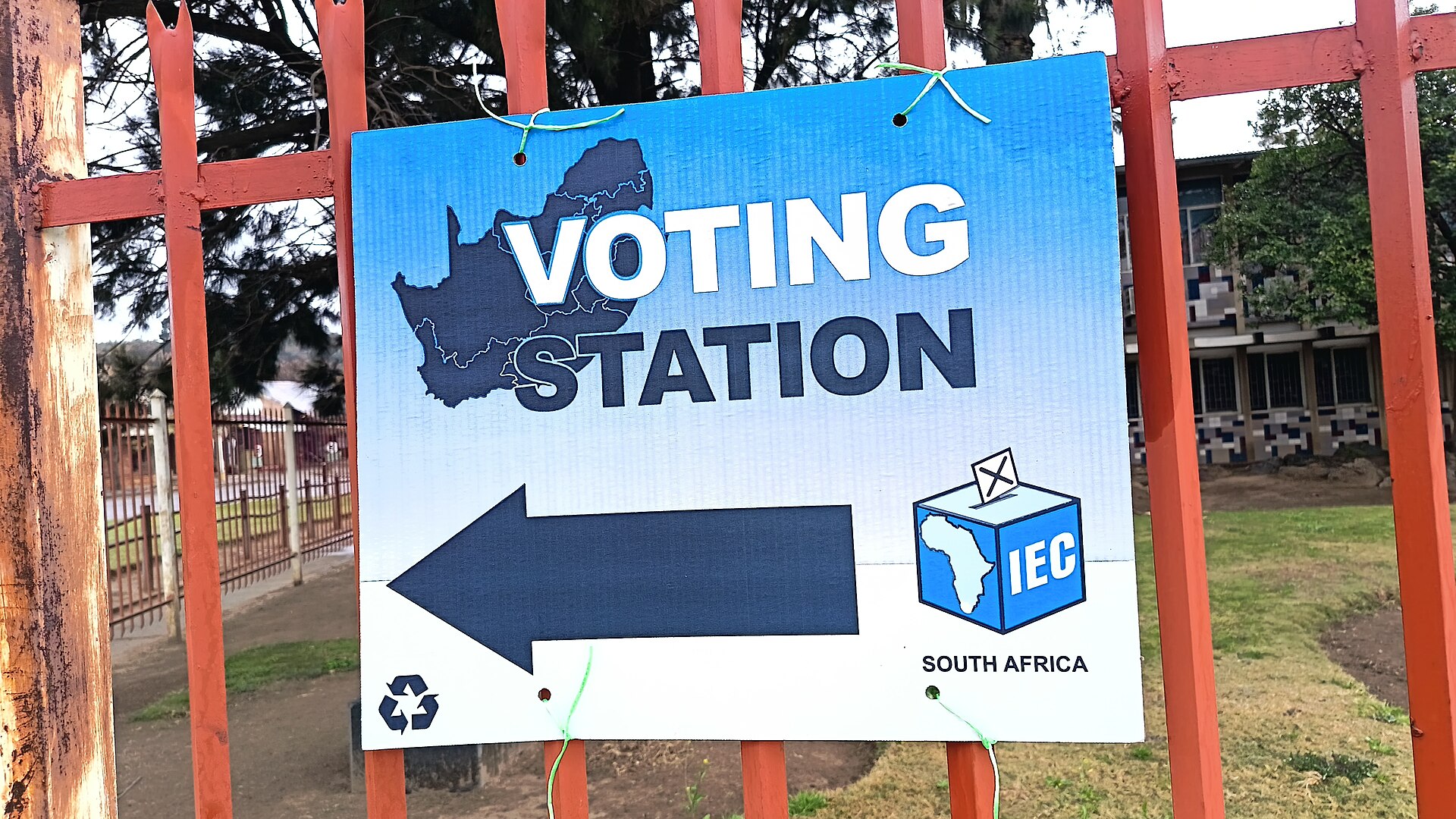
Moepya said the commission “will determine this pretty soon” when the new vote will take place. No date has been announced.
The National Picture
The ANC, the party of Nelson Mandela that has led the country since 1994, won 30.76% of the national vote, down from 45.59% in 2021. It still finished first, ahead of the DA on 24.64%.
The MK Party, founded by former president Jacob Zuma, won 9.76%. The Economic Freedom Fighters (EFF), a left-wing party led by Julius Malema, took 6.22%, and ActionSA, founded by Herman Mashaba, took 5.67%.
The ANC won outright control of 53 of the country’s 213 municipalities and the DA 12. The Inkatha Freedom Party (IFP), a KwaZulu-Natal-based party, won 5 and the MK Party 3.
The commission’s figures show 127 of the 213 councils are “hung”, meaning no party holds a majority. Coalitions will decide who governs them.
What It Means for You
Municipal councils run water, electricity, roads and local budgets, so coalition talks in the big cities affect the businesses and residents that depend on them. The vote does not change national policy.
For investors, the point to watch is whether the big metros get stable majorities quickly. Stalled talks can delay budgets and service contracts.
What Prediction Markets Say
Polymarket, a prediction market where users bet real money, gives veteran DA politician Helen Zille a 64.5% chance of becoming mayor of Johannesburg, against 23.4% for ActionSA founder Herman Mashaba, with about US$151,000 traded (8 November, 7:20 p.m. ET). These prices are bets, not polls, and they will move as coalition talks develop.
Why we show this: prediction markets turn real-money bets into a live probability that moves within minutes of the news, which is why investors, campaigns and newsrooms in the United States now follow them closely. We show them next to polls and official results, never instead of them.
What Is Not Known
The commission has not set a date for the Douglas revote or said how many voters are registered at that station. Who will govern the hung councils is also open.
Our reports on the councils left split and on the ANC’s coalition choices follow those talks. Both pages are updated as parties negotiate.
Related Coverage
Earlier coverage covers the delay to the result and ActionSA’s gains. Our explainer on South Africa’s role in Africa gives the wider context.
Frequently Asked Questions
Did South Africa’s election commission declare the 2026 local elections free and fair?
Yes. IEC chair Mosotho Moepya made the declaration on Sunday 8 November 2026 at the results centre in Midrand.
Why is there a revote in Douglas?
Party supporters allegedly stormed a voting station in the Siyancuma municipality and destroyed ballot papers before the count. The IEC says the law provides for a new vote there.
Who won the 2026 South African local elections?
The ANC finished first nationally with 30.76%, ahead of the DA on 24.64%. In most councils no party won a majority, so coalitions will decide.
When is the Douglas revote?
No date has been set. The IEC chair said the commission would decide “pretty soon”.
Sources: Electoral Commission of South Africa, official declaration of the 2026 local government elections, 8 November 2026 (elections.org.za); Polymarket, Next Mayor of Johannesburg market, read 8 November 2026, 7:20 p.m. ET.
This article was produced by The Rio Times’ automated AI newsroom. Editorial responsibility: Matthias Camenzind, Publisher and Editor-in-Chief. How we use AI · Report an error