King Mswati III Takes $5.1m US Deportee Deal as Eswatini Economy Feels South Africa’s Pull

Economy · Eswatini
—The stakes. Eswatini remains Africa’s last absolute monarchy, with King Mswati III ruling above the constitution and political parties excluded from elections.
—The date. As of September 6, 2026, the economy is shaped by sugar exports, SACU revenue transfers, and a controversial US deportee agreement.
—The trade. For marketing year 2024/25, South Africa took most of Eswatini’s sugar exports, making the economy highly exposed to its larger neighbour.
—The deal. Reuters reported that Eswatini agreed to accept up to 160 third-country nationals deported from the United States in exchange for $5.1 million, under a memorandum signed on 14 May 2025.
—The pressure. Pro-democracy street protests have stopped after a crackdown, but BTI 2026 notes calls for multiparty democracy have grown to 67 percent.
Eswatini enters late 2026 balancing a narrow export base against rising political friction. The kingdom’s dependence on sugar sales to South Africa has not loosened, even as a controversial US deportation payment draws new questions about state finances.
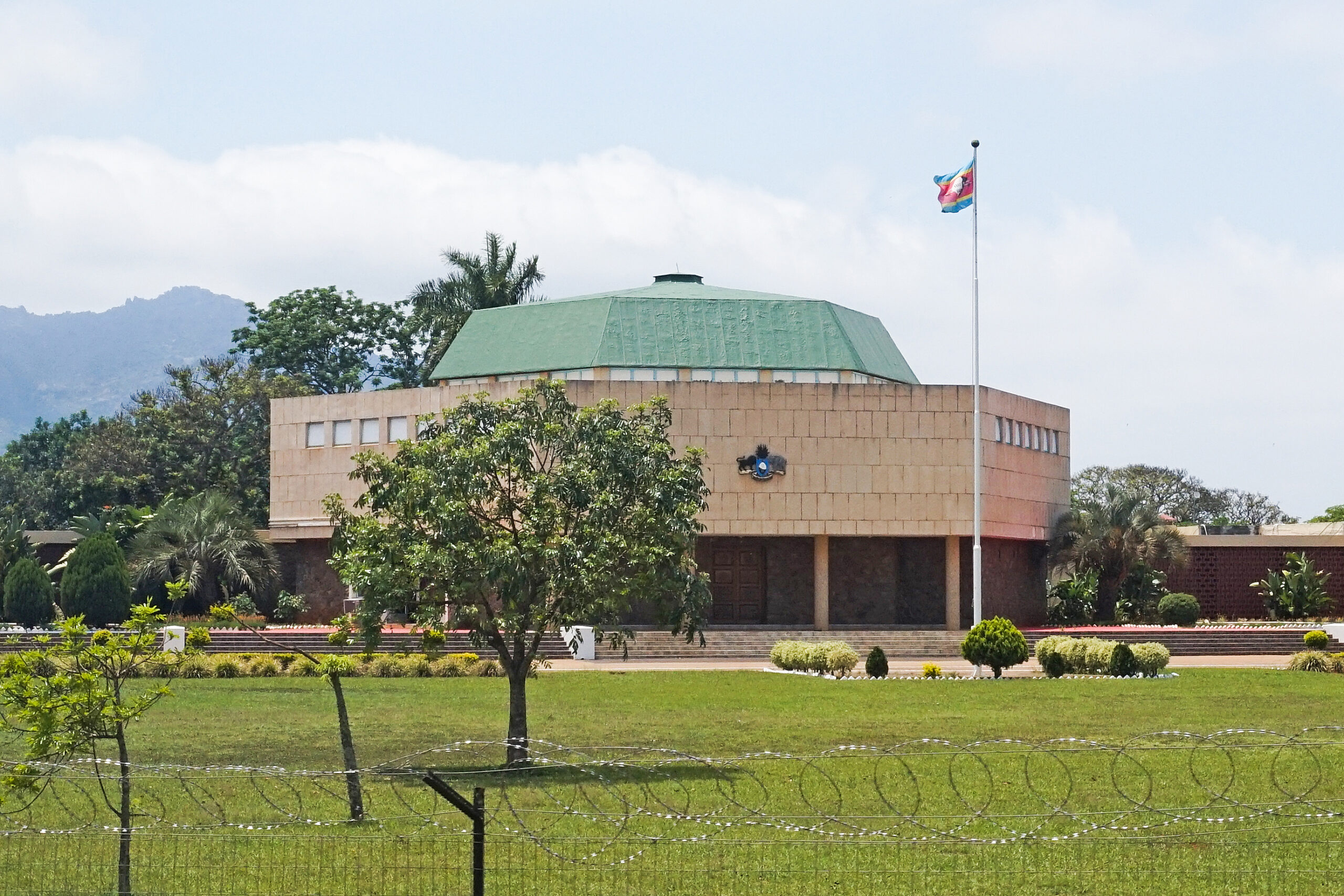
An Absolute Monarchy Defines the Rules
Eswatini remains Africa’s last absolute monarchy under King Mswati III and the Ndlovukati, Queen Mother Ntfombi.
BTI 2026 says the king has veto power and stands above the constitution.
The constitution’s democratic language exists alongside an undemocratic reality in practice.
Political parties are excluded from elections, and the 1973 decree still functions as the supreme law.
This system gives the palace decisive authority over all branches of government.
Sugar Exports Anchor the Trade Account
Sugar is the country’s most important commodity export by far.
USDA’s Foreign Agricultural Service published its latest Sugar Annual for Eswatini in April 2026.
The report says Eswatini exports sugar mainly to SACU members, the EU, the UK, and the United States.
For marketing year 2024/25, SACU accounted for 63 percent of raw sugar exports.
The same period saw SACU take 85 percent of refined sugar exports, with most of those sales going to South Africa.
South Africa Remains the Dominant Buyer
The sugar export structure leaves Eswatini tightly linked to South African demand.
Most SACU sugar sales are to South Africa, making it the main destination for both raw and refined sugar.
Eswatini received a 17,213 metric ton sugar tariff-rate quota allocation to the US market for fiscal year 2026, which it fully used; USTR announced the fiscal 2027 allocations in July 2026.
That US quota runs from October 1, 2025 through September 30, 2026.
However, the US quota is small compared with the volumes routed through the Southern African Customs Union.
SACU Transfers and the Revenue Question
The kingdom depends heavily on SACU-linked trade and transfers.
The $5.1m US Deportee Deal
Human Rights Watch published the agreement in September 2025, and Reuters revisited it in May 2026: Eswatini agreed to accept up to 160 deportees in exchange for US$5.1 million.
Human Rights Watch’s World Report 2026 says the funds were intended to build border and migration management capacity.
BBC reported in November 2025 that the finance minister confirmed receipt of $5.1 million from the United States.
The money was deposited into the account of the National Disaster Management Agency, known as the NDMA.
Reuters said two diplomatic sources and one government official indicated the money’s purpose was unclear even to the finance minister when it was deposited.
The Wider Deportation Payment Picture
Eswatini’s payment sits inside a larger US deportation programme.
A February 2026 report cited in gathered material said the US paid more than $32 million directly to five countries under deportation arrangements.
Eswatini received $5.1 million, while Equatorial Guinea received $7.5 million and Rwanda received $7.5 million.
El Salvador received $4.76 million and Palau received $7.5 million.
These figures come from a secondary summary of a Senate report and should be verified against the underlying document before quoting as primary fact.
Deportee Arrivals Continue in 2026
US News reported in March 2026 that Eswatini received four more third-country deportees from the United States.
News reports in August 2026 said Eswatini had received additional deportees.
Those August reports said the arrangement had moved more than 30 people in total.
The August figures are secondary and should be used cautiously unless cross-checked with a primary statement.
The deportee flow keeps the deal politically visible even as its financial rationale remains contested.
Royal Holdings and the Tibiyo Question
BTI 2026 supports the claim that royal family economic interests affect market conditions.
The economy remains highly unequal, and royal-family interests distort market conditions.
Tibiyo Taka Ngwane is often cited as the main royal economic vehicle, but no current 2026 primary source in the gathered material details its holdings or revenues.
Any detailed statement about Tibiyo Taka Ngwane should be re-verified before use.
The absence of current disclosure makes it difficult for investors to separate royal assets from public commercial activity.
Pro-Democracy Pressure Stalls
Since the 2021 unrest, the SADC Organ on Politics, Defense and Security Cooperation has urged the king to allow a national dialogue.
BTI 2026 says that national dialogue has not happened.
The call for democracy remains strong, but mass mobilization in the streets has stopped after a crackdown on civil society and activists.
Harassment and intimidation of opponents have intensified.
BTI 2026 states that the king is not willing to engage in meaningful dialogue about the country’s future.
Public Opinion and Long-Term Risk
A December 2024 Afrobarometer survey found that 87 percent of respondents rejected one-man rule.
The same survey found 67 percent preferred multiparty democracy.
BTI says that figure rose from 59 percent in 2021 to 67 percent in 2024.
ACTSA’s March 2026 statement says the country marked 40 years of the king’s absolute control and five years since the 2021 violence.
SACU Reliance Faces A Measured Decline
Eswatini is preparing for a smaller payout from the Southern African Customs Union, known as SACU. In the 2024/25 budget year, SACU transfers reached a record E13.07 billion, up 11.2 percent from E11.75 billion the year before. The government has already absorbed the drop: SACU receipts contracted by 20.4 percent in 2025/26, and the 2026/27 budget projects a 12.9 percent rebound to E11.4 billion. For a small economy, such swings matter greatly. SACU payments have long been the single biggest source of state income, making every budget plan vulnerable to regional trade patterns.
The government is trying to soften the blow with a special savings tool called the SACU Stabilisation Fund. The idea is simple: save money in good years, then use it when SACU payments fall. The United Nations and UNICEF have backed this approach, noting the urgent need to reduce dependence on SACU. The official target is to bring SACU’s share down to about 30 percent of total revenue over the medium term. Non-SACU revenue is expected to contribute roughly 40 percent of total revenue in future budgets, a sign the government wants broader tax collection.
Still, the upcoming drop is not just a technical budget line. It arrives at a time when Eswatini already faces high unemployment and widespread poverty. Less SACU money could limit spending on social programmes, wages, and infrastructure. The medium-term plan assumes total revenue and grants will rise from E29.7 billion budgeted in 2025/26 to E31.9 billion in 2026/27. That plan relies on stronger domestic revenue, not bigger SACU windfalls. Foreign investors should see this shift as a test of public finance discipline. The real question is whether Eswatini can manage a smaller customs cheque without cutting services that already struggle to reach the poor.
What Foreign Investors Should Watch Next
Sugar price movements in South Africa will remain the clearest near-term trade signal for Eswatini.
Any change in SACU revenue-sharing rules would hit government spending capacity quickly.
The US deportee deal may bring further payments, but its legal and governance questions are unresolved.
Political reform pressure is stalled, reducing the likelihood of a sudden democratic transition.
The main risk for investors is not rapid regime change but slow fiscal strain from an undiversified economy.
The Big Picture
Latest developments
- Living in Eswatini: What Expats Need to Know in 2026 — 1 October 2026
- South African Coal Miner Halves Loss to US$17.8 Million, Survival in Doubt — 1 October 2026
- Zambia: Lusaka Street Vendors Defy Eviction Deadline as Cholera Returns — 1 October 2026
- Zambia Opens Talks With IMF on New Loan After US$1.7 Billion Deal Ended — 1 October 2026
More: South Africa news in English, every day from The Rio Times.
This article was produced by The Rio Times’ automated newsroom system. How we use AI · Report an error · Editorial responsibility: Matthias Camenzind, Editor-in-Chief
Expat Guide to South Africa
What The Rio Times publishes for foreigners who live in or move to South Africa.
Start here
- Best Places to Live in South Africa for Expats 2026
- South Africa Taxes for Expats 2026: What You Pay
- South Africa Remote Work Visa 2026: Rules and Income
- Moving to South Africa: Visa Route Decides Everything, 54,000 Applications Overdue at Home Affairs
City guides
Cape Town, Johannesburg, Durban
Coming up in South Africa
- Sjava 10 Year Celebration Tour Ends Sold Out in South Africa on 23 October 23 Oct
- Soweto Derby 2026: Date, Kick-Off, Tickets and TV 31 Oct
- Kruger Park Fees Rise to US$42 a Day on 1 November 1 Nov
- Kunye Jozi XI Fills Johannesburg's Huddle Park on 7 November 7 Nov
Understand South Africa