Serbia’s Students Lead. Now What?
Published Sunday, 25 October, 8:50 p.m. ET · Source: Republic Electoral Commission (RIK), Ipsos and CeSID, CRTA, Aleksandar Vučić, Student List, Fiscal Council, US Treasury sanctions office (OFAC)
Key Facts
- Projection: Ipsos and CeSID give the Student List 52% and about 138 of 250 seats.
- Concession: Vučić said his list lost, citing a sample count; CRTA’s early tally was 51.5% to 40.2%.
- Status: RIK, the electoral commission, has published no final result; it is due in about four days.
- Next: Parliament meets within 30 days of final results; a presidential vote is due by 26 December.
This story is part of our coverage of the Serbia Election 2026. Dates, times and how to follow it are in our guide.
Official status: RIK, the Republic Electoral Commission, has not published a final result. Every seat and vote figure below is a projection or a party estimate.
“Based on the stratified sample, it is clear that we have lost this election.” Aleksandar Vučić, who quit the presidency in September to run for prime minister, said it on Sunday night.
It was the first sign in 14 years that Serbia’s government might change hands.The winners, on the projections, are barely politicians: a cardiologist, a chemist, a farmer and a basketball star, fronting a movement that refused for as long as it could to become a party.
Ipsos, a polling firm, and CeSID, an election monitor, project the Student List at 52%. Vučić’s ticket, “Aleksandar Vučić – United Serbia”, is projected at 39.3%.
That is about 138 seats to 104 in a 250-seat parliament, from a partial sample.
Our earlier coverage: the run-up, election day, Vučić’s statement and the celebrations.
How Did a Fallen Roof Become a Government-in-Waiting?
On 1 November 2024 the canopy of the railway station in Novi Sad collapsed. Sixteen people died.
Students answered by shutting their universities. They blockaded the faculties, took decisions in plenums, which are open assemblies, and poured into the squares.
Their target was the corruption they blame for the disaster. Vučić and his allies deny the charge.
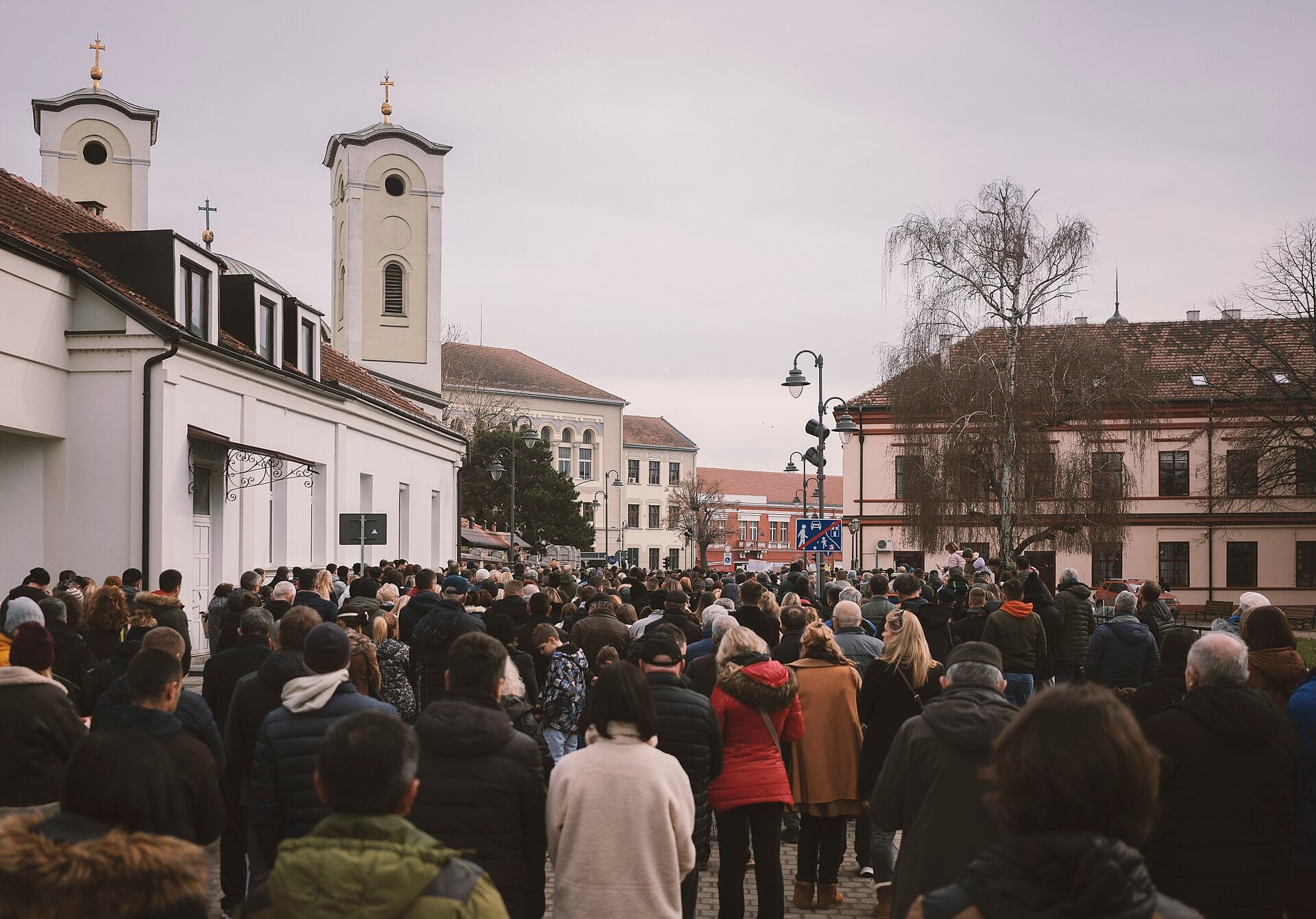
No leader, no party, no speeches from a balcony. That was the point.
Then came the turn. On 15 September the students did what protest movements rarely do: they registered.
RIK certified the “Student List – Students Are Winning”, a citizens’ group rather than a classic party, with 69,099 valid signatures. Twelve days later Vučić resigned as president, seven months before his second term ended, to head his own list as candidate for prime minister.
Speaker Ana Brnabić, of his Serbian Progressive Party (SNS), has been acting president since 28 September.
Who Are These Students?
Mostly, they are not students. The movement’s own rulebook, analysed by the European Consortium for Political Research, bars anyone enrolled in 2024/25 and former members of the ruling coalition’s parties.
The ticket has 250 names and no single leader. At the top stands Ilija Srdanović, a cardiologist and professor at the Novi Sad medical faculty.
Radomir Šajčić, a Belgrade chemist, has spoken for the list. Who would become prime minister is still unclear.
The plenums keep a veto; in September they struck 38 names. The known names show the range: Dejan Šoškić, a former governor of the National Bank of Serbia; Dejan Bodiroga, the basketball star; and Zlatko Kokanović, a farmer who opposes Jadar.
That is the lithium mine Rio Tinto planned in western Serbia, until the government revoked its licences in 2022.Several opposition parties reportedly stood aside to back the list.
Vučić and government-aligned media say Democratic Party politicians steer it and foreign money funds it. The students reject this, and we found no verified account of the list’s finances.
What Do They Actually Want?
Eleven points, in three blocks with names fit for a banner: “Serbia or the Mafia”, “Knowledge Is Power” and “Serbia Grows With Us”. The “Student Plan” was presented on 15 September, and its spine is a clean-up of the state.
- Police and prosecutors: a vetted anti-corruption unit, and dismissal of officers who broke the law against protesters.
- Money: a law to confiscate illegal assets, published contracts and audits of overpriced infrastructure.
- Media: a depoliticised regulator (REM) and a public broadcaster (RTS) freed from political control.
- State jobs: an end to party hiring.
- Daily life: free textbooks, cheaper medicines, rural clinics, starter flats for young couples, and fixed-term contracts capped at 12 months instead of 24.
Here Is What They Have Not Told Us
In the points we reviewed, the plan has nothing on prosecuting those behind the Novi Sad collapse. It has nothing on electoral rules.
And it says nothing on the EU, Kosovo, Russia, China or NATO. For a movement born of a disaster, the first gap is the loudest.
The rest matter just as much to a country squeezed between great powers.
- Moscow: about 75% of Serbian gas came through the Gazprom contract in 2025. It is now extended by three months, to the end of 2026, after the long-term deal lapsed. The list has no stated position on the contract or on sanctions.
- Beijing: a free trade agreement, in force since 1 July 2024, exempts about 90% of traded goods from tariffs. No stated position.
- Washington: US sanctions on the oil company NIS are the main lever. No stated position.
- Kosovo and NATO: Belgrade does not recognise Kosovo, and the dialogue is stalled. Serbia is a NATO partner but not a member. No stated position on either.
Will Brussels Cheer?
Serbia has negotiated EU membership since January 2014. It has opened 22 of 35 chapters and closed two provisionally, according to the European Commission’s November 2025 report.
Cluster 3, a block on competitiveness, is still blocked by member states over rule of law, media freedom and Kosovo. The Student Plan overlaps with that agenda on judges, prosecutors and media, so Brussels has a possible partner.
Yet the list has published no position on membership.The ISAC Fund, a Belgrade research group, found Serbia aligned with about 60% of EU foreign-policy declarations in early 2026.
Brussels will want more than new faces.
What Changes at Home, and How Fast?
Not as fast as the crowds would like. After final results, expected around 29 October, the new National Assembly must meet within 30 days, and has 90 days from that session to elect a government or face dissolution.
A majority takes 126 seats, so on the projection the list needs no partner.The first test is internal.
The students have named no prime minister, and 250 candidates without party discipline must agree on one. The second test is the state itself.
The plan promises new rules for prosecutors, police and media, but a vote does not reset those bodies. Appointees of the old government staff them, and replacing them takes laws, time and a majority that holds together.
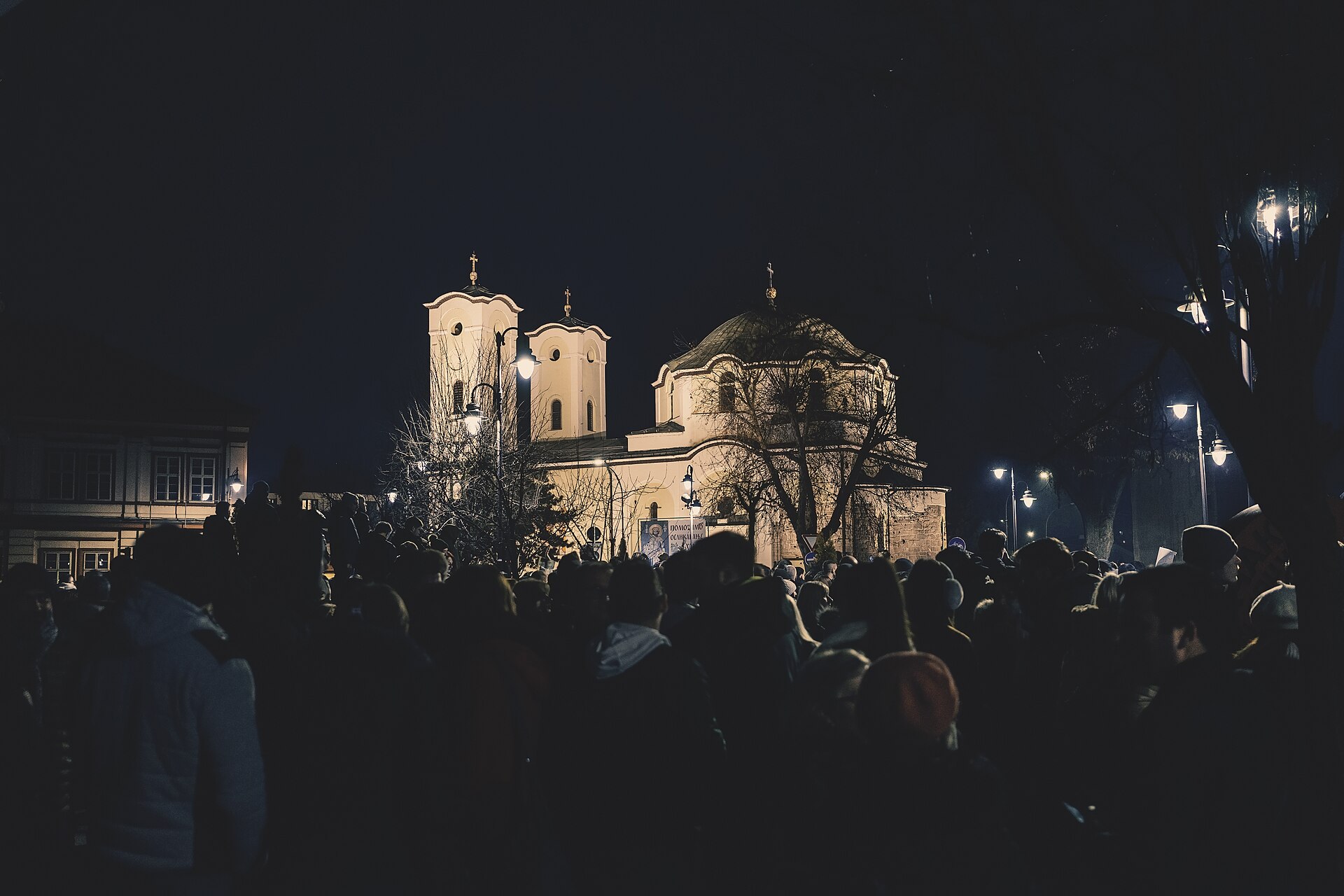
A presidential election must be held by 26 December, and no date is set.
Is the Money Waiting?
The International Monetary Fund projected growth of 2.8% in 2026. The weak spot is foreign investment: net inflows roughly halved in 2025 after a record 2024, National Bank of Serbia data show.
EXPO 2027, a specialised world exhibition in Belgrade from 15 May to 15 August 2027, is the first test of the new government’s purse. The Fiscal Council, a budget watchdog, puts EXPO-related spending at about €3.4 billion.
And there is a deadline that belongs to the outgoing government. NIS, Serbia’s main oil company, is majority Russian-owned and has been under US sanctions since 9 October 2025.
OFAC, the US Treasury sanctions office, extended its operating licence, and Hungary’s MOL’s licence to negotiate a purchase, to 30 October.
What Could Still Go Wrong?
The count itself. RIK’s first tally, from 203 of 8,392 polling stations, had Vučić’s list ahead, and partial counts depend on which stations report first.
CRTA, the Serbian election watchdog, reported pressure on voters; RIK called the irregularities mostly minor.The losers still hold the keys.
Vučić said he would respect the result, but the SNS keeps the institutions it built over 14 years and would keep about 104 seats.And the winners may not stay one team.
Candidates accept only “moral and political” responsibility to the plenums. The mandate belongs to the MP rather than the list, so the plenums cannot remove anyone once elected, according to the European Consortium for Political Research.
Blockading a lecture hall takes conviction. Running a ministry takes a majority that holds.
What to Watch
- Around 29 October: RIK final results.
- 30 October: US licences for NIS operations and for MOL’s talks expire.
- Late November: the new Assembly must meet, within 30 days of final results.
- By 26 December: presidential election; no date is set.
Sources
Republic Electoral Commission of Serbia · Student List, “Student Plan” (studenti.org.rs) · Ipsos and CeSID projection · CRTA · European Consortium for Political Research · European Commission 2025 Serbia report · European Parliament · International Monetary Fund · National Bank of Serbia · US State Department · ISAC Fund · Serbian Fiscal Council · US Treasury OFAC
This article was produced by The Rio Times’ automated newsroom system. How we use AI · Report an error · Editorial responsibility: Matthias Camenzind, Editor-in-Chief
Frequently Asked Questions
Did the students win the Serbia election?
Ipsos and CeSID projected the Student List at 52% and about 138 of 250 seats, and Vučić said his list lost. RIK has not yet published a final result.
Will the Student List need a coalition?
On the projection, no, because a majority takes 126 of 250 seats. That depends on the final count.