Señor de los Milagros Lima Processions in Peru: What to Expect on 18, 19 and 28 October 2026
PERU · CULTURE
Key Facts
- —What happens Major religious processions cross the historic centre of Lima, Peru on 18, 19 and 28 October 2026.
- —How big Reported outings last around 20 hours and cover much of the colonial centre.
- —What it means Streets, bus corridors and Metropolitano stations in central Lima shut for most of those days.
- —The catch The dates repeat every year, but the exact 2026 routes have not been published.
- —Who it affects Anyone with plans in the old centre, plus commuters on Avenida Tacna and Avenida Abancay.
- —What comes next The image returns to the Las Nazarenas church on Sunday 1 November.
The Señor de los Milagros Lima processions fill the old centre of the Peruvian capital for hours at a time each October. Here is what the month means for visitors and residents.
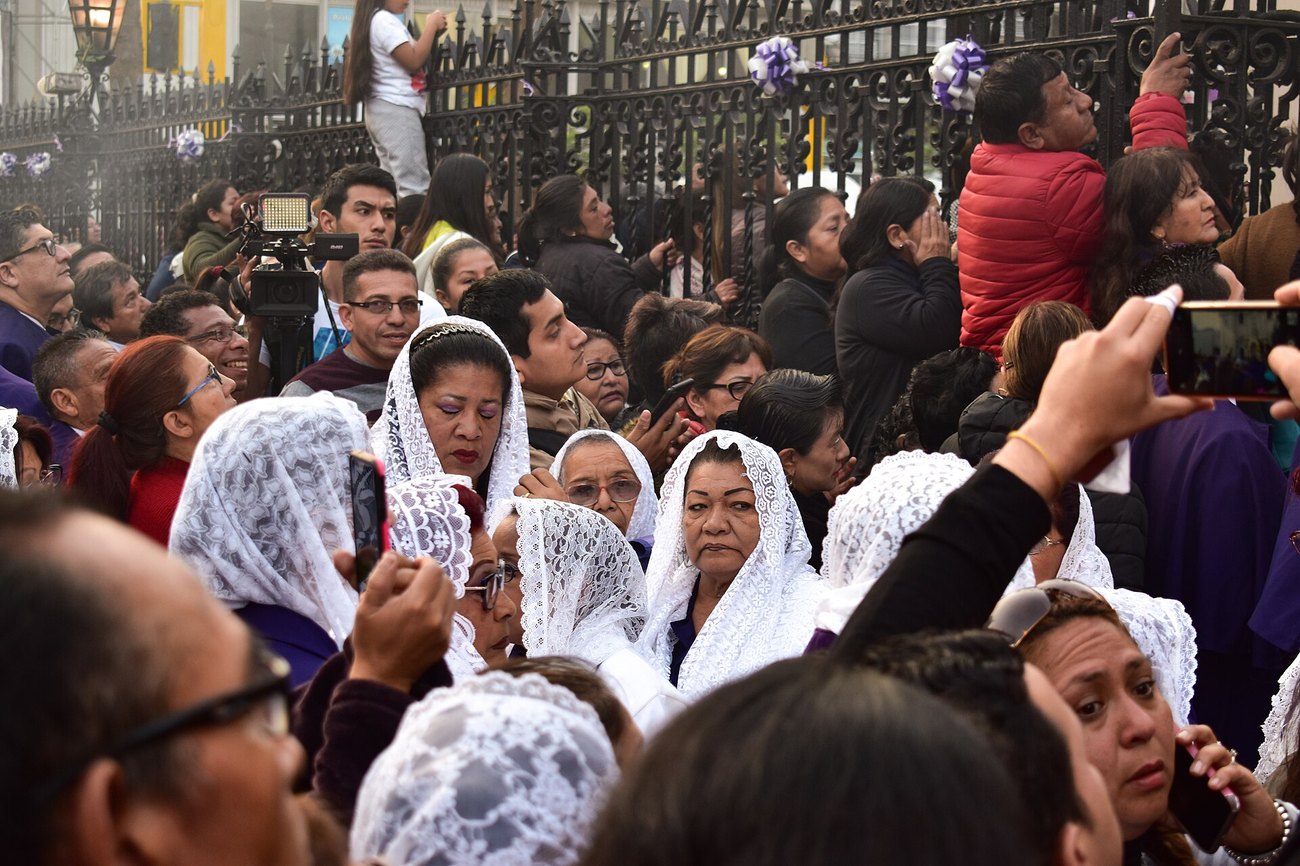
The Señor de los Milagros Lima processions return to the historic centre of Peru’s capital in October. The main outings are set for 18, 19 and 28 October 2026.
What the procession actually is
The Señor de los Milagros is a Catholic devotion built around a painted image of Christ. Lima has marked it in October for more than three centuries.
The original image stays inside the Las Nazarenas church on Avenida Tacna. What leaves the church is a replica on a heavy litter, carried on shoulders.
The carriers belong to the Hermandad del Señor de los Milagros de Nazarenas. The brotherhood is organised into 20 teams, called cuadrillas, who take turns under the litter.
This is not a parade with floats and sound trucks. It moves at walking pace and can fill most of a day and a night.
The processions did stop for three years during the pandemic. The Archdiocese of Lima announced their return in 2022.
Where the devotion comes from
The story begins in the 17th century in a Lima district called Pachacamilla. By tradition an enslaved man from Angola painted the image on an adobe wall there around 1651.
A severe earthquake struck Lima in 1655 and flattened much of the area. The wall carrying the painting was left standing, and believers read that as the first miracle.
Further earthquakes in 1687 and 1746 spread the devotion across the city. The image became known as the Cristo Moreno, the dark-skinned Christ.
The devotion grew out of Lima’s Afro-Peruvian community and remains closely tied to it. That link is still visible in the music and the brotherhoods today.
Historians dispute the painter’s identity. Accounts name a man called Benito or Pedro Dalcón, but the attribution is not settled.
What happens on the three main days
The main outings in 2026 fall on Sunday 18, Monday 19 and Wednesday 28 October. The image then returns to the Las Nazarenas church on Sunday 1 November.
Every outing leaves the Las Nazarenas sanctuary on Avenida Tacna. Reports put the 2025 starts at midday, and listings show the same for earlier years.
Plan for a very long day. Wikipedia puts the main route at roughly 20 hours, and Peruvian tour operators describe outings of 18 to 24 hours.
There are usually more than three outings in a season. Lima and Callao had six in 2025, the first on 4 October.
Which streets and buses are affected
The route covers the colonial core, so closures land on the streets most visitors come to see. Earlier routes have used Avenida Tacna, Jirón Ica, Jirón de la Unión and the Plaza Mayor.
Past years also took in Jirón Carabaya, Avenida Abancay and Jirón Junín, where Congress pays its respects. The late October route has run along Avenida Alfonso Ugarte.
Buses change as well. The Autoridad de Transporte Urbano para Lima y Callao, known as the ATU, publishes a diversion plan for each procession day.
In 2025 the ATU closed the Metropolitano stations at Colmena, Jirón de la Unión, Tacna and Castilla. Service C stopped short at Central.
Taxis and ride apps will not rescue you. Drivers avoid the cordon, and walking is often faster than sitting in the diverted traffic.
Purple clothes, turrón and mazamorra
October is known in Peru as el mes morado, the purple month. Devotees wear a purple habit, the hábito morado, often tied with a white cord.
You will see purple on buses, in offices and in shop windows all month. For many it marks a personal promise, so it is a religious garment, not a costume.
The sweet of the season is turrón de Doña Pepa, sold everywhere from early October. It is a slab of short sticks made with flour, sugar, lard and seeds.
The name honours a cook remembered as Doña Pepa, said to have been healed after praying to the image. That is tradition, not documented history.
Supermarkets, bakeries and street stalls sell it by the slice across the city. Mazamorra morada, a thick purple corn pudding, is the other flavour of the month.
How to plan your week and behave in the crowd
Treat 18, 19 and 28 October as lost days for anything inside the old centre. Museums, banks and offices near the route can be unreachable for hours.
Restaurants in the centre either close or fill completely. Book anything that matters in Miraflores, Barranco or San Isidro instead.
If you want to watch, arrive early and pick a spot on a side street. Crowds are dense, pickpocketing is a known risk, and leaving one is slow.
Stand still while the litter passes and keep your voice down. Photographs are normal, but avoid flash close to the image and never block the carriers.
Do not push through the rows of brothers, singers and incense bearers. Stewards will move you, and the polite answer is to step back without arguing.
What is still unconfirmed
The dates are fixed, but the 2026 routes are not public yet. As of mid-September neither the brotherhood nor the ATU had released a street plan.
In 2025 the transport plan appeared about two weeks before the first procession. Expect a similar window and check again before you travel into the centre.
Wikipedia calls these among the biggest Catholic processions of their kind in the Americas. No official crowd count is published, so treat any firm ranking with care.
Our report on the papal visit to Peru in November covers the other big date this season. Travellers leaving Lima can also read our note on the Inca Trail reopening.
More: Peru news in English, every day from The Rio Times.
Frequently Asked Questions
When is the Señor de los Milagros procession in 2026?
The main outings are Sunday 18, Monday 19 and Wednesday 28 October 2026, all through central Lima. The image then returns to the Las Nazarenas church on Sunday 1 November.
What is the procession route through central Lima?
The 2026 route has not been published, and past plans appeared only about two weeks ahead. Earlier years used Avenida Tacna, Jirón Ica, Jirón de la Unión, the Plaza Mayor and Avenida Abancay.
Why do people in Peru wear purple in October?
October is el mes morado, the purple month, and the colour is tied to this devotion. Devotees wear a purple habit, often as a personal promise, and many keep it on all month.
What is turrón de Doña Pepa and where can I buy it?
It is a sweet slab of short sticks made with flour, sugar, lard and seeds, bound with dark syrup and sprinkles. Supermarkets, bakeries and street stalls sell it across Lima through October.
Sources: Wikipedia (Lord of Miracles), the Archdiocese of Lima procession listing, RPP on the ATU diversion plan, America TV on the 18 October route and Quechuas Expeditions; see https://en.wikipedia.org/wiki/Lord_of_Miracles and https://www.arzobispadodelima.org/actividades/mes-morado-recorridos-y-acciones-significativas-en-octubre-2/ and https://rpp.pe/lima/actualidad/primer-recorrido-del-senor-de-los-milagros-este-es-el-plan-de-desvio-del-metropolitano-y-corredores-noticia-1655806 and https://gestion.pe/peru/senor-de-los-milagros-2025-conoce-las-fechas-y-rutas-de-los-seis-recorridos-en-lima-y-callao-noticia/
This article was produced by The Rio Times’ automated newsroom system. How we use AI · Report an error
Read More from The Rio Times