
PUERTO RICO · GEOPOLITICS
Key Facts
- —The basics Puerto Rico is a US territory of 3.18 million people (July 2025 estimate), and as of October 2026 Washington, not San Juan, sets its foreign relations, shipping rules, debt oversight and final political status.
- —Why it matters The island sits in the eastern Caribbean, where the US Army held logistics exercises in 2025 and the island’s Guard serves abroad, while Cuba, Russia and Nicaragua press the United Nations to call its status colonial.
- —The numbers Statehood won 58.61% of 1,059,212 counted votes on 5 November 2024, and the 2022 debt plan cut total Commonwealth debt service from US$90.4 billion to US$34.1 billion.
- —Who is who Governor Jenniffer González Colón leads the island government, Resident Commissioner Pablo José Hernández sits in the US House without a floor vote, and a seven-member oversight board created by Congress must approve its fiscal plans and budgets.
- —What to watch House bill H.R. 9246 would hold a four-option status vote on Sunday, 14 March 2027, but as of October 2026 it has only been referred to the House Natural Resources Committee.
- —Prediction markets Kalshi gives Puerto Rico a 1.7% chance of becoming the 51st US state before 20 January 2029 (16 October 2026, 10:22 a.m. ET).
- —What it means for you US citizens visit without a passport and pay in dollars, and foreign takeovers of island companies can face the same federal screening as in any state.
Puerto Rico geopolitics is the politics of a US territory, where Congress holds the final word. Here are the federal powers, the debt board, the status debate and the military role as of October 2026.
Puerto Rico geopolitics starts with one fact: the island is a US territory, so Washington decides its foreign relations and status. Its people are US citizens, but they have no vote for president and no voting member of Congress.
It had 3.18 million residents in July 2025, and has a governor, a non-voting delegate and a debt board created by Congress. Other governments deal with the island mainly through Washington, or through the United Nations, where Cuba and Russia press its case.
Puerto Rico Geopolitics Starts With Federal Power
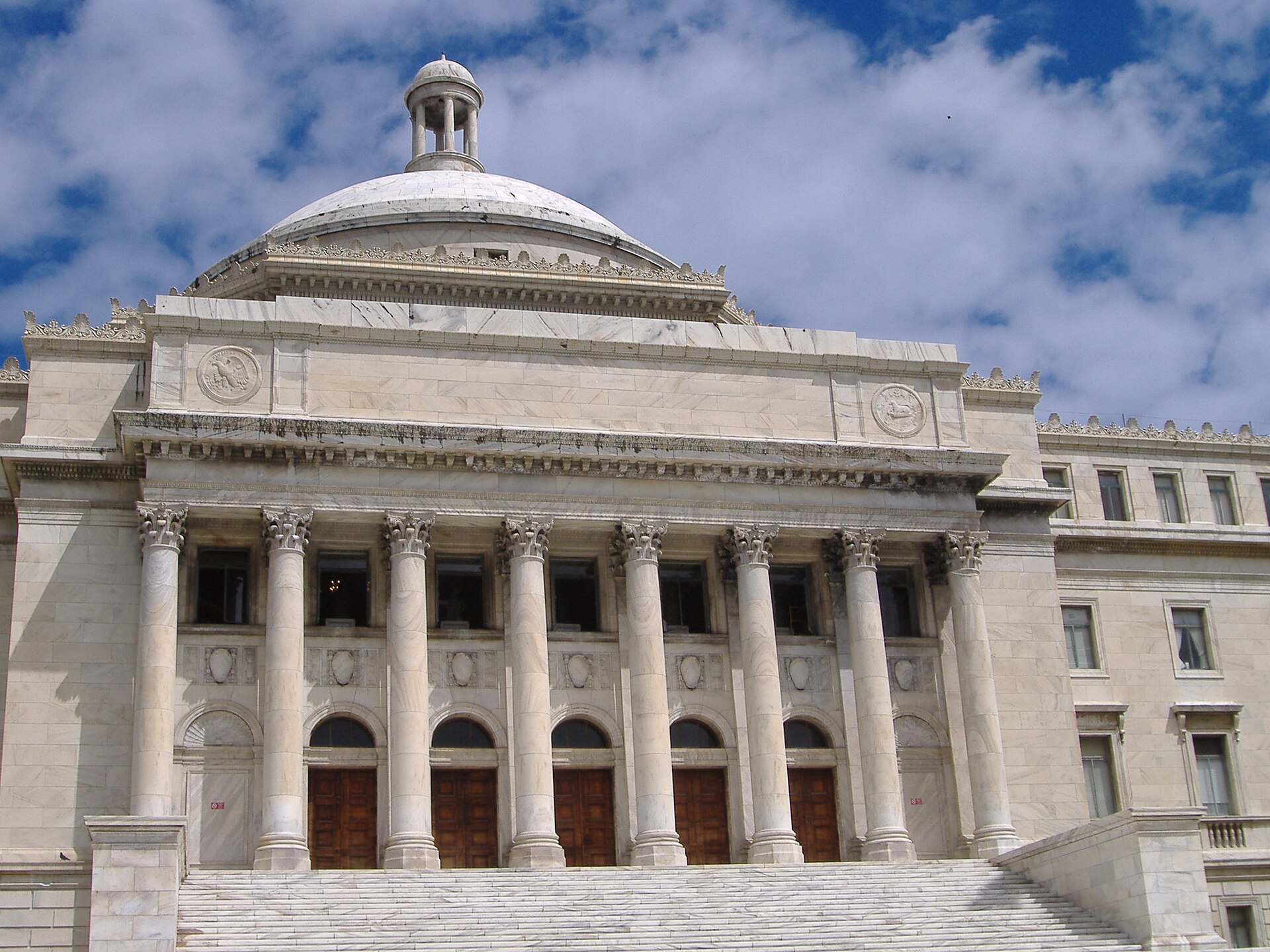
Congress governs Puerto Rico under the Constitution’s Territorial Clause, which lets it make all needful rules and regulations for territories. The 2016 debt law, PROMESA, says in its own text that Congress enacted it on that basis.
On Thursday, 9 June 2016, the Supreme Court held in Sanchez Valle that the “ultimate” source of prosecutorial power remains Congress. Behind the island’s people and its constitution, the Court found, stands Congress.
On Monday, 1 June 2020, the Court ruled in Aurelius that the debt board’s members are not officers of the United States. Their duties are mainly local, so the Appointments Clause does not dictate how they are chosen.
Federal benefits follow the same logic, including Supplemental Security Income (SSI), the cash aid for the poor, aged and disabled. In April 2022, the Court ruled 8 to 1 in Vaello Madero that Congress need not pay SSI benefits on the island.
Foreign relations belong to Washington, and the island has no seat of its own at the United Nations. Foreign takeovers can face federal screening, since the rules count any commonwealth or territory as part of the United States.
Daily life under this system is covered in the guide to Puerto Rico for Americans. This guide follows the power questions: shipping, debt, status, bases and outside powers.
The Jones Act and the Cost of Shipping
The Jones Act is the popular name for the coastwise rules in section 55102 of Title 46 of the US Code. A vessel carrying goods between the mainland and the island must be wholly owned by US citizens and hold a coastwise endorsement.
The endorsement generally requires a US-built vessel, and goods carried in breach of the rule can be seized or forfeited. The government may instead recover the goods’ value or the shipping cost, whichever is greater.
The Government Accountability Office (GAO), Congress’s auditor, studied the island’s shipping in a report published on 14 March 2013. It found that four Jones Act carriers move most cargo between the mainland and the island.
GAO called the effects of changing the law “highly uncertain.” Unrestricted foreign competition, it warned, could cause “the disappearance of most U.S.-flag vessels in this trade.”
Waivers are narrow, and the main route needs a presidential finding that national defense requires one. Such a waiver is capped at 10 days at a time and 45 days for one set of events.
The Maritime Administration must publish each finding that no qualified US ships are available, within 48 hours of notifying the transportation secretary. Trade with foreign neighbours such as the Dominican Republic is covered in the guide to Puerto Rico and its Caribbean neighbours.

PROMESA and the Debt Oversight Board
PROMESA, the Puerto Rico Oversight, Management, and Economic Stability Act, became law on Thursday, 30 June 2016. It created a seven-member oversight board to help the island reach fiscal responsibility and access to capital markets.
The board is an entity within the territorial government, not a federal agency, and the governor sits on it without a vote. Its seven members are appointed by the President, most from lists supplied by congressional leaders.
The board then took the island’s debt through court. A plan confirmed by Judge Laura Taylor Swain on Tuesday, 18 January 2022 took effect on Tuesday, 15 March 2022.
The board says the plan cut Commonwealth debt service, sales-tax bonds included, from US$90.4 billion to US$34.1 billion. Across all restructured debts, it says liabilities fell from more than US$70 billion to US$37 billion.
The unfinished piece is PREPA, the Puerto Rico Electric Power Authority, the public utility. The board’s website says a plan would cut its debt about 80% to US$2.6 billion, but it is not confirmed.
The law ends the board only when the island has market access at reasonable rates and four straight years of balanced budgets. The board itself must certify both conditions, so no end date is fixed.
On Friday, 1 August 2025, the White House sent dismissal notices to five of the board’s seven members, and a sixth followed. On Friday, 3 October 2025, a temporary restraining order held that three plaintiffs “have never been properly removed.”
The government appealed, and in December 2025 it asked the First Circuit to pause the case; the plaintiffs did not oppose. The case turns on whether courts can review a removal for cause, PROMESA’s only ground, and whether notice is required.
The Status Debate and the Plebiscites
Puerto Rican politics revolve around status more than left and right: statehood, independence, free association or the current commonwealth. Any change needs an act of Congress, as the two House bills below show.
A plebiscite held with the general election on Tuesday, 5 November 2024, offered three options and left out the current commonwealth. The State Elections Commission’s official count gave statehood 620,782 of 1,059,212 counted votes (58.61%).
Free association took 313,259 votes (29.57%) and independence 125,171 (11.82%). The vote does not bind Congress, which alone can change the island’s status.
The Puerto Rico Status Act, H.R. 8393, passed the House 233 to 191 on Thursday, 15 December 2022, offering only non-territorial options. It reached the Senate the same day and saw no further action, so it lapsed with that Congress.
Resident Commissioner Pablo José Hernández filed H.R. 9246, the Puerto Rico Democratic Self Determination Act, on Wednesday, 10 June 2026. It would put four options on the ballot: independence, commonwealth, statehood and sovereignty in free association.
The vote would be held on Sunday, 14 March 2027, and a majority of valid votes would be needed to win. If nobody wins, a runoff between the top two options would follow on Sunday, 16 May 2027.
The bill would also end PROMESA and the board once the chosen status takes effect, with a two-year delay for commonwealth. Its official record shows no action beyond referral to the House Natural Resources Committee on 10 June 2026.
The New Progressive Party backs statehood, the Popular Democratic Party defends the commonwealth, and the Puerto Rican Independence Party seeks independence. Governor Jenniffer González Colón, in office since January 2025, belongs to the pro-statehood party.
Bases, Radar and the Strategic Map
Puerto Rico’s strategic value is its place in the eastern Caribbean, beside Hispaniola and the Virgin Islands. Official records show past and present uses for logistics, air defense, counter-drug surveillance and National Guard missions.
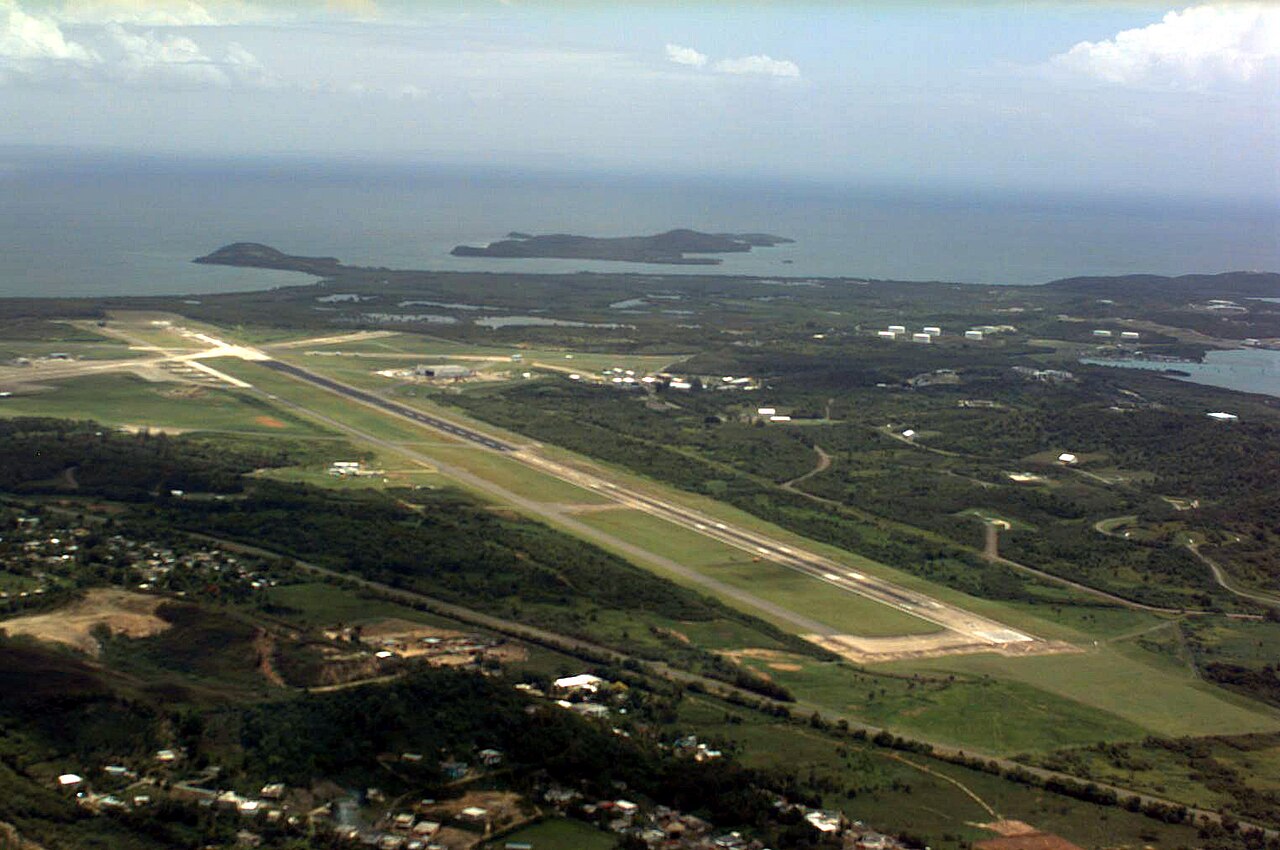
In early September 2025, the island’s economic development secretary said the US Army was using Roosevelt Roads for logistics exercises. The statement called them temporary maneuvers with no ammunition or weapons, coordinated with Muñiz Air National Guard Base.
Roosevelt Roads is a former Navy station in Ceiba, and the island government wants it redeveloped for civilian use. On Sunday, 13 September 2026, the governor’s office said demolition had begun on old Coast Guard pier structures there.
The site is meant for a Marine Business, Research and Innovation Center, with completion projected for 2029. An auction is expected in early 2027, and the governor cited more than 63,000 local blue economy jobs.
On Saturday, 12 September 2026, the governor honored about 4,000 Puerto Rico National Guard soldiers and aviators at Camp Santiago in Salinas. The Guard had more than 800 soldiers and aviators on missions outside Puerto Rico, the governor’s office said.
In October 2017, the National Guard Bureau said the Puerto Rico Air National Guard ran radars at Punta Salinas and Aguadilla. Their mission then was air defense and counter-drug interdiction.
After Hurricane Maria, the unit shared its radar imagery with the Federal Aviation Administration and the Air Force. On Saturday, 11 September 2021, the Guard put its radar unit, the 140th Air Defense Support Squadron, into inactive status.
The Guard said members of the 156th Wing would assume the responsibility. The present radar role of the sites is not confirmed in the sources checked.
In February 1998, the Navy decided to build an over-the-horizon radar in Puerto Rico to monitor drug activity. The plan put a transmitter on Vieques and a receiver at Fort Allen in Juana Díaz, operated from Chesapeake, Virginia.
The Navy said the system would cover Peru, Bolivia and Colombia and complement radars in Virginia and Texas. Its current operating status is not confirmed by the primary sources checked.
The wider US buildup in the Caribbean, including Roosevelt Roads, is covered in the guide to Puerto Rico and its neighbours. That guide also covers Mona Passage migration and trade with the Dominican Republic.
Russia, Cuba and the UN Decolonization Committee
The UN Special Committee on Decolonization, known as the C-24, has adopted 43 resolutions and decisions on Puerto Rico since 1972. The UN’s automatic transcript, not an official record, says it adopted draft L.7 without a vote on Monday, 22 June 2026.
Cuba, Nicaragua and the Russian Federation sponsored the draft, and the transcript says Venezuela joined as a co-sponsor. China, India, the Gulf states and Turkey were not among the sponsors.
The text reaffirms the island’s right to self-determination and independence and calls on Washington to promote that process. It also urges the return of all military-occupied lands, in particular installations on Vieques and in Ceiba.
The draft describes the oversight board as an imposed body with plenary control powers over elected officials. It also asks the General Assembly to consider Puerto Rico and decide on the question as soon as possible.
At the same meeting, Russia spoke for the Group of Friends in Defense of the Charter of the United Nations. Cuba’s ambassador thanked the Non-Aligned Movement, CELAC and that group for their statements.
CELAC, the Community of Latin American and Caribbean States, reaffirmed Puerto Rico’s regional character in its Buenos Aires Declaration of January 2023. Its Bogotá Declaration of March 2026 omits the island, though a CELAC statement at the 22 June UN meeting repeated the position.
The island’s place in regional bodies is covered in the guide to Puerto Rico’s role in Latin America. That guide also compares its economy with Latin American peers.
China, Europe and the Other Outside Powers
No primary source checked for this guide shows a Chinese, Indian, Gulf or Turkish loan, base or treaty with the island. That fits the law, because foreign relations belong to Washington.
The Committee on Foreign Investment in the United States (CFIUS) can review a foreign purchase of an island company. Its rules define the United States to include any commonwealth, territory, dependency or possession, so the island is covered like a state.
Spain ruled the island until 1898, and the Spanish language still ties it to Madrid and to Latin America. The sources checked show no treaty or formal agreement between the European Union and the island government.
What each outside power wants is clear for Washington and for the UN critics, and unconfirmed for the rest. The list below separates what documents show from what they do not.
- United States: final say on status, debt and shipping, with Army logistics exercises and Guard missions on the island.
- Island government: federal funds, including Medicaid and reconstruction money, and civilian redevelopment of Roosevelt Roads.
- Cuba, Nicaragua, Russia and Venezuela: a UN finding that US rule is colonial, independence for the island and the return of military land.
- China, India, the Gulf states, Turkey and the BRICS group: no demands on Puerto Rico found in the sources checked.
- Spain and the European Union: none found in the sources checked, beyond the ties of language and history.
What It Means for US Readers
US citizens can fly to Puerto Rico without a passport and pay in dollars. Residents cannot vote for president, and federal decisions on debt, shipping and benefits reach them without a voting member of Congress.
Popular, First BanCorp, OFG Bancorp and Evertec file with the Securities and Exchange Commission. The 2022 plan cut Commonwealth debt service to US$34.1 billion, but the PREPA restructuring remains open for creditors.
The Jones Act limits who can carry goods to the island, but GAO called the effect of changing it highly uncertain. Any status change would be decided by Congress, so voters in all 50 states have a stake through their representatives.
Living there is covered in the guide to moving to Puerto Rico in 2026 and the San Juan guide. All coverage is collected on the Puerto Rico page.
What Prediction Markets Say
Kalshi, a US-regulated prediction-market exchange, lists a bet on whether Puerto Rico becomes the 51st state before 20 January 2029. Yes was priced at 1.7%, the midpoint of bid and ask (16 October 2026, 10:22 a.m. ET).
Other outcomes in the same market are also long shots, with Cuba at 4.5% and Venezuela at 2.3%. The last trade was 1.9%, against 1.5% the previous day, so no large move was seen.
In all, 211,257 contracts had traded and 72,307 were open by 16 October, and each pays US$1 if the bet wins. Bets are not forecasts, and prices can move within minutes.
Why we show this: prediction markets turn real-money bets into a live probability that moves within minutes of the news, which is why investors, campaigns and newsrooms in the United States now follow them closely. We show them next to polls and official results, never instead of them.
What Is Not Known
This guide could not confirm who sits on the oversight board in October 2026 or how the First Circuit ruled. The latest confirmed facts are the 2025 dismissals, the 3 October 2025 order and the December 2025 request to pause the appeal.
Metro Puerto Rico reported that the First Circuit reopened the case on 1 July 2026 after the Supreme Court’s Cook ruling. El Nuevo Día reported on 31 August 2026 that the Justice Department agreed to a permanent injunction; no court record was found.
The board’s website still lists PREPA as unfinished, but a confirmed plan and the latest court dates were not found. The debt figures here are the board’s own, tied to the plan effective 15 March 2022; its debt page carries no date.
The operating status of the Navy’s radar plan from 1998 is not confirmed by the primary sources checked. Troop numbers on the island in 2026 are not confirmed by any official record found for this guide.
No source checked shows China, India, the Gulf states, Turkey or the BRICS group taking a position on Puerto Rico. No 2026 waiver of the Jones Act for the island was found in the sources checked.
H.R. 9246 has no recorded hearing or vote, so the date of any status vote is unknown. The island’s next general election is due in November 2028.
Frequently Asked Questions
Who controls Puerto Rico’s foreign policy?
The US government does, because the island is a territory and has no seat of its own at the United Nations. The governor runs local government, but treaties, defense and foreign investment screening are federal matters.
What is the Jones Act and how does it affect Puerto Rico?
The Jones Act reserves shipping between US points for US-built, US-owned vessels, and it covers cargo between the mainland and the island. GAO found in 2013 that four carriers move most of that cargo and called changing the law highly uncertain.
What is PROMESA?
PROMESA is the 2016 federal law that created the seven-member oversight board and a court process for the island’s debt. The board says the 2022 plan cut total Commonwealth debt service from US$90.4 billion to US$34.1 billion.
Will Puerto Rico become a state?
Only Congress can make it a state, and the last status bill to pass the House, H.R. 8393, died in the Senate. Statehood won 58.61% in the 2024 plebiscite, and H.R. 9246 would hold a four-option vote on 14 March 2027.
Do China or Russia have bases or deals in Puerto Rico?
No primary source checked shows a Chinese or Russian base, loan or treaty in Puerto Rico. Russia co-sponsored the 2026 UN decolonization text, and CFIUS can review foreign purchases of island companies.
What US military sites are in Puerto Rico?
Official records name Roosevelt Roads in Ceiba, Muñiz Air National Guard Base and Punta Salinas Air Guard Station. A 1998 Navy decision approved a radar for Vieques and Juana Díaz, and its present status is not confirmed.
Sources: US Code, 48 U.S.C. 2121 (PROMESA, Oversight Board); US Code, 48 U.S.C. 2149 (termination of the Board); US Code, 46 U.S.C. 55102 (Jones Act); US Code, 46 U.S.C. 12112 (coastwise endorsement); US Code, 46 U.S.C. 501 (waivers); eCFR, 31 CFR 800.251 (CFIUS, definition of United States); GAO-13-260, Puerto Rico maritime trade and the Jones Act; Supreme Court, Puerto Rico v. Sanchez Valle (2016); Supreme Court, Financial Oversight and Management Board v. Aurelius (2020); Supreme Court, United States v. Vaello Madero (2022); Financial Oversight and Management Board, debt restructuring; Congressional Research Service, attempted dismissals of Board members (January 2026); First Circuit, Gonzalez v. Gor, joint motion (December 2025); State Elections Commission, 2024 general election statistical report; H.R. 8393, Puerto Rico Status Act, as passed by the House; H.R. 8393, bill status and roll call; H.R. 9246, Puerto Rico Democratic Self Determination Act; H.R. 9246, bill status; UN Special Committee on Decolonization, draft resolution A/AC.109/2026/L.7; UN Transcripts, C-24 eighth meeting, 22 June 2026 (automatic transcript, not an official record); CELAC, Buenos Aires Declaration 2023; CELAC, Bogotá Declaration 2026; Puerto Rico Department of Economic Development and Commerce, statement on Roosevelt Roads (September 2025); La Fortaleza, demolition at Roosevelt Roads (13 September 2026); La Fortaleza, Heroes Day with the National Guard (12 September 2026); La Fortaleza, Office of the Governor, press releases; National Guard Bureau, Puerto Rico Air National Guard radar (2 October 2017); Puerto Rico National Guard, 156th Wing, inactivation of the 140th Air Defense Support Squadron (11 September 2021); Federal Register, Navy record of decision on the Puerto Rico radar (17 February 1998); US Census Bureau, Vintage 2025 population estimates; Office of Resident Commissioner Pablo José Hernández; Metro Puerto Rico, First Circuit reopens the Board removal case (2 July 2026); El Nuevo Día, injunction on Board removals (31 August 2026); SEC, company tickers (all accessed 16 October 2026).
This article was drafted with automated assistance and reviewed before publication. How we use AI · Report an error · Editorial responsibility: Matthias Camenzind, Editor-in-Chief
Expat Guide to Puerto Rico
What The Rio Times publishes for foreigners who live in or move to Puerto Rico.
Start here
Coming up in Puerto Rico
Understand Puerto Rico