Who Runs Puerto Rico’s Economy, the Key Players in 2026
PUERTO RICO · ECONOMY
Key Facts
- —The country Puerto Rico is a US territory in the Caribbean with 3.18 million US citizens. Its economy runs on factories, banks, tourism and a large flow of federal money.
- —Size and direction The Planning Board says real output grew just 0.4% in the year to June 2025. It expects about the same in the year to June 2026.
- —The factories The Planning Board says manufacturing makes up 44% of output. Invest Puerto Rico, the state promotion agency, puts 2025 exports at US$62.4 billion.
- —The banks Popular holds US$77.8 billion in assets at 30 September 2026. FirstBank held US$19.2 billion at 30 June 2026, and OFG US$12.1 billion at 30 September.
- —The overseers A federal Oversight Board still approves the government’s budget and fiscal plan. It says about 80% of the debt has been restructured since 2016.
- —The power grid LUMA Energy runs the lines and Genera PR runs the plants. The government is trying to end the LUMA contract, and the island’s Supreme Court is weighing it.
- —Still open Incomes are low, and the Board warns of a federal Medicaid funding cliff that could begin in 2028. The grid and the oil price also threaten growth.
The Puerto Rico economy matters to Americans because the island is US soil and exported US$62.4 billion in 2025. Its fate rests with a few banks, factories, two power companies and a federal oversight board.

The Puerto Rico Economy in Numbers
The Puerto Rico economy is small by US standards but dense with institutions. This guide follows the main players across Puerto Rico in October 2026.
Puerto Rico is a Caribbean island of 3,184,835 people, according to the US Census Bureau’s estimate for 1 July 2025. Median household income was US$26,297 in the 2020-2024 American Community Survey, and Census QuickFacts lists a poverty rate of 37.3%.
The island’s Planning Board, its official forecaster, reported real output growth of 0.4% in fiscal year 2025, which ended in June 2025. Output measured at current prices rose 2.6%, and employment averaged about 1.16 million people.
The Planning Board set its base case in October 2025 and kept it in its report of 4 May 2026. It sees growth of 0.4% for the year to June 2026 and 0.3% after that.
The optimistic case is 2.3% and the pessimistic case a 1.6% contraction.
Fewer than half of working-age Puerto Ricans hold or seek a job, which holds back the Puerto Rico economy. The federal Oversight Board puts the labour force participation rate at 44.9%, against 62.3% in the United States.
The Planning Board said early indicators for the first half of the 2026 fiscal year looked mixed. Tourism rose 6%, retail sales 2.6% and manufacturing exports 4.7%, but overall activity slowed.
The report named oil prices as the main risk. If crude stays above US$100 a barrel for weeks, the Board says its outlook turns pessimistic.
Who Holds the Purse
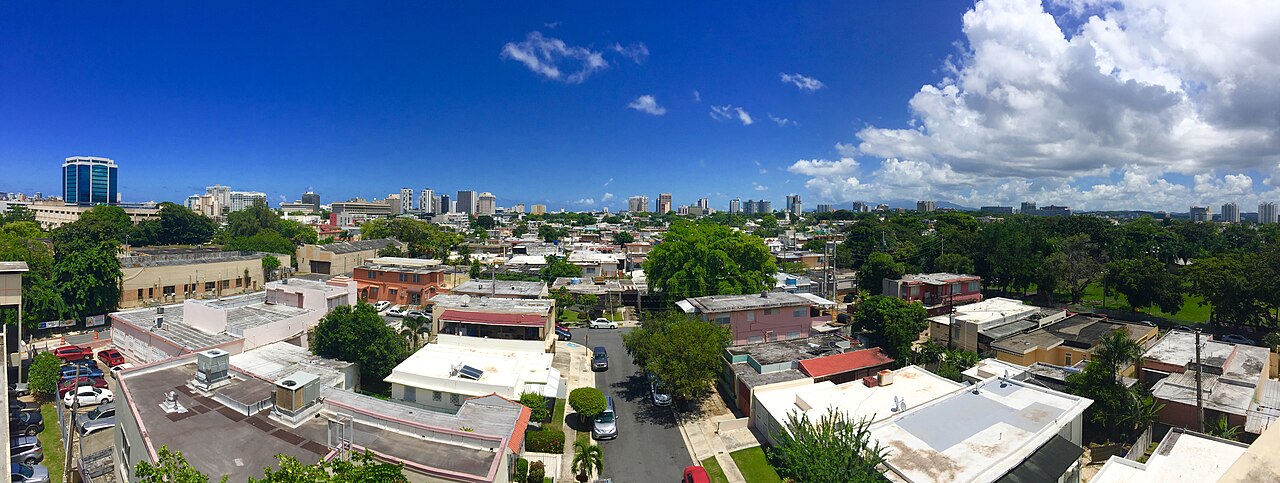
Governor Jenniffer González Colón leads the elected government in San Juan, the capital, and sets the direction of the Puerto Rico economy. She also sits on the Oversight Board as an ex-officio member, according to the Board’s own website.
The Oversight Board is a federal body created by the 2016 PROMESA law, the US statute that handles Puerto Rico’s debts. It must certify the island’s fiscal plan and each annual budget.
Its website lists Arthur J. González as chair, with Andrew Biggs, John Nixon and Betty Rosa as members. Robert Mujica is named on its executive team.
President Donald Trump tried to fire three of them, González, Biggs and Rosa, in 2025. A federal judge in San Juan blocked the dismissals in October 2025.
On 17 August 2026 an appeals court sent the case back to the San Juan judge. The injunction was not revoked.
In her State of the State speech of 21 May 2026, the governor said the 2026-27 budget would be the second the Board certified. She said four in a row are needed before the Board can leave.
The governor’s budget includes US$176 million for roads and US$44 million for police pay scales, according to Metro Puerto Rico’s report of the speech.
The Board is less upbeat. Its May 2026 report put General Fund revenue at US$6.0 billion by December 2025, 1.7% above plan but 5% below a year earlier.
- Governor: Jenniffer González Colón leads the island government and its budget proposal.
- Oversight Board: certifies fiscal plans and budgets, and negotiates debt. Chair Arthur J. González.
- Planning Board: the island’s official forecaster, which publishes the yearly Economic Report.
- Energy czar Josué Colón Ortiz: the governor’s point person on the power system, who spoke for the government in the LUMA dispute on 7 October 2026.
The Debt Deal and the Federal Money
Governor Alejandro García Padilla declared the island’s debt unpayable in 2015. Congress then passed PROMESA in 2016 and set up the Oversight Board.
The Board says it has restructured about 80% of the island’s debt. It says total liabilities fell from more than US$70 billion to US$37 billion, saving more than US$50 billion in debt service.
The largest piece was the Commonwealth plan, confirmed by a federal judge on 18 January 2022 and effective from 15 March 2022. The sales-tax bond deal, known as COFINA, cut US$18 billion of debt to US$12 billion in 2019.
The power company PREPA remains the open case. The Board says its proposed plan would cut more than US$10 billion of claims by about 80%, to about US$2.6 billion.
Federal money now props up the economy, and the Oversight Board says Puerto Rico has received over US$120 billion in federal recovery and stimulus funds. It says 58% of reconstruction money is still unpaid.
The Board warns that this inflow may be masking weak spots in the Puerto Rico economy. It also flags a Medicaid funding cliff from 2028 if federal support is not extended.
The government held US$10.7 billion in its main cash account at 30 September 2025, according to the Board. About 76% of that was restricted or already committed.
Banks: Popular, FirstBank and OFG
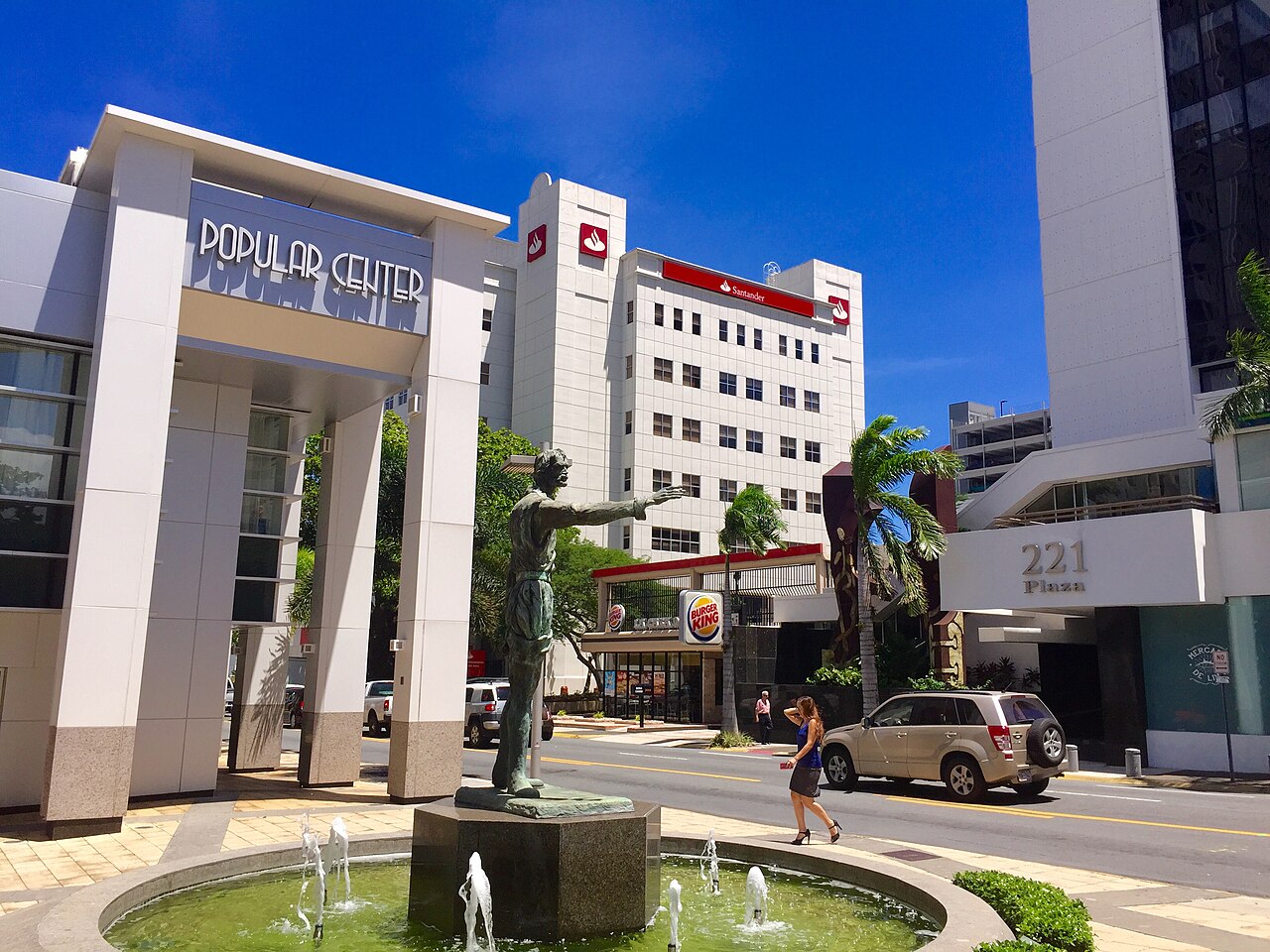
Three banks are the best-known lenders in the Puerto Rico economy: Popular, FirstBank and OFG. Each published results in 2026.
Popular, Inc., the parent of Banco Popular de Puerto Rico, is by far the biggest. For the three months to 30 September 2026, Popular reported net income of US$266 million.
Total assets were US$77.8 billion and deposits US$68.7 billion. Jorge J. García is president and chief executive, and the group had 9,112 full-time staff at 30 September 2026.
FirstBank, part of First BanCorp, is second. Chief executive Aurelio Alemán reported assets of about US$19.2 billion and quarterly net income of US$96.1 million at 30 June 2026.
OFG Bancorp, which owns Oriental Bank, is third. On 21 October 2026 chief executive José Rafael Fernández reported assets of US$12.1 billion and quarterly net income of US$56.6 million.
Popular’s Puerto Rico unit earned US$592 million in net interest income in the quarter. That is the gap between what it earns on loans and pays on deposits.
Factories and Exports
Manufacturing is the engine of the Puerto Rico economy. The Planning Board says it accounts for 44% of Puerto Rico’s gross domestic product, the value of everything the island produces.
Invest Puerto Rico, the government’s investment promotion agency, reports US$62.4 billion in exports across sectors in 2025. It lists advanced manufacturing, biosciences, aerospace, food and beverage, and logistics among its ten target sectors.
The agency names Bacardi & Company, HP and Lufthansa Group among the companies that chose Puerto Rico. Its bioscience pitch points to more than 70 years of experience in drugs and medical products.
The Planning Board’s first-half figures show manufacturing exports up 4.7% in fiscal year 2026. The Board says overall activity slowed in that period.
Reshoring, the move of production closer to the US market, is the Planning Board’s biggest hope. It calls it a major opportunity for the island’s industrial base.
The island’s film incentives and rum-producer incentives, both listed by the economic development department, add a smaller layer of industry.
The Power Grid: LUMA, Genera and PREPA
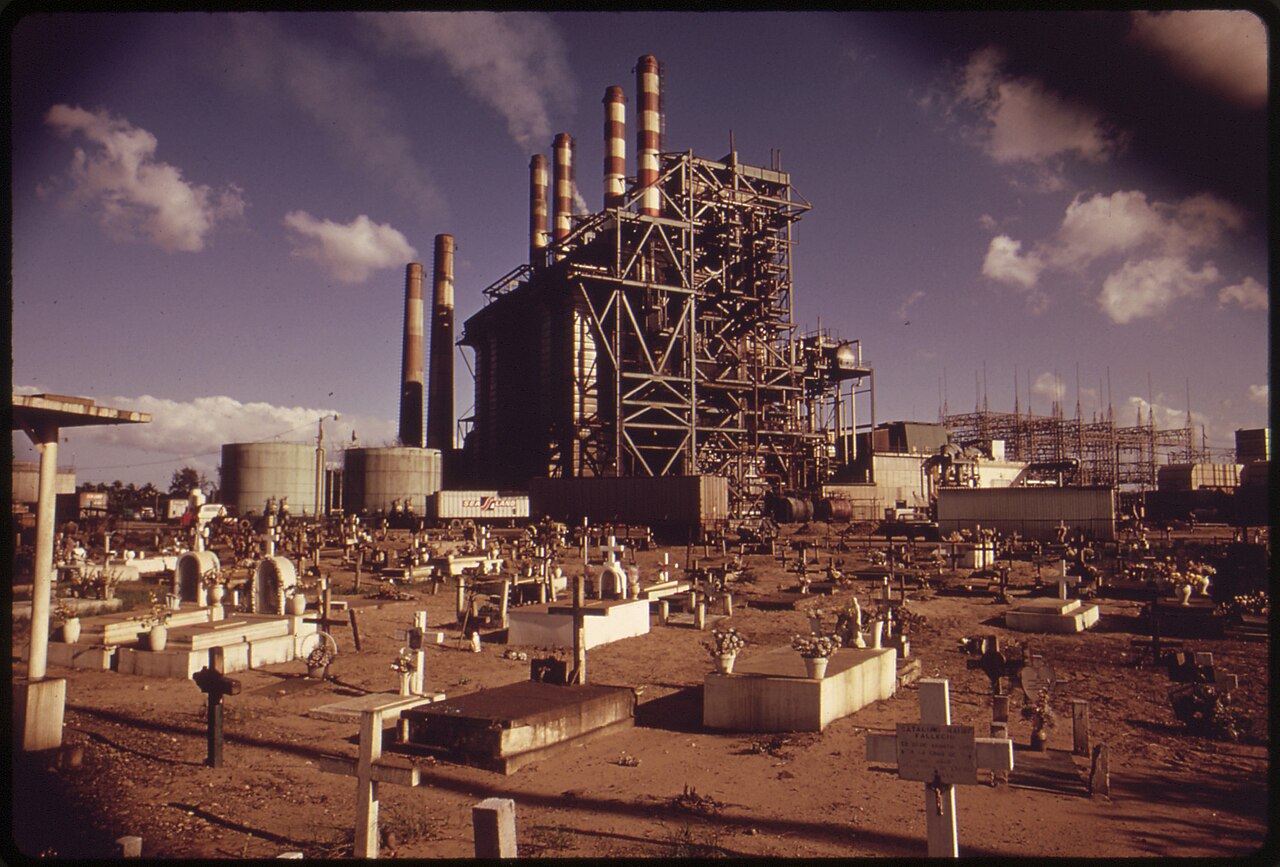
The Puerto Rico economy depends on a power system split between private operators and a state owner. PREPA, the Puerto Rico Electric Power Authority, is the state-owned utility whose generation systems Genera uses and whose debt is still being restructured.
LUMA Energy runs the transmission and distribution lines under a contract signed with the government. Genera PR runs PREPA’s oil and gas power plants under a 10-year contract, and its parent company is New Fortress Energy.
On 15 December 2025, the government sued to end the LUMA contract, saying a 2022 extension was invalid. Governor González Colón called LUMA’s performance unacceptable.
On 7 October 2026, LUMA said cancelling the extension would trigger about US$1.3 billion in costs. The government replied that nearly 70% of that sum would be owed whoever runs the grid.
According to the government’s statement of that day, the island’s Supreme Court is still weighing whether the 2022 extension was legal. No ruling had been reported.
Genera’s parent also faces trouble. New Fortress Energy said on 17 March 2026 that it cannot meet its debt obligations, and it plans to restructure through the US bankruptcy courts.
The Energy Bureau, the power regulator, approved budgets in April 2026. They fell US$1.3 billion to US$1.9 billion a year short of what the three companies asked.
Tourism, Tax Incentives and Reshoring
Tourism is a second source of growth for the Puerto Rico economy. The Planning Board counted a 6% rise in tourism in the first half of fiscal year 2026.
Act 60, the island’s incentives code, is the main tax lure. Invest Puerto Rico says it offers reduced corporate tax rates, capital gains exemptions and research incentives, and it advertises a 4% corporate rate.
The economic development department, known by its Spanish initials DDEC, issues the tax decrees. On 15 September 2026 it issued an order to simplify and automate its young-entrepreneur decrees.
The DDEC lost its secretary, Sebastián Negrón Reichard, when he resigned on 26 May 2026. The governor named Carlos J. Ríos Pierluisi, who had led the Roosevelt Roads redevelopment authority, and the Senate confirmed him on 22 June 2026.
Individual taxpayers arriving under Act 60 are a separate story, covered in this guide to moving to Puerto Rico. For the wider political and security picture, see the Rio Times Puerto Rico geopolitics explainer.
The governor says her permit reform has cut waiting times sharply. She told lawmakers single-permit waits fell from 82 days to 11, and construction permits from 97 to 29.
What It Means for US Readers
Puerto Rico is a US jurisdiction, in Invest Puerto Rico’s words, with US legal and financial systems. People born there are US citizens by federal law.
Investors in US-listed Popular, First BanCorp and OFG are betting on a slow-growth Puerto Rico economy that still produces bank profits. Anyone planning a trip or a move should expect power cuts and rising electricity costs as the grid dispute plays out.
Taxpayers have a stake in the Puerto Rico economy too. Federal recovery money, Medicaid support and the Oversight Board are all paid for or backed by Washington.
What Is Not Known
Whether the island’s Supreme Court will cancel the LUMA extension is not known, nor who would run the grid afterwards. No replacement operator has been named in the government’s statements.
Whether González, Biggs and Rosa keep their Oversight Board seats is still before the federal court in San Juan.
Whether the PREPA debt plan will win final approval from the federal judge is open. The Board’s own website describes the plan as still in progress.
The size of the island’s family-owned businesses is not public, because private companies publish no accounts. The share of drug-industry output made by each company is also not published in the sources reviewed here.
For the Puerto Rico economy, the Planning Board’s base case is growth of 0.4% a year, which leaves little room for shocks. A rise in oil prices or a Medicaid cut could change that.
Frequently Asked Questions
Who runs the Puerto Rico economy?
No single group runs the Puerto Rico economy. The elected government, a federal Oversight Board, three big banks, factories and two power companies each hold a share of control.
How big is the Puerto Rico economy?
The Planning Board reports real output growth of 0.4% in fiscal year 2025 and expects similar growth in 2026. The island has 3.18 million people and a median household income of US$26,297.
What is the Oversight Board?
It is a federal board created by the PROMESA law in 2016. It certifies Puerto Rico’s budgets and fiscal plans and negotiates the island’s debts.
What are the biggest banks in Puerto Rico?
Popular, FirstBank and OFG Bancorp are the largest locally headquartered banks. Popular alone held US$77.8 billion in assets at 30 September 2026.
Who runs Puerto Rico’s electricity?
LUMA Energy runs the power lines and Genera PR runs the plants, both under contract to the state-owned PREPA. The government is trying to end the LUMA contract.
Is Puerto Rico part of the United States?
Yes. It is a US territory, and people born there are US citizens under federal law.
Sources: Popular, Inc., third quarter 2026 earnings release (SEC filing), 22 October 2026; OFG Bancorp, third quarter 2026 earnings release (SEC filing), 21 October 2026; First BanCorp, second quarter 2026 earnings release, 22 July 2026; Junta de Planificación, Informe Económico 2025, 4 May 2026; Financial Oversight and Management Board for Puerto Rico, Debt, October 2026; Financial Oversight and Management Board for Puerto Rico, About Us, October 2026; US Census Bureau, QuickFacts Puerto Rico, V2025 estimate, 1 July 2025; Invest Puerto Rico, 2026; DDEC, Departamento de Desarrollo Económico y Comercio, October 2026; Metro Puerto Rico, court keeps three Oversight Board members in place, 7 October 2025; Metro Puerto Rico, appeals court returns Oversight Board dismissal case, 17 August 2026; Metro Puerto Rico, Senate confirms DDEC secretary, 22 June 2026; Metro Puerto Rico, governor names new DDEC secretary, 15 June 2026; Cornell Law School, 8 U.S. Code 1402 (citizenship of persons born in Puerto Rico), 2026; Genera PR, October 2026; Metro Puerto Rico, Oversight Board first-quarter report, 16 March 2026; Metro Puerto Rico, Oversight Board second-quarter report, 13 May 2026; Metro Puerto Rico, governor’s State of the State, 21 May 2026; El Nuevo Día, Energy Bureau budget decision, 27 April 2026; San Juan Daily Star, government rejects LUMA cost estimate, 7 October 2026; San Juan Daily Star, New Fortress restructuring and Genera, 24 March 2026; San Juan Daily Star, House leaders back ending LUMA contract, 15 December 2025.
This article was produced by The Rio Times’ automated newsroom system. How we use AI · Report an error · Editorial responsibility: Matthias Camenzind, Editor-in-Chief
Expat Guide to Puerto Rico
What The Rio Times publishes for foreigners who live in or move to Puerto Rico.
Start here
Coming up in Puerto Rico
Understand Puerto Rico
Rotate for Best Experience
This report is optimized for landscape viewing. Rotate your phone for the full experience.
You've reached your free article limit
Subscribe to The Rio Times for unlimited access to our news, expat and nomad guides and market intelligence on Latin America and Africa.
Expat Guide to Puerto Rico
What The Rio Times publishes for foreigners who live in or move to Puerto Rico.
Start here
Coming up in Puerto Rico
Understand Puerto Rico