Peru’s New Judicial Chief Backs Military Support to Curb Rising Crime
In Peru, a bold strategy is unfolding as Javier Arévalo, the new head of the judicial power, endorses the Armed Forces’ involvement in battling the nation’s escalating crime.
This decision emerges from the shadows of Lima’s La Victoria district, a hotspot for violence and criminality.
Arévalo asserts that the military will complement, not replace, police efforts in a collaborative security operation.
Simultaneously, President Dina Boluarte takes a different path from the harsh measures seen in El Salvador under Nayib Bukele, which drew global criticism over human rights issues.
She aims to bolster the police force with a new division dedicated to community safety and surveillance, steering clear of internationally contentious strategies.
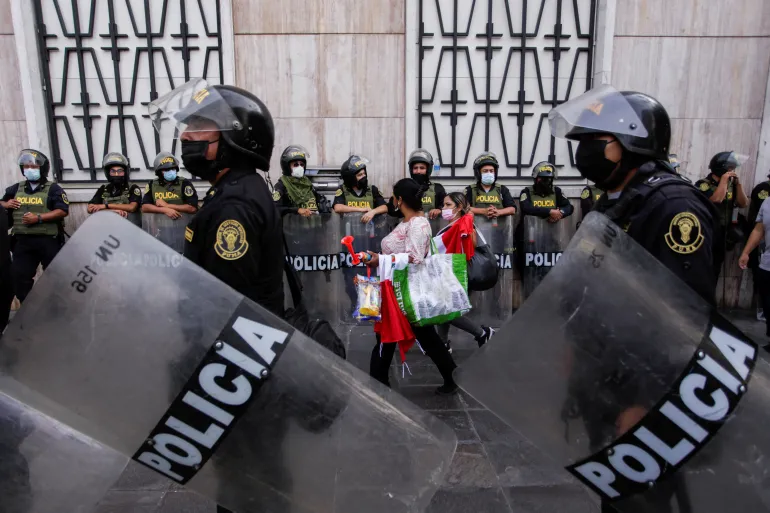
However, this initiative arises amidst a pressing need for security reforms, driven by the current structure where a considerable chunk of police forces are tied up in administrative roles.
This leaves fewer officers on active patrol, which could potentially weaken the response to criminal activities.
Balancing Security and Civil Liberties
Peru’s streets echo with calls for change, reflecting widespread dissatisfaction with the government and allegations of corruption.
In addition, planned protests underscore the public’s hunger for reform and better governance.
The growing debate over security strategy plays out against the backdrop of civil unrest and demands for accountability.
These developments highlight the complex balancing act facing the Peruvian government. It must navigate the dual challenges of enforcing the law and upholding civil liberties.
The involvement of the Armed Forces in public security tasks marks a pivotal moment. It has the potential to set a new course in the nation’s fight against crime and violence.
In short, as Peru grapples with these issues, the eyes of the world watch closely. They are waiting to see if this new approach can bring back safety and trust to its citizens.
More: Peru news in English, every day from The Rio Times.
This article was produced by The Rio Times’ automated newsroom system. How we use AI · Report an error
Read More from The Rio Times