At the brink of Peru’s Independence Day celebrations, a critical strike threatens the heartbeat of national operations.
The National CAS Workers’ Union of the Superintendence of National Migrations, representing 700 employees, has declared an indefinite strike starting July 27.
This date falls on the eve of the festivities. These workers manage crucial tasks like passport issuance and border controls.
The timing is precarious, aligning with an expected surge in tourism due to the holiday.
According to the Ministry of Foreign Trade and Tourism, nearly 1.7 million tourists were anticipated, projected to inject roughly 200 million dollars into the economy.
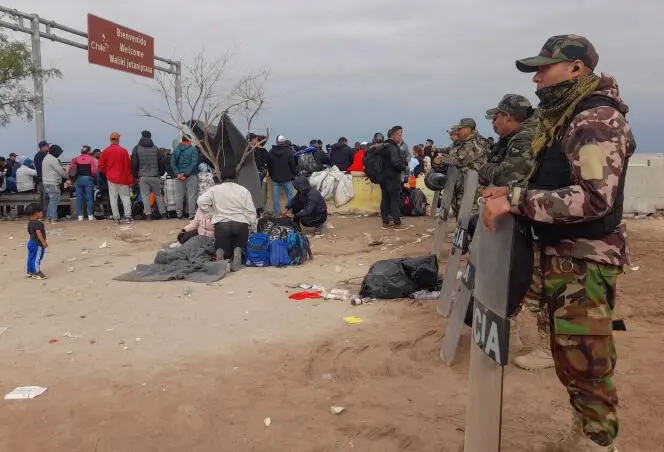
However, this strike casts a shadow over these projections, potentially derailing significant economic benefits.
The union’s grievances are deep-rooted, highlighting poor working conditions, favoritism in staffing, and frozen wages under their contractual terms.
They’ve reached their boiling point after unmet dialogues and negotiations, emphasizing their critical role in national security and public service quality.
In a move of last resort, they plan to maintain minimal staffing at border points, insufficient to handle the expected traffic.
This labor action does not just disrupt tourism but also poses significant risks to national security.
Implications of Border Control Strikes
Jorge Fernández, former superintendent of migrations, warned that reduced border control could aid criminals with active warrants in evading capture.
The porous borders might become escape routes not only on land but also via air.
Further compounding the issue, the strike jeopardizes the recovery of the tourism sector, still rebounding from previous setbacks.
Stakeholders like Juan Stoessel from the Cusco Tourism Chamber express concerns over the impact on foreign visitor entries and potential delays.
They highlight the timing as a strategic move by the union to press for better conditions. The union’s demands include twelve bonus payments for 2024-2025.
This highlights a decade of stagnant wages that fail to match the cost of living. It’s particularly harsh for those contracted under the CAS system, which limits wage adjustments.
With daily losses potentially exceeding 2.5 million dollars if the strike proceeds, the stakes are high.
A final conciliation meeting is scheduled for July 25, involving the Superintendence of National Migrations and the Ministry of Labor and Employment Promotion.
The outcome could determine whether Peru faces a logistical nightmare during its national celebrations.
This situation could affect not only the local economy but also the country’s international reputation.
More: Peru news in English, every day from The Rio Times.
This article was produced by The Rio Times’ automated newsroom system. How we use AI · Report an error
Read More from The Rio Times