Illegal Gold Is Set to Overtake Legal Gold in Peru, Institute Says
Key Facts
Peru has sold gold for four centuries, and most of it now leaves without a clean paper trail. A Lima think tank has put a number on the shadow half, and the number is larger than the legal one.
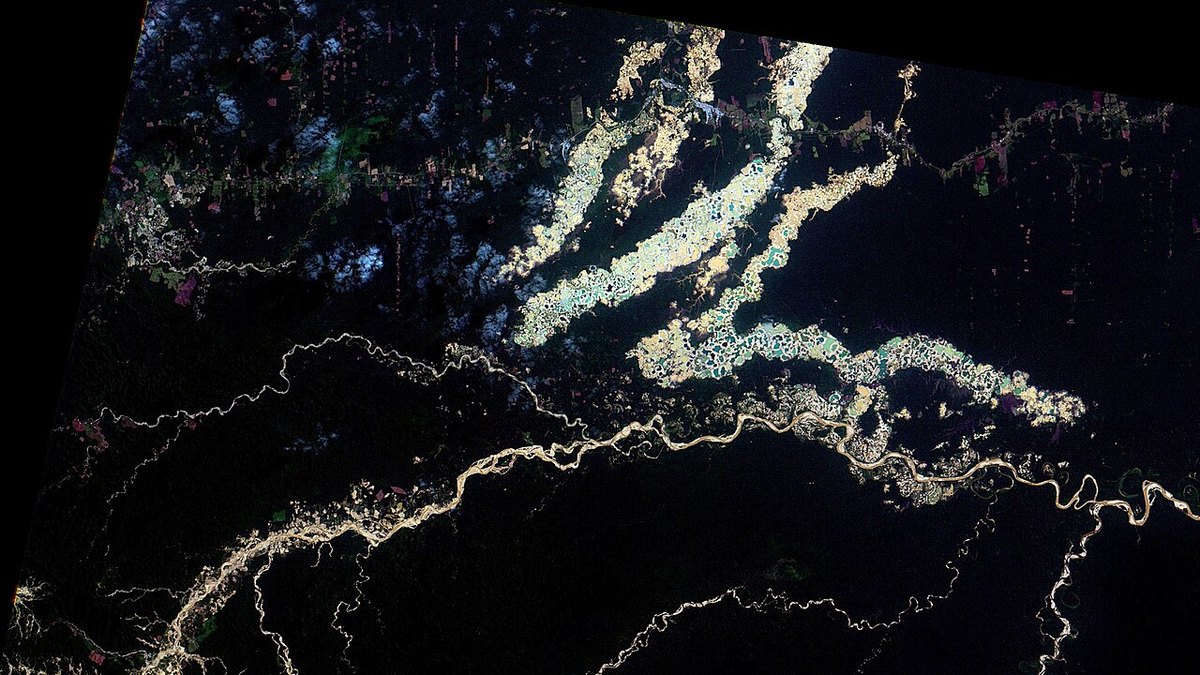
The Instituto Peruano de Economia said on 17 September 2026 that illegal gold will outsell legal gold. It would be the first such year, with shipments of 110 to 120 tonnes worth US$16 billion to US$18 billion.
What the Institute Actually Said
The Instituto Peruano de Economia, known as the IPE, is a private research body in Lima. Its finding was published on 17 September 2026 and carried by Gestion, El Comercio and RPP.
In the first half of 2026, the IPE says illegal shipments exceeded legal ones by 8.7 tonnes. That gave illegal gold 54 percent of the volume Peru exported in those six months.
Illegal shipments grew 19.4 percent over the half year, while declared formal output fell 5.9 percent. For the full year the IPE expects illegal gold to hold 52 to 55 percent of volume.
Carlos Gallardo, the IPE’s general manager, said this would be the first such year on record. The institute valued the 2025 illegal trade at US$11.5 billion, so the jump is about 39 percent.
How the Estimate Is Built
This is an estimate, not a customs tally, and the IPE presents it as one. The method compares the gold leaving Peru through customs with the output miners report to the state.
The energy and mines ministry collects declared production from titled operations across the country. Anything exported above that declared figure is treated as gold of illegal or unexplained origin.
Gallardo has described the residual as metal that gets laundered somewhere along the chain. The price used matters as much as the tonnage in this calculation.
The IPE assumes an average gold price near US$4,500 an ounce in 2026, up about 44 percent. A lower average price would cut the dollar figure without changing the volume finding.
What the Central Bank Data Show
Central bank series let a reader test the shape of the claim, though not the IPE’s split. BCRP figures put gold exports at US$18.49 billion in the first seven months of 2026.
That is 58.5 percent above the same months of 2025, when the total was US$11.66 billion. The volume behind it was just over 4.03 million troy ounces, or about 125.6 tonnes.
Declared metallic gold output over the same stretch of 2026 came to roughly 58 tonnes. Exports therefore ran far ahead of declared production, by something close to 68 tonnes.
The gap is the raw material of the IPE’s estimate, not proof of any single crime. The comparison is rough, because export and production series are not compiled on identical terms.
How the REINFO Register Works
REINFO is the mechanism a foreign reader will not know, and it explains much of the rest. The full name is the Registro Integral de Formalizacion Minera, the mining formalisation register.
It was created under Legislative Decree 1293 in 2016 as a temporary path to legality. A miner who signs up may keep working while completing permits, studies and title agreements.
While registered, that miner is shielded from prosecution for illegal mining. The register was meant to close within two years and has instead been extended five times.
Law 32537, published on 26 December 2025, carries it to 31 December 2026. As of 20 April 2026 it held 31,610 entries, of which 23,861 were active.
Only about 2,295 miners completed formalisation between 2014 and 2025, a small fraction of those who enrolled. The Constitutional Tribunal admitted a challenge to the latest extension, case 00009-2026-AI, in September 2026.
The claim was filed by the Colegio de Abogados de Loreto, the Loreto bar association. Admission does not suspend the law, so the December deadline stands for now.
Where the Gold Comes From and Where It Goes
Three regions dominate the trade, and each works differently. Madre de Dios in the Amazon is alluvial, worked with dredges and hoses in cleared forest.
Puno sits on the Bolivian border and feeds both export routes and cross-border movement. La Libertad in the north is hard rock, where crews work tunnels near large formal mines.
Ore and concentrate move to processing plants, which the energy ministry now wants to police. From there the metal reaches Callao and the Lima airport as refined bars.
Peruvian investigative reporting traces shipments to refiners in India and the United Arab Emirates. Those routes are documented in reporting rather than in any published official trade breakdown.
Overland movement into Bolivia has been documented for years, much of it around Lake Titicaca. SUNAT, the tax and customs agency, has intercepted consignments at Lima airport in recent years.
The Security Dimension
The money has brought armed competition. And the state has answered with emergency powers.
Pataz province in La Libertad has been under a state of emergency for more than two years. Supreme Decree 113-2026-PCM renewed it for 60 days from 4 August 2026.
The decree puts the armed forces in charge of internal order and sets a curfew from 10pm to 5am. In May 2025, 13 men working for a contractor of the Poderosa mine were killed underground.
Three more people died in a shootout at a Pataz mine mouth on 31 December 2025. Poderosa said that clash happened where groups tied to illegal mining dispute control.
The mayor of Pataz has publicly questioned the mining company’s account of that clash. The emergency decree expires in early October, and renewals have been routine.
What the Government and the Industry Say
Energy and mines minister Guillermo Shinno has been blunt about the register’s record. He said in late August 2026 that the process as designed leaves nobody able to formalise.
His ministry has said a small and artisanal mining bill, the Ley MAPE, goes to Congress in October. Shinno also wants gold processing plants monitored with the tax agency and the financial intelligence unit.
He has signalled that the roughly 31,000 unfinished files may move to a simplified track. Congress has not been helpful to the executive on mining this month.
Its energy and mines committee voted 11 to 8 on 8 September against delegating legislative powers. The mining lobby SNMPE has argued for years that the register protects criminal operators.
Its president, Julia Torreblanca, told Correo in November 2025 that many illegal operators use it as a shield. The SNMPE also said an earlier MAPE draft would rebuild the register under a new name.
The Bill in Forest and Mercury
The environmental cost is measured, and it is concentrated in one region. The Monitoring of the Andean Amazon Project counted 139,169 hectares of gold mining deforestation.
Its September 2025 report put 135,939 of those hectares in Madre de Dios alone. That is roughly 97 percent of the mapped total for the Peruvian Amazon.
Mercury is used to bind fine gold and is then burned off into the air. A June 2025 study by CINCIA and FCDS estimated over 180 tonnes released yearly in the region.
The same work found 78 percent of adults sampled in Puerto Maldonado above a US reference level. Tax revenue is lost as well, which is easier for a finance ministry to act on.
Gold that leaves the country outside the formal chain pays no royalty and little income tax. Conversions here use the BCRP interbank sale rate of 3.367 soles to the dollar for 16 September 2026.
What It Means If You Invest or Live in Peru
For investors, the read-across is to permitting risk rather than to gold prices. The IPE puts more than US$12 billion of mining projects under pressure from illegal activity.
Named exposures include Poderosa in La Libertad and Las Bambas in Apurimac. Pipeline projects such as Conga, Michiquillay, Los Chancas and Haquira sit in the same argument.
For banks and exporters, the compliance question is sourcing, not volume. Refiners and buyers in India and the Gulf are the ones being asked about provenance.
For residents, the practical change is regional rather than national. Pataz carries a curfew, and parts of Loreto are under military policing, so travel there needs checking.
Madre de Dios remains open to tourism, though river and fish contamination is documented. Anyone buying jewellery or bullion locally should expect paperwork questions to tighten.
What Is Not Yet Known
The central number is a projection for a year that still has three months to run. It rests on an assumed average gold price, and prices have moved a long way this year.
No official body has published a competing volume estimate for 2026. The split between informal miners in the register and organised criminal groups is not measured.
The Constitutional Tribunal has not ruled on the challenge to the latest extension. Congress has not seen the new MAPE bill, and its committee has just refused delegated powers.
Whether REINFO lapses on 31 December is therefore an open political question. Nobody has published a reliable count of deaths tied to mining disputes this year.
Frequently Asked Questions
Who produced the estimate?
The Instituto Peruano de Economia, a private research body in Lima, published it on 17 September 2026. Its general manager, Carlos Gallardo, presented the figures.
How is illegal gold counted?
The IPE compares gold exported through customs with production declared to the energy and mines ministry. The unexplained difference is treated as gold of illegal origin.
What is REINFO?
It is Peru’s mining formalisation register, created in 2016 as a temporary route to legality. Registration shields a miner from prosecution while the paperwork is completed.
Does REINFO end this year?
Law 32537 sets 31 December 2026 as the deadline, though the mines minister has said unfinished files may move to a simplified track. A constitutional challenge and a pending small-mining bill both leave the outcome uncertain.
Sources: Gestion, IPE estimate on illegal gold exports, RPP, IPE method and Gallardo remarks, BCRP statistics, gold exports and mining output series, La Republica, REINFO numbers and the MAPE timetable, Dipromin, Constitutional Tribunal admits case against the extension, Congress, energy and mines committee rejects delegated powers, MAAP, gold mining deforestation in the Peruvian Amazon, La Republica, state of emergency renewed in Pataz and Loreto
This article was produced by The Rio Times’ automated newsroom system. How we use AI · Report an error
Read More from The Rio Times