
CHILE · ECONOMY
Key Facts
- —The country 18.5 million people (2024 census); a leading copper and lithium supplier.
- —Who governs President José Antonio Kast since 11 March 2026; Finance Minister Jorge Quiroz.
- —What happened Codelco said on 6 October it is auditing possibly double-counted output.
- —The numbers Copper exports reached US$43.3 billion in January–August 2026, up 19.3%.
- —The families The Luksic, Angelini and Paulmann families control big listed groups.
- —For US investors Seven Chilean companies, including SQM, list on the New York Stock Exchange.
A new conservative government, a state copper giant under audit and a handful of family groups decide where Chile’s money goes.
The Chile economy is run by a short list: a conservative government, an autonomous central bank, state miner Codelco and family groups. They matter to Americans because Chile is a leading supplier of copper and lithium, and seven Chilean companies trade on Wall Street.
This guide sets out who controls the money, the mines and the brands, as of October 2026. Figures carry their dates, and claims made by companies are attributed to them.
The Referees: Kast, Quiroz and the Central Bank
José Antonio Kast, a conservative, was sworn in as president before Congress on Wednesday, 11 March 2026, according to the Senate. He received the presidential sash from the president of the Senate.
His background is set out in the Rio Times profile of who José Antonio Kast is. The wider balance of power is covered in the guide to Chile politics and who holds power.
Economic policy runs through Finance Minister Jorge Quiroz. On Tuesday, 6 October, he presented the government’s annual report on the state of public finances to Congress.
Quiroz says the programme rests on three pillars: lighter regulation, tax competitiveness and fiscal consolidation. A new reconstruction and development law cuts the corporate income tax from 27% to 23% by 2029, the Finance Ministry says.
The ministry also says about half of 1,000 stalled sector permits were cleared in seven months. That, it says, released more than 40 investment projects worth US$10.4 billion.
On Wednesday, 30 September, Quiroz sent the 2027 budget bill to Congress. He called it a moderate expansion of spending, with emphasis on jobs, public works, housing and security.
Interest rates are set by the Banco Central de Chile, which is autonomous under the constitution. Its president, Rosanna Costa, has led the board since February 2022 and joined it in 2017, the bank says.
The bank kept its policy rate at 4.5% at its September 2026 meeting. Annual inflation was 4.1% in August and unemployment 9.6%, its statistical bulletin shows.
The Comisión para el Mercado Financiero (CMF), the financial regulator, supervises banks, insurers and listed companies. Its chair is Catherine Tornel.

Copper Pays the Bills, and Codelco Leads
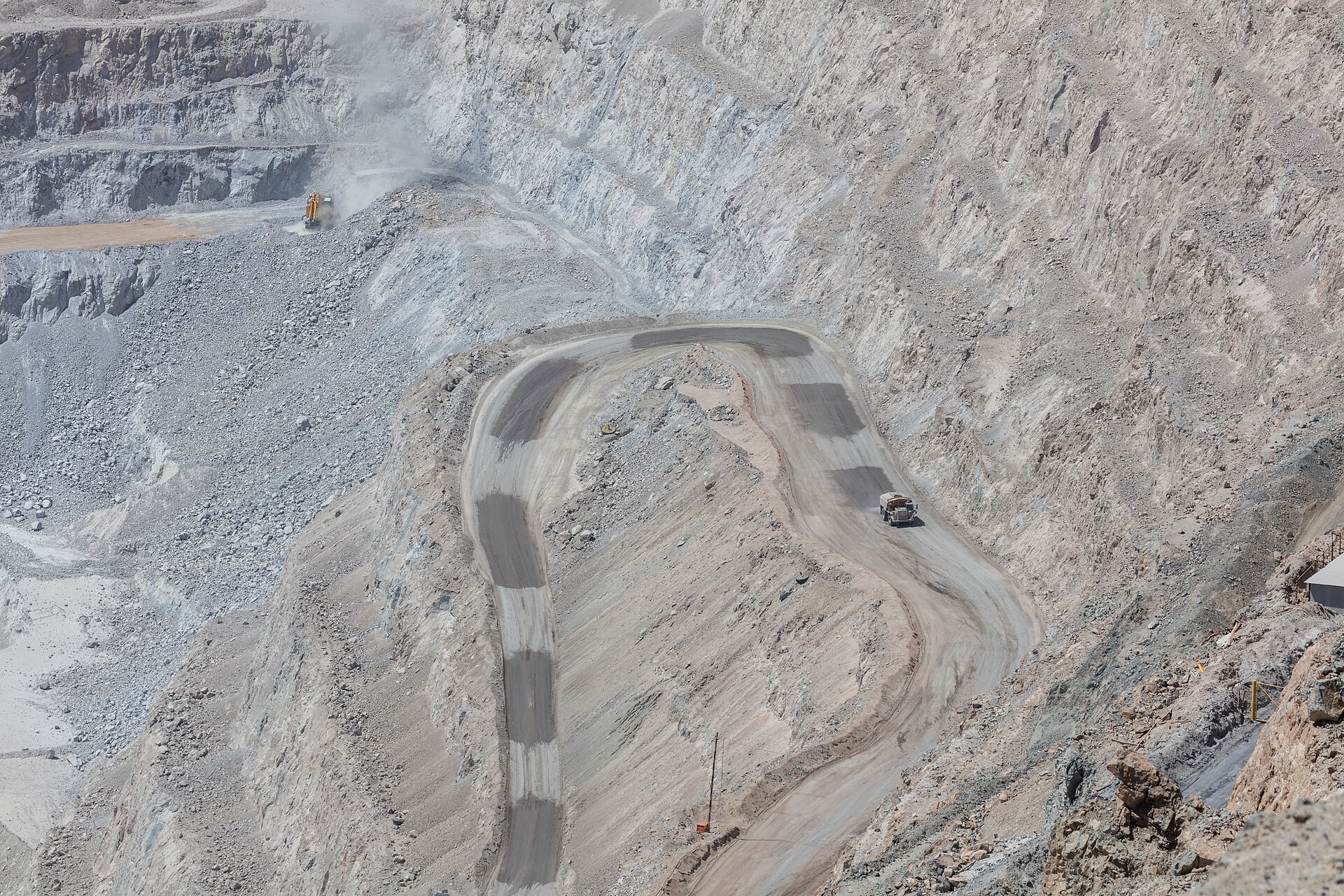
Mining earned US$52.1 billion between January and August 2026, or 62.6% of Chile’s exports. That is the count of SUBREI, the trade undersecretariat in the Foreign Ministry.
Copper alone brought in US$43.3 billion, up 19.3% on a year earlier. London Metal Exchange copper averaged about US$6.50 a pound in August, central bank data show.
Codelco, the National Copper Corporation, is wholly owned by the state. It describes itself as the world’s largest producer of mined copper.
In 2025 it reported 1.33 million tonnes of copper from its own mines and US$1.78 billion in payments to the treasury. Its profit of US$2.42 billion included a one-off gain of about US$2.0 billion from its lithium deal with SQM.
First-half 2026 profit was US$669 million, on EBITDA of US$4.65 billion. EBITDA means earnings before interest, tax, depreciation and amortisation.
Codelco also holds 49% of El Abra, 20% of Anglo American Sur and 10% of Quebrada Blanca. Those mines are run by other companies.
The board is chaired by Bernardo Fontaine, and Jorge Gómez is executive president, the chief executive role. Gómez replaced Rubén Alvarado, who was executive president when the 2025 results came out in March 2026.
On Tuesday, 6 October, Codelco said the same material may have been booked as output by two divisions, Ministro Hales and Salvador. That could have inflated reported production in 2024 and 2025.
The board hired EY for an external audit of the possible double counting, while KPMG keeps reviewing all divisional output. The findings were sent to the public prosecutor’s office.
The company’s debt and mine problems are explained in the Rio Times guide What Is Codelco?
The Luksic Group and Antofagasta
The Luksic family controls two big listed groups. One mines copper, and the other spans banking, beer, shipping and fuel.
Antofagasta plc, listed in London, mines copper in northern Chile. Its website says it is controlled by a foundation in which members of the Luksic family have interests.
Jean-Paul Luksic has chaired the company since 2004, and Iván Arriagada is chief executive. It produced 285,000 tonnes of copper in the first half of 2026.
The company expects 625,000 to 655,000 tonnes for the full year. First-half revenue rose 18% to US$4.48 billion, as covered in the Rio Times report on its results.
Quiñenco, the family’s Santiago-listed holding company, is 83% controlled by the Luksic group. It says its market value was about US$8 billion at the end of 2025.
Through Quiñenco, the family shares control of Banco de Chile with Citigroup and of brewer CCU with Heineken. It also owns 66.5% of shipping line CSAV, which holds 30% of Germany’s Hapag-Lloyd.
Fuel retailer Enex and tugboat operator SM SAAM complete the portfolio. Since May 2026 Pablo Granifo has chaired Quiñenco, with Andrónico Luksic Lederer as vice-chairman, CMF filings show.
Lithium: SQM, Codelco and a Chinese Shareholder
SQM, the Sociedad Química y Minera de Chile, mines salt flats and nitrate deposits in the north. It says it is the world’s largest producer of potassium nitrate and iodine, and one of the largest lithium producers.
Chile’s lithium exports nearly tripled to US$4.3 billion between January and August 2026, SUBREI says. Gold exports doubled to US$3.2 billion over the same months.
SQM’s lithium operation in the Salar de Atacama now sits inside Novandino Litio, a joint company with Codelco. It is designed to run until 2060 with majority state participation.
Codelco holds 50% plus one share, according to its 2025 results. SQM’s annual report to US regulators sets out two governance stages, from 2025 to 2030 and from 2031 to 2060.
No single shareholder controls SQM, the CMF ruled in 2018. China’s Tianqi Lithium owns 21.55% through Inversiones TLC, the regulator’s September 2026 shareholder list shows.
Tianqi went to court against the CMF’s view that SQM’s board alone could approve the Codelco deal. Chile’s Supreme Court rejected its appeal on 26 January 2026, SQM’s filing says.
The Pampa group held about 25.5% in March 2026, SQM’s filing says. It traces the Pampa companies to a trust that businessman Julio Ponce Lerou set up for his four children.
Ricardo Ramos has been chief executive since January 2019, and Gina Ocqueteau chairs the board. SQM’s shares trade in New York under the ticker SQM.

The Family Groups Behind Fuel, Forests and Shops
Empresas Copec, a holding in forestry and energy, is 60.8% owned by AntarChile. The Angelini family’s investment company owns 68.7% of AntarChile, CMF records show.
Roberto Angelini Rossi chairs Copec. Its businesses include pulp and wood maker Arauco, the Copec fuel stations and Mapco, a fuel retailer in the United States.
Empresas CMPC, a pulp, paper, tissue and packaging group, is chaired by Bernardo Larraín Matte. The company says seven of its nine directors are linked to its controlling shareholder.
Diario Financiero, a Santiago business daily, reported that the Matte group nominated CMPC directors in 2025. Francisco Ruiz-Tagle is chief executive.
Cencosud, a supermarket, department-store and shopping-mall group, says the Paulmann family controls 56.16% of it. Manfred Paulmann became chairman in April 2026, and Horst Paulmann holds 2.5% directly, CMF records show.
Cencosud operates in Argentina, Brazil, Chile, Colombia, Peru and the United States. In the US it runs The Fresh Market grocery chain.
Banks, Pension Funds and the Santiago Exchange
Banco Santander-Chile describes itself as the country’s largest bank by loans. Spain’s Banco Santander controls 67.18% of its shares, its 2025 filing in the United States says.
Banco de Chile ranked second by loans, with a 15.8% share at the end of 2025. It led the industry in net income for a fifth straight year, with 22.4% of sector profit.
Banco de Chile is controlled by LQIF, a holding owned by Quiñenco and Citigroup, with about 51% of the votes. Banco de Crédito e Inversiones (BCI) includes City National Bank of Florida in its investor reporting.
Private pension funds, known as AFPs, also hold large stakes in listed firms. One of them, Habitat, is among SQM’s 12 largest shareholders, CMF data show.
Shares trade on the Bolsa de Santiago, the Santiago Stock Exchange. It now belongs to nuam, a regional holding that joins the Santiago, Lima and Colombia exchanges into one market.
The benchmark IPSA index of leading Santiago shares rose 56.2% in 2025, central bank data show. The bank’s monthly series put it at 11,315 points in August 2026.
The Chile Economy in Numbers: Growth, Trade and Debt
Chile’s gross domestic product was about US$357.5 billion in 2025, the central bank says. That is roughly US$17,800 per person.
The economy grew 2.5% in 2025. Output then shrank 0.3% and 0.2% from a year earlier in the first two quarters of 2026.
Goods exports reached US$110.4 billion in 2025, against imports of US$86.5 billion. China bought 33.6% of Chile’s exports from January to August 2026, and the United States 16.8%.
Non-mining exports, including fruit and wine, reached a record US$31.1 billion in those eight months. Nearly all exports, 97.1%, went to countries with which Chile has trade agreements.
Gross central government debt stood at 41.5% of GDP at the end of 2025. Central bank reserves were US$53.5 billion in August 2026.
The country’s role among its neighbours is covered in the Rio Times guide to Chile in Latin America. Daily coverage is collected on the Chile news page.
What It Means for US Readers
Seven Chilean companies list shares on the New York Stock Exchange, SEC records show. They are SQM, Banco de Chile, Banco Santander-Chile, LATAM Airlines, brewer CCU, power company Enel Chile and bottler Embotelladora Andina.
The United States bought US$14.0 billion of Chilean goods from January to August 2026, Chilean data show. US Census figures put two-way goods trade at US$38.1 billion in 2025.
Since 24 July 2026, many Chilean goods face an extra 12.5% US tariff under a Section 301 action on forced-labour import rules. Articles of copper, steel and aluminium are among the listed exemptions, the notice says.
Because Chile is a leading copper supplier, news from its mines can move prices paid by US manufacturers. The peso traded at about 972 per US dollar on 7 October 2026, according to open.er-api.com.
What Is Not Known
The audits by EY and KPMG have not yet said whether, or by how much, Codelco’s 2024 and 2025 output was overstated. Codelco has not said whether any restatement would change past payments to the treasury.
It is not yet clear how the 12.5% US tariff will affect Chilean fruit, wine and salmon sales over a full season. The family groups hold stakes through investment companies, so full beneficial ownership is not always public.
In February 2026 Tianqi announced plans to sell up to 1.25% of SQM. Its stake slipped from 21.9% in March to 21.55% in September; whether it sells more is not known.
Frequently Asked Questions
Who runs the Chile economy?
President José Antonio Kast and Finance Minister Jorge Quiroz set fiscal policy. The autonomous central bank, led by Rosanna Costa, sets interest rates.
What is Codelco?
Codelco is Chile’s wholly state-owned copper company, and it paid US$1.78 billion to the treasury in 2025. It reported 1.33 million tonnes of copper from its own mines that year.
Why is Codelco auditing its production figures?
In October 2026 it said the same material may have been counted as output by two divisions in 2024 and 2025. EY is auditing the possible double counting, and prosecutors have the findings.
Who owns SQM?
No shareholder controls SQM. Its biggest holders are China’s Tianqi Lithium, with about 21.6%, and the Pampa group, with about 25.5%.
Which families control major Chilean companies?
The Luksic family controls Antofagasta and Quinenco, and the Angelini family controls Empresas Copec. The Matte group is linked to CMPC, and the Paulmann family controls Cencosud.
Can Americans invest in Chilean companies?
Yes, seven Chilean companies list shares on the New York Stock Exchange. They include SQM, Banco de Chile, Banco Santander-Chile and LATAM Airlines.
Sources: Senado de Chile, inauguration of 11 March 2026; Ministerio de Hacienda, Estado de la Hacienda Pública 2026; Ministerio de Hacienda, 2027 budget bill; Banco Central de Chile, statistical bulletin of 7 October 2026; Banco Central de Chile, quarterly series; Banco Central de Chile, Rosanna Costa; SUBREI, January–August 2026 exports; INE, Censo 2024; Codelco, 6 October 2026; Codelco, 2025 results; CMF, SQM largest shareholders, September 2026; SQM, Form 20-F 2025; Antofagasta plc, 2026 half-year results; Quiñenco; Banco Santander-Chile, Form 20-F 2025; Banco de Chile, Form 20-F 2025; Empresas Copec; CMPC; Cencosud; nuam; USTR Section 301 notice, Federal Register; US Census Bureau, trade with Chile; Diario Financiero (all accessed 7 October 2026).
This article was produced by The Rio Times’ automated newsroom system. How we use AI · Report an error · Editorial responsibility: Matthias Camenzind, Editor-in-Chief
In depth