Paraguay’s Soybean Exports See Major Growth
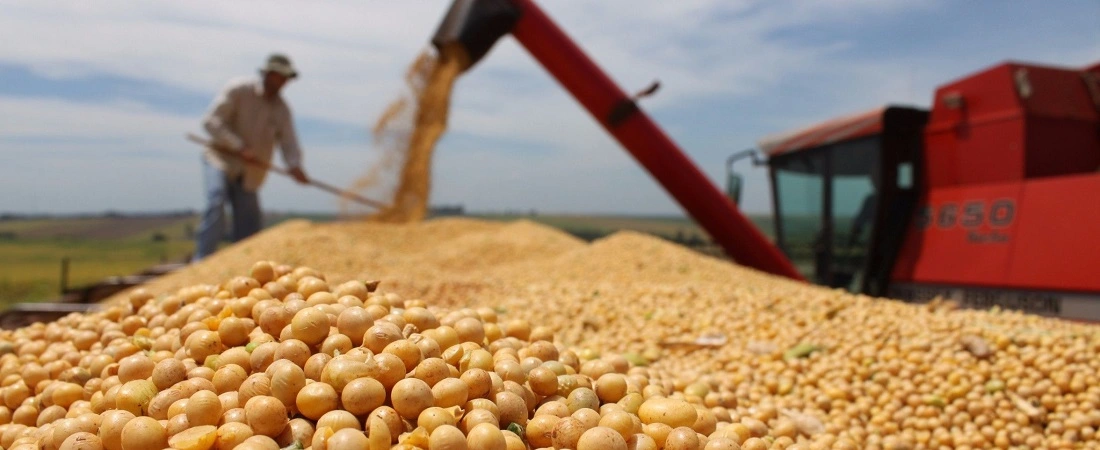
In October 2023, Paraguay’s soybean exports saw a significant rise, increasing by 162.9% compared to the same period in the previous year.
This data comes from a report by the Paraguayan Chamber of Exporters and Traders of Cereals and Oilseeds (Capeco).
The report shows that in the first ten months of 2023, Paraguay exported 5.706 million tons of soybeans.
This amount is much larger than the 2.1706 million tons exported in the same period last year. The increase is a notable 3.5354 million tons.
This growth in exports brought in $3.0361 billion in revenue. This figure is a 159.6% increase from the $1.1697 billion earned by October 2022.
These statistics are from the Central Bank of Paraguay (BCP).
Sonia Tomassone, a Capeco foreign trade advisor, pointed out the significance of these numbers.
She explained that they indicate a recovery from the previous season’s severe drought. This recovery is positively affecting Paraguay’s economy.
Tomassone also mentioned the increased export volumes of both soybeans and their derivatives. This suggests more advanced processing methods are in use.
By October 2023, Paraguay exported 435,713 tons of soybean oil and 1.5 million tons of soybean pellets.
The soybean oil was valued at $435 million and the pellets at $739 million.
The report also discusses the main markets for these soybean exports. Argentina is the largest buyer, taking 89% of the exports.
Brazil follows with 3%, and Russia with 2%. Other countries like the U.S., South Korea, Uruguay, Belgium, and Chile are also importers.
Tomassone highlighted the re-emergence of Russia as a significant market. This is noteworthy because exports to Russia had only resumed the previous month.
Key Facts
— Deep Dive
— For the complete picture, read our in-depth guide: Paraguay: Washington's Most Valued Ally in Latin America
More: Brazil news in English, every day from The Rio Times.
This article was produced by The Rio Times’ automated newsroom system. How we use AI · Report an error
Read More from The Rio Times