In Nigeria, a Surgeon Removes a Kidney Tumour 500 km Away by Robot
Nigeria · Health
Key Facts
- The country — Nigeria has well over 200 million people, more than any other African country, and too few specialist surgeons for them. Wealthier patients often fly abroad for complex operations.
- The gap — That medical travel costs families money and the country foreign currency. The pitch behind remote surgery is simple: the specialist no longer has to be in the room.
- What changed — A Toumai surgical robot, made by China’s Shanghai MicroPort MedBot, won Nigerian approval, announced in late December 2025.
- What happened — On Saturday 19 September 2026 a surgeon in Ogun State removed a cancerous right kidney from a patient in Abuja, about 500 kilometres away, using a remote-controlled robot. It took about three hours.
- Who did it — The console sat at Redeemer’s Health Village in Mowe, a 300-bed hospital founded by a large Pentecostal church; the patient lay at Nisa Premier Hospital in Abuja. Urology professor Obi Davies-Ekwenna led the work.
- What it means for you — If you live in or travel to Nigeria, this is a demonstration, not a service you can book. It does show that scarce specialists can now operate at a distance.
- Still open — The “first in West Africa” label is the hospital’s own; Morocco and Angola hosted African telesurgeries in 2025. Nothing has been said about cost or routine use.
A surgeon sat at a console near Lagos while a robot 500 kilometres away in Abuja removed a cancerous kidney. The hospital behind this telerobotic surgery calls it West Africa’s first.
A surgeon in Ogun State, next door to Lagos, has removed a cancerous kidney from a patient in Abuja using telerobotic surgery. The two hospitals are about 500 kilometres apart.
The operation took place on Saturday 19 September 2026, according to the News Agency of Nigeria, the state news agency. Its organisers call it the first telesurgery in West Africa.
For a country whose wealthier patients often fly abroad for complex operations, the pitch is simple. The specialist no longer has to be in the room.
A console in Ogun, a patient in Abuja
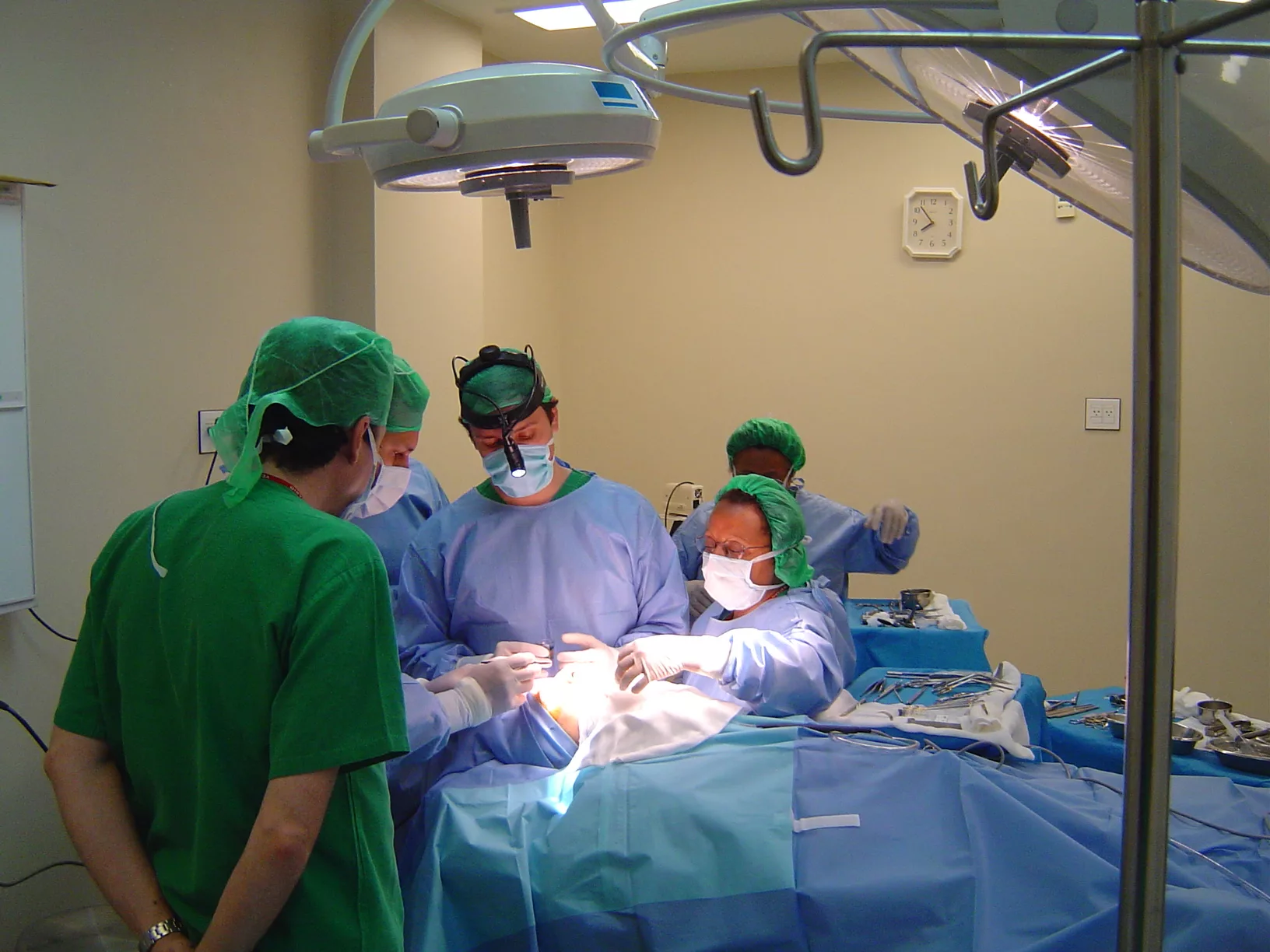
The surgeon sat at a robotic console at Redeemer’s Health Village in Mowe, Ogun State. The patient lay in an operating theatre at Nisa Premier Hospital, a private hospital in the capital, Abuja.
Redeemer’s Health Village is a 300-bed hospital founded by the Redeemed Christian Church of God, one of Nigeria’s largest Pentecostal churches. Journalists watched the procedure live on screens there.
The operation was a right radical nephrectomy, the removal of the whole right kidney. The kidney carried a cancerous tumour, the agency reported.
It was led by Obi Davies-Ekwenna, a United States-based professor of urology and transplant surgery. He co-founded RoboMed Global, the company behind the robotic programme.
“We were able to operate on a patient in Abuja, 500 kilometres away,” he told reporters, the Lagos newspaper Punch reported.
That is the straight-line distance; by road the journey is far longer.
Three hours, with pauses for checks
Davies-Ekwenna said the operation lasted about three hours. The team paused briefly several times to confirm that equipment and systems were working properly.
He said the patient was in good condition and was expected to go home within 24 hours.
In telerobotic surgery, the surgeon’s hand movements travel over a data link to the robot. The Nigerian news outlets Leadership and Pulse reported that the link used Starlink satellite internet. The mobile operator MTN provided backup.
Davies-Ekwenna summed up the case, the News Agency of Nigeria reported. “Distance should never decide who receives safe surgery; this is what safe and trusted surgery looks like.”
Earlier the same day, the Mowe team performed a robot-assisted pyeloplasty on a 28-year-old woman. That operation repairs a blockage that stops urine draining from the kidney.

A Chinese robot approved in Nigeria
The machine is a Toumai surgical robot made by Shanghai MicroPort MedBot, a Chinese manufacturer. Its approval for clinical use by NAFDAC, Nigeria’s drug and medical-device regulator, was announced at the end of December 2025.
The operators presented that approval as the first for a robotic surgery platform in West Africa. The announcement followed robotic operations at Nisa Premier Hospital on 22 November 2025, the Nigerian newspaper Vanguard reported.
Ibrahim Wada, who founded and runs Nisa Premier, said his patient had received expert care “without leaving Abuja”, the radio station Nigeria Info reported. He added that Nigerian institutions could achieve more by building together.
Who is claiming a first
The “first telesurgery in West Africa” description comes from Adedamola Dada, chief executive of Redeemer’s Health Village. His hospital and its partners carried out the operation.
Telerobotic surgery itself is not new to the continent. On 2 May 2025, Moroccan hospital group Akdital linked Casablanca with Laâyoune, more than 1,100 kilometres away, for a prostate operation.
On 14 June 2025, Vipul Patel of AdventHealth in Florida operated on a man in Luanda, Angola. That link spanned about 11,000 kilometres (nearly 7,000 miles).
MicroPort MedBot says the Angola case also used a Toumai robot. Neither earlier case took place in West Africa.
Manpower, not machines, is the bottleneck
Dada told reporters that equipment was rarely the obstacle, Punch reported. “The challenge now is the manpower,” he said, urging the federal government to fund scholarships for trainees.
He argued that remote operations could let surgeons abroad treat Nigerians at home. “This is a new day for our country,” he told reporters, Vanguard reported.
The hospital is setting up a robotic academy with RoboMed Global. Davies-Ekwenna said it aims to train at least 150 surgeons within two years.
He said the programme had the support of the health minister and other government bodies. He also appealed for backing from private companies and charities.
What could slow it down
Dada acknowledged that weather can disrupt connectivity. He said the quality of equipment and the supply of trained staff also decide whether telesurgery works.
The hospital’s board chairman, Kunle Onakoya, stressed that the robot does not act alone. “The robot is still being controlled by a human being,” he told reporters, Vanguard reported.
More: Africa coverage, every day from The Rio Times.
What is telerobotic surgery?
It is an operation in which the surgeon controls a surgical robot from a console in another place. The surgeon’s movements travel over a data link to robotic arms beside the patient. A local team stands by in the operating theatre.
What happened in Nigeria on 19 September 2026?
A surgeon at Redeemer’s Health Village in Mowe, Ogun State, operated remotely on a patient at Nisa Premier Hospital in Abuja. He removed the patient’s cancerous right kidney. The two sites are about 500 kilometres apart, and the operation took about three hours.
Was it really the first in West Africa?
The claim comes from the chief executive of Redeemer’s Health Village, one of the hospitals involved. Earlier African telesurgeries took place in Morocco in May 2025 and Angola in June 2025, neither of which is in West Africa.
Which robot was used?
A Toumai surgical robot made by Shanghai MicroPort MedBot of China. Its approval for clinical use by Nigeria’s regulator, NAFDAC, was announced at the end of December 2025.
Sources: News Agency of Nigeria report via P.M. News, Punch on the Mowe control room, Vanguard on the press briefing, Leadership on the date and connectivity, Tribune on the hospitals, Nigeria Info on Nisa Premier Hospital, Vanguard on the NAFDAC approval, AdventHealth on the Florida–Angola telesurgery, Yabiladi on Morocco’s first telesurgery
Frequently Asked Questions
This article was produced by The Rio Times’ automated newsroom system. How we use AI · Report an error · Editorial responsibility: Matthias Camenzind, Editor-in-Chief