
MEXICO · POWER
Key Facts
- —The country 130.9 million people in 31 states plus Mexico City (INEGI, 2025).
- —Who rules Claudia Sheinbaum’s Morena and allies hold 86 of 128 Senate seats.
- —What happened Constitutional reforms since 2024 remade courts, regulators and the National Guard.
- —The elites Families such as Slim, Larrea and Azcárraga control telecoms, mining and TV.
- —Who is left out Chiapas poverty is 66.0%, against 10.6% in Nuevo León (2024).
- —Prediction markets Polymarket gives about a 4% chance Sheinbaum leaves office by 31 December (8 October, 8:50 a.m. ET).
One ruling movement, a few business dynasties and a growing military hold most of the power in Mexico.
Mexico power in 2026 rests with three groups: the Morena-led presidency, a few business families and the armed forces. The poorer, more indigenous south has the least say.
For Americans, that balance shapes trade, security and migration next door. This guide maps who dominates whom as of October 2026; daily news is in the Rio Times Mexico section.
How Mexico Power Is Concentrated in 2026
Mexico is a federal republic of 31 states and Mexico City. Each state elects a governor and a congress, but money and authority flow mostly from the capital.
The president is both head of state and head of government. Under Article 83 of the constitution, the term lasts six years and can never be repeated.
Claudia Sheinbaum has held the office since 1 October 2024. She comes from Morena, the left-wing movement founded by her predecessor, Andrés Manuel López Obrador.
The Senate’s own register, consulted on 8 October 2026, gives Morena 66 of its 128 seats. With two allies, the ruling bloc holds 86.
The allies are the Green Party (PVEM), a pragmatic party that backs the government, and the small left-wing Labour Party (PT). Together they sit just above two-thirds, the majority needed to amend the constitution.
The largest opposition party is the conservative National Action Party (PAN), with 21 senators. The Institutional Revolutionary Party (PRI), which ruled Mexico for most of the 20th century, has 13.
The centrist Citizens’ Movement has six senators, and two sit without a group. The ruling bloc has used its majorities to reshape the state.
The 2024 judicial reform replaced appointed Supreme Court justices with nine chosen by popular vote. They were sworn in on 1 September 2025.
The Rio Times explainer on the judicial reform covers how that vote worked and what it means for investors.
A reform published on 20 December 2024 abolished several independent watchdogs. They included the transparency institute INAI, the competition authority Cofece and the telecoms regulator IFT.
Their work passed to ministries or to new bodies, which narrows the checks on the presidency. Party-by-party detail is in Mexico politics explained, who holds power in 2026.
Political dynasties are also being targeted, slowly. A 2025 amendment bars close relatives from directly succeeding an official in an elected post, but only from the 2030 elections.
The Business Families at the Top
A handful of family groups dominate Mexican big business, and several of them are listed in New York. Their own filings with US regulators show who is in control.
Carlos Slim Helú and his children and grandchildren “may be deemed to control” América Móvil, the group behind Telcel and Telmex. Its annual report, filed in April 2026, says so.
Carlos Slim Domit chairs both América Móvil and Grupo Carso, the family’s industrial and retail group. The former telecoms regulator found in 2014 that the Slim group served more than half of Mexico’s telecoms customers.
The Larrea family controls a majority of the mining group Grupo México, says the annual report of its US-listed unit, Southern Copper. Germán Larrea Mota-Velasco has chaired and run Grupo México since 1994.
Emilio Azcárraga Jean holds 48.7% of Grupo Televisa’s A shares, enough to control the election of its directors. Televisa now runs cable and satellite networks and is the largest shareholder of TelevisaUnivision, a Spanish-language media company.
In Monterrey, FEMSA, owner of the OXXO convenience stores, is controlled by a voting trust. Its members include descendants of the founders of a city brewery set up in 1890.
The trust held 76.3% of FEMSA’s full voting shares on 1 April 2026. José Antonio Fernández Carbajal chairs the board, and José Antonio Fernández Garza Lagüera became chief executive on 1 November 2025.
Wealth buys a political voice, but not immunity. Grupo Salinas, the retail, banking and television empire of Ricardo Salinas Pliego, fought the tax authority in court for years.
The group agreed to pay MXN 32.1 billion (about US$1.8 billion) in 2026 and 2027. By 25 May 2026 it had paid MXN 14.0 billion (about US$780 million), the Finance Ministry said, Zeta Tijuana reported.
Peso conversions use 17.98 pesos per dollar, the FIX rate set by Banco de México, the central bank, on 7 October 2026. Older peso figures are converted at that rate too.
These groups, and the state oil and power companies Pemex and CFE, are profiled in who runs Mexico’s economy.

The Military’s Growing Role
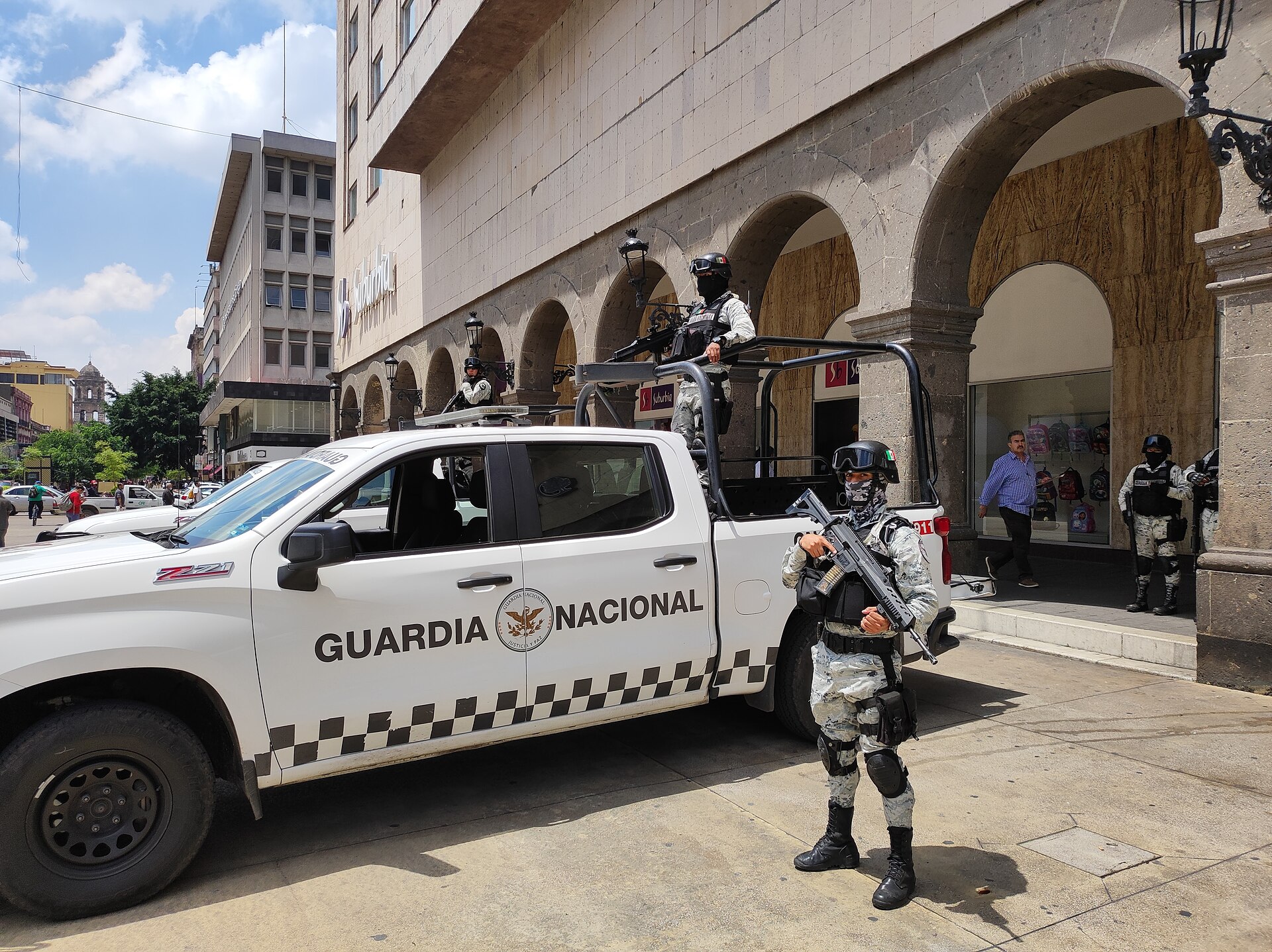
Mexico’s armed forces answer to a civilian president, but their role keeps growing. The National Guard, a federal security force, was created by constitutional amendment in March 2019.
A further amendment, published on 30 September 2024, placed the Guard under the Defence Ministry. The constitution now describes it as made up of military personnel with police training.
The 2026 federal budget gives the Defence Ministry MXN 170.8 billion (about US$9.5 billion). The Navy, a separate ministry, receives MXN 65.9 billion (about US$3.7 billion).
For comparison, the civilian Security Ministry gets MXN 60.1 billion (about US$3.3 billion). The Welfare Ministry, which pays the government’s cash programmes, gets MXN 674.5 billion (about US$37.5 billion).
Soldiers also run businesses. The budget funds a Defence Ministry programme for the Maya Train, a passenger and freight railway in the south-east.
Another Defence programme manages airport, railway and related infrastructure. That gives the armed forces a direct stake in transport revenue and contracts.
The Rio Times report How Mexico’s army became one of its biggest businesses traces that trend in detail.
North and South, Two Different Countries
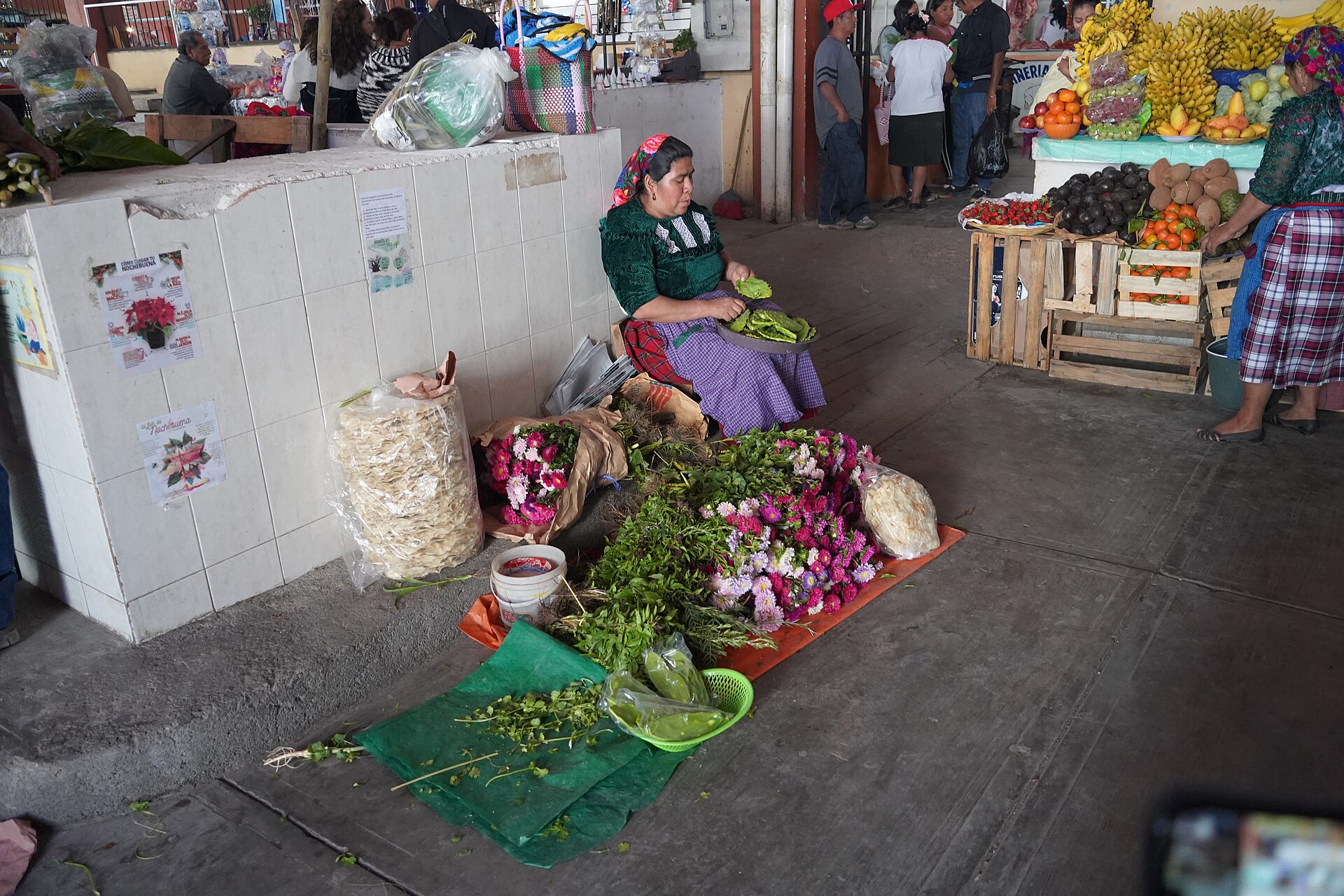
Geography divides power as sharply as money does. The industrial north trades heavily with the United States, while the south is poorer, more rural and more indigenous.
Households in Nuevo León, home to Monterrey, had an average income of 39,011 pesos a month in 2024 (about US$2,170). In Chiapas, on the Guatemalan border, the figure was 13,695 pesos (about US$760).
Those figures come from INEGI, the national statistics institute, and its 2024 household income survey. Mexico City households averaged 36,895 pesos (about US$2,050), second only to Nuevo León.
Poverty shows the same split. In 2024 it reached 66.0% of people in Chiapas, 58.1% in Guerrero and 51.6% in Oaxaca, all in the south.
In Nuevo León the rate was 10.6%, and in Baja California, on the US border, 9.9%. The national rate was 29.6%.
Jobs follow the pattern. In the second quarter of 2026, 80.1% of workers in Oaxaca were informal, against 34.8% in Nuevo León.
Informal workers lack the social security and legal protection of a formal job. Northern states compete for US factories, as Mexico nearshoring explained sets out.
Skin Colour, Ethnicity and Gender
Mexico’s national story celebrates mixed ancestry, but skin colour still tracks status. An INEGI survey of adults aged 25 to 64, carried out in 2016, measured this directly.
Among people who placed themselves in the darkest skin tones, 20.2% had no schooling. Among the lightest-skinned, the share was 10%.
Darker-skinned respondents also held fewer skilled jobs, the survey found. Privilege is inherited, too: 63.0% of children of officials, directors and bosses reached higher education.
Among farmworkers’ children, the share was 7.2%. Indigenous Mexicans face some of the deepest gaps.
In 2025, 24.2 million people, 18.6% of the population, identified as indigenous, INEGI says. Those who consider themselves indigenous or speak an indigenous language earned 26.0% less money income than average in 2024.
For speakers alone, the gap was 43.4%. Symbols are shifting at the top, though.
Hugo Aguilar Ortiz, president of the elected Supreme Court, is an Oaxaca lawyer who spent decades defending indigenous communities. The court’s biography notes he won Mexico’s National Indigenous Youth Prize in 2001.
Women have gained political ground faster than economic ground. Sheinbaum is Mexico’s first woman president, and a 2019 amendment requires gender parity in cabinet appointments.
Yet women’s average monthly money income in 2024 was 7,905 pesos (about US$440), against 12,016 pesos (about US$670) for men.
Churches and Unions
The Catholic Church remains Mexico’s largest faith. At the 2020 census, 77.7% of Mexicans called themselves Catholic, 11.2% Protestant or evangelical, and 8.1% said they had no religion.
Its formal political power is capped by law. Article 130 of the constitution bars ministers of religion from holding public office or campaigning for or against candidates.
Churches gained legal status, through registration, only with a 1992 reform of that article. No political party may carry a religious name, and political meetings in churches are banned.
Unions were long tied to the PRI and its 20th-century rule. A 2017 constitutional amendment set out to loosen that grip.
It requires personal, free and secret votes to elect union leaders and to approve collective contracts. The rules matter most in formal industry, since 55.1% of workers were informal in the second quarter of 2026.
Organised Crime as a Rival Power
In parts of Mexico, criminal groups compete with the state for control. On 20 February 2025 the US designated six Mexican cartels as Foreign Terrorist Organizations.
They are the Sinaloa, Jalisco New Generation, Gulf and Northeast cartels, plus La Nueva Familia Michoacana and Cárteles Unidos.
Violence has eased but remains high. INEGI counted 27,989 presumed homicides in 2025, a preliminary rate of 21.4 per 100,000 people, down from 25.8 in 2024.
Firearms caused 70.8% of those deaths. In 2025, 509,900 households included someone forced to move by crime or insecurity, INEGI’s intercensal survey found.
Criminal influence over local politics is a recurring concern in both Washington and Mexico City. It is also the hardest part of the power map to measure.
Inequality and Who Is Left Out
Inequality has narrowed but remains wide. In 2024 the richest tenth of households earned 14 times as much as the poorest tenth, down from 21 times in 2016.
The top tenth received 30.3% of all current household income and the bottom tenth just 2.2%, INEGI’s income survey shows.
Poverty fell from 41.9% of the population in 2018 to 29.6% in 2024, or 38.5 million people. Government cash transfers are central to Morena’s appeal.
In 2025, 41.4% of households received benefits from a government programme, against 25.0% in 2020, INEGI found.
Those left out are easy to name. In 2024, 66.3% of indigenous-language speakers lived in poverty, against 26.7% of other Mexicans.
Rural poverty, at 45.8%, was almost double the urban rate of 25.0%. Afro-Mexicans, recognised in the constitution since 2019, had a poverty rate of 32.3%.
The detail on each group is in Mexico population and ethnic groups explained.
What It Means for US Readers
Investors face a state where one bloc can change the constitution and few independent regulators remain. Rules on energy, telecoms and competition can move fast.
Several family-controlled groups trade in New York, including América Móvil (AMX), FEMSA (FMX), Televisa (TV) and Southern Copper (SCCO). América Móvil and FEMSA warn their controllers’ interests may differ from other investors’.
The 2025 terrorist designations raise legal stakes for US companies whose payments could reach cartels. Firms in cartel-affected states should review extortion and payment risks.
Travellers often see National Guard patrols in cities and on highways, and safety varies widely by state. The US State Department publishes state-by-state travel advisories for Mexico.
For the person at the top, read who is Claudia Sheinbaum.
What Prediction Markets Say
Polymarket bettors gave about a 4% chance that Claudia Sheinbaum leaves office by 31 December 2026 (8 October, 8:50 a.m. ET). That contract had traded about US$36,000, within an event worth about US$288,000.
Earlier contracts on her leaving by 31 January, 30 June and 31 July 2026 all expired without her departure. The bets point to continuity at the top of Mexico’s power structure through 2026.
Why we show this: prediction markets turn real-money bets into a live probability that moves within minutes of the news, which is why investors, campaigns and newsrooms in the United States now follow them closely. We show them next to polls and official results, never instead of them.
What Is Not Known
Whether the ruling bloc can still amend the constitution after the 2027 midterms, which elect a new lower house, is open. So is how independently the elected Supreme Court will rule on cases the government cares about.
Mexico publishes no official register of private wealth, so fortunes cited by magazines cannot be checked against primary data. INEGI’s skin-tone figures date from 2016.
How far cartels control local governments is not measured officially. Whether Grupo Salinas completes its tax payments by July 2027, as the Finance Ministry expects, is also unknown.
Frequently Asked Questions
Who really holds power in Mexico?
Formally, President Claudia Sheinbaum and a Congress in which her Morena-led bloc holds two-thirds of Senate seats. In practice, power is shared with business families, the armed forces and, in some regions, criminal groups.
Which families dominate Mexican business?
US filings show the Slim family controls América Móvil, the Larrea family controls Grupo México and Emilio Azcárraga Jean controls Televisa. A voting trust including Monterrey brewing heirs controls FEMSA.
How powerful is Mexico’s military?
Since a 2024 amendment, the National Guard belongs to the Defence Ministry, which has about US$9.5 billion for 2026. The military also runs the Maya Train and manages airport and rail infrastructure.
Is northern Mexico richer than the south?
Yes. In 2024 households in Nuevo León averaged about US$2,170 a month, against about US$760 in Chiapas, where 66.0% of people were poor.
Does the Catholic Church have political power in Mexico?
It has social weight, since 77.7% of Mexicans were Catholic in 2020. But the constitution bars clergy from public office and from campaigning for or against candidates.
How unequal is Mexico?
In 2024 the richest tenth of households earned 14 times as much as the poorest tenth. Poverty affected 29.6% of the population, or 38.5 million people.
Are cartels part of Mexico’s power structure?
In some regions they rival the state, and the US designated six Mexican cartels as terrorist organisations in February 2025. INEGI counted 27,989 presumed homicides in 2025.
Sources: Senate of Mexico, senators by parliamentary group; Constitution of Mexico (Articles 2, 21, 41, 83, 94, 123, 130 and reform decrees of 2019, 2024 and 2025); Federal Expenditure Budget 2026 (DOF, 21 November 2025); INEGI, household income survey ENIGH 2024, press release 112/25; INEGI, multidimensional poverty 2024 (presentation); INEGI, employment survey ENOE, second quarter 2026; INEGI, Intercensal Survey 2025, press release 54/26; INEGI, homicide deaths 2025, press release 42/26; INEGI, intergenerational social mobility module 2016; INEGI, Census 2020 results; Supreme Court of Mexico, Hugo Aguilar Ortiz biography; Banco de México, FIX exchange rate; América Móvil, 2025 Form 20-F; Southern Copper, 2025 Form 10-K; Grupo Televisa, 2025 Form 20-F; FEMSA, 2025 Form 20-F; US Federal Register, Foreign Terrorist Organization designations, 20 February 2025; Zeta Tijuana, Grupo Salinas tax payments; Por Esto, SAT confirms first Grupo Salinas payment (all accessed 8 October 2026).
This article was produced by The Rio Times’ automated newsroom system. How we use AI · Report an error · Editorial responsibility: Matthias Camenzind, Editor-in-Chief