Mexico Markets: IPC & the Peso — September 17, 2026
Key Facts
- Mexico’s market was shut on Wednesday for Independence Day. Its last close, on Tuesday 15 September, left the S&P/BMV IPC down about 1.1% at 63,507.11 points.
- The peso ended Tuesday around 17.14-17.15 per dollar. With no local session on Wednesday, it weakened offshore to about 17.24 after the Fed moved.
- Selling was concentrated in a few heavyweights with 10 of 15 key local names actually finishing higher on the day.
- The Fed lifted its benchmark rate by a quarter-point to a range of 3.75%-4% in a unanimous 12-0 vote, its first increase since 2023.
- The index sits roughly 10-12% below its 52-week high leaving it in a comfortable middle range rather than extreme territory.
Today’s Focus
Mexico’s market did not trade on Wednesday. Banks and the exchange were closed for Independence Day, and the official peso fixing was suspended. The last completed session was Tuesday 15 September, when the S&P/BMV IPC closed down about 1.1% at 63,507.11 points, a fall of 709.87 points.
The peso ended that Tuesday session around 17.14 per dollar. While Mexico was closed, the Federal Reserve raised rates, and the peso weakened in offshore trading to about 17.24, some 0.57% softer. Thursday brings the first domestic price since the decision.
What makes this session interesting is that weakness was not broad-based. Ten of 15 major stocks on the index actually rose, meaning a handful of very large companies dragged the headline number lower while most of the market held firm.
What matters today. Mexico reopens on Thursday with a Fed increase already on the board and the peso marked down offshore. The first local session since the decision is the one to watch.
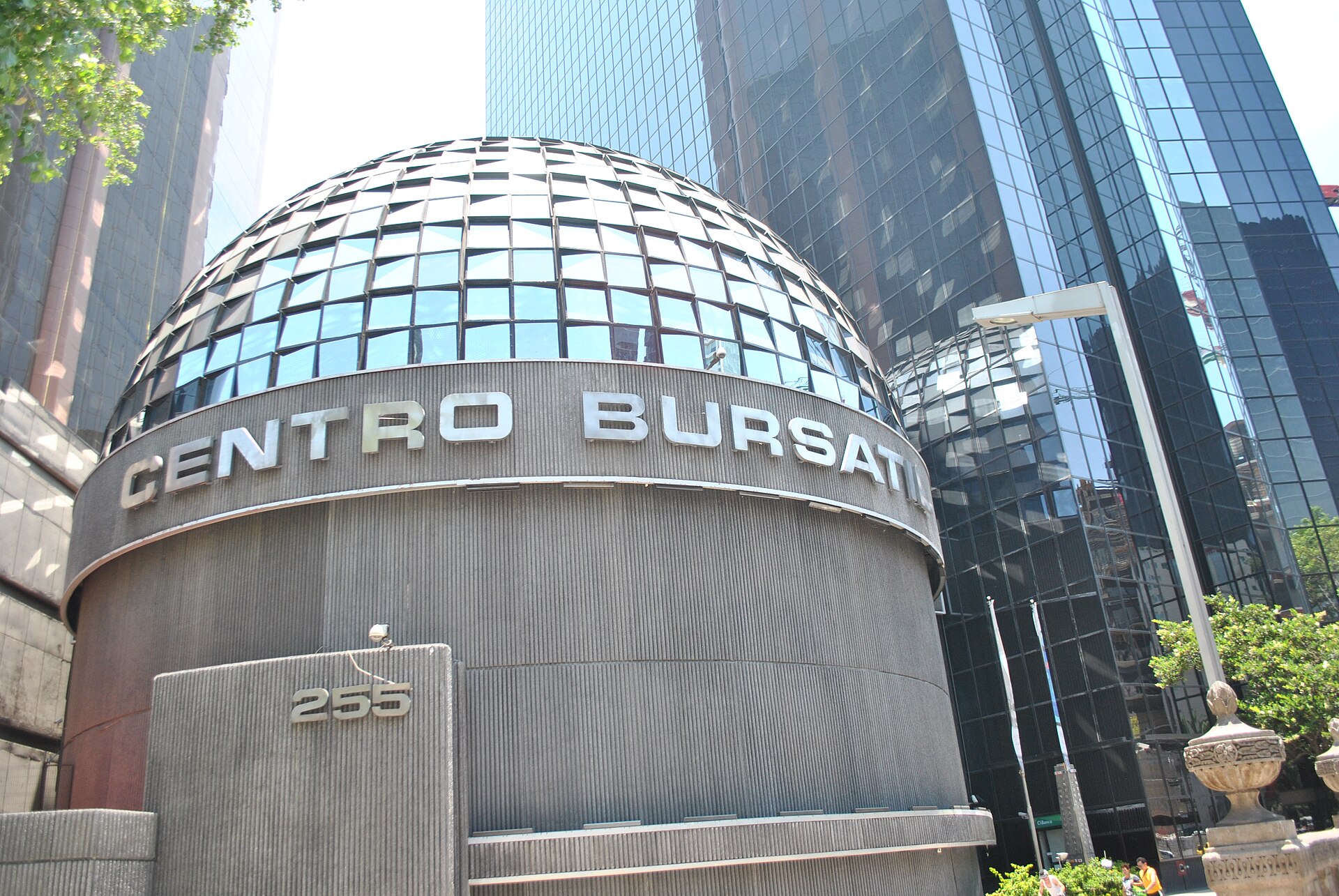
01 The session in one read
Mexico’s last completed session was Tuesday 15 September, the day before the Independence Day holiday. The S&P/BMV IPC index, which tracks roughly 35 of the country’s largest listed companies, closed down about 1.1% at 63,507.11 points, having shed 709.87 points.
One US dollar bought about 17.14 pesos at that close. The Federal Reserve then raised rates on Wednesday, with Mexico shut, and the peso softened offshore to roughly 17.24. That is a move of about 0.57%, not a rout.
Beneath the surface, the Tuesday decline was narrow. Ten of 15 key stocks finished higher, meaning a few very heavy shares drove the index lower rather than across-the-board selling.
The index felt the weight of its largest constituents, while most of the market held its ground.
Mexico met the Fed’s decision with its market closed, so there is no local verdict on it yet. Tuesday’s 1.1% decline came with positive breadth, and the offshore peso move of about 0.57% is orderly rather than stressed.
The variable to watch is Thursday’s reopening, which gives the first domestic reading on how Mexican assets price a rising American rate.
02 The day’s numbers
| Measure | Level | Change | Read |
|---|---|---|---|
| S&P/BMV IPC (Tuesday close) | 63,507.11 | −1.11% | Last session before the holiday |
| USD/MXN (Tuesday close) | 17.14–17.15 | — | Pesos per US dollar |
| USD/MXN (Wednesday, offshore) | 17.24 | +0.57% | No local fixing; market shut |
| Banxico FIX rate (Tuesday) | 17.1527 | — | No fixing published on the holiday |
| 52-week range | — | — | Index mid-range, ~10-12% below high |
The index’s decline was real but not dramatic, leaving it roughly 10 to 12 percent below its 52-week peak. That puts the Mexican market in the neutral middle of its recent trading band, not testing the extremes.
The peso’s steadiness stands out because a US rate hike typically draws money toward dollar assets. When Mexico’s currency barely flinches, it tells you traders had already placed their bets well before the announcement. Rio Times · Live Market Intelligence
Live Market IntelligenceMexico — Live Market Board
Mexico — Live Market Board
Instrument Last Change YoY Prev. High Low Volume
IPC MEX
63,507.11
-1.11%
+12.17%
64,216.98
66,121
65,405
108,886,187
USD/MXN
17.06
-0.24%
-8.58%
17.10
17.08
17.01
—
WALMEX
48.07
-0.62%
-14.38%
48.37
48.65
48.02
10,781,446
GMEXICO
223.28
+0.35%
+73.59%
222.50
226.18
222.17
1,325,556
FEMSA
201.19
-0.24%
+25.67%
201.67
206.71
199.56
750,706
CEMEX
19.32
+0.89%
+19.10%
19.15
19.35
19.04
14,327,054
GFNORTE
193.98
+1.18%
+14.36%
191.71
195.79
191.83
1,579,115
BIMBO
60.98
-0.96%
+11.89%
61.57
61.46
60.29
1,048,115
TELEVISA
9.71
+0.21%
+12.78%
9.69
9.75
9.60
577,851
AMX
19.80
-0.95%
+12.53%
19.99
20.05
19.70
58,058,525
GAP
366.23
+0.43%
-21.21%
364.68
370.85
362.82
226,946
ASUR
275.04
+1.25%
-15.28%
271.64
275.08
271.31
15,451
OMA
233.50
+0.62%
-6.48%
232.06
235.00
230.62
555,693
KOF
188.04
+0.86%
+18.94%
186.44
188.56
185.52
425,273
GRUMA
252.90
+0.11%
-21.85%
252.61
254.74
250.36
90,048
KIMBER
39.74
+0.43%
+8.85%
39.57
40.09
39.33
490,551
AMX ADR
23.38
-0.23%
+22.25%
23.43
23.49
23.06
1,347,445
03 Why it moved — Fed rate hike meets Mexican calm
The trigger was straightforward: the US Federal Reserve raised its policy rate by a quarter of a percentage point, to a range of 3.75 to 4 percent. Chairman Kevin Warsh cited persistent inflation pressures as the reason.
For Mexico, a higher US rate normally creates a headwind. It makes dollar-denominated assets more attractive and can pull capital away from emerging markets like Mexico.
But the peso’s resilience and the selective nature of the stock selling suggest investors were not particularly shaken. Many had been anticipating this move for weeks.
Local media also carried quieter domestic stories during the session — security operations in Jalisco, Pemex and CFE budget needs — but none shaped the market with the force of the Fed’s decision.
04 The day’s movers
| Driver | Level / Move | Change | Note |
|---|---|---|---|
| S&P/BMV IPC overall | 63,507.11 | −1.11% | Dragged by a few heavyweight names |
| Breadth check | 10 of 15 key stocks up | — | Most of the market rose despite index dip |
| Individual share moves | — | — | Not disclosed in available data |
The unusual spread between the index and its members is the key story here. With 10 of 15 major stocks rising, the selling was concentrated in only a handful of very large companies that carry outsized weight in the index.
Unfortunately, reliable per-stock figures for América Móvil, Femsa, Banorte, Walmex, Cemex or the airport operators were not available for this session. The available data confirms the pattern — concentrated selling among heavyweights — without giving us the names with precision.
05 The regional scoreboard
| Index | Country | Change |
|---|---|---|
| Ibovespa | Brazil | −0.51% |
| IPSA | Chile | −0.77% |
| Merval | Argentina | −1.65% |
| IPSA | Colombia | −2.16% |
| BVL General | Peru | +0.80% |
The regional picture was broadly negative, with Colombia’s market taking the hardest hit among the larger Latin American exchanges. Peru bucked the trend with a modest gain.
The live market board above carries the latest closing levels for all of these indices, so the table here focuses on the shifts rather than exact levels.
06 The technical picture
The S&P/BMV IPC’s close at 63,507.11 leaves it in the middle of its 52-week range, about 10 to 12 percent below its high. That is a comfortable position that does not suggest panic or euphoria.
The peso near 17.14 also sits well off its 52-week extremes, with a range roughly between 16.89 and 18.68. A stable currency at these levels gives the central bank room to keep its own policy steady.
For now, the technical picture supports the narrative of a market digesting a known event rather than reacting to a shock. The breadth data — most stocks rising — reinforces that view.
07 What to watch
- Fed follow-through: Whether Thursday’s session confirms selective selling or broadens into wider declines
- Peso stability: If USD/MXN holds near 17.14, it signals confidence in Mexico’s rate advantage
- Heavyweight stocks: Which large caps drove the index down and whether they stabilise
- Bank of Mexico response: Any local signal on whether Mexico follows or holds its own rate path
Background: Mexico FDI Record Hides 13.4% Drop in New Investment.
Frequently Asked Questions
What happened to Mexico’s stock market on September 16?
The S&P/BMV IPC index closed down about 1.1% at 63,507.11 points after the US Federal Reserve raised interest rates.
Why did the peso stay calm despite the Fed hike?
Traders had largely priced in the rate increase ahead of time, and Mexico’s higher yields continue to attract investors even with a slight rise in US rates.
Did all Mexican stocks fall?
No. Market data shows 10 of 15 key stocks actually rose, meaning a few very large companies drove the index decline.
What is the S&P/BMV IPC?
It is Mexico’s main stock market index, tracking around 35 of the country’s largest listed companies such as América Móvil, Femsa, Banorte and Walmex.
IPC — Market data: RT; exchange figures from BMV
This article was produced by The Rio Times’ automated newsroom system. How we use AI · Report an error
In depth
LatAm Markets: Live Signals → — real-time movers, turnover leaders and FX across Latin America.
Read More from The Rio Times