Malaysia is making big moves in the tech world. Prime Minister Anwar Ibrahim recently announced plans to transform the country into a global semiconductor powerhouse.
This involves training 60,000 local engineers and drawing in investments worth 500 billion ringgit ($106.45 billion).
Why does this matter? Semiconductors are everywhere—from smartphones to cars to even your kitchen appliances.
As digital technology expands, the demand for these tiny chips skyrockets. Countries that can design and produce them hold the keys to significant economic and technological advances.
Under this grand plan, Malaysia isn’t just boosting its workforce. The government is also investing 25 billion ringgit ($5.325 billion) to propel local businesses to the forefront of chip design and manufacturing.
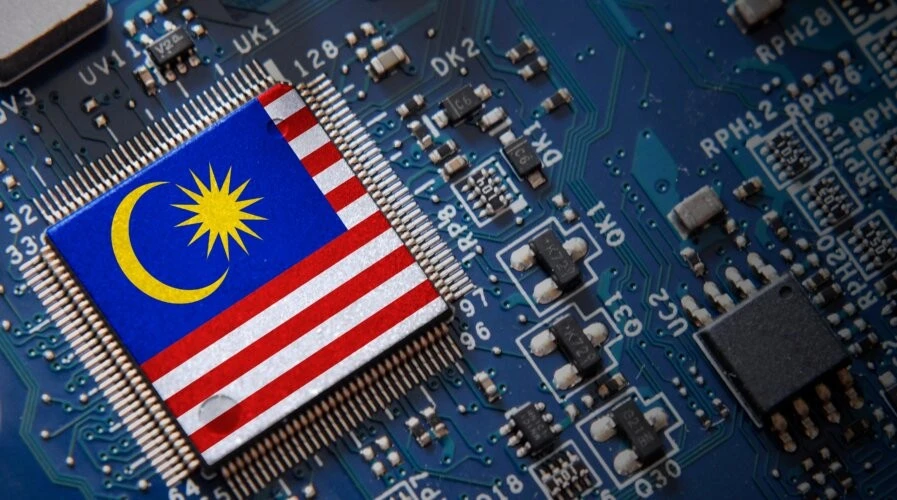
By 2024, the Selangor Hub’s Malaysia Semiconductor Accelerator and IC Design Park will kickstart operations, aiming to become Southeast Asia’s largest hub for integrated circuit design.
Malaysia’s Tech Renaissance
Moreover, partnerships are already in place with global giants like ARM Ltd. and Infineon Technologies, ensuring a robust start.
Such collaborations aim to innovate and create high-quality jobs, strengthening Malaysia’s economic fabric.
But there’s more! The “Golden Pass” initiative and other incentives are luring top-tier venture capital firms and tech startups.
This will not only increase investment but also establish Malaysia as a creative leader in the tech industry.
Meanwhile, Intel and Infineon are making substantial investments in the region.
Intel is setting up a new facility for chip packaging and testing, while Infineon is building the world’s largest power fabrication facility for silicon carbide.
Together, these efforts will place Malaysia at the center of the global tech stage, showcasing its commitment to innovation and economic resilience.
As Malaysia gears up, it’s not just about manufacturing; it’s about leading the charge in the high-stakes world of semiconductors.
This strategic shift is set to redefine Malaysia’s role in the global economy, making it a key player in our tech-driven future.
This article was produced by The Rio Times’ automated newsroom system. How we use AI · Report an error
Read More from The Rio Times