Navigating Troubled Waters: The Growing Strain in Philippines-China Sea Relations
Tensions are escalating in the South China Sea, spotlighting the fragile ties between the Philippines and China.
This strategic waterway, rich in resources and pivotal for global trade, is now a hotbed of diplomatic strains.
Recently, an alleged phone conversation, purportedly recorded by China, hinted at Filipino officials compromising to reduce tensions, stirring significant media attention.
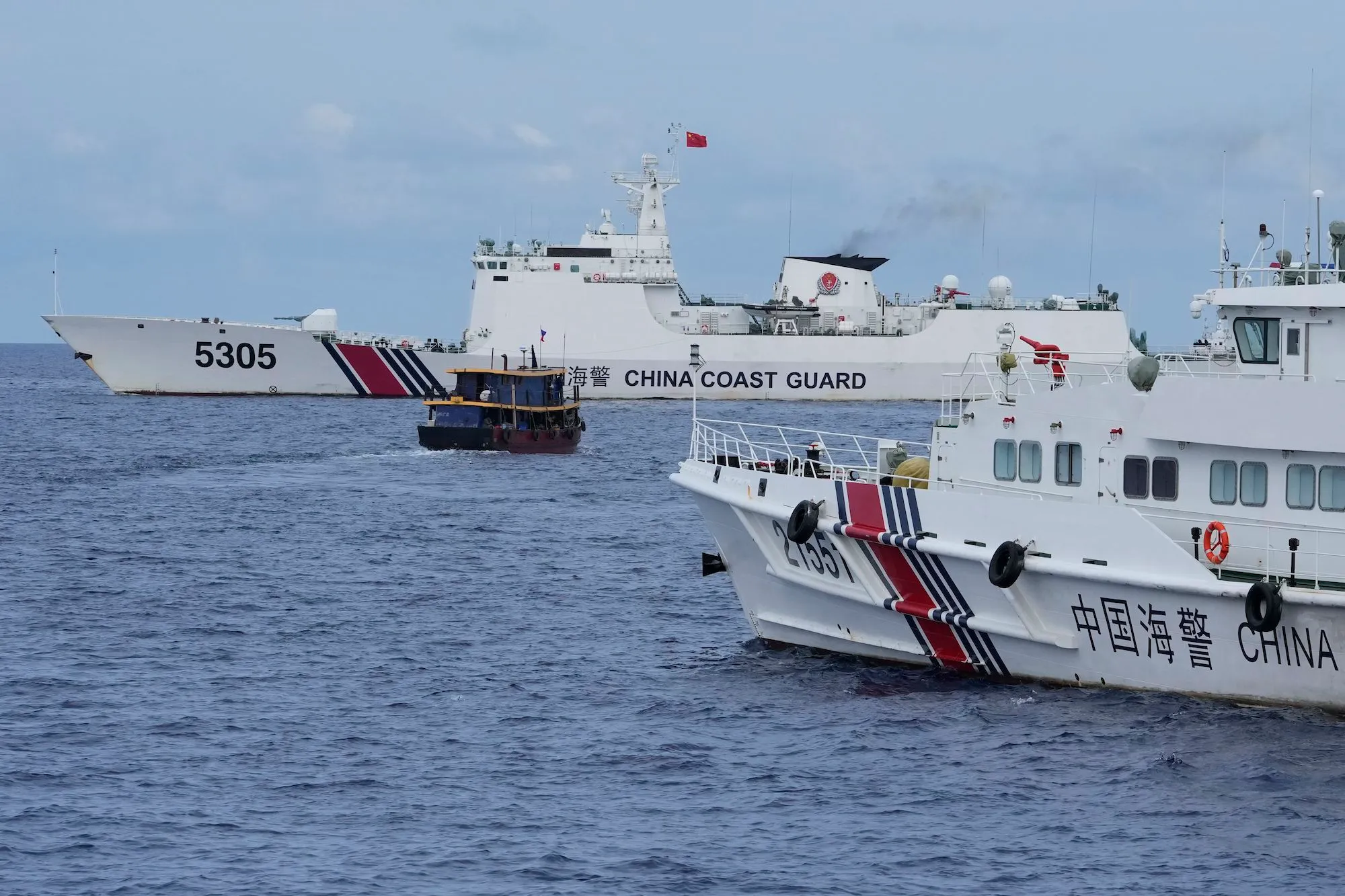
Compounding these tensions, China used water cannons to thwart a Philippine humanitarian mission near Scarborough Shoal.
Since President Ferdinand Marcos Jr.’s election in June 2022, Philippines-China relations have deteriorated.
This occurred despite initial efforts to sustain the friendly ties established by his predecessor, Rodrigo Duterte.
After a seemingly conciliatory visit to Beijing, confrontations escalated. In February 2023, a Chinese Coast Guard ship aimed military-grade lasers at a Philippine vessel, further exacerbating tensions.
Adding to the strife, China unveiled a map claiming vast areas of the South China Sea, intensifying disputes over maritime boundaries.
These provocations peaked in October when the Philippines accused China of deliberately colliding with its ships near Second Thomas Shoal.
The South China Sea Dispute
China’s aggressive stance, marked by the notorious nine-dash line, conflicts with international rulings and challenges the sovereignty of several Southeast Asian nations.
Beijing’s tactics—ranging from water cannons to potential ship collisions—stop short of outright war but maintain high-stakes pressure on Manila.
The United States, affirming its alliance through the Mutual Defense Treaty, has vocally supported the Philippines, condemning China’s destabilizing actions.
This international backing emboldens Manila to counter China’s advances with a blend of diplomacy and potential military enhancements.
Amid these rising tensions, the Philippines is strategizing with allies to safeguard its maritime domains without sparking broader conflict.
This delicate balance of force and diplomacy highlights the ongoing struggle for control in a region central to global maritime governance.
The ongoing confrontations in the South China Sea underscore a critical juncture for regional stability and international maritime law.
In short, they emphasize the broader implications for global peace and the rule of law.
This article was produced by The Rio Times’ automated newsroom system. How we use AI · Report an error
Read More from The Rio Times