
INDONESIA · ANALYSIS
Key Facts
- What is happening Indonesia’s economy grew 5.47% year on year in the third quarter of 2026, according to Statistics Indonesia (BPS), released on 5 November 2026.
- Why it matters Indonesia imports all of its wheat and nearly all of its soybeans, so a strong consumer economy feeds import demand that Brazil, Argentina and the United States compete for.
- The numbers Growth was 5.47% against 5.29% in the second quarter of 2026 and 5.04% in the third quarter of 2025.
- Who is who Bank Indonesia under Governor Destry Damayanti holds its rate at 5.75%.
- What to watch Bank Indonesia meets on 17-18 November and 15-16 December 2026.
- What it means for you US investors and farm-exposed readers should treat the growth as real demand, but note that US purchase pledges, import controls and a weak rupiah decide who captures it.
Indonesia’s GDP growth in 2026 accelerated to 5.47% in the third quarter, driven mainly by household spending, and that supports demand for imported wheat and soy products. For readers in the United States it matters because American farmers, investors in Asian markets and Latin American exporters all compete for the same Indonesian buyers.
Indonesia is Southeast Asia’s largest economy, an archipelago of more than 270 million people that feeds itself partly through imports. This analysis explains what the third-quarter figure measures, what Indonesia buys abroad, and where Brazil and Argentina fit, building on the Asia Intelligence Brief.
The Numbers Behind the 5.47% Reading
Statistics Indonesia (BPS), the national statistics agency, said on 5 November 2026 that GDP grew 5.47% year on year in July to September. That compares with 5.29% in the second quarter of 2026 and 5.04% in the third quarter of 2025.
What the Figure Measures
The headline is real GDP, which means output adjusted for price changes, compared with the same quarter a year earlier. BPS compiles it from the production side, by sector, and from the expenditure side, by consumption, investment and trade.
Quarter on quarter, GDP rose 1.59%, and growth for January to September was 5.45%, according to Liputan6 and Beritasatu. The first quarter of 2026 was 5.61%, according to BPS’s release of 5 May 2026.
What Drove It
Household spending is the engine, and every report of the release names it as the main driver. The pieces, as reported by Investor.id, Tempo and Beritasatu, were:
- Household consumption grew 5.04% year on year and added 2.62 percentage points to growth.
Reuters, via Business Recorder, adds that manufacturing was helped by palm oil being processed into fuel under an expanded mandatory biodiesel programme. Inflation stayed inside Bank Indonesia’s 1.5% to 3.5% target range, at 3.28% in September and 3.23% in October, according to Kontan.
Who Is Who
Several institutions shape both the growth story and the grain trade. Each one has a distinct role:
- Statistics Indonesia (BPS) is the official statistics agency, and Moh. Edy Mahmud, its Deputy for Balance and Statistical Analysis, is quoted in coverage of the release.
- Prabowo Subianto is president and head of government.
- Bank Indonesia is the central bank, led by Governor Destry Damayanti, whom parliament confirmed in late August 2026 after Perry Warjiyo resigned.
- Andi Amran Sulaiman is the agriculture minister. Under the US trade deal, the flour millers’ association APTINDO signed an MOU with US Wheat Associates to buy 1 million tonnes of US wheat a year from 2026 to 2030.
- Márcio Elias Rosa is Brazil’s minister of Development, Industry, Trade and Services and the counterpart on a Mercosur proposal.
Bank Indonesia held its policy rate, the BI-Rate, at 5.75% on 20-21 October 2026, the fourth straight hold, according to RRI and Bisnis. Rupiah pressure was the stated reason, and most economists had expected a rise to 6.00%.
Warjiyo’s resignation was announced on 27 July 2026, and the State Secretary said it was for personal reasons, not health or pressure. The Jakarta Post reported that sources described policy tensions with the finance ministry, which the research could not confirm independently.
Indonesia’s Food-Import Role and the Latin American Link
Wheat, Soybeans and Meal
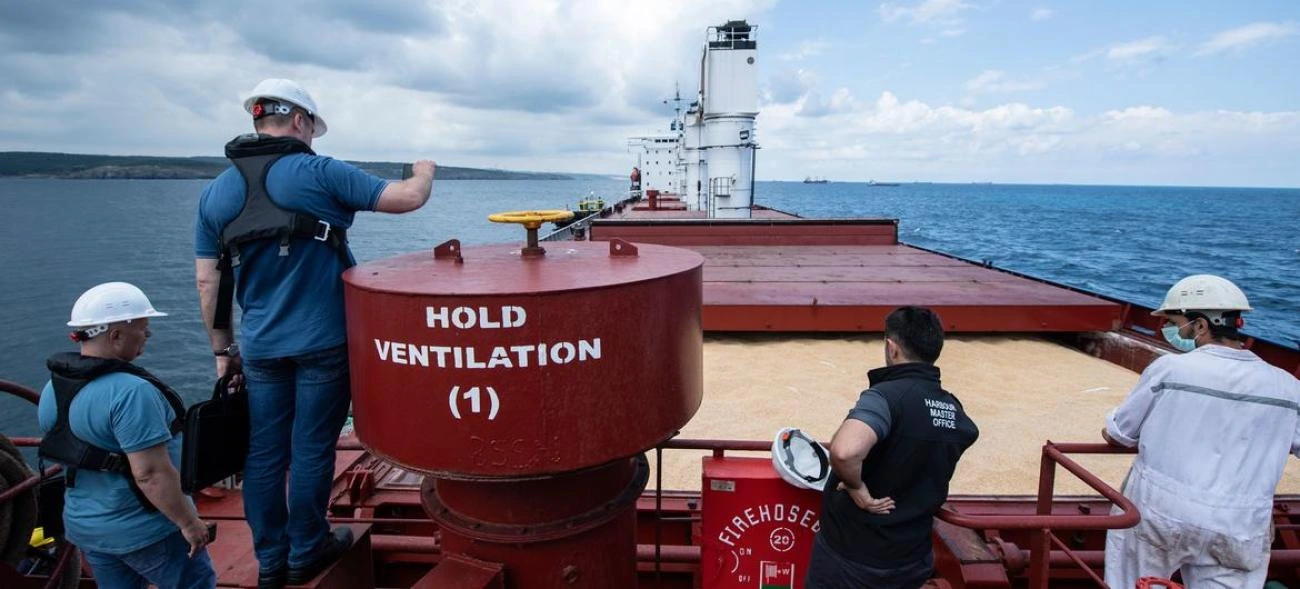
Indonesia grows no wheat and depends fully on imports. The US Department of Agriculture’s Jakarta office, in its April 2026 Grain and Feed Annual, forecasts higher 2026/27 imports on feed and poultry demand and rising demand for wheat foods.
Soybeans are also almost entirely imported, with Indonesia projected to import about 2.57 million tonnes in 2026, roughly 94% of annual domestic demand of about 2.74 million tonnes, according to Indonesian government projections. Soybean meal, the protein base of poultry feed, is a separate and larger import line.
A free-meals programme targeting 82.9 million recipients adds to food demand, and officials still expect to import wheat, soybeans and sugar, according to Kabarbursa and RCTI+. Consumer spending of the kind behind the 5.47% reading tends to raise protein demand, though the research found no source tying the quarter’s growth to grain prices.
Argentina and Brazil
Brazil and Argentina are the traditional soybean meal suppliers, according to UkrAgroConsult and the Jakarta Post of 16 May 2026.
The Trade Agreement Question
On 7 August 2026, in Jaipur, Trade Minister Santoso proposed a narrow preferential trade agreement between Indonesia and Mercosur, the South American trade bloc, to Minister Elias Rosa. The broader Indonesia-Mercosur comprehensive partnership talks (IM-CEPA) have stalled, according to Antara and Investortrust.id.
Brazil said it would study the proposal, and formal talks have not begun. Itamaraty, Brazil’s foreign ministry, sees potential but rules out a free-trade agreement, according to Datamar.
Scenarios and Risks
The risks for Latin American sellers are mostly political, not economic. Indonesia’s government said it will not import rice, table sugar or corn for feed, seed and household use in 2026, citing domestic output and stocks, according to UkrAgroConsult and the Jakarta Post.
Officials said corn imports had ceased, and Bulog, the state food agency, plans to distribute 500,000 tonnes of corn in 2026, according to UkrAgroConsult. The US trade deal pledges 3.5 million tonnes of US soybeans, up from 2.2 million, which favours American suppliers.
Pledges are not purchases, however. Indonesia bought only 216,000 tonnes of US soybean meal in 2025 against a pledge of 3.8 million tonnes, according to the same trade-deal reporting.

One scenario, labelled as such, is that consumption keeps growing and import controls stay light for feed grains. In that case Argentine meal and Brazilian soy products would gain volume, with the Mercosur proposal adding a tariff channel if talks start.
A second scenario has tighter state control of soybean meal imports and self-sufficiency drives that cut corn and rice purchases. Soybean meal imports are being centralised under state control, which could hurt poultry farmers’ profits, according to UkrAgroConsult, and that would reduce sales volumes.
Macroeconomic risks sit behind both. The 2026 budget deficit could widen from 2.68% to 2.85% of GDP against a 3% legal cap, according to Indonesia-Investments, and Reuters notes weaker investor sentiment amid scrutiny of fiscal plans.
Data credibility is a further question. BPS defended its first-quarter figure of 5.61% as built from more than 3,500 indicators after academic debate, according to RCTI+ and Antara.
What It Means for You
For US investors, the growth is real but unevenly shared, and monetary policy is tight. Bank Indonesia’s rate rose by 100 basis points between 20 May and 18 June 2026, to 5.75%, and rupiah weakness raises the cost of imported food and feed.
For US farm interests, Indonesia’s pledges favour American soybeans, meal and wheat, yet actual buying lagged the pledge in 2025. The figure to track is delivered volume, not announced commitments.
For Latin America, the opening is in soybean meal and wheat, where Argentina and Brazil are established suppliers. The constraints are import approvals, US purchase pledges and a Mercosur proposal that is still only a proposal.
What Is Not Known
The BPS third-quarter press release was not available to the research, so growth rates for exports, imports and government spending are unconfirmed. Official 2025-26 import volumes and supplier shares for wheat, soybeans and meal were also not available from USDA or BPS.
Published supplier shares for corn differ and lack a clear year, so none is used here. Nobody has shown that the 5.47% growth moved grain prices, despite the brief’s wording.
What to Watch
- 17-18 November 2026: Bank Indonesia board meeting, according to its published schedule as reported by Bisnis.
- 15-16 December 2026: Bank Indonesia’s final meeting of the year.
- December 2026: the deadline Lula gave Prabowo in October 2025 for the IM-CEPA, according to Bisnis.com, which looks unlikely given the narrower proposal.
- Early February 2027: BPS normally publishes fourth-quarter and full-year 2026 GDP, a date not yet confirmed.
Finance Minister commentary on whether 2026 growth reaches 5.5% will also matter, since the budget assumed 5.4%. Watch Argentine and Brazilian meal shipment data for evidence that demand turns into volume.
Frequently Asked Questions
How fast did Indonesia’s economy grow in 2026?
Indonesia’s economy grew 5.47% year on year in the third quarter of 2026, according to Statistics Indonesia (BPS). That followed 5.61% in the first quarter and 5.29% in the second.
What drove Indonesia’s third-quarter growth?
Household consumption was the main driver. Manufacturing was helped by palm-oil processing into biodiesel, according to Reuters via Business Recorder.
Does Indonesia import grain?
Yes, Indonesia grows no wheat and imports almost all of its soybeans. The government has said it will not import rice, table sugar or corn for consumption in 2026, citing domestic production.
How much soybean meal does Argentina sell to Indonesia?
Argentina is one of the traditional soybean meal suppliers to Indonesia, alongside Brazil.
Is there a trade agreement between Indonesia and Mercosur?
Not yet. Indonesia proposed a narrow preferential agreement on 7 August 2026, Brazil said it would study it, and formal talks have not begun.
What is Bank Indonesia’s interest rate?
Bank Indonesia held its BI-Rate at 5.75% on 20-21 October 2026, the fourth straight hold. Its next meetings are on 17-18 November and 15-16 December 2026.
Sources: riotimesonline.com, brecorder.com, investor.id, liputan6.com, beritasatu.com, medcom.id. Retrieved 5 November 2026.
This article was produced by The Rio Times’ automated newsroom system. How we use AI · Report an error · Editorial responsibility: Matthias Camenzind, Editor-in-Chief
LatAm Markets: Live Signals → — real-time movers, turnover leaders and FX across Latin America.