Maduro’s Referendum Rejects International Mediation with Guyana
On Sunday, Venezuela held a key referendum on its territorial dispute with Guyana, focusing on the oil-rich Esequibo region.
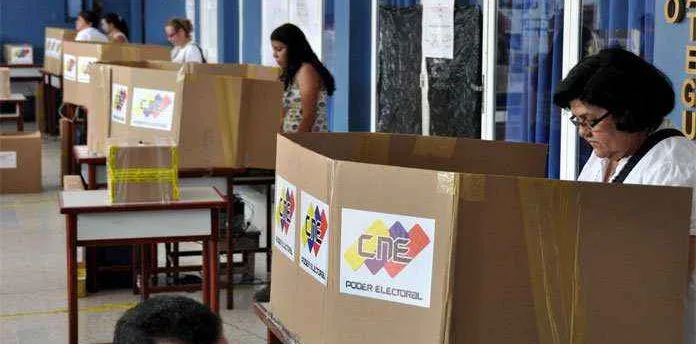
Venezuelan voters largely rejected the International Court of Justice’s (ICJ) role in this conflict. Additionally, they favored forming a new state in Esequibo.
President Nicolas Maduro’s administration arranged this referendum amidst an active ICJ case.
The ballot included five questions, each gaining over 95% support.
Elvis Amoroso, the electoral chief, announced that more than 10.5 million votes supported these questions. However, the total voter count is still unknown.
Experts interpret this referendum as Maduro’s strategic move. They consider it a gauge of public backing before the 2024 presidential election.
The ICJ had asserted its jurisdiction in April. Nevertheless, a final resolution might take years. Venezuela insists on a bilateral solution with Guyana, bypassing the ICJ.
Maduro celebrated the outcome, deeming it a decisive voice of the Venezuelan people.
The Esequibo region, spanning 160,000 square kilometers, has attracted recent attention due to offshore oil and gas finds.
A political science expert, Ricardo Sucre, suggests to Reuters Maduro’s intent to showcase power to Guyana while focusing on energy prospects.
The maritime boundary between Venezuela and Guyana is also under dispute. There was minimal opposition to the referendum.
Analysts anticipated low participation from dissenters. Observations nationwide indicated sparse voter presence in many regions.
Carmen Pereira, an 80-year-old retiree, voted to defend Venezuelan territory. The government prolonged the voting time by two hours.
Maduro’s rule might be challenged
Benigno Alarcon, a political studies director, sees the referendum as Maduro’s test of his electoral mechanism.
Security analyst Rocio San Miguel believes Maduro’s rule might be challenged if the opposition unifies and citizens actively participate in the 2024 election.
She hints that the referendum could be part of a larger conflict strategy.
The referendum has caused unease in Guyana. The Guyanese leadership has called for calm among its people.
President Irfaan Ali rallied supporters post-ICJ ruling, which forbids Venezuelan encroachment on Guyanese land.
Guyanese like Kim Rampersaud felt reassured by the ICJ’s verdict.
Brazil reacted to these events by bolstering its northern border defenses. This move underscores the regional significance of the Venezuela-Guyana territorial dispute.
More: Latin America news in English, every day from The Rio Times.
This article was produced by The Rio Times’ automated newsroom system. How we use AI · Report an error
In depth
Read More from The Rio Times