
LESOTHO · INFRASTRUCTURE
Key Facts
- The country Lesotho is a mountain kingdom surrounded by South Africa; its loti currency is tied to the rand.
- The background The A2 links five southern districts; the minister says years of pothole filling and neglect left it unsafe.
- What happened The government launched a rebuild of 64 kilometres of the A2, from the airport junction to Mafeteng.
- The parties and numbers Sinohydro builds it for M547.4 million (US$33.5 million); Mafube Consulting supervises; 36 months allowed.
- What it means for you Roadworks may slow trips to the airport and the south, though no start date has been published.
- Still open The release gives no start date and no breakdown of how the government is paying.
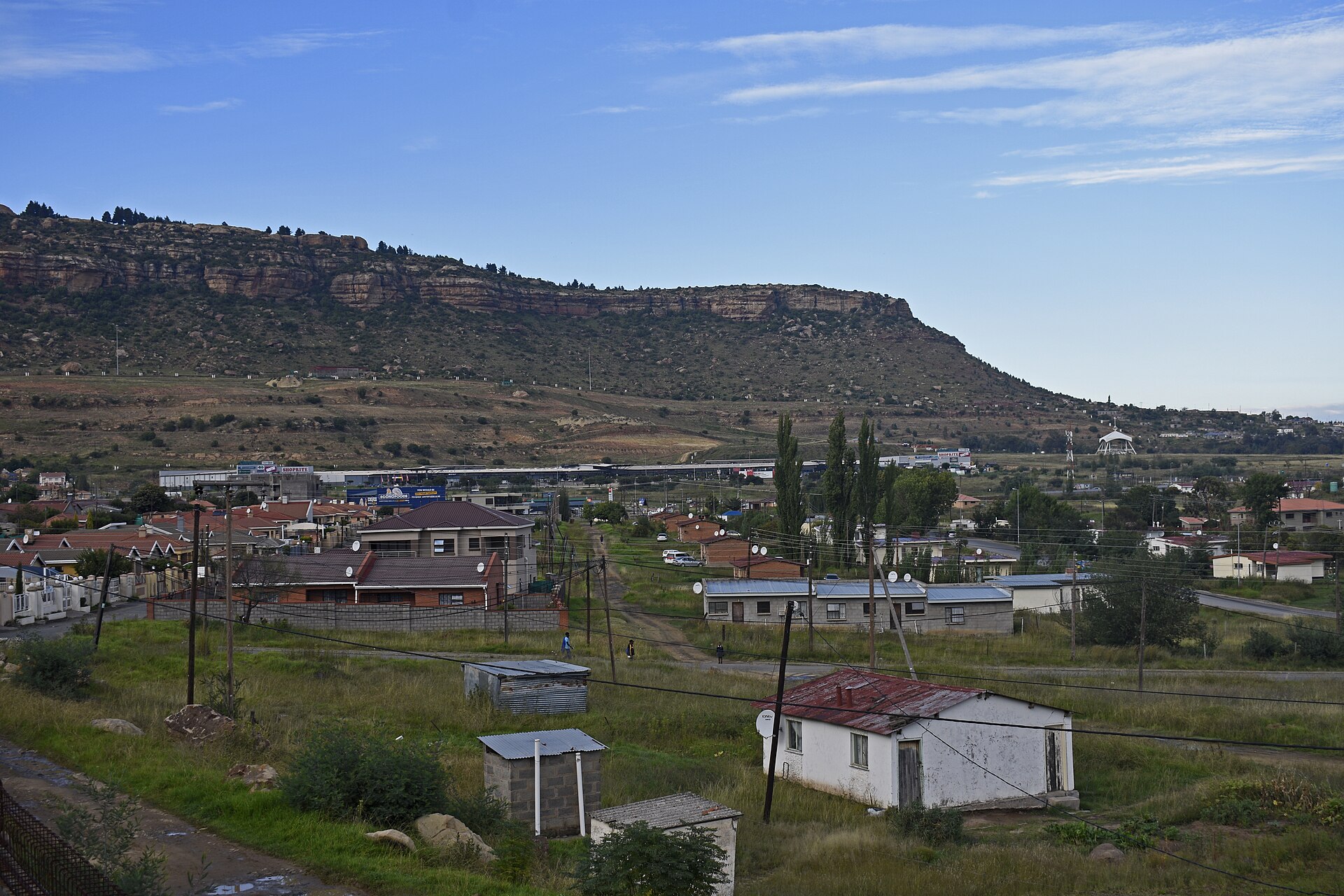
Lesotho has launched a rebuild of the 64-kilometre A2 road from the airport junction near the capital Maseru to Mafeteng, a government investment of M547.4 million (maloti, the plural of the loti currency), or about US$33.5 million. The Ministry of Public Works and Transport announced the launch in the first week of November 2026, and completion is expected within three years.
The builder is Sinohydro Corporation Limited, a Chinese state-owned construction company, and Mafube Consulting (Pty) Ltd has been appointed to supervise the works. Lesotho is a small mountain kingdom entirely surrounded by South Africa, so road links matter for trade between its districts.
What the Project Covers
Public Works and Transport Minister Matjato Moteane said the A2 links five districts in the south and has suffered years of neglect, and that filling potholes and clearing drains is no longer enough. The rebuild will use concrete surfacing, new drainage pipes and water-management works for areas hit by flash floods.
Moteane urged the contractor to work with integrity, protect workers and the public, and warned: “Do not make the mistake of using substandard materials.” He also asked for equipment and machinery to be sourced locally where possible, and for nearby villages to get surplus quarry material for their own roads.
The ministry expects safer, more reliable travel, easier access for health services and less dust and fewer accidents. Its release gives a three-year completion period and names no start date.
The Money and the Currency
Amounts in this article are converted at the South African Reserve Bank rate of 16.3568 rand per US dollar on Thursday 5 November 2026. The loti, whose plural is maloti, is tied to the rand at par, so the same rate is used for maloti.
At that rate the M547,383,184.79 contract is about US$33.5 million. The government release calls it a government investment and does not break down the financing.
A Wider Road Programme
Finance and Development Planning Minister Dr Retšelisitsoe Matlanyane told the event that the government began its infrastructure drive with the Tsoaing Bridge and will continue in the Leribe, Mokhotlong and Thaba-Tseka districts. She pledged electricity for every household within five years and clean water within 10 years.
Moteane said a contractor has been appointed for repairs, resealing and intersection upgrades on the Masianokeng road, and that one was selected last month for the road linking Mohale’s Hoek and Quthing, two southern districts. He also said feasibility studies are under way to connect Leribe and Katse to Thaba-Tseka town, and Quthing to Qacha’s Nek.
A separate government release dated 13 October 2026 named China Geo-Engineering Corporation Lesotho as contractor for rebuilding the 22-kilometre A1 road from the Maseru Border Post to Maqhaka, at more than M700 million (about US$43 million). Deputy Prime Minister Justice Nthomeng Majara said the work is part of the mandate given to the ministry by Prime Minister Sam Matekane, and that the aim is to rehabilitate the A1 fully up to Mokhotlong District.
What It Means for US Readers
Two road contracts announced since October went to Sinohydro, a Chinese state-owned company, and to China Geo-Engineering Corporation Lesotho. For US firms and officials following infrastructure competition in southern Africa, neither release names a foreign lender or funder.
Visitors who use the airport road or the A2 south of Maseru may meet roadworks once building starts. The release gives no start date or traffic arrangements.
What Is Not Known
It is not known when work will start on site or how traffic will be handled during the three years. The Ministry of Public Works and Transport can answer, and it has announced no date.
It is not known how the M547.4 million is financed, because the release calls it a government investment without a breakdown. The Ministry of Finance and Development Planning can answer, and no date has been given for publishing the contract.
Frequently Asked Questions
What is the A2 road in Lesotho?
The A2 is a main road connecting Maseru and Mafeteng and linking five districts in the south, according to the transport minister. The new contract covers a 64-kilometre section from the airport junction to Mafeteng.
Who is building the airport-to-Mafeteng road?
The contractor is Sinohydro Corporation Limited, and Mafube Consulting (Pty) Ltd has been appointed to supervise the works. Completion is expected within three years.
How much does the road cost in US dollars?
The project is worth M547.4 million, about US$33.5 million at the South African Reserve Bank rate of 16.3568 rand per dollar on 5 November 2026. The government describes it as a government investment.
Who is Dr Retšelisitsoe Matlanyane?
She is Lesotho’s Minister of Finance and Development Planning, and she spoke at the launch. She pledged household electricity within five years and clean water within 10 years.
When will construction start?
The government release gives no start date. It says completion is expected within three years.
Sources: Government of Lesotho releases on the A2 rehabilitation launch and on the A1 road of 13 October 2026. Exchange rate: South African Reserve Bank, rand per US dollar, 5 November 2026.
This article was produced by The Rio Times’ automated newsroom system. How we use AI · Report an error · Editorial responsibility: Matthias Camenzind, Editor-in-Chief