Lesotho AI Blueprint: First Country to Apply the UN Plan
LESOTHO · TECHNOLOGY
Key Facts
- —What happened Matekane opened the UN session that launched the Blueprint for National AI Strategies on 21 September 2026.
- —First in line The UN says Lesotho is the Blueprint’s first country application, tested against real energy and water limits.
- —On the ground Lesotho has begun Phase One of a National Compute Roadmap running from 2026 to 2029.
- —The catch No budget, no cost estimate and no launch date have been published for any of it.
- —Who it touches About 2.3 million Basotho, plus firms handling their data under rules still in draft.
- —Next step Cabinet must still adopt three digital policies that were validated in August 2026.
The United Nations picked a small mountain kingdom to test its new method for turning AI ambition into a costed national plan.
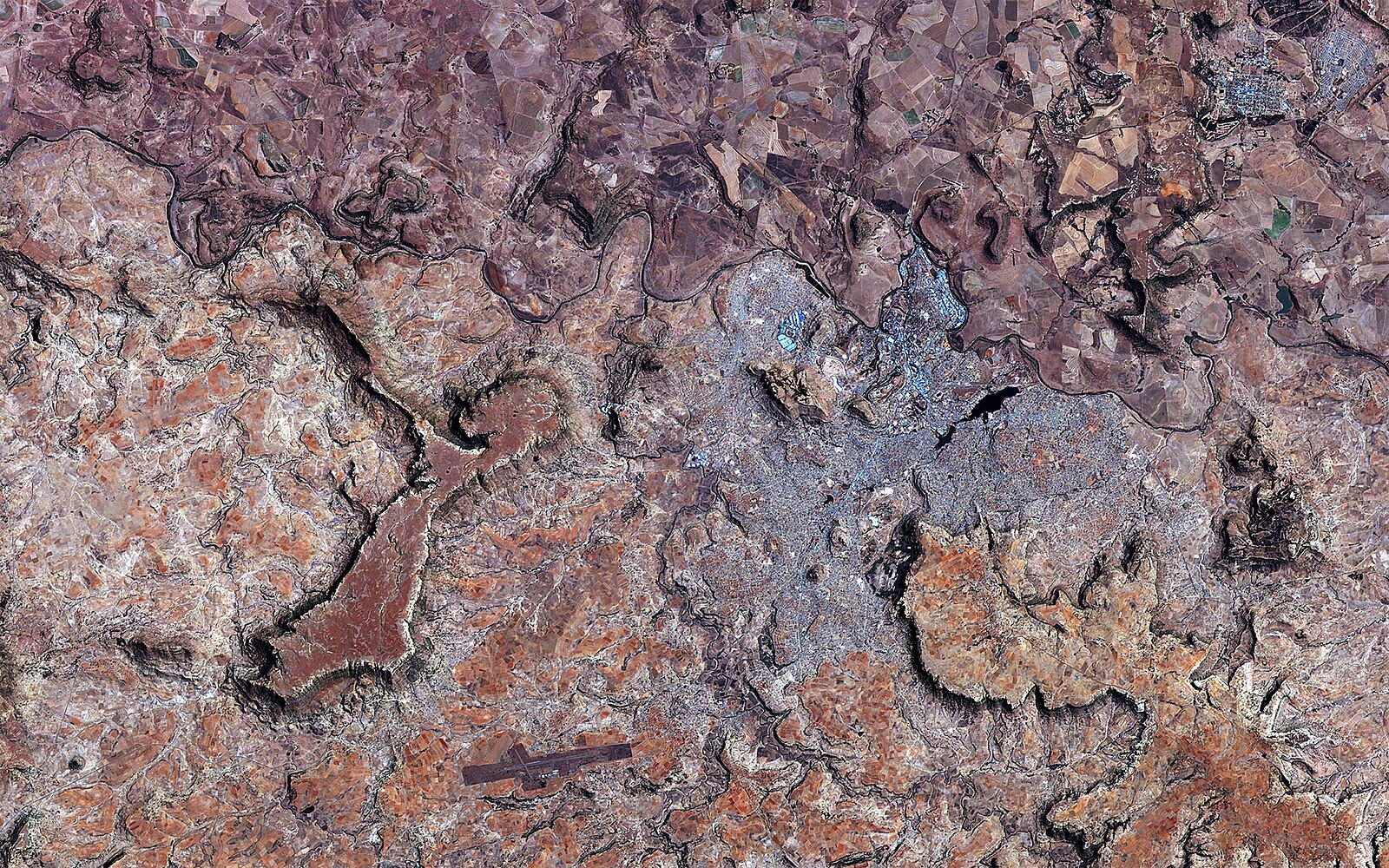
Prime Minister Sam Matekane presented the Lesotho AI Blueprint work in New York on Monday, 21 September 2026. The United Nations says the kingdom is the first country to apply its new Blueprint for National AI Strategies.
What Happened at the UN in New York
Prime Minister Ntsokoane Samuel Matekane arrived in New York on Sunday, 20 September 2026, for the 81st UN General Assembly. He spoke the next day at Digital Cooperation Day, run by the UN Office for Digital and Emerging Technologies.
The day’s theme was Shaping A Global AI Future Through Science, Policy, and Capacity. Matekane gave the opening remarks for the session that launched the Blueprint.
His communications minister, Nthati Moorosi, sat on the panel. The UN describes that session as the Blueprint’s launch and its first country application, in Lesotho.
Lesotho brought some standing to the room. It has served as chair of the African Union’s Specialised Technical Committee on Communication and ICT.
What the Lesotho AI Blueprint Actually Is
The UN calls the Blueprint a guided, interactive platform and methodology. It accompanies a government from mandate to an adopted, costed and achievable national AI strategy.
In plain terms, it is a workbook for writing a plan a country can pay for. The Lesotho AI Blueprint test asks one question first: can the country get enough computing power?
The UN frames that question around real energy and water constraints. Data centres need both, and Lesotho sells its water to South Africa rather than having spare power.
From Strategy to Implementation, in Numbers
Matekane said Lesotho has finished planning and begun Phase One of its National Compute Roadmap, 2026 to 2029. The assessment behind it took more than a year.
It covered computing capacity, data centres, internet links, skills and financing. Lesotho now has three digital policies, a government data centre and a chief digital officer.
The wider plan is the National Digital Transformation Strategy 2024–2030. It targets full broadband coverage by 2030, up from 58 percent internet use today.
The strategy rests on five pillars: rules, digital government, infrastructure, digital skills and digital business. Lesotho ranked 145th of 193 countries on the UN’s e-government index.
It also aims to lift electricity access from 54 to 67 percent of people by 2030. Roughly four in ten Basotho still live without a mains connection.
That strategy names the World Bank, the African Development Bank and the EU among possible funders. It carries no cost figure at all.
On identity, Lesotho is not starting from zero. Its biometric national ID has covered about 85 percent of the population since registration began in 2013.
In February 2026 the ministry signed a digital ID work plan with UNICEF. It builds on MOSIP open-source software for biometric registration and online checks, with no published rollout date.
Lesotho has joined the 50-in-5 campaign, which helps poorer countries build shared digital systems by 2028. UN-India funding has already paid for high-performance computing upgrades and training.
Why This Matters for Business in Africa
Nothing changes this week for anyone trading with or living in Lesotho. Permits, banking and payments work as before.
The medium term is the point. If the Lesotho AI Blueprint work delivers, the country becomes a place where data rules and digital services are predictable.
Being the UN’s test case also brings attention and technical help. Moorosi has said openly that she wants hyperscalers and development banks to look at data centres there.
Lesotho’s own officials are cautious. One ICT director warned the work must not become another policy document that gathers dust on a shelf.
A government diagnostic this year called the country’s data ecosystem emerging but fragmented. It used a sharper phrase too: asset-rich but connection-poor.
A consultant on the same project said the country writes strong policy but struggles to implement it. That is the honest measure of what was announced in New York.
What Is Not Known
No budget, no cost estimate and no timeline have been published for the compute roadmap. No launch date exists for the new MOSIP-based digital ID.
Three policies — on AI, data management and broadband — were validated in August 2026. Whether cabinet has adopted them is not public.
The economics are hard. The IMF’s 2025 review put Lesotho’s government spending at about 53.5 percent of GDP, with the wage bill near 17 percent.
Growth is thin as well. The IMF recorded 2.6 percent real growth in the 2024–25 financial year, falling to a projected 1.4 percent.
It found real income per person fell 12 percent between 2016 and 2023. A country in that position has little room for a failed IT project.
The next real signal will be a published cost and date for the Lesotho AI Blueprint work.
Frequently Asked Questions
Is Lesotho the first country to use the UN AI Blueprint?
Yes. The UN Office for Digital and Emerging Technologies says Lesotho is the Blueprint’s first country application, launched on 21 September 2026.
Has Lesotho launched a new digital ID?
No. It already has a biometric national ID covering about 85 percent of people, and the MOSIP-based upgrade has no announced launch date.
How much will the Lesotho AI Blueprint work cost?
No cost has been published. The national strategy names the World Bank, African Development Bank and EU as possible funders, without any figures.
Sources: Reporting draws on the UN Office for Digital and Emerging Technologies, the Government of Lesotho, the Lesotho News Agency, UNICEF, the International Monetary Fund, Lesotho Times and ITWeb Africa.
This article was produced by The Rio Times’ automated newsroom system. How we use AI · Report an error
Read More from The Rio Times