
Americans moving to Côte d’Ivoire, also called Ivory Coast, need an approved e-visa, an online entry permit, before they fly. As of Thursday 12 November 2026 the process runs online, and screening for Ebola, a deadly virus, plus a yellow fever certificate now shape the trip.
Key Facts
•Who. US citizens need an e-visa, an online entry permit, approved before travelling to Côte d’Ivoire.
•Fee. The e-visa costs 73 euros (about US$81) and lasts three months with multiple entries.
•Health. Entry requires a yellow fever vaccination certificate, and travellers arriving from another African country must file an online health declaration.
•Money. The local currency, the West African CFA franc, trades at about 590 per US$.
•Safety. Britain’s foreign ministry advises against all travel to the north, and Abidjan, the economic capital, carries terror and protest risks.
In Plain English
CFA franc The West African CFA franc is the local currency. It is pegged to the euro at 655.957 per euro.
E-visa An e-visa is an entry permit you apply for and pay for online. It is approved by email before you travel.
ONECI The Office National de l’État Civil et de l’Identification is the national identity agency. It issues the resident card.
Yellow fever certificate This is proof of yellow fever vaccination. UK government travel advice says you need it to enter the country.
Do You Need a Visa as a US Citizen
US citizens need a visa before flying to Côte d’Ivoire. Our Côte d’Ivoire country guide covers the wider background.
The UK Foreign, Commonwealth & Development Office (FCDO), Britain’s foreign ministry, sets out the rule clearly. Nationals of countries outside the Economic Community of West African States (ECOWAS), a regional bloc, must hold a visa or approved e-visa before travel.
The FCDO says your passport must be valid for at least six months after you arrive. It also says you need a yellow fever vaccination certificate to enter.
The e-visa lasts three months and allows multiple entries, according to SNEDAI, the official e-visa operator. SNEDAI lists the fee as 73 euros, including bank charges (about US$81).
Applying for the E-Visa Step by Step
Start on the SNEDAI e-visa page at snedai.com/e-visa and complete the online pre-enrolment. You then pay with a Visa or Mastercard card.
Upload three scanned documents in JPG, PNG, GIF or PDF format, each no larger than 1 MB. SNEDAI says a missing document means automatic rejection, and the fee is not refundable.
The first document is the identity page of your passport. The second is a round-trip flight booking.
The third is either an invitation letter or an accommodation certificate. The invitation letter must be typed, printed, signed, stamped and legalised.
After payment you receive a payment receipt by email. SNEDAI says the answer, approved or refused, arrives by email within 48 working hours, meaning Monday to Friday.
The wait may be longer because police check the documents. The FCDO advises applying and paying at least 10 working days before travel.
An approved pre-enrolment document stays valid for three months from approval. At the airport desk marked Visa aéroport (airport visa) in Abidjan, you give fingerprints and a photo, and the visa is printed and handed over at once.
SNEDAI says its enrolment boxes work 24 hours a day, seven days a week. Cases with no online pre-enrolment are exceptional and go to the Direction de la Surveillance du Territoire (DST), the police border-security unit.
Residence Card and Staying Beyond Three Months
The e-visa covers three months, so a longer stay raises the question of a residence card. Relocation advisers report that stays past three months require one, but this is reported, not confirmed, on an official portal.
The government’s service portal, servicepublic.gouv.ci, describes the resident card (carte de résident). Its pages carry a footer reading updated 8 November 2016, so fees and lists must be confirmed before you rely on them.
The Office National de l’État Civil et de l’Identification (ONECI), the national identity agency, handles the card. You can reach it on +225 20 00 48 76 or at [email protected].
The portal lists a fee of 300,000 West African CFA francs (about US$509) for foreigners other than French nationals. French nationals pay 150,000 CFA francs (about US$254).
For a first application, a photocopy of your passport and visa is mandatory. Every document in a language other than French must be translated and certified.
The portal gives the processing time as not determined. Plan for an open-ended wait.
A temporary residence permit (titre provisoire de séjour) is handled by the Département de l’Immigration et de l’Émigration (DIE), the immigration department. It costs 6,000 CFA francs (about US$10).
A first application needs photocopies of your passport, visa and entry stamp, plus an original residence certificate under six months old. You also need two colour ID photos on a white background.
Proof of status depends on your situation. Workers show an employer’s work attestation, students a school or student card, and traders a trade register copy.
Retirees show a pension document. People with no occupation go to door 04 at the ONECI head office.
Work authorisation is also reported, not confirmed, at an official source. If you plan to work, ask your employer to confirm the rules in writing.
Money and Costs in US Dollars
The currency is the West African CFA franc, pegged at 655.957 per euro, a fixed rate used by the BCEAO, the regional central bank. With the European Central Bank reference rate of 1.1127 US$ per euro on 11 November 2026, that is about 589.5 CFA francs per US$, by our calculation.
The e-visa costs 73 euros including bank charges (about US$81). Whether SNEDAI also publishes a CFA franc price is not stated.
The FCDO says you may bring up to 500,000 CFA francs in cash (about US$848). You must also declare any foreign currency you carry.
For rents, commuting and daily spending, read our guide to Abidjan rent and commuting costs. We found no official rent statistics for Abidjan, so we give no rent figures here.
Where to Live and Get Around in Abidjan
Abidjan is the economic capital, while Yamoussoukro is the political capital. French is the official language, so basic French helps with every form.
Abidjan runs on UTC (Coordinated Universal Time), the same time as London in winter. That is five hours ahead of New York in winter.
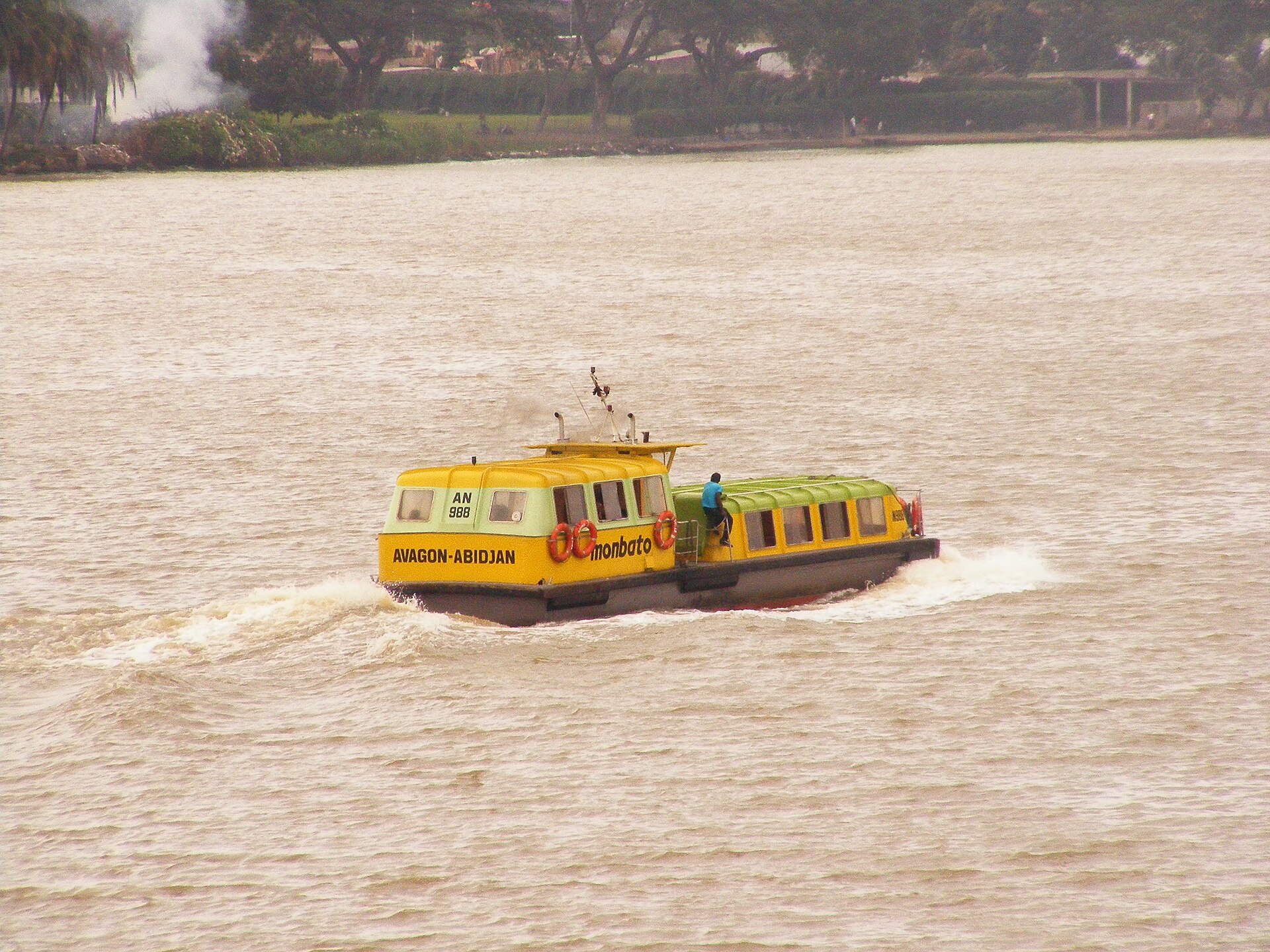
The photo shows a water bus run by SOTRA, Abidjan’s public transport company, on the Ébrié Lagoon. The photo was taken in 2009, so check current routes and fares directly.
We have no verified neighbourhood, rent or flight data to add here. For leisure, see our guide to things to do in Abidjan.
Safety in Côte d’Ivoire
The FCDO advises against all travel within 40 km of the Burkina Faso and Mali borders. It also advises against all travel to the northern Zanzan and Savanes provinces and Comoé National Park, because of the security risk.
It advises against all but essential travel within 20 km of the Liberia border. The main terror threat comes from JNIM (Jama’at Nusrat al-Islam wal-Muslimin), a jihadist group, mostly active in northern border areas.
The FCDO says attacks cannot be ruled out and could occur anywhere, including Abidjan. Check the FCDO page for the latest wording.
Political demonstrations sometimes take place in Abidjan and regional towns, particularly around elections. Authorities may use tear gas, roadblocks are common, and internet access might be restricted in major unrest, so avoid crowds.
The US State Department is reported to list the country at Level 2, Exercise Increased Caution, in an advisory dated 18 February 2026. It lists the northern border region at Level 4, Do Not Travel.
We could not open the live State Department page, so this level is reported, not confirmed. Check the advisory and the embassy’s guidance before you book.
Follow our Côte d’Ivoire news hub for developments.
Healthcare in Abidjan
The FCDO says Abidjan’s medical facilities are of a reasonable standard but can be expensive. Emergency facilities are limited to a few major hospitals.
Outside Abidjan, facilities are rudimentary. Serious treatment could need medical evacuation, so carry insurance that covers it.
The ambulance number is 185. The FCDO lists health risks including malaria, dengue, yellow fever, Zika and Ebola.
It advises checking vaccine advice at least eight weeks before travel. We found no verified clinic names or prices, so we list none.
Ebola Screening and Health Rules
Côte d’Ivoire has introduced screening of travellers arriving from countries affected by the Ebola outbreak. The World Health Organization (WHO), the UN health agency, declared the outbreak in the Democratic Republic of the Congo and Uganda a Public Health Emergency of International Concern on 17 May 2026.
Anyone travelling to or through Côte d’Ivoire from another African country must complete an online health declaration. It sits on the Destination Côte d’Ivoire website and must be done before arrival.
You must show the QR code from the declaration on arrival. Keep a screenshot and a printout in case your phone fails.
The yellow fever certificate is a separate requirement for entry, according to the FCDO. Check vaccine advice at least eight weeks before you travel.
What It Means for You
For a US mover, the paperwork is a bigger hurdle than the fee. Apply for the e-visa at least 10 working days before you fly, and gather the three documents first.
Ask your host to start the legalised invitation letter early, because it needs a stamp and legalisation. Pack your yellow fever certificate, and file the online health declaration if you arrive from or via another African country.
Expect to handle forms in French. Anything in another language needs a certified translation.
Keep your residence plans flexible, since the official portal’s data dates from 2016. Treat the north as off limits and carry your embassy contact details.
What Is Not Known
We found no official rent statistics for Abidjan, and ONECI does not state a processing time for the resident card. We also do not know whether the e-visa fee has a published CFA franc price.
We could not confirm at an official source that stays beyond 90 days need a card, or what the work permit rules are. International school fees are also not confirmed.
Frequently Asked Questions
Do US citizens need a visa for Côte d’Ivoire?
Yes, the FCDO says non-ECOWAS nationals need a visa or approved e-visa before travel. SNEDAI lists the e-visa fee as 73 euros (about US$81).
How long does the e-visa take?
SNEDAI says the answer arrives by email within 48 working hours. It may take longer because police check documents, so the FCDO advises applying at least 10 working days ahead.
Is Abidjan safe for US visitors?
The FCDO advises against all travel to the northern border areas and says attacks cannot be ruled out anywhere, including Abidjan. Check the US State Department advisory before you book.
This article was produced by The Rio Times’ automated AI newsroom. Editorial responsibility: Matthias Camenzind, Publisher and Editor-in-Chief. The Rio Times also runs Ask Rio Times, which answers from 100,000+ of our own articles, the daily Latin America Power Map, and prediction-market odds on elections and markets.. How we use AI · Report an error