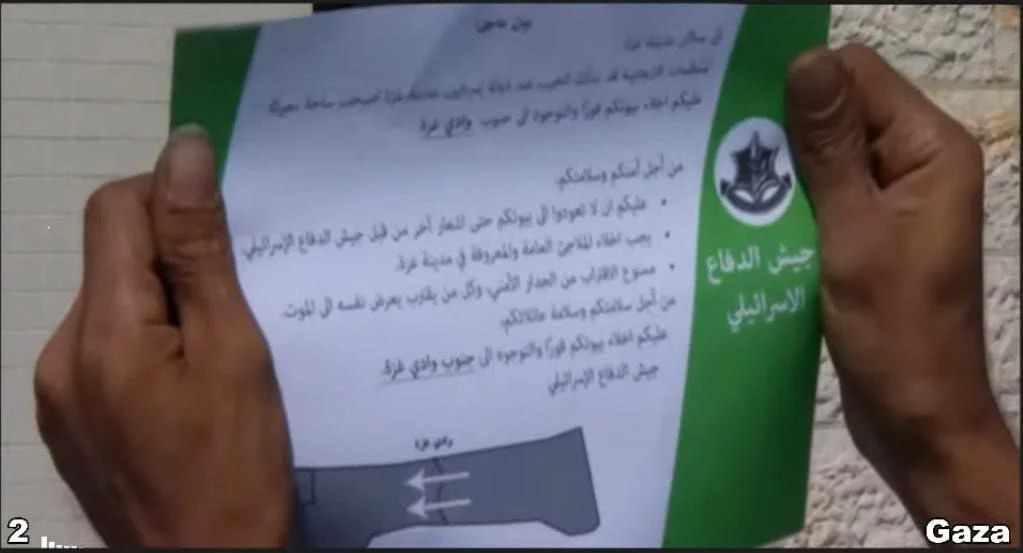
On Friday, Israel directed civilians to evacuate northern Gaza, an order that quickly drew criticism from the UN and was rejected by Hamas.
The order came as Israel continued airstrikes in the area. These strikes responded to a major attack by Hamas, which started on October 7.
In Israel, around 1,200 people have died since then, mostly civilians. The Israeli army reports 258 of these deaths were soldiers.
In Gaza, local authorities say Israeli strikes killed at least 1,537 people, mainly civilians.
Hamas also claims to hold 150 hostages in Gaza. Reportedly, 13 of them died in Israeli bombings.
Israel urged civilians to move south for safety. They initially set a 24-hour deadline but later extended it. Hamas immediately rejected this order.
The UN warned against Israel’s evacuation plan. They cited “devastating consequences” if carried out.
The Palestinian Health Ministry also stated evacuating patients from northern Gaza hospitals is “impossible.”
Crucial Development
This evacuation order is a crucial development in the ongoing Israel-Gaza conflict. Israel has a long history of conflict, but the current situation is notably difficult.
Hamas’ quick rejection shows the group’s stance against compromise. The UN’s involvement underscores international worries about the crisis.
Israel has military strength, but the human toll is significant. Both diplomacy and humanitarian aid are essential for resolving the conflict.
The high stakes also suggest that both sides may soon re-examine their tactics. This conflict also has the potential to escalate into a wider regional issue.
Escalation in Hostilities
The scale of casualties on both sides signals a significant escalation in hostilities. This raises the question: What are the limits of proportional response in warfare?
International law comes into play here, and violations could lead to sanctions or other punitive actions.
The evacuation order affects over a million civilians and reveals the humanitarian aspect of military strategies.
This crisis also puts pressure on neighboring countries like Egypt and Jordan, both of whom have peace treaties with Israel.
Their response could signal changing dynamics in Middle Eastern geopolitics. The role of non-state actors, such as Hamas and Hezbollah, adds another level of complexity.
These groups operate somewhat independently, and their actions can significantly impact diplomatic efforts.
Lastly, global public opinion is highly polarized on this issue. Social media campaigns and activism can influence the policy decisions of countries far removed from the conflict.
This article was produced by The Rio Times’ automated newsroom system. How we use AI · Report an error
Read More from The Rio Times