
KENYA · NATURAL RESOURCES
Key Facts
- —The basics Kenya’s natural wealth lies mostly in farmland, geothermal steam, lakes, forests and wildlife, while mining produced only 0.8% of GDP in 2025 and commercial oil output had not started as of October 2026.
- —Why it matters Agriculture, forestry and fishing produced 23.2% of Kenya’s economy in 2025, tea and fresh horticulture are top export earners, and geothermal steam generated about 40% of the country’s electricity that year.
- —The numbers In 2025, tea exports earned about US$1.44 billion, fresh horticulture about US$1.67 billion and mining and quarrying added about US$1.09 billion, converted at KSh 129.63 per US$ as of October 2026.
- —Who is who KenGen, the majority state-owned power producer, runs most Olkaria geothermal plants; Nairobi-based Gulf Energy holds the former Tullow oil blocks in Turkana; the mining ministry sets mining policy and Parliament ratifies oil contracts.
- —What to watch Gulf Energy targets first oil from the South Lokichar fields on Tuesday, 1 December 2026, starting at 20,000 barrels a day, with government oil revenue expected from February 2027 at the earliest.
- —What it means for you US buyers of Kenyan tea, coffee and flowers, energy investors and safari travellers all depend on Kenya’s rain, farmland, steam fields and wildlife, so drought and the Turkana oil timeline matter to them.
Kenya earns more from tea, flowers, steam and safaris than from mines. This guide explains who extracts the country’s resources, who profits and what they cost, as of October 2026.
Kenya resources are mostly renewable: fertile highland farmland, geothermal steam in the Rift Valley, freshwater lakes, forests and wildlife. Minerals and oil matter less than many visitors expect, with mining producing just 0.8% of GDP in 2025.
That balance could shift if crude from Turkana in the northwest starts flowing as planned in December 2026. For US readers, the story touches coffee and tea prices, clean-energy investment and the safari trips that bring visitors each year.
Figures come from the Kenya National Bureau of Statistics (KNBS), the national statistics office, and its 2026 summary of the year 2025. Conversions use the open.er-api.com rate of 14 October 2026, KSh 129.63 per US$.
Daily news is in the Rio Times Kenya section, and the guide to who runs Kenya’s economy covers business. For the country’s place in the region, see Kenya geopolitics explained and Kenya history explained.
Kenya Resources at a Glance
KNBS puts Kenya’s 2025 GDP at KSh 17.58 trillion (about US$135.6 billion), with real growth of 4.6%. Agriculture, forestry and fishing together produced 23.2% of that output, worth KSh 4.07 trillion (about US$31.4 billion).
Mining and quarrying added KSh 141.7 billion (about US$1.09 billion), or 0.8% of GDP, though it grew 14.9% in real terms. KNBS also counts an environment and natural resources sector, which rose to 4.3% of GDP from 3.9% in 2024.
The main groups are farmland, geothermal and hydro power, minerals such as soda ash, Turkana oil, and lakes, forests and wildlife. Each has different owners, different winners and a different environmental bill.
For a recent update on the size of the economy, see the Rio Times report on the latest estimate of Kenya’s GDP. The sections below take each resource in turn, from the fields to the oil wells.
Farmland, Tea and Flowers, the Biggest Earners
Farmland is Kenya’s most valuable resource, and the cool, rainy highlands grow most of its tea and coffee. Tea is the flagship: farmers sold 550.4 thousand tonnes to marketing boards in 2025, down 8.0% from 598.5 thousand tonnes in 2024.
Tea exports still earned KSh 187.1 billion (about US$1.44 billion) in 2025. Unroasted coffee exports brought in KSh 52.1 billion (about US$402 million), from 41.6 thousand tonnes delivered to marketing boards.
Fresh horticulture, which covers cut flowers, vegetables and fruit, earned KSh 216.5 billion (about US$1.67 billion) in 2025. That puts horticulture ahead of tea, coffee and every mineral export in the KNBS summary.
Who profits is uneven, because tea is grown both by large estates and by smallholder farmers who sell green leaf to factories. Land ownership remains politically charged, a legacy of the colonial era covered in the Kenya history guide.

Geothermal Steam Powers the Grid
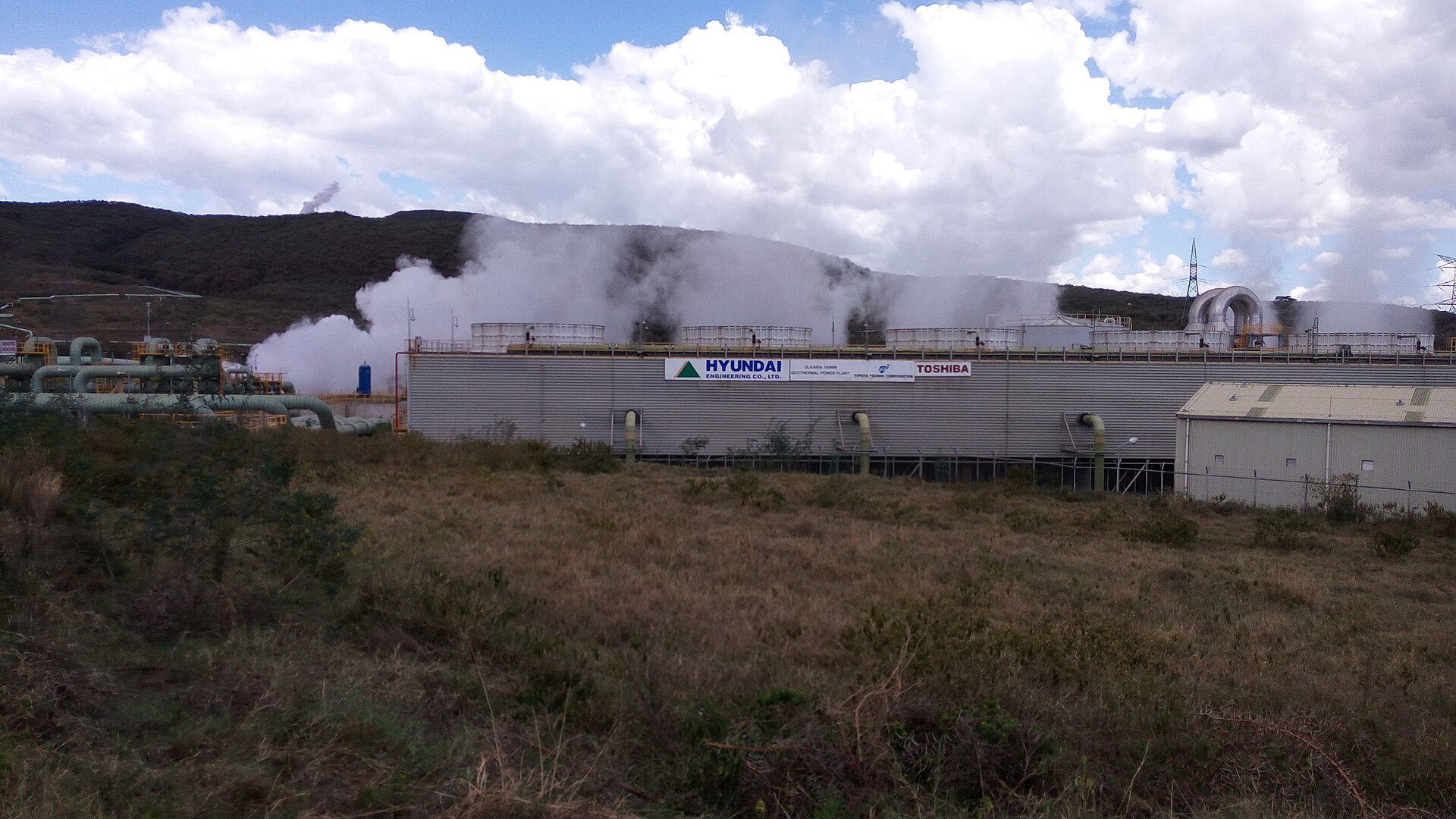
Kenya sits on the East African Rift, where underground heat makes geothermal steam its largest single source of electricity. Geothermal plants produced 5,981.6 gigawatt hours in 2025, about 39.7% of the 15,067.7 gigawatt hours supplied.
Hydropower added 23.0%, wind 12.9%, solar 3.1% and fuel-fired thermal plants 9.8%, while imports covered 11.4%. Of the power generated inside Kenya, about 88.9% came from renewable sources in 2025.
The main field is Olkaria, in and around Hell’s Gate National Park near Lake Naivasha in the Rift Valley. Most plants there belong to KenGen, the majority state-owned generator listed on the Nairobi Securities Exchange.
Hydropower depends on rain in the basins that feed the dams, so dry years cut output and raise reliance on thermal plants. That makes the steam fields a hedge against drought as well as a source of cheap, steady power.
Minerals, From Soda Ash to Titanium
Kenya’s best-known mineral export is soda ash from Lake Magadi in the southern Rift Valley, used to make glass and detergents. Soda ash exports earned KSh 7.4 billion (about US$57 million) in 2025.
Titanium was the big mining story of the past decade, from the Kwale mineral sands mine on the south coast. Mine operator Base Titanium stopped processing ore on Tuesday, 31 December 2024, after the deposits were worked out.
Its last bulk cargo, 4,200 tonnes of rutile bound for the United States, left Mombasa on Wednesday, 12 February 2025. About 1,100 workers lost their jobs when the mine closed.
Titanium ore exports fell from KSh 13.7 billion (about US$106 million) in 2024 to KSh 1.7 billion (about US$13 million) in 2025. Between 2014 and 2025, Kwale shipped 3.89 million tonnes of ilmenite, 804,000 tonnes of rutile and 295,000 tonnes of zircon.
Other minerals, including gold, are mined on a smaller scale, but national output figures are not in the KNBS summary. The Mining Act of 2016 splits royalties 70% national government, 20% county and 10% local community.
Turkana Oil and the Promise of First Exports
Oil was found in the South Lokichar basin of Turkana County, in Kenya’s arid northwest, by Tullow Oil and partners in 2012. Commercial production never began, and Tullow sold its Kenyan fields to Nairobi-based Gulf Energy for US$120 million.
By November 2025, the energy ministry had given initial approval to Gulf Energy’s field development plan for blocks T6 and T7. A joint report of the energy committees of both houses of Parliament was tabled in the Senate in February 2026.
Gulf Energy told lawmakers in February 2026 that it would invest about KSh 774 billion (about US$6.0 billion). It set Tuesday, 1 December 2026, as its formal production target date.
The government says output should start at 20,000 barrels a day and rise to 50,000 over the following years. In May 2026, the energy ministry said the first export-ready cargo was expected in the first week of December.
Under the Petroleum Act of 2019, the government’s share of profit oil is split 75% national, 20% county and 5% local community. Turkana residents quoted by The Standard in July 2026 warned that cost recovery of up to 85% could delay their share.
Gulf Energy has told county leaders that government revenue could begin as early as February 2027. Whether ratification is complete, and whether the December date holds, could not be confirmed from official records on 14 October 2026.
Water, Forests and Wildlife Under Pressure
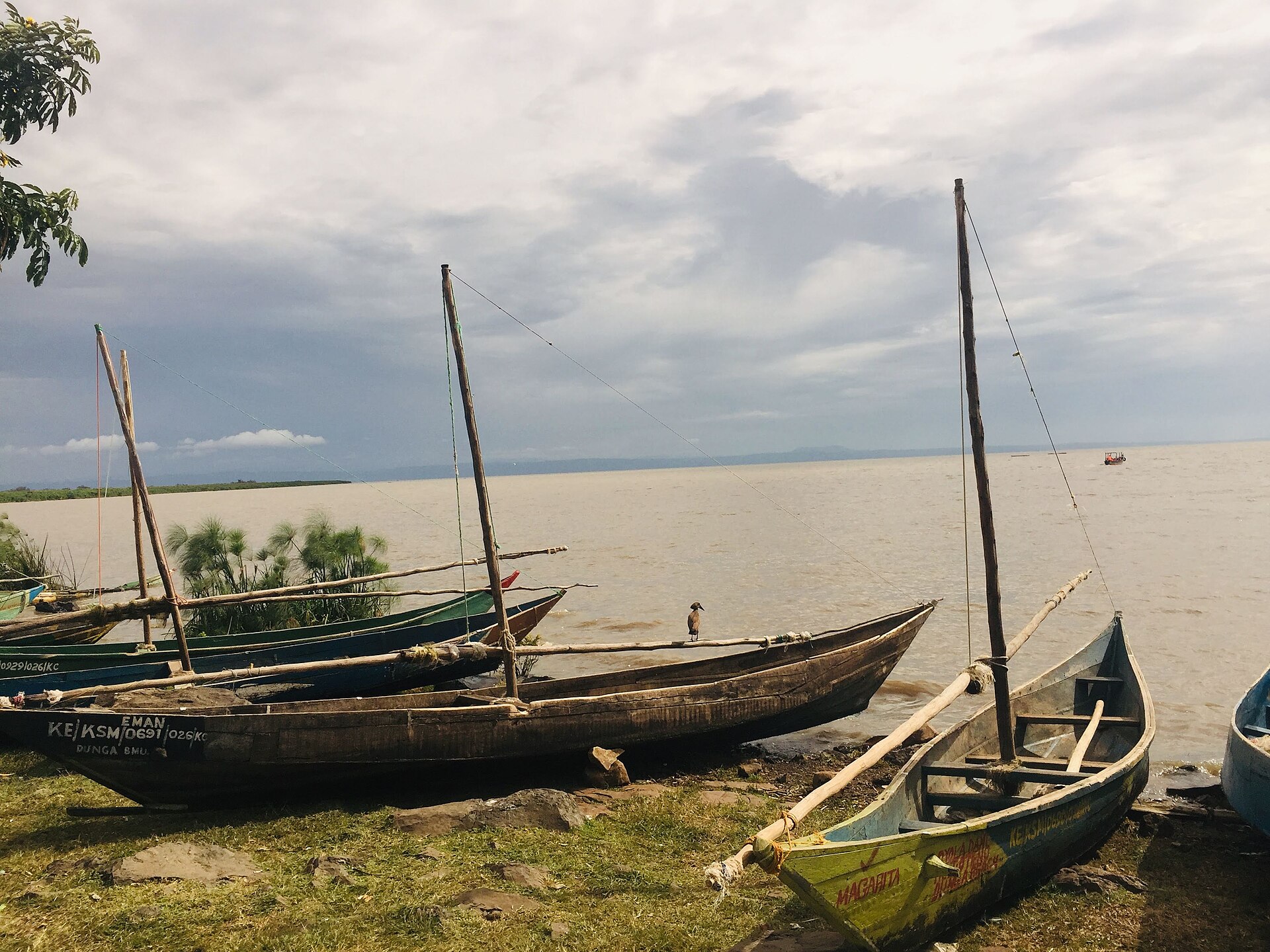
Kenya shares Lake Victoria, Africa’s largest lake, with Uganda and Tanzania, and its shores support many fishing communities. Fishing and aquaculture added KSh 146.1 billion (about US$1.13 billion) in value in 2025.
Water supply, sewerage and waste management added KSh 74.8 billion (about US$577 million) in 2025. Much of northern and eastern Kenya is arid or semi-arid, which makes rivers, wells and boreholes there a constant source of pressure.
Forestry and logging added KSh 396.7 billion (about US$3.06 billion) in value in 2025. The government runs a national campaign to grow 15 billion trees by 2032 to restore lost tree cover.
Wildlife is a resource too, drawing visitors to parks such as the Maasai Mara and Amboseli. KNBS counted 2.55 million visitor arrivals in 2025, up 6.2% from 2024.
The environmental cost includes forest loss, pressure on fish stocks and land lost to mines and drilling sites. In Kwale and Turkana, local communities have pressed for jobs, royalties and transparency as projects open or close.
Who Profits From Kenya’s Resources
The state takes its share through royalties, taxes and state-owned firms, including the power producer KenGen and its geothermal plants. Counties and communities hold legal claims to a share under the Mining Act and the Petroleum Act.
Private profits go to estate owners, exporters and investors such as Gulf Energy. Smallholder farmers, fishers and herders depend most on rain, water and land, which leaves them most exposed to drought.
Mining policy sits with the Ministry of Mining, Blue Economy and Maritime Affairs, and oil with the Ministry of Energy and Petroleum. The Energy and Petroleum Regulatory Authority oversees power and fuel, while Parliament must ratify oil contracts.
What It Means for US Readers
For US consumers, Kenya matters as a supplier of tea, coffee and fresh horticulture, worth about US$3.5 billion in 2025 exports. Weather shocks in the highlands can move supply and prices for those products.
Energy investors watch geothermal, where Kenya already draws about 40% of its power from underground steam. Oil investors and traders should treat the December 2026 first-oil target as a goal, not a certainty, until production is confirmed.
Travellers meet these resources in tea country around Kericho, the steam vents of Hell’s Gate and the parks of the Rift Valley. Anyone moving to the capital can start with the Rio Times Nairobi city guide for expats and visitors.
What Is Not Known
It is not confirmed whether Parliament has ratified the Turkana oil plan, or whether first oil will flow in December 2026. Gulf Energy’s final spending and the export route for crude to Mombasa were not set out in the records checked.
National gold, rare earth and limestone output figures were not in the KNBS 2026 summary, so they are left out here. Current national forest cover and water per person could not be confirmed from a primary source on 14 October 2026.
Frequently Asked Questions
What are Kenya’s main natural resources?
Kenya’s main natural resources are fertile farmland, geothermal steam, lakes and rivers, forests, wildlife and minerals such as soda ash. Oil has been found in Turkana, but commercial production had not started as of October 2026.
Does Kenya produce oil?
Not yet on a commercial scale, although oil was found in the South Lokichar basin of Turkana County in 2012. Operator Gulf Energy targets first production on 1 December 2026, starting at 20,000 barrels a day.
How much of Kenya’s electricity comes from geothermal?
Geothermal plants produced about 39.7% of the electricity supplied in Kenya in 2025, more than any other source. Most of it comes from the Olkaria field near Lake Naivasha.
What is Kenya’s biggest export crop?
Tea is Kenya’s biggest single export crop, earning about US$1.44 billion in 2025. Fresh horticulture, including cut flowers, vegetables and fruit, earned more as a group, about US$1.67 billion.
How big is mining in Kenya’s economy?
Mining and quarrying added about US$1.09 billion in 2025, or 0.8% of GDP. The sector grew 14.9% in real terms that year, but titanium exports fell sharply after the Kwale mine closed.
Who gets the money from Kenya’s oil and minerals?
Mining royalties are split 70% national government, 20% county and 10% community under the Mining Act of 2016. The government’s profit oil is split 75% national, 20% county and 5% community under the Petroleum Act of 2019.
Sources: KNBS, 2026 Facts and Figures; KNBS, 2026 Economic Survey; National Treasury, Framework for Sharing of Royalties (Mining Act 2016, section 183); Senate motion on the South Lokichar field development plan (Mzalendo parliamentary record); People Daily, 25 February 2026; World Oil, 11 November 2025; The Standard, 28 July 2026; The Standard, 13 February 2025; Capital FM, 15 billion trees programme; open.er-api.com exchange rates (all accessed 14 October 2026).
This article was produced by The Rio Times’ automated newsroom system. How we use AI · Report an error · Editorial responsibility: Matthias Camenzind, Editor-in-Chief
Part of our ongoing coverage
Africa: The New Scramble — the great-power contest over the continent.
Expat Guide to Kenya
What The Rio Times publishes for foreigners who live in or move to Kenya.
Start here
- Moving to Kenya: US$30 Travel Authorisation, Work Permit Costs 500,000 Shillings a Year
- Kenya Residency Visa Requirements 2026: Class K Starts at 35
- Open a Bank Account in Kenya as a Foreigner, Step by Step
- Taxes in Kenya for Expats 2026: The Health Levy Cap Is Gone
City guides
Coming up in Kenya
- Kenya Hosts Four-Day Kisima Wellbeing Festival in Kilifi, 16-19 October 19 Oct
- Kenya's Mashujaa Day Holiday on Tuesday 20 October 20 Oct
- Ne-Yo in Nairobi on 20 October, Gold Tickets US$116 20 Oct
- Mombasa Events 12 to 31 October 2026 24 Oct
Understand Kenya