
PERU · DISASTERS
Ica, a desert region on Peru’s southern coast, felt the ground move again this week. Walter Mendoza, deputy civil-defence manager at Ica’s provincial municipality, was quoted on Tuesday 17 November as saying tremors near Marcona, a coastal district, on Monday 16 November did no material damage in the city.
He also said, citing warnings from the IGP, Peru’s state seismology agency, that a larger earthquake cannot be ruled out, so households need contingency plans, emergency backpacks and known safe spots. His statement is a single report that we could not independently confirm.
No economic or trade effect has been confirmed so far. People in Ica, and visitors to towns in the region such as Nasca and Paracas, are the ones affected, since INDECI, Peru’s national civil-defence institute, named both among places where the 13 November quake was felt.
Key Facts
- What A magnitude 5.9 quake struck 102 km west of Marcona, a coastal district, on 13 November.
- Why A local official says a bigger quake cannot be ruled out and urges emergency backpacks.
- El Niño Ica has districts at very high flood risk if El Niño brings heavy rain.
- As of Tuesday 17 November 2026, 1:30 p.m. ET.
- Power Index Peru ranks 5th of 14 in The Rio Times Latin America Power Index, with 53.9 points (November 2026 edition).
A local civil-defence official urges Ica households to prepare for a larger quake, while state studies flag El Niño flood risk for the region.
We covered the Monday tremors in our report on Monday’s quakes. This article looks at what officials now tell residents to do.
The Big Picture
Peru sits where the Nazca tectonic plate slides under the South American plate, so earthquakes are a constant background risk. The Ica region was hit by the 2007 earthquake, which Mendoza cited on 17 November when he said public learning since then has been slow.
The record we could verify for this episode begins with the 13 November quake. INDECI said on Friday 13 November that the IGP measured magnitude 5.9 at 11:43 a.m., at a depth of 32 km.
INDECI’s stated aim is readiness: it recommends staying calm, knowing the family evacuation plan and keeping an emergency backpack. Mendoza’s aim, in his own account, is to widen that readiness in Ica, where he said few people join drills.
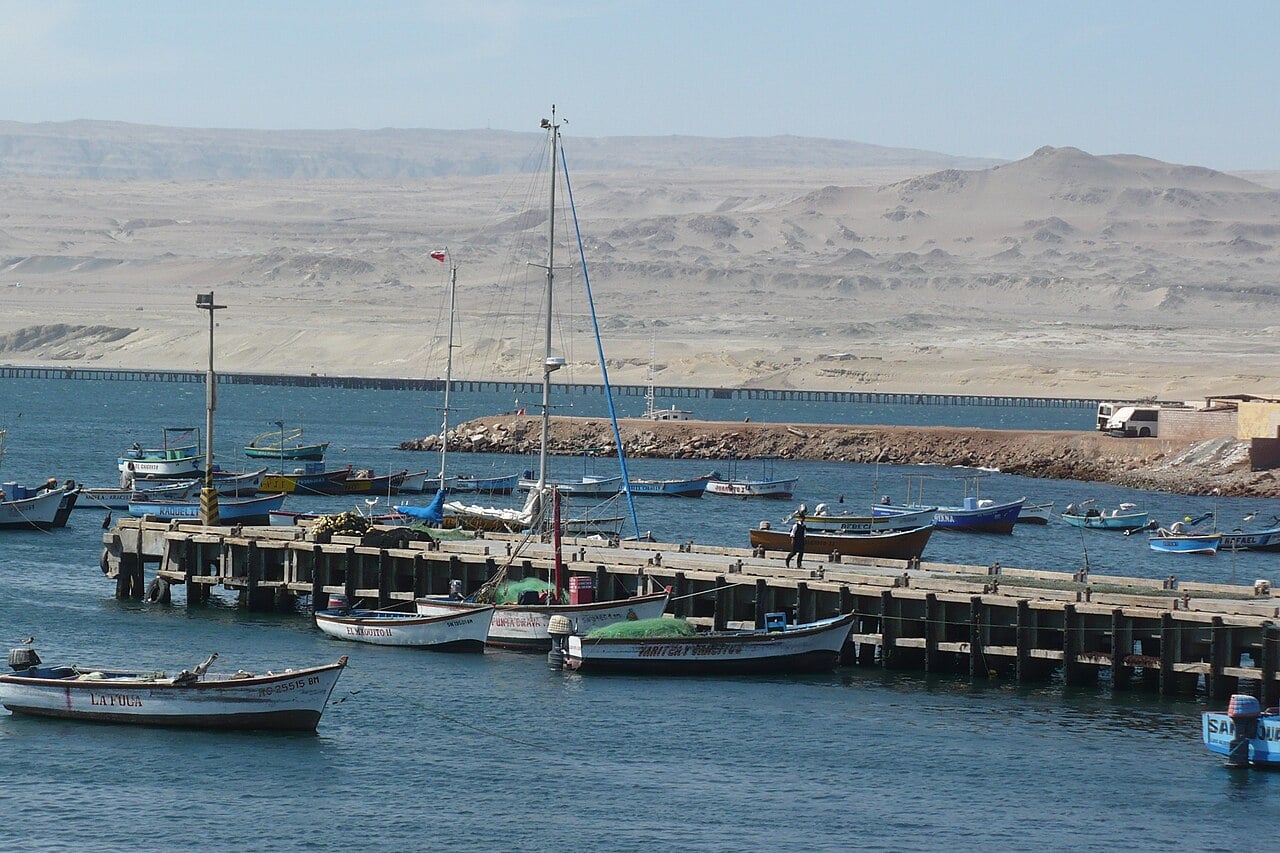
What the 13 November Quake Did
INDECI said in a press note on Friday 13 November that the quake struck at 11:43 a.m., 102 km west of Marcona district in Nasca province. It recorded intensity IV, a measure of felt shaking, at San Juan de Marcona.
INDECI said the shaking was felt as mild in Ica district and in towns including Pisco, Paracas, Chincha Baja and Nasca. It was felt as moderate in others, including Marcona, Palpa and Chincha Alta.
INDECI reported no damage to property or people at that time. The Navy’s hydrography service, DIHIDRONAV, said there was no tsunami threat for Peru’s coast.
What Ica’s Civil-Defence Official Says
Mendoza said the Monday shaking was felt less strongly in Ica city because of its depth and distance. He said public learning since the 2007 earthquake has been slow and that few people join drills.
He named possible shelter sites: the José Picasso Peratta stadium, facilities of the Peruvian Sports Institute (IPD) and a sports complex. Together, he said, they could host about 6,000 people.
El Niño Adds a Second Risk
CENEPRED, Peru’s national risk-reduction centre, said in a May 2026 study that Ica has districts rated at very high susceptibility to floods and mass movements (landslides, mudflows). That rating applies under El Niño rainfall anomalies.
The study cites a communiqué of ENFEN, Peru’s multi-agency El Niño committee, dated 15 May 2026. At that date it expected an El Niño developing from June 2026 and lasting until February 2027.
CENEPRED’s update of that study, which cites a later ENFEN communiqué of 26 June 2026, lists 16 Ica districts at very high flood risk, home to 491,647 people. The figure applies to flood exposure, not to earthquakes.
Why It Matters
The only shelter capacity figure available is Mendoza’s 6,000 people (17 November), set against 491,647 people living in districts at very high flood risk in the CENEPRED update. Those are different hazards and different areas, so the two numbers are not a like-for-like gap.
The 13 November note itself reported no damage at that time. A larger quake or El Niño floods would test the shelters, drills and housing that Mendoza described.
What to Watch
No dated event is confirmed for Ica, and we found no scheduled drill date. ENFEN’s May communiqué expected El Niño to last until February 2027, as cited in the CENEPRED study.
What It Means for You
Official advice comes from INDECI, which recommends staying calm, knowing the family evacuation plan and keeping an emergency backpack. Anyone planning a trip to the region should check current guidance from the authorities.
Our Ayacucho earthquake report and Peru coverage give wider context on the country’s quake record. Peru’s key players covers the political setting.
What Is Not Known
Whether Monday’s tremors caused damage elsewhere in the region is not confirmed, because Mendoza spoke only about Ica city. We could not confirm the IGP warning that he cites.
The updated CENEPRED scenario behind the 491,647 figure was not available to us in full, so the share of Ica’s population that number represents is unconfirmed. Mendoza’s statements of 17 November remain a single report.
Frequently Asked Questions
How strong was the 13 November earthquake off Marcona?
INDECI said the IGP measured magnitude 5.9 at 11:43 a.m. on Friday 13 November, 102 km west of Marcona at 32 km depth. It recorded intensity IV at San Juan de Marcona and no damage at that time.
Was there a tsunami threat after the quake?
The Navy’s hydrography service, DIHIDRONAV, said there was no tsunami threat for Peru’s coast. INDECI included that statement in its note of 13 November.
Where could Ica residents shelter in a big quake?
Walter Mendoza of Ica’s municipal civil defence named the José Picasso Peratta stadium, Peruvian Sports Institute facilities and a sports complex. He said on 17 November that they could host about 6,000 people together.
Is Ica at risk from El Niño floods?
CENEPRED’s May 2026 study lists Ica among departments with districts at very high susceptibility to floods and mass movements under El Niño rains. CENEPRED’s update of 2026 lists 16 Ica districts at very high flood risk, home to 491,647 people.
Sources: INDECI press note, 13 November 2026; CENEPRED El Niño risk-scenarios study, May 2026; CENEPRED updated El Niño risk-scenarios study, June 2026; statements of Walter Mendoza, Ica municipal civil defence, 17 November 2026.
This article was produced by The Rio Times’ automated AI newsroom. Editorial responsibility: Matthias Camenzind, Publisher and Editor-in-Chief. The Rio Times also runs Ask Rio Times, which answers from 100,000+ of our own articles, the daily Latin America Power Map, and prediction-market odds on elections and markets.. How we use AI · Report an error