What Are the 2026 US Midterms and Who Is Ahead?

UNITED STATES · MIDTERMS 2026 · EXPLAINER
Americans choose a new Congress on Tuesday 3 November, and this guide explains in plain English what is at stake, who is ahead and when the results arrive.
The 2026 US midterm elections on Tuesday 3 November decide which party controls Congress for the last two years of President Donald Trump’s term. All 435 seats in the House of Representatives and 35 of the 100 Senate seats are on the ballot, along with the governors of 36 states.
Trump’s Republicans control both chambers today, but polls and prediction markets point to a Democratic House, and betting markets also lean towards a Democratic Senate. For Latin America and Africa the result matters because Congress holds the purse strings for foreign aid and writes trade law, and its Senate confirms every US ambassador.
Key Facts
- —The vote Tuesday 3 November 2026; polls close between 6 p.m. and 1 a.m. ET.
- —On the ballot All 435 House seats, 35 of the 100 Senate seats and 36 governors.
- —Today Republicans hold 218 House seats, Democrats 214; Republicans lead the Senate 53 to 47.
- —Prediction markets House: Democrats 92%; Senate: Democrats 65% (Polymarket, 21 October, 8:29 a.m. ET)
- —New Congress The new Congress begins its term at noon on 3 January 2027.
In Plain English
- Midterms: the national vote held halfway through a president’s four-year term; the president is not on the ballot.
- Congress: the US parliament, with two chambers that must both pass every law and every budget.
- House of Representatives: 435 members elected every two years; 218 seats make a majority.
- Senate: 100 members, two per state, elected for six years; about a third face the voters every two years.
- Balance of power: which party controls each chamber, and so whose bills get a vote.
The Short Answer
Democrats are favoured to win the House, while the Senate is closer and leans their way mainly in the betting markets. On 21 October at 7:05 a.m. ET Polymarket traders gave Democrats a 91.5% chance of taking the House and 64.5% for the Senate, and Kalshi, a rival platform regulated in the United States, priced them at 91% and 66%.
Polls point the same way, with Democrats 8.9 points ahead on the generic ballot in the Silver Bulletin polling average on 20 October. That question asks voters which party they want in Congress without naming candidates, which makes it a widely used national gauge for House races.
Trump himself is not on the ballot, because the next presidential election is in November 2028. History still works against him, since the president’s party has lost House seats in 20 of the 23 midterms from 1934 to 2022, according to the American Presidency Project at the University of California, Santa Barbara.
The exceptions were 1934, 1998 and 2002, and in his first term Trump’s party lost its House majority in the 2018 midterms. His net approval stood at minus 22.3 points in the Silver Bulletin average on 20 October, meaning far more Americans disapprove of his job performance than approve.
- Latino Voters Favor Democrats 51% to 24%
Pew surveyed 774 Hispanic registered voters from 28 September to 4 October: 51% back Democrats for the House, 24% Republicans and 18% are unsure.
- Midterm Odds and the Limits of Trump's Power
The midterm odds favour Democrats in both chambers. Here is what a Democratic Congress could stop and what Trump could still do on tariffs, sanctions and war.
The 2026 US Midterms and the Race for Congress: all our coverage →
Who Controls Congress Today
The House of Representatives has 435 voting members, and a party needs 218 for a majority. The Clerk of the House lists 218 Republicans, 214 Democrats, one independent and two vacant seats, so Democrats need four more seats than they hold now.
The Senate has 53 Republicans, 45 Democrats and two independents, Bernie Sanders of Vermont and Angus King of Maine, who vote with the Democrats. Vice President JD Vance breaks a 50-50 tie, so Democrats need 51 seats, a net gain of four, while Republicans keep control with 50.
What Each Chamber Does
- Both chambers: pass every law and every federal budget; the president can veto a bill, and two thirds of each chamber can override him.
- House only: starts every tax bill and can impeach a president, a cabinet secretary or a judge by a simple majority.
- Senate only: confirms cabinet members, federal judges and ambassadors, and approves treaties by two thirds of the senators present.
- Removal from office: after an impeachment, it takes two thirds of the senators present to convict.
What Is at Stake
Control of the House decides whose bills reach a vote, who chairs the committees and who can issue subpoenas to the administration. A Democratic House could block Republican bills and refuse new money for Trump’s priorities, but it could not pass laws of its own without the Senate and the president.
The Senate decides nominations, so a Democratic majority could stall Trump’s choices for judges, cabinet posts and embassies. Most bills also need 60 of the 100 votes to end a filibuster, a delaying tactic, so neither party is likely to pass big laws on its own.
Money is the first test, because the stopgap funding law Trump signed on 2 September runs out on Friday 11 December, before the new Congress begins its term. The outgoing Republican majorities can still pass bills and confirm nominees in that lame-duck session, the weeks between the vote and 3 January.
Impeachment is the question many readers ask about, and a Democratic House could impeach Trump by a simple majority. Removing him would take two thirds of the senators present, 67 if all 100 vote, and no president has ever been removed, as our analysis of the midterm odds and the limits of Trump’s power explains.
The Timeline in Eastern Time
Voting is already under way, because most states allow early voting in person or by mail. Clocks in most of the United States go back one hour on Sunday 1 November, so the times below are Eastern Standard Time (ET), five hours behind London and Lisbon.
- Now: early and mail voting in most states; rules and deadlines differ by state.
- Tuesday 3 November, 6 p.m.: the first polls close, in the eastern parts of Indiana and Kentucky.
- 7 p.m.: Georgia, South Carolina, Vermont, Virginia and most of Florida.
- 7:30 p.m.: North Carolina, Ohio and West Virginia.
- 8 p.m.: Pennsylvania, Maine, New Hampshire, Illinois, most of Michigan and Texas, and more than a dozen other states plus Washington, DC.
- 9 p.m.: Arizona, New York, Wisconsin, Minnesota, Iowa, Nebraska, Colorado and others.
- 10 p.m.: Nevada, Montana, Utah and most of Idaho; 11 p.m.: California, Washington state and most of Oregon.
- Midnight to 1 a.m.: Hawaii and Alaska, where the last polls close in the Aleutian Islands.
- Tuesday 1 December: Georgia runoffs for any race where no candidate won more than half the vote.
- Friday 11 December: federal funding runs out unless Congress passes a new law.
- Sunday 3 January 2027, noon: the new Congress takes office.

The Senate Races to Watch
Republicans are defending 22 of the 35 Senate seats on the ballot and Democrats 13, which gives Democrats more chances to gain ground. Two of the Republican seats are special elections in Ohio and Florida, held because the senators appointed there filled seats left by JD Vance and Marco Rubio.
The contests below are the most closely watched, with the candidates on the ballot and the Polymarket favourite on 21 October. Each price is a bet on the winner, not a poll of voters.
- Texas: Attorney General Ken Paxton (Republican) against state lawmaker James Talarico (Democrat); Polymarket favours Talarico at 64.5%.
- Ohio (special election): Senator Jon Husted (Republican) against former Senator Sherrod Brown (Democrat); Polymarket favours Brown at 64%.
- Maine: Senator Susan Collins (Republican) against former state Senate leader Troy Jackson (Democrat); Polymarket favours Jackson at 64.5%.
- Alaska: Senator Dan Sullivan (Republican) against former Congresswoman Mary Peltola (Democrat); Polymarket favours Peltola at 74.5%.
- Iowa (open seat): Congresswoman Ashley Hinson (Republican) against state lawmaker Josh Turek (Democrat); Polymarket favours Hinson at 58%.
- Michigan (open seat): former Congressman Mike Rogers (Republican) against public-health official Abdul El-Sayed (Democrat); Polymarket favours El-Sayed at 69.5%.
- Kansas: Senator Roger Marshall (Republican) against Adam Hamilton (Democrat); Polymarket favours Marshall at 62%.
- North Carolina and Georgia: Democrats Roy Cooper, a former governor, and Senator Jon Ossoff are both priced above 90%.
What the Polls and Maps Say
An 8.9-point lead on the generic ballot is large by midterm standards, and in 2018, when Democrats last took the House, they won about 9.9 million more House votes than Republicans, 60.3 million to 50.5 million, according to the Clerk of the House. A national lead does not convert neatly into seats, because each of the 435 districts is a separate race.
The maps have also changed, because several states redrew their House districts in 2025 and 2026, outside the usual once-a-decade cycle. Ballotpedia, an online election encyclopedia, counts new maps in Texas, Florida, Ohio, North Carolina, Tennessee, Alabama and Louisiana that could shift about 15 seats towards Republicans, against about six for Democrats from California’s Proposition 50 and a court-ordered map in Utah.
That potential net gain of about nine seats for Republicans is why a modest Democratic lead might not be enough. The size of the national swing, not the maps alone, will decide whether it is.
What Prediction Markets Say
Prediction markets let traders buy contracts that pay US$1 if an outcome happens, so the price works as a live probability. Polymarket has drawn more than US$19 million in bets on House control alone, and Kalshi is regulated in the US by the Commodity Futures Trading Commission (CFTC).
Prediction markets · US midterms, 3 November 2026
Implied chances from traders’ prices on Polymarket and Kalshi.
Who wins the House of Representatives
Polymarket: US$19.2 million traded. All 435 seats are on the ballot, and 218 make a majority.
Kalshi (regulated in the US by the CFTC): Democrats 90.8% · Republicans 9.5% (63,093,819 contracts traded, each paying US$1 if right).
Who wins the Senate
Polymarket: US$7.5 million traded. 35 of the 100 seats are on the ballot; Democrats need 51 seats, Republicans 50 because the vice president breaks ties.
Kalshi (regulated in the US by the CFTC): Democrats 66% · Republicans 36% (16,325,999 contracts traded, each paying US$1 if right).
Who controls Congress after the vote
Polymarket: US$27.6 million traded. A law needs both chambers, so a split Congress can block the other side.
As of 21 October, 8:29 a.m. ET (13:29 Lisbon), updated every 20 minutes. Prices are bets, not polls, and can move fast.
Why we show this: prediction markets turn real-money bets into a live probability that moves within minutes of the news, which is why investors, campaigns and newsrooms in the United States now follow them closely. We show them next to polls and official results, never instead of them.
The card above updates every 20 minutes, and prices can swing on a single poll or news event. For prices on impeachment and what Trump could still do on his own, see our midterm odds analysis.
How to Follow Results Night
Results arrive state by state as polls close, starting with Indiana and Kentucky at 6 p.m. ET and most of the East Coast between 7 and 8 p.m. ET. Television networks and the Associated Press, the news agency whose race calls most US media follow, call winners once enough votes are counted, but those calls are not official results.
Control of the House can be clear on election night, as in 2018, or take days, as in 2022, when the House majority was called on 16 November. Western states such as California and Nevada count mail ballots that arrive after election day, and Alaska tabulates its ranked-choice votes on 18 November.
In 2022 the House majority was called eight days after the vote, so a slow count is normal, not a sign of trouble.
Under ranked-choice voting, used in Alaska and for federal races in Maine, voters number the candidates in order of preference. If a close race goes to a recount, or to the Georgia runoff on 1 December, Senate control could stay open into December.
States then certify their results over the following weeks. The new Congress then begins its term at noon on 3 January.
What It Means for Latin America and Africa
Congress does not run US foreign policy, which belongs mostly to the president, but it controls the money, the trade laws and the confirmations that shape it. That makes the midterms matter to countries from Mexico to Nigeria, even if few candidates mention them.
Trade and Tariffs
The Constitution gives Congress the power to set duties on imports, and on 20 February the Supreme Court ruled that an emergency-powers law did not let the president impose tariffs on his own. The administration has since relied on other trade laws, such as Section 301, under which the Trade Representative announced a 25% tariff on certain Brazilian goods on 15 July.
A Democratic Congress could hold hearings and pass bills to limit such tariffs, but Trump could veto them. For Mexico and Canada, the bigger question is the USMCA trade pact, which Washington declined to renew in its current form at the review on 1 July, leaving it in force while talks continue.
Migration and Remittances
Since 1 January a 1% US tax applies to money sent abroad in cash, by money order or by cashier’s check, while transfers paid from a US bank account or with a US-issued card are exempt. Mexico received US$62.5 billion in remittances in 2025, 3.9% less than in 2024, according to Bank of Mexico figures reported by the Mexican newspaper Crónica.
The administration has also ended Temporary Protected Status, a shield from deportation, for Venezuelans and Haitians and, in Africa, for Somalis, Ethiopians and South Sudanese, according to the US immigration agency USCIS. Congress could write new protections into law, but only with the president’s signature or a veto-proof majority.
What Congress Controls for the Region
- Money: foreign aid and the budgets for border and deportation enforcement.
- Trade law: duties on imports and the laws that put trade deals into force.
- People: the Senate confirms every US ambassador.
- Not in its hands day to day: most tariffs, sanctions and deportation priorities, which the president sets under existing laws.
Aid and Trade With Africa
Foreign aid depends on the spending bills Congress passes each year, and the US Agency for International Development (USAID) has been dismantled, with some of its functions moved to the State Department, according to the Congressional Research Service. The spending bill for foreign aid in the budget year that began on 1 October has not been enacted, so the money fight may run into the new Congress.
For African exporters, Congress has extended the African Growth and Opportunity Act (AGOA), which gives eligible countries duty-free access to the US market, until 31 December 2028. The extension was part of the stopgap funding law Trump signed on 2 September, so it does not depend on the midterm result.
Venezuela and Cuba
US forces captured Venezuela’s president, Nicolás Maduro, on 3 January, and Delcy Rodríguez, his former vice president, has governed since then as acting president with US backing, according to the Congressional Research Service. A Democratic House could demand records on the oil revenue that now flows through US-controlled accounts, but the oil licences are issued by the Treasury (see our Venezuela coverage).
The Cuba embargo is written into law, so ending it would need Congress as well as the president, while Trump has tightened sanctions by executive order since January. A change of majority would therefore not lift the embargo on its own.
Latino Voters
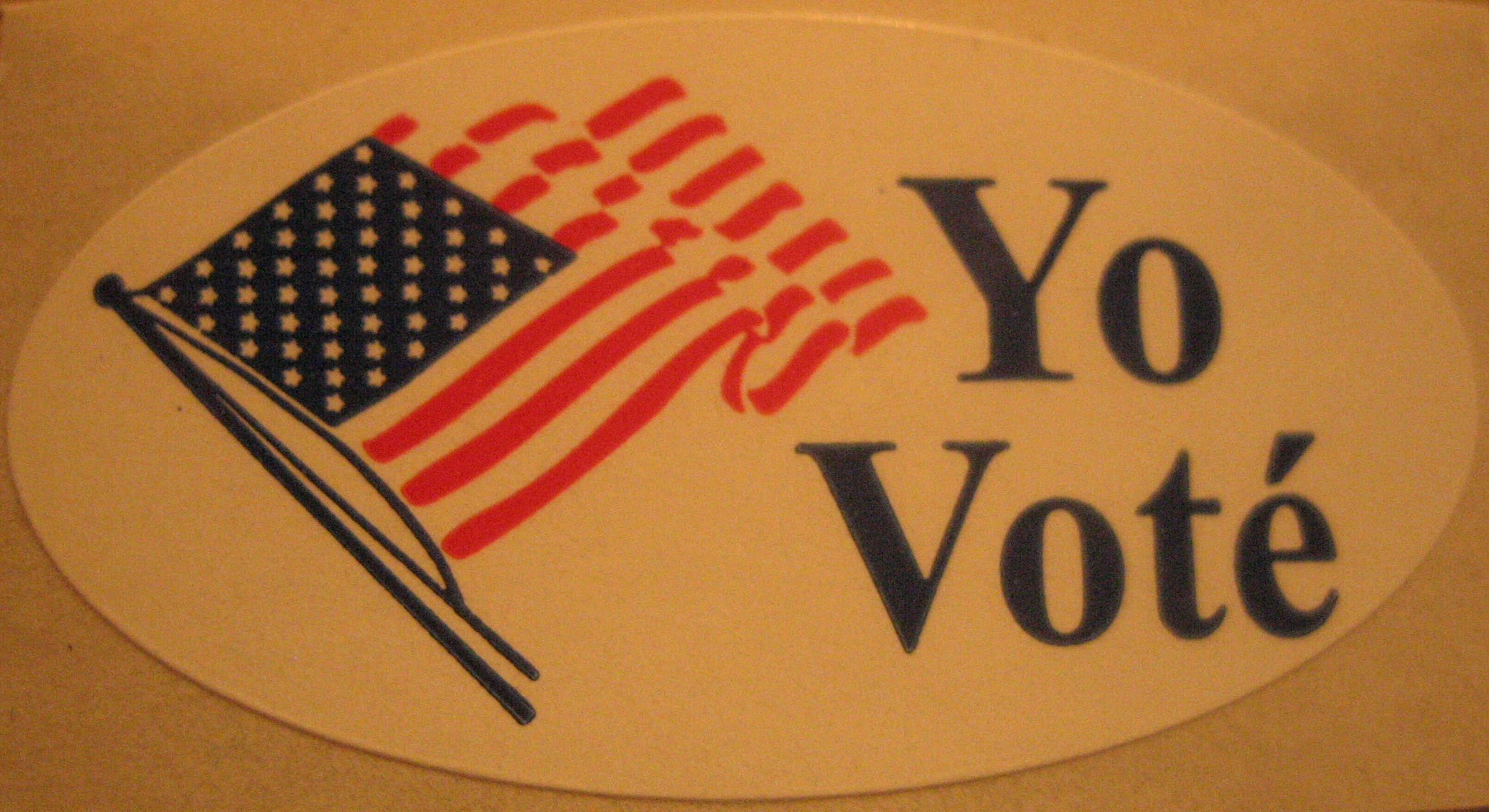
Latinos make up about 39 million of the roughly 250 million Americans eligible to vote this year, or 16%, Pew Research Center estimates. In Pew’s survey of 774 Latino registered voters from 28 September to 4 October, 51% backed Democratic House candidates and 24% Republicans, with 18% unsure.
Only 24% of those voters approved of Trump’s job performance, down from 38% in February 2025, and the economy was their top issue. Trump won 48% of Latino voters in 2024, up from 36% in 2020, according to Pew’s study of verified voters, so how Latino voters lean in the 2026 midterms matters in states such as Texas, Arizona, Nevada and Florida.
What It Means for You
For investors, a split Congress, with Democrats in the House and Republicans in the Senate, would make big tax or spending changes less likely and budget fights more frequent. The first deadline is 11 December, when a lapse in funding would shut parts of the federal government.
For businesses and families in Latin America and Africa, little changes on 3 November itself, because tariffs, sanctions and deportation rules sit mostly with the president. What changes is how much Congress can question, fund or block those policies from January.
What Is Not Known
Prediction markets and polls can be wrong, and a 65% chance still leaves roughly a one-in-three chance of the other outcome. Close races may need recounts or runoffs, so control of the Senate in particular may not be known on election night.
It is not known how a Democratic House would use its power, whether it would open an impeachment inquiry or how the 11 December funding fight will end. Turnout, which is usually lower in midterms than in presidential years, is the biggest unknown of all.
For every update and explainer in one place, follow our US midterms 2026 dossier. It refreshes automatically as new reports are published.
Frequently Asked Questions
What are the US midterms?
The midterms are the US national election held halfway through a president’s four-year term, when all 435 House seats and about a third of the Senate are chosen. In 2026 they fall on Tuesday 3 November, and the president is not on the ballot.
When are the 2026 midterm elections?
Election day is Tuesday 3 November 2026, and polls close between 6 p.m. and 1 a.m. Eastern Time. Most states also allow early voting in person or by mail before that day.
How many seats are up in the 2026 midterms?
All 435 House seats and 35 of the 100 Senate seats are up: 33 regular seats plus special elections in Ohio and Florida. Voters in 36 states also elect their governors.
Is Trump on the ballot in the midterms?
No, Trump is not a candidate, because the next presidential election is in November 2028. The vote decides whether his Republican Party keeps control of the House and the Senate for his last two years.
When will we know the midterm results?
Many races are projected on election night, but close contests can take days, as in 2022, when the House majority was called on 16 November. Official results follow once the states certify them in the following weeks.
How do the midterms affect Latin America?
Congress controls foreign aid, trade law and the confirmation of ambassadors, so a Democratic majority could question or slow Trump’s tariffs, deportations and sanctions. It could not reverse them alone, because the president keeps his veto.
Sources: 2 U.S.C. 7 (election day); Clerk of the House, party breakdown; US Senate, senators; US Constitution; 20th Amendment; Ballotpedia, Senate elections 2026; Ballotpedia, governor elections 2026; Ballotpedia, redistricting ahead of the 2026 elections; 270toWin, poll closing times; Georgia.gov, 2026 election dates; Alaska Public Media, 19 October 2026; Clerk of the House, statistics of the 2018 election; CBS News, House projection (6 November 2018); Associated Press via News4Jax, House call (16 November 2022); American Presidency Project, midterm seat changes; Silver Bulletin, generic ballot average; Silver Bulletin, Trump approval; White House, H.R. 6500 signed into law; Supreme Court, Learning Resources, Inc. v. Trump (20 February 2026); USTR, Section 301 action on Brazil; USTR, USMCA joint review; 26 U.S.C. 4475 (remittance tax); Crónica, Banxico remittance data (1 October 2026); USCIS, Temporary Protected Status (20 October 2026); Congressional Research Service, foreign assistance (13 October 2026); The Standard (Kenya), AGOA extension to 2028; Congressional Research Service, Venezuela after Maduro; Pew Research Center, Latino voters and the 2026 midterms (16 October 2026); Pew Research Center, the 2026 electorate; Pew Research Center, behind Trump’s 2024 victory. Market prices from Polymarket and Kalshi, read on 21 October at 7:05 a.m. ET.
Editorial responsibility: Matthias Camenzind, Editor-in-Chief · Editorial standards · Report an error
US Midterms 2026
- What Time Do Polls Close in the 2026 Midterms?
- Midterm Odds and the Limits of Trump’s Power
- Latino Voters Favor Democrats 51% to 24%