
GUINEA · GEOPOLITICS
Key Facts
- What is happening China, miner Rio Tinto, the IMF lender, the Gulf and Turkey compete for influence as Simandou ore ships.
- Why it matters Guinea holds about a third of world bauxite reserves, aluminium’s raw ore, and the giant Simandou iron-ore deposit.
- The numbers Net foreign investment hit US$7.76 billion in 2025, the economy is US$28.3 billion, and the president won 86.72%.
- Who is who Former special-forces officer Mamadi Doumbouya is president; Rio Tinto and Chinese groups Chinalco and Baowu hold Simandou stakes.
- What to watch Watch the IMF Board decision on the August 2026 agreement, Simandou’s ramp-up, and the Gulf dispute over bauxite.
- What it means for you US exports to Guinea were US$196.6 million in 2025; Guinea is not on the US entry-ban list.
Guinea holds the huge Simandou iron-ore mine and about a third of the world’s bauxite reserves. This guide shows which powers lend, invest and trade there, and what each wants back, as of November 2026.
Guinea geopolitics comes down to two minerals, iron ore and bauxite, and a ruler who lets big powers compete for them. China, Rio Tinto, the Gulf, Turkey, Europe and the United States all hold a card.
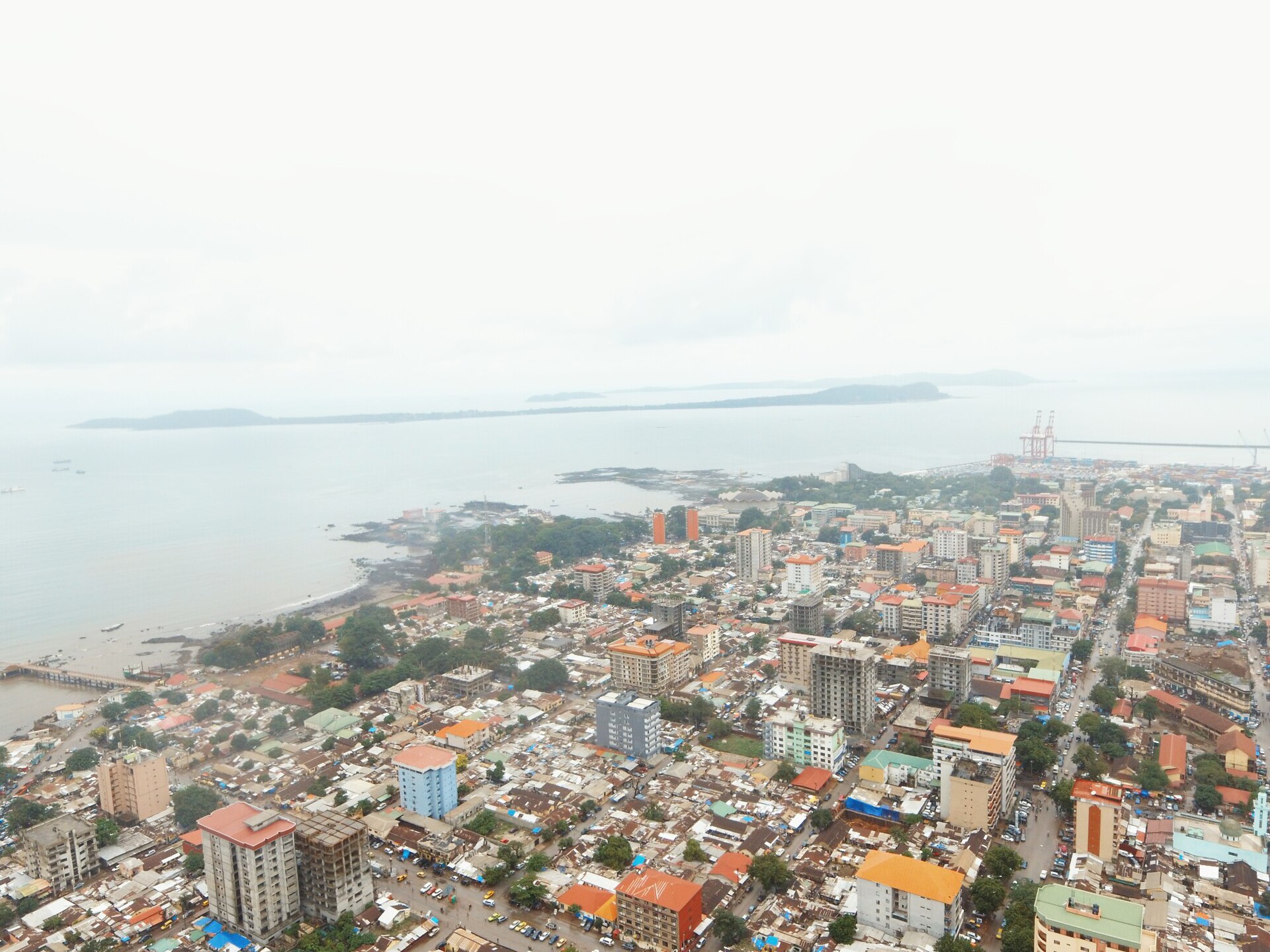
Guinea has about 15.1 million people and a US$28.3 billion economy, the World Bank says for 2025. Foreign investment jumped to US$7.76 billion in 2025 from US$1.40 billion in 2024, as the Simandou mine and railway came on stream.
Earlier Rio Times guides cover Guinea overall and its West African neighbourhood. This guide follows the great powers, lenders and investors instead.
More coverage sits on the Rio Times Western Africa page, and the report on the first Simandou cargo gives the news side. Every figure below carries its date, and every foreign-currency amount carries a US$ value.
How Guinea Geopolitics Works
Guinea sells ore, and buyers and builders follow the ore. The state wants a bigger share of the profit and has taken back licences from firms it says broke the rules.
The list below explains the main names in plain English. Each is described again where it first matters.
- Simandou: a giant iron-ore deposit in southeastern Guinea, with a mine, a railway of more than 600 kilometres and a port.
- SimFer: the venture of Rio Tinto, a global mining group, a Chinese consortium led by Chinalco, and the Guinean state.
- Winning Consortium Simandou: a group led by Chinese firms Winning International and Weiqiao Aluminium, with steelmaker Baowu.
- Nimba Mining: the state-backed company that took over a bauxite concession in August 2025.
- EGA: Emirates Global Aluminium, a state-owned producer of the United Arab Emirates, which lost that concession.
- ECOWAS: the Economic Community of West African States, the regional bloc of West African states.
A Ruler Seeking Recognition
Mamadi Doumbouya, a former special-forces commander, took power in a coup in September 2021. He was elected president on 28 December 2025 with 86.72% of the vote, the Supreme Court confirmed.
The runner-up, Abdoulaye Yero Balde, won 6.59%. The vote ended four years of military rule and opened the way to Guinea’s return to the African Union.
On 22 January 2026 the African Union’s Peace and Security Council took up a recommendation to lift Guinea’s suspension. The Commission chair cited the new constitution and the presidential election as proof of a return to constitutional order.
The African Union announced the lifting of Guinea’s suspension in late January 2026. At the end of that month ECOWAS, the West African bloc, lifted all its sanctions and reinstated Guinea in its decision-making bodies.
Simandou, China and Rio Tinto
Simandou is where Guinea’s foreign policy becomes concrete. Rio Tinto says operations began at a ceremony on 11 November 2025, and its first shipment left Guinea in December 2025.
Rio Tinto says SimFer is 85% owned by Simfer Jersey and 15% by the Guinean government. Simfer Jersey is 53% Rio Tinto and 47% Chalco Iron Ore Holdings, which Chinalco leads with 75%.
Winning Consortium Simandou is 51% held by Winning International and Weiqiao Aluminium and 49% by Baowu Resources, Rio Tinto says. Chinese groups therefore hold stakes in both ventures.
The railway and port company, CTG, is owned 42.5% by SimFer, 42.5% by Winning Consortium and 15% by the state. The two ventures together can export up to 120 million tonnes a year once fully running.
Rio Tinto says SimFer needs about 30 months to reach full capacity once the shared rail and port are commissioned. SimFer’s mine is designed for about 60 million tonnes a year, of which Rio Tinto’s share is about 27 million.

China’s role goes beyond ore, and a Chinese firm completed the 240 megawatt Kaleta dam in 2015. The 450 megawatt, US$2.1 billion Souapiti dam began with Chinese investment, the State Department says.
The state holds 15% of the rail and port company. It is also setting up a sovereign wealth fund to manage Simandou mining revenue, the State Department says.
Bauxite, the Gulf and the State Takeover
Guinea holds about a third of the world’s bauxite reserves, the State Department says. China is the main buyer, and trade data show Guinea’s shipments to China hit new records in 2025.
In August 2025 Guinea revoked the concession of Guinea Alumina Corporation, a company of the United Arab Emirates’ EGA. The government said the company had not filed refinery plans, a breach of the mining code.
The state handed the 690 square kilometre concession to Nimba Mining without compensation. EGA called the move a flagrant violation of its rights and said it would pursue legal remedies.
The 2013 mining code gives the state a 15% interest in major mining operations, the State Department says. It also lists over 50 mining permits withdrawn since 2021 and a rule that mining companies bring home 50% of export value.
Despite the dispute, the United Arab Emirates keeps a diplomatic channel open. Its new ambassador, Ahmed Ibrahim Al Dhaheri, presented credentials to President Doumbouya in Conakry on 13 October 2026.
Lenders and Europe, the IMF, the World Bank and the EU
In August 2026 IMF staff reached a staff-level agreement with Guinea on a 41-month Extended Credit Facility, a concessional loan programme. It is set at SDR 310.59 million, about US$425 million to US$439 million, and needs IMF Board approval.
The IMF’s country page lists projected growth of 8.7% and inflation of 4.1% for 2026. The IMF said the Board was expected to consider the programme in September 2026, and no approval was found by 4 November.
The World Bank puts Guinea’s external debt at US$5.39 billion in 2024, with net official development assistance of US$532 million in 2023. Remittances reached US$616 million in 2024.
The EU has set aside EUR 362 million, about US$405 million, in grants for 2021 to 2027. It funds farming, health, energy, roads and governance; US$ values use the central bank rate of 1.1179 per euro on 3 November.
The EU’s energy projects include high-voltage lines from the Kaleta and Souapiti dams, built with the French development agency. Brussels links these projects to its Global Gateway strategy, its overseas investment plan.
The United States and Turkey
The US Trade Representative puts US goods exports to Guinea at US$196.6 million in 2025 and imports at US$9.7 million. That is a US surplus of US$187 million.
On 21 September 2026 Wabtec, a US locomotive maker, announced a services deal with railway operator CTG worth over US$700 million. Wabtec calls it its largest services contract in Africa, and its Simandou business now exceeds US$1.2 billion.
Guinea is not among the countries in the US entry proclamation of 16 December 2025, but Equatorial Guinea is. The State Department rates Guinea Level 2, Exercise Increased Caution, in an advisory issued on 12 December 2024.
Turkey’s Albayrak Group signed a memorandum on 10 December 2025 to help finance phase two of the Conakry airport expansion. The plan adds a terminal and a wider runway, and capacity would rise from about 500,000 to three million passengers.
The memorandum gives no financing amount, and a formal agreement is to follow once funds are raised. Albayrak built the first phase of the airport.
Russia, India and BRICS
Russia’s aluminium group Rusal has long held bauxite and alumina assets in Guinea. Their current status, and any 2026 Russian investment or military agreement, could not be confirmed from primary pages.
No Guinean membership of BRICS, the club of large emerging economies, was confirmed. No Indian investment total or recent UN voting pattern could be confirmed either.
What It Means for US Readers
US citizens travelling to Guinea should read the State Department advisory, which cites crime, unrest without warning and weak health care. Guinea is not on the 2026 US entry restriction list.
US investors gain exposure through Rio Tinto and Wabtec, and through aluminium prices that depend on Guinea’s bauxite. Licence revocations such as the EGA case show that contract risk is real.
Buyers of aluminium and steel inputs should watch Simandou volumes and Chinese demand. This is a reading of published facts, not a forecast.
What Is Not Known
The IMF Board decision on the August 2026 agreement was not confirmed. The programme’s dollar value depends on the SDR rate, and bauxite refining terms are unpublished.
No confirmed total exists for Chinese loans to Guinea or for Guinea’s bauxite exports to China in 2025 from a primary page. Nor could Russian, Indian, Turkish or Gulf investment totals be confirmed.
Foreign military presence in Guinea is unpublished, and no foreign base is confirmed. How Guinea voted on recent United Nations resolutions was also not checked.
The ownership split of SimFer is given by Rio Tinto only in layers, and the effective percentages are not published. Whether talks between Guinea and EGA on bauxite supply have produced a deal is unconfirmed.
Frequently Asked Questions
Who owns the Simandou iron-ore mine in Guinea?
Rio Tinto says SimFer is 85% Simfer Jersey and 15% the state, and Winning Consortium Simandou holds the other blocks. Chinese groups hold stakes in both ventures.
Why did Guinea take a bauxite concession from the UAE’s EGA?
Guinea said the company failed to file refinery plans and so breached the mining code. EGA called the decision a flagrant violation and said it would seek legal remedies.
Is Guinea back in the African Union?
Yes, the African Union announced in late January 2026 that it lifted Guinea’s suspension after the new constitution and the presidential vote. ECOWAS lifted its sanctions and reinstated Guinea days later.
Is Guinea on the US travel ban list?
No, Guinea is not among the countries in the US proclamation of 16 December 2025. The State Department’s advisory for Guinea is Level 2, Exercise Increased Caution.
Is the IMF lending to Guinea?
IMF staff agreed a 41-month Extended Credit Facility with Guinea in August 2026, worth roughly US$425 million to US$439 million. The IMF Executive Board has not been confirmed to have approved it.
What does the European Union give Guinea?
The European Union has set aside EUR 362 million in grants for 2021 to 2027, about US$405 million. It covers farming, health, energy, roads, migration and governance.
Sources: Rio Tinto, Simandou start of operations (11 November 2025); Rio Tinto, Simandou operations page; Wabtec and CTG services agreement (21 September 2026); African Union Peace and Security Council, 1325th meeting (22 January 2026); IMF country page, Guinea; European Commission, Guinea cooperation; US Trade Representative, Guinea; US State Department Investment Climate Statement, Guinea; US State Department travel advisory, Guinea; White House proclamation (16 December 2025); UAE Ministry of Foreign Affairs (13 October 2026); World Bank data, Guinea; Guinea Supreme Court ruling on the presidential election (January 2026); IMF press release on the staff-level agreement with Guinea (August 2026); ECOWAS statement lifting sanctions (January 2026); European Central Bank reference rate (3 November 2026); Guinea government decree on the Guinea Alumina Corporation concession (August 2025); Albayrak Group and SOGEAG memorandum (10 December 2025).
This article was produced by The Rio Times’ automated newsroom system. How we use AI · Report an error · Editorial responsibility: Matthias Camenzind, Editor-in-Chief