Guatemala · Economy
Key Facts
- —What happened Guatemala’s growth outpaces last year, US halved aid to three Central American governments, and Washington phases out work permits.
- —How big a jump Economic activity grew 4.4% from January-May 2026, up from 3.9%, and remittances hit Q117.8 billion (~US$15.45 billion) in seven months.
- —The real story Remittances hit a record 21% of Guatemala’s GDP in 2025—about one in five dollars comes from overseas relatives.
- —The catch The 4.4 percent isn’t GDP growth, and State gave no dollar figure for the aid (US$…).
- —Who it touches Roughly 170,000 Salvadorans face an uncertain future when TPS expires 9 September 2026 (US$ cost unknown).
- —What comes next The US missed the 11 July deadline on El Salvador; watch 9 September, with remittances at Q204.3 billion (~US$26.81 billion).
Guatemala is growing faster than last year, Washington has released half its aid to three Central American governments, and the programme that let hundreds of thousands of Central Americans work legally in the US is being wound down.
Guatemala is having a good year. The central bank says the economy grew faster in the first five months of 2026 than it did a year earlier, and the money Guatemalans send home from abroad has never been higher.
Then there is the other half of the story. The US permit that has let hundreds of thousands of Central Americans work legally — and send that money home — is being dismantled country by country, and El Salvador’s runs out in three weeks.
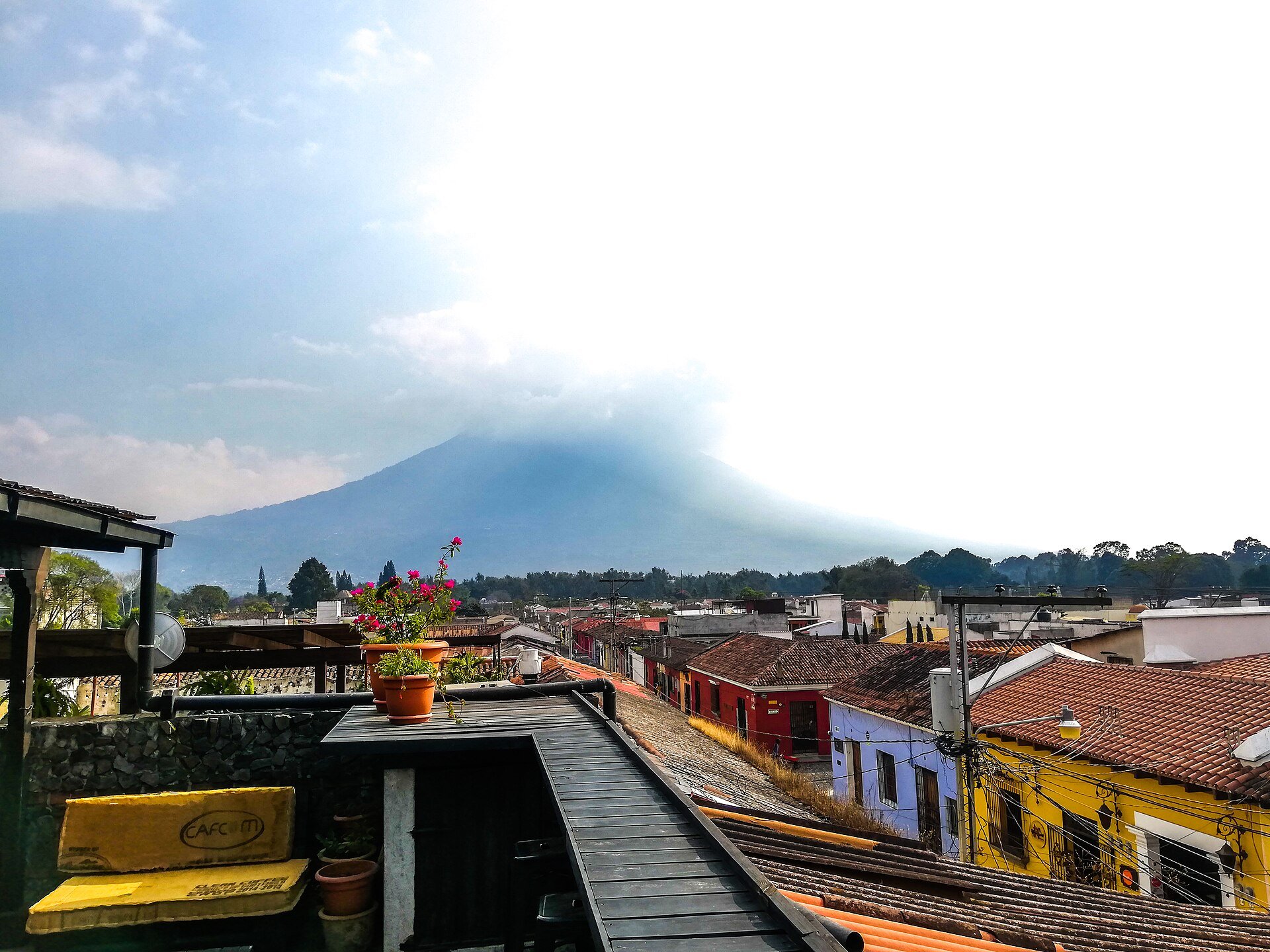
Guatemala’s economy is picking up speed
Banguat — the Bank of Guatemala, the country’s central bank — publishes a monthly gauge called the IMAE, or Monthly Index of Economic Activity. It is a running read on how much the country is producing, and between January and May 2026 it grew 4.4 percent.
That is genuinely better news than it sounds. The same measure grew 3.9 percent over those months in 2025, so the slowdown of recent years has broken.
The proper GDP figure tells a similar story. Gross domestic product — the total value of everything Guatemala produces — rose 4.5 percent in the first quarter of 2026 compared with a year before, up from 3.8 percent.
The growth is spread around, which is what you want to see. Shops and vehicle repair grew 4.3 percent, factories 4.5 percent, hotels and restaurants 5.4 percent, and banking and insurance 6.7 percent.
The official forecast for the whole of 2026 is around 4.1 percent, and the government would like to beat it. The International Monetary Fund finished its annual check-up on 29 July 2026 and called the economy stable, while pushing for faster reform.
The money sent home is doing the heavy lifting
Guatemalans working abroad, overwhelmingly in the United States, sent home Q117.8 billion (~US$15.45 billion) between January and July 2026. That is 6.6 percent more than the same seven months of 2025.
July alone brought in Q18.8 billion (~US$2.47 billion), a 4.2 percent rise on July last year. Banguat released those figures on Thursday 6 August 2026.
The full-year picture is bigger still. Remittances reached Q194.6 billion (~US$25.53 billion) in 2025, and the central bank expects about Q204.3 billion (~US$26.81 billion) this year — a rise of 5 percent.
Here is the number that matters most. Those transfers were 21 percent of Guatemala’s GDP in 2025, an all-time record, according to the IMF — meaning roughly one dollar in five circulating in the economy arrives from someone’s relative overseas.
All figures convert at the central bank’s reference rate of Q7.62 to the US dollar, quoted for mid-August 2026.
Washington has unlocked half the aid money
Every year the US Congress writes a condition into its spending law: half the economic and security aid promised to the governments of El Salvador, Guatemala and Honduras is frozen until the State Department certifies they are behaving. Ten conditions have to be met, covering good government, corruption, human rights, rule of law and cooperation on migration.
That certification came through on 1 July 2026. Christopher Landau, the Deputy Secretary of State, signed it for all three countries, and it was published in the Federal Register on 6 August.
The legal hook, if you want to look it up, is Section 7045(b)(2)(A) of the National Security, Department of State, and Related Programs Appropriations Act, 2026. The certification also has to be sent to Congress with a written justification.
One caveat worth being straight about: the State Department did not publish a dollar figure for what that 50 percent actually amounts to. Anyone quoting you a number for it is guessing.
It is a vote of confidence in the three governments. It does not, however, touch remittances — that money comes from individuals, not from Washington.
Where protected status actually stands right now
TPS stands for Temporary Protected Status. It is a US permit that lets people from countries wrecked by disaster or conflict live and work legally for a fixed period, and it is worth stressing that it is not a green card and never turns into one.
For El Salvador, it is still in force and expires on 9 September 2026, covering roughly 170,000 people. The US government was legally required to announce by 11 July whether it would extend or end the designation, and that deadline came and went with no announcement.
The Department of Homeland Security says it has not made an official announcement. Some immigration lawyers argue a six-month automatic extension written into the law has now kicked in, but the government has not confirmed that either.
In the meantime US immigration services have extended Salvadoran work permits to 9 September 2026. So nothing has been terminated — the honest description is that the decision is overdue and the outcome is unknown.
For Honduras and Nicaragua the answer is simpler and harder. Their protections ended on 8 September 2025, covering about 72,000 Hondurans and a few thousand Nicaraguans, and although a judge briefly restored them at the end of 2025, the Ninth Circuit Court of Appeals put that ruling on hold on 9 February 2026.
Haiti’s ended on 27 July 2026, after the Supreme Court ruled in June that courts generally cannot review these decisions at all. A federal judge in Washington confirmed on 5 August that her earlier block was gone.
Two numbers worth getting right
You will see the 4.4 percent reported as Guatemala’s GDP growth. It is not — it is that monthly activity index for January to May, and the quarterly GDP figure is a separate 4.5 percent.
The second one matters more. A figure of 500,000 Central Americans affected by the protected-status changes has been circulating, and it does not hold up.
Add the real country numbers together and Central American holders peaked at roughly a quarter of a million — about 170,000 Salvadorans, 72,000 Hondurans and a few thousand Nicaraguans. Guatemala has never been designated for the programme, so Guatemalans in the US are exposed to general deportation policy rather than to this particular deadline.
Nationwide the programme has shrunk dramatically. It covered 1,297,635 people from 17 countries in March 2025, and by 12 August 2026 the Pew Research Center counted about 273,200 people from just four — El Salvador, Ukraine, Sudan and Lebanon.
Why this matters if you invest here or live here
Remittances are not a footnote in these economies — they are the engine of household spending. They pay for groceries, school fees, cement and the stock on small-shop shelves, which is precisely why commerce, banking and hotels are the sectors growing fastest.
So the arithmetic is uncomfortable. If large numbers of Central Americans lose the right to work legally in the United States, the flow of money home eventually thins, and so does the consumer demand currently driving the growth figures.
There is an honest counterpoint, and it is worth knowing. During past enforcement scares remittances have gone up rather than down, as people rush savings home ahead of trouble — which is part of what powered the 18.7 percent jump Guatemala recorded in 2025.
That makes the timing tricky rather than the risk imaginary. A surge first, a thinner flow later, is the pattern to plan around.
The practical takeaway for anyone holding Guatemalan assets, running a business there or living on a foreign income: the US immigration calendar has become an economic calendar. The 9 September date is the next one to have in your diary.
More: Latin America news in English, every day from The Rio Times.
Frequently Asked Questions
Did Guatemala’s economy really grow 4.4 percent?
Economic activity did, but that is not the GDP figure. The 4.4 percent is the central bank’s monthly activity index for January to May 2026, while GDP — the total value of everything produced — grew 4.5 percent in the first quarter.
What is TPS, in plain English?
Temporary Protected Status is a US permit for people from countries hit by disaster or war, letting them live and work legally for a set period. It has to be renewed by the US government, and it does not lead to a green card or citizenship.
Is El Salvador’s protected status ending in September?
Nobody knows yet, and that is the whole problem. It is valid until 9 September 2026, the US government missed its own 11 July deadline to say what happens next, and no termination has been announced.
Does any of this affect Guatemalans in the United States?
Not through this programme — Guatemala has never been designated for protected status. Guatemalans in the US are affected by general immigration enforcement instead, which still matters enormously given how much money they send home.
Connected Coverage
Guatemala Property Tax Reform: 45 Towns Collected Nothing in 2025
Guatemala Tourism Draws 1.6 Million Visitors in First Half of 2026
Air Canada Adds a Weekly Guatemala City–Toronto Flight from December 2026
Sources: Prensa Libre: Remittances to Guatemala reach US$15.447 billion through July; Prensa Libre: Government bets on investment and market diversification to beat 4.1% forecast; IMF concludes 2026 Article IV consultation with Guatemala; Guatemala’s economic activity grows 4.4% (IMAE, Banguat); Soy502: Banguat monthly remittance table, record July 2026; Banguat reference exchange rate, mid-August 2026; Federal Register: Certification under Section 7045(b)(2)(A), P.L. 119-75; Infobae: US State Department certifies El Salvador to release cooperation funds; USCIS: Temporary Protected Status designated country — El Salvador; USCIS: Update on termination of Temporary Protected Status for Haiti; Pew Research Center: TPS ended for most immigrants who had it; UCLA Law: Ninth Circuit permits TPS terminations for Honduras, Nepal and Nicaragua
This article was produced by The Rio Times’ automated AI newsroom. Editorial responsibility: Matthias Camenzind, Publisher and Editor-in-Chief. The Rio Times also runs Ask Rio Times, which answers from 100,000+ of our own articles, the daily Latin America Power Map, and prediction-market odds on elections and markets.. How we use AI · Report an error