Griselda Gambaro, Argentine Playwright Who Confronted Violence, Dies at 98
ARGENTINA · OBITUARY
Key Facts
- —Who Griselda Gambaro, Argentine playwright and novelist, born in Buenos Aires in 1928.
- —Died September 15, 2026, in Buenos Aires, at age 98.
- —Known for Founding voice of Argentina’s theater of the grotesque and cruelty.
- —Defining work “El Campo,” “Información para Extranjeros,” and “La Malasangre.”
- —Recognition Konex award, National Theatre Prize, and an honorary doctorate.
- —The catch Her breakthrough novel was banned, pushing her into exile in Spain.
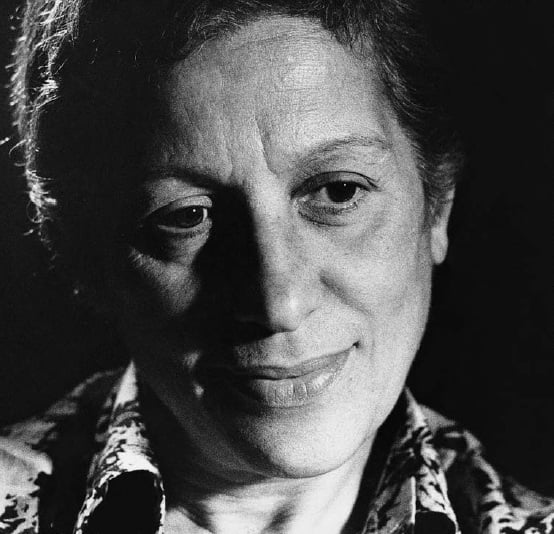
She wrote about cruelty before Argentina had a name for what was coming. Decades later, the country called her a founder of its modern theater.
Griselda Gambaro, the playwright who reshaped twentieth-century Argentine theater, died in Buenos Aires on September 15, 2026, at the age of 98. Her death was confirmed by major Argentine outlets including La Nación, Infobae, and the playwrights’ guild Argentores.
No cause of death was made public in the announcements that followed. Tributes arrived quickly from across the Argentine cultural world, where she was seen as a founder of postwar dramatic tradition.
A Childhood in La Boca
Gambaro was born in July 1928 in the working-class La Boca neighborhood of Buenos Aires, to a family of Italian immigrants. She completed primary school locally and secondary studies in the nearby district of Barracas.
She chose not to pursue a university degree, preferring instead to read widely and begin writing on her own terms. That self-taught path shaped a voice that later resisted easy classification within Argentine letters.
Her first staged work reached audiences in 1965 at the Instituto Di Tella, then the country’s leading showcase for experimental art. Director Jorge Petraglia brought her early scripts to a stage already associated with the avant-garde.
Recognition followed almost immediately, and a municipal theater prize arrived in 1968, just three years into her career on stage. Critics of the period noted an unusually assured and unsettling new voice in Argentine drama.
A Theater Built on Cruelty
Gambaro belonged to a generation of writers who used absurdist and grotesque imagery to describe violence that was becoming disturbingly real. Critics later grouped this current under the label Argentina’s theater of cruelty, a lineage running through much of her work.
Her 1967 play “El Campo,” or “The Camp,” placed ordinary characters inside a setting that revealed itself as a concentration camp. It remains one of her most widely studied and translated works.
“Información para Extranjeros” pushed the idea further, staging scenes of torture and abuse across several rooms that audience members walked through together. The format turned spectators into uneasy witnesses rather than distant observers of the violence on display.
Her 1976 novel “Ganarse la Muerte” depicted institutional cruelty toward women in unsparing detail. Argentina’s military government formally banned the book the following year, at the height of state repression.
The ban came as the country’s Dirty War intensified under a dictatorship that abducted and disappeared thousands of its own citizens. Gambaro soon left with her family for Barcelona, joining a wave of Argentine artists forced into exile.
She spent several years living in Spain before returning to Argentina in the early 1980s, while the military government still held power. Friends later said she felt writing from outside the country had become unsustainable for her.
Teatro Abierto and a Return to the Stage
In 1981, Argentine theater workers organized Teatro Abierto, a defiant collective season of new plays staged as protest against dictatorship-era censorship. Gambaro contributed her play “Decir Sí” to that founding cycle of resistance.
The festival continued despite official harassment and an arson attack that destroyed its original venue partway through the run. It is remembered today as one of the clearest acts of cultural resistance in modern Argentine history.
Her later play “La Malasangre,” staged in 1982, used a tyrannical father figure to evoke dictatorship without ever naming it outright. The play remains among her most frequently performed works in Argentina and abroad.
After democracy returned in 1983, Gambaro kept writing steadily for both the stage and the page, rarely slowing her pace. Her novel “El Mar que Nos Trajo” appeared in 2001, decades into an already substantial body of work.
Awards and Later Recognition
Argentina’s National Theatre Prize arrived in 1994, formal recognition from a democratic state that had once censored her writing outright. The playwrights’ guild Argentores honored her work on four separate occasions between 1976 and 1997.
The Konex Foundation awarded her a special career prize in 2014, marking five decades of continuous work in Argentine theater. Three years earlier, the National Arts Institute had granted her an honorary doctorate for her contribution to national culture.
Her final play, “El Don,” premiered at the Teatro Nacional Cervantes in 2015, closing a five-decade body of stage work. Critics described it as a fitting, quietly powerful conclusion to her theatrical career.
Gambaro was married to sculptor Juan Carlos Distéfano, who died in July 2026 at age 92, just weeks earlier. The couple had two children together during a partnership that lasted several decades.
A Legacy Across Latin American Theater
Playwright Mauricio Kartun described her as a true illuminator of Argentine drama in comments following news of her death. Argentores, her longtime guild, issued a formal farewell the same day, calling her one of the country’s essential dramatic voices.
Gambaro’s plays are now standard reading in university theater programs across Latin America and Spain. Scholars regularly place her alongside earlier Argentine writers as one of the clearest voices to confront state violence directly on stage.
Her work never let audiences look away from cruelty dressed up as ordinary life. That refusal, sustained across six decades of writing, is the legacy Argentine theater now carries forward without her.
This article was produced by The Rio Times’ automated newsroom system. How we use AI · Report an error
Read More from The Rio Times