
GHANA · NATURAL RESOURCES
Key Facts
- —The basics As of October 2026, Ghana resources span gold, cocoa farmland, offshore oil and gas, manganese, bauxite, timber forests and rivers, with the country’s first lithium mine planned at Ewoyaa in the Central Region.
- —Why it matters Gold earned about US$21.0 billion in 2025, two thirds of all export income, so gold, cocoa and oil revenues underpin the cedi, central bank reserves and the state budget.
- —The numbers Ghana mined about 150 tonnes of gold in 2025, the most in Africa; crude output fell to 37.3 million barrels; and cocoa farmers receive GHS 42,400 (about US$3,627) a tonne for 2026/27.
- —Who is who Newmont, AngloGold Ashanti and Gold Fields, all listed in New York, run the main industrial gold mines; Tullow and Kosmos Energy pump Jubilee oil; and the state Gold Board buys all small-scale gold.
- —What to watch Atlantic Lithium shareholders are due to vote in November 2026 on a takeover by China’s Zhejiang Huayou Cobalt, and Gold Fields’ leases at Tarkwa, its Ghana flagship, expire in April 2027.
- —What it means for you US investors in NEM, AU, GFI and KOS shares carry Ghana risk from royalty and lease changes, while illegal mining that muddies rivers and destroys forests threatens cocoa and water supplies.
Gold, cocoa and offshore oil earn most of Ghana’s dollars, while illegal mining eats into its rivers and forests. Here is who extracts each resource, who profits and what it costs, as of October 2026.
Ghana resources run from gold and cocoa to offshore oil and gas, manganese, bauxite, timber and a planned first lithium mine. Gold alone brought in about US$21.0 billion in 2025, two thirds of all export earnings, Bank of Ghana data show.
For US readers, the story runs from New York-listed miners and oil firms to chocolate prices. The cost shows in rivers turned brown by illegal mining and in forest reserves stripped of trees.
Figures come from the US Geological Survey, the Bank of Ghana, company filings and Ghanaian regulators, each dated. Conversions use GHS 11.69 per US$1, the open.er-api.com rate of 15 October 2026.
Ghana Resources at a Glance
Ghana’s south holds the gold belts, cocoa farms and timber forests, while the drier north is mostly savannah farmland. Offshore, the Jubilee oil field in the Tano Basin has pumped crude since late 2010, according to its discoverer, Kosmos Energy.
In 2025, Ghana exported goods worth US$31.2 billion, the Bank of Ghana reports, and gold made up US$21.0 billion of that. Cocoa added US$4.0 billion and crude oil US$2.6 billion, leaving all other exports at US$3.7 billion.
The pattern held in 2026, with gold worth US$14.9 billion of US$22.4 billion in exports from January to August. That is about 66% of the total, as the world gold price averaged US$4,408 an ounce in August 2026.
Minerals in their natural state belong to the Republic under the 1992 Constitution, vested in the president in trust for the people. Mining leases are granted by the lands minister, with the Minerals Commission acting as the sector regulator.
Gold, Africa’s Largest Producer
Ghana mined an estimated 150 tonnes of gold in 2025, up from 149 tonnes in 2024, according to the US Geological Survey. That makes it Africa’s largest producer and the world’s sixth, behind China, Russia, Australia, Canada and the United States.
South Africa, once the continent’s leader, produced about 90 tonnes in the same survey. The USGS puts Ghana’s gold reserves at 1,000 tonnes, against 5,000 tonnes for South Africa.
The Ghana Chamber of Mines counts more, putting provisional 2025 output at a record 6 million ounces, or about 187 tonnes. Large mines produced 2.9 million ounces and small-scale miners 3.1 million, Mining Weekly and Agence Ecofin reported in February 2026.
Three New York-listed companies run several of the biggest mines, according to their 2025 filings with US regulators. Newmont (NYSE: NEM), based in Denver, produced 664,000 ounces at Ahafo South and 70,000 at Ahafo North in 2025.
Ahafo North reached commercial production in October 2025. Newmont’s sale of its Akyem mine to China’s Zijin Mining closed on Tuesday, 15 April 2025.
Gold Fields (NYSE: GFI) of South Africa produced 474,500 ounces at Tarkwa in 2025, down 12%, and owns 90% of the mine. Its five Tarkwa leases expire in April 2027, and it has applied to renew them, its 2025 filing says.
AngloGold Ashanti (NYSE: AU) produced 266,000 ounces at Obuasi and 199,000 at Iduapriem in 2025, for gold income of US$1.65 billion. Obuasi’s output rose 20% on 2024, while Iduapriem’s fell 16%.
Gold Fields’ older Damang mine reverted to the state when its extended lease ended on Saturday, 18 April 2026. Ghanaian firm Engineers and Planners won the lands ministry’s tender and took over that day, Citi Newsroom and the Daily Graphic reported.
The Gold Board and Gold for Reserves
Since 2025, small-scale gold must be sold through the Ghana Gold Board, or GoldBod, set up under Act 1140. The board calls itself the sole authority to buy, sell, assay and export gold and other precious minerals in Ghana.
GoldBod buys through licensed aggregators and aims to export at least 3 tonnes a week, according to its chief executive, Sammy Gyamfi. The government gave it seed capital of US$279 million in cedis, its website says.
In September 2026, GoldBod generated US$1.871 billion in foreign exchange, against a monthly target of US$1.4 billion. It sold US$701.3 million to commercial banks and passed US$1.170 billion to the Bank of Ghana for reserves.
For October, the board plans US$1.4 billion, with US$1 billion for banks and up to US$400 million for the central bank. It follows a reserve policy approved by Cabinet and Parliament, under a financing model in use since Monday, 3 August 2026.
Since Thursday, 1 October 2026, GoldBod has required X-ray fluorescence testing as the definitive measure of gold purity in local purchases. The board’s earlier September pledge is covered in the Rio Times report on GoldBod’s dollar targets.
The Bank of Ghana held 25.2 tonnes of gold, worth US$3.57 billion, at the end of August 2026. That was up from 18.6 tonnes in December 2025 but below 37.1 tonnes in September 2025.
Gross reserves stood at US$12.05 billion on Tuesday, 22 September 2026, enough for 4.5 months of imports. How far gold dollars can support the currency is tracked in the Rio Times report on the cedi against the US dollar.
Oil and Gas Offshore, Jubilee, TEN and Sankofa
Ghana’s crude output fell for a sixth straight year in 2025, to 37.3 million barrels from a 2019 peak of 71.44 million. The figures come from the 2025 report of PIAC, the Public Interest and Accountability Committee that monitors oil money.
Jubilee produced 22.21 million barrels, down 30.3%, while the TEN fields gave 5.83 million and Sankofa-Gye Nyame 9.26 million. The Ghana News Agency reported these field figures from the report’s presentation, and Ghanaian Times confirmed the national total.
Jubilee output rose in 2026, according to Tullow Oil (LSE: TLW), the London-listed operator of Jubilee and TEN. Jubilee averaged 70,800 barrels a day gross in the first half, against 60,900 in 2025, while TEN averaged 14,800.
Tullow holds 38.98% of Jubilee and Kosmos Energy (NYSE: KOS), based in Dallas, holds 38.61%. The state-owned Ghana National Petroleum Corporation (GNPC) holds 19.69% and South Africa’s state oil firm PetroSA 2.72%, Tullow’s Ghana page shows.
Parliament ratified an extension of the Jubilee and TEN agreements to 31 December 2040, Tullow says. From 20 July 2036, GNPC’s share rises by a further 10% interest, with the partners’ shares cut pro rata.
Tullow also plans to buy the TEN production vessel for about US$126 million, with completion expected at the end of March 2027. Its results and the government’s latest output comments are covered in reports on Tullow’s half-year and Ghana’s 2026 oil output.
Italy’s Eni (NYSE: E) operates Sankofa-Gye Nyame, part of the gas-rich Offshore Cape Three Points project, with Vitol and GNPC as partners. Eni says its gas is sold on the local market, so power plants can burn gas instead of crude oil.
Petroleum receipts fell to about US$770 million in 2025 from US$1.3 billion in 2024, Ghanaian Times reported from the PIAC report. PIAC also said GNPC’s subsidiary Explorco had not accounted for US$561.65 million of petroleum revenue for 2022 to 2024.
Cocoa, Farmland and Forests
Cocoa is Ghana’s second export after gold, earning US$4.0 billion in 2025 and US$2.76 billion from January to August 2026. It grows in the same southern forest belt as much of the gold, which is why galamsey threatens cocoa farms.
COCOBOD, the state cocoa board, set the 2026/27 farmgate price at GHS 42,400 a tonne (about US$3,627). That equals GHS 2,650 (about US$227) per 64-kilogram bag, effective Friday, 25 September 2026.
The price is 71.18% of the realised gross export value, and up from GHS 41,392 (about US$3,541) in 2025/26. The new Ghana Cocoa Board Act, 2026 (Act 1182) guarantees farmers at least 70% of the gross export price.
The act also protects cocoa farms from illegal mining and bars COCOBOD from quasi-fiscal activities, the board says. COCOBOD says its traceability system now covers every growing area, ready for EU deforestation rules due from Wednesday, 30 December 2026.
World cocoa prices averaged US$5,988 a tonne in August 2026, against US$8,074 a year earlier, Bank of Ghana data show. Ghana’s realised export price averaged US$4,132 a tonne that month.
Forests supply timber and shelter cocoa, rivers and wildlife, and timber sales to Europe run under an EU scheme called FLEGT. Lands minister Emmanuel Armah-Kofi Buah says a FLEGT licence makes Ghana the only African country exporting licensed timber to the EU.
Buah said more than 28 million trees were planted in 2025 under the Tree for Life campaign, against a 30 million target. More than 340 hectares of degraded mining land were reclaimed with private partners, he added in February 2026.

Galamsey and the Cost to Rivers
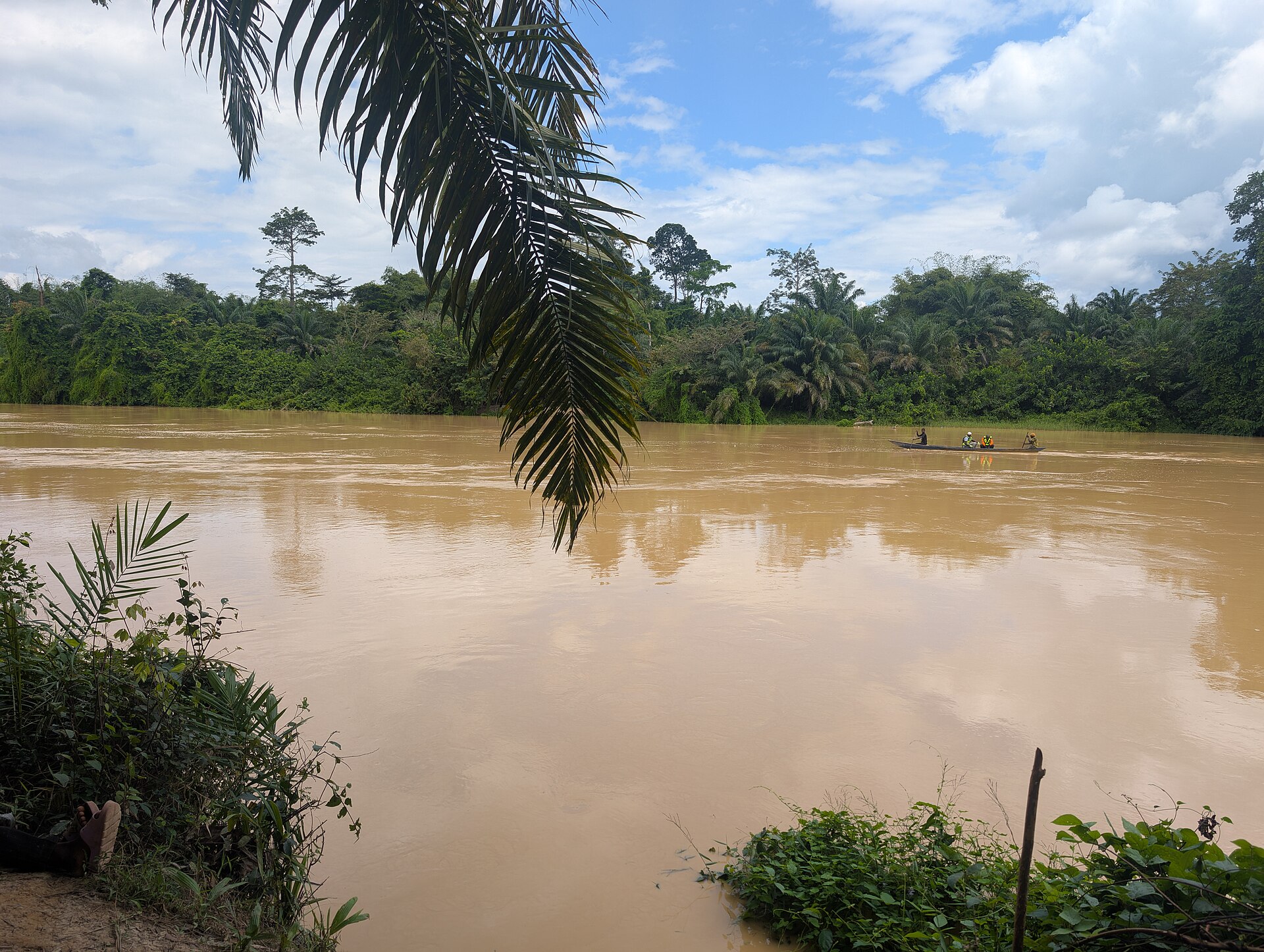
Illegal small-scale mining, known in Ghana as galamsey, strips forest and farmland and dredges riverbeds for gold. Miners use excavators and floating chanfang platforms, enforcement data from the lands ministry show.
In February 2026, Buah said illegal mining had heavily degraded 44 forest reserves, particularly in Ashanti, Western and Western North. Nine were declared red zones because of armed activity, and more than 6,000 hectares, about 23 square miles, were destroyed.
Rivers carry the damage to household taps, because very muddy water is costly or impossible to treat. In late August 2025, cloudiness at Ghana Water’s Kwanyaku plant on the Ayensu River peaked at 32,000 NTU.
The plant was designed for at most 2,500 NTU, the unit of water cloudiness, the Ghana News Agency reported. It supplies more than 30 districts, including Winneba, Swedru and Kasoa.
The Kibi plant on the Birim River had reportedly been out of action since August 2025, MyJoyOnline said in October 2026. Kingsley Agyemang, MP for Abuakwa South in the Eastern Region, called the river a lifeline after inspecting it with Ghana Water officials.
NAIMOS, the National Anti-Illegal Mining Operations Secretariat set up in June 2025, ran 122 operations from July 2025 to March 2026. It made 237 arrests, including 144 foreign nationals, seized 94 excavators and destroyed 2,647 chanfang platforms, the lands ministry says.
NAIMOS reported early signs of recovery on the Ankobra and Ayensu rivers where patrols were sustained. By May 2026, the government had trained and deployed 2,071 Blue Water Guards to patrol rivers, a programme launched in March 2025.
The debate over forest losses and shorter mining leases is followed in the Rio Times report on illegal mining in forest reserves. Where the damage falls by region is mapped in Ghana regions explained.
Manganese, Bauxite and Lithium
Ghana was the world’s third-largest manganese producer in 2025, after South Africa and Gabon, the USGS estimates. It mined about 2 million tonnes of manganese content, up from 1.28 million, and holds reserves of 13 million tonnes.
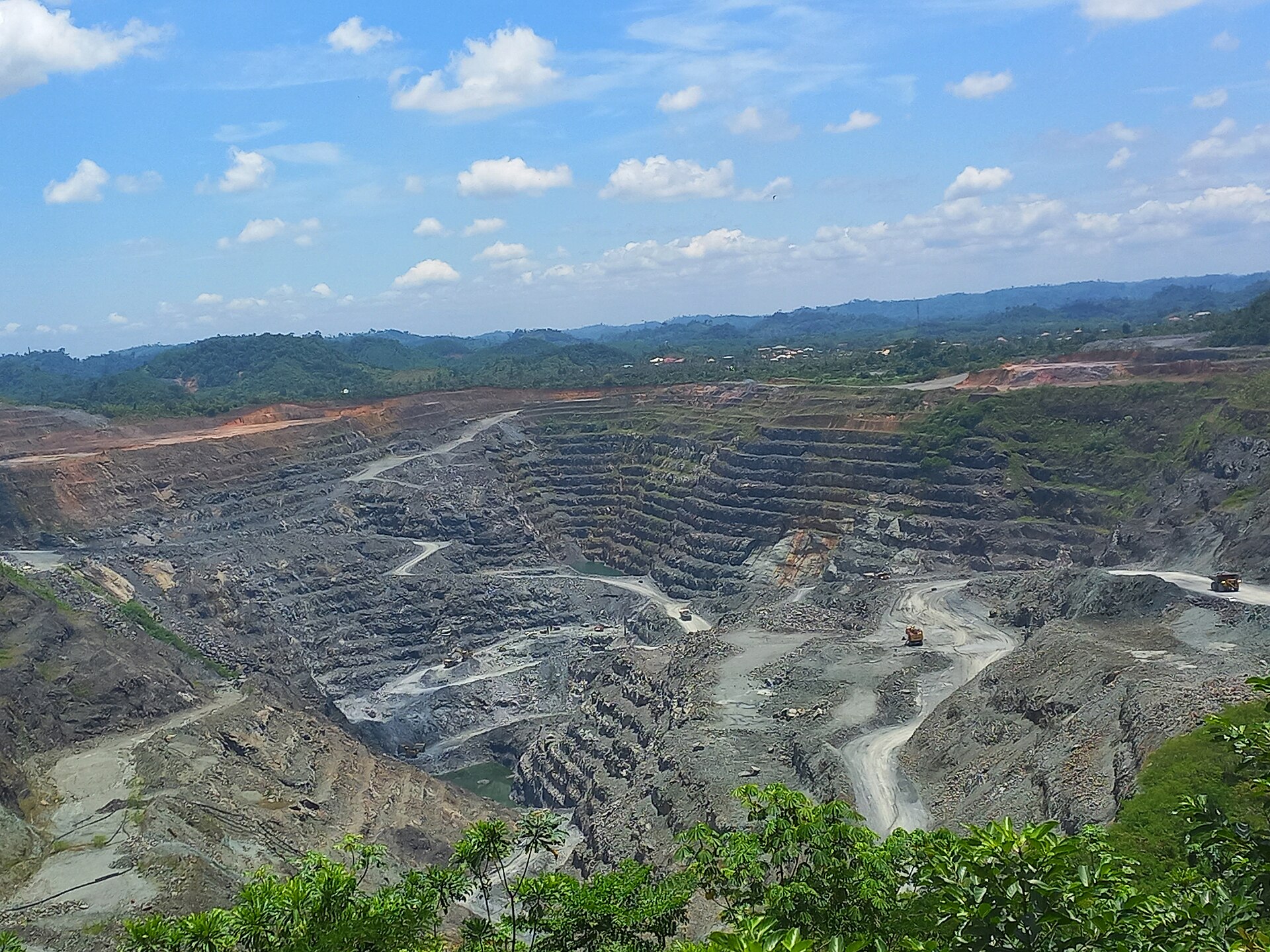
Ghana Manganese Company runs the Nsuta open-pit mine in the Western Region, and manganese is mainly used to make steel. The company targeted 700,000 tonnes of output in August 2026 and 8 million tonnes for the year, the Ghana News Agency reported.
Ghana also mines bauxite, the ore of aluminium, but the USGS does not list its output separately. The state’s Ghana Integrated Aluminium Development Corporation (GIADEC) is charged with building an aluminium industry on the country’s deposits.
Lithium is the newest prospect, with measured and indicated resources of 200,000 tonnes of lithium content, the USGS says. Atlantic Lithium announced on Friday, 20 March 2026, that Parliament had ratified its Ewoyaa lease, Ghana’s first for lithium.
Atlantic Lithium (AIM: ALL, ASX: A11, GSE: ALLGH) holds a 15-year lease first granted in October 2023, in the Central Region. Royalties follow a new sliding scale, from 5% when spodumene, the lithium concentrate, sells below US$1,500 a tonne to 12% above US$3,200.
On Thursday, 7 May 2026, Atlantic agreed to a takeover by China’s Zhejiang Huayou Cobalt at US$0.25486 a share, about US$210 million. Australian regulators cleared it in September; Atlantic expects the shareholder vote in November and completion in December.
Elevra Lithium (Nasdaq: ELVR), formed from US-based Piedmont Lithium and Australia’s Sayona, has agreed to sell its Ewoyaa rights to Huayou. If both deals close and regulators approve, a Chinese battery-materials group would control Ghana’s first lithium project.
Who Profits From Ghana’s Resources
Policy is set by the government of President John Mahama, of the centre-left National Democratic Congress, in office since January 2025. The parties and power brokers behind it are explained in Ghana politics explained.
The state takes its share through royalties, taxes, free stakes and state firms such as GNPC, GoldBod and COCOBOD. Since March 2026, a sliding gold royalty of 5% to 12% has replaced a flat 5% rate, Gold Fields’ annual filing says.
Private profit flows mainly to the shareholders of foreign miners and oil companies, listed in New York, London, Johannesburg and China. Gold Fields owns 90% of Tarkwa, for example, and Tullow and Kosmos together hold more than three quarters of Jubilee.
Small-scale miners produced just over half of Ghana’s gold in 2025, on the Chamber’s figures. By law, all of that gold must now be sold through GoldBod and its licensed buyers.
Cocoa farmers must receive at least 70% of the gross export price under the 2026 law. COCOBOD’s price statement keeps the margins and fees for licensed buyers, hauliers, warehousing and internal marketing unchanged.
Oil money goes to the budget, GNPC and two petroleum funds, PIAC figures reported by the Ghana News Agency show. In 2025 the budget received US$433.29 million, the Stabilisation Fund US$160.46 million, GNPC US$107.89 million and the Heritage Fund US$68.77 million.
The environmental bill falls mostly on farm and river communities in the forest belt, whose land and water galamsey damages. Water users pay too, when treatment plants shut or slow down because rivers are too muddy to treat.
How gold money shapes Ghana’s elites is the subject of the Rio Times guide to who runs Ghana. Daily news on mining, cocoa and oil is collected in the Rio Times Ghana section.
What It Means for US Readers
US investors are exposed through Newmont, AngloGold Ashanti, Gold Fields, Kosmos Energy, Eni and Elevra, all of which trade in New York. Lease renewals, royalty changes and the Gold Board’s control of small-scale gold all affect their Ghana business.
For consumers, Ghana’s cocoa feeds global chocolate supply chains, and its new traceability system targets the EU’s deforestation rules. Gold and cocoa earnings also underpin the cedi and Ghana’s ability to service its debts.
Travellers meet these resources in the cocoa farms and forests of the south, and in Accra, home of the Gold Board. The Accra city page covers neighbourhoods, costs and safety for newcomers.
What Is Not Known
No final 2025 gold figure from the Minerals Commission was found, and the Chamber’s provisional count exceeds the USGS estimate. Bauxite output, the owners of Ghana Manganese Company and the new Damang lease terms could not be confirmed from primary sources.
The PIAC 2025 report itself could not be opened, so its figures rest on two Ghanaian news reports of its presentation. No national water-quality data from the Environmental Protection Agency or the Water Resources Commission were found for 2026.
It is unclear whether Huayou’s takeover of Atlantic Lithium will win its remaining approvals, and when Ewoyaa will reach an investment decision. The Bank of Ghana’s monthly data do not explain why its gold holdings fell in late 2025.
Frequently Asked Questions
What are Ghana’s main natural resources?
Ghana’s main natural resources are gold, cocoa farmland, offshore oil and gas, manganese, bauxite, timber forests and rivers. Lithium is the newest, after Parliament ratified the first lithium mining lease in March 2026.
Is Ghana the largest gold producer in Africa?
Yes, the US Geological Survey estimates Ghana mined about 150 tonnes of gold in 2025, ahead of South Africa at 90 tonnes. That made Ghana the sixth-largest producer in the world.
How much oil does Ghana produce?
Ghana produced 37.3 million barrels of crude in 2025, down from 71.44 million in 2019, according to PIAC’s 2025 report. Jubilee averaged 70,800 barrels a day gross in the first half of 2026, operator Tullow says.
What is galamsey?
Galamsey is illegal small-scale gold mining, which strips forests and farmland and muddies rivers. The government has deployed a special enforcement unit, NAIMOS, and more than 2,000 Blue Water Guards against it.
What is GoldBod?
GoldBod, the Ghana Gold Board, is the state body with exclusive rights to buy, assay and export small-scale gold. In September 2026 it generated US$1.871 billion in foreign exchange for banks and the central bank.
How much do Ghana’s cocoa farmers earn?
For 2026/27, COCOBOD pays GHS 42,400 a tonne, about US$3,627, or GHS 2,650 (about US$227) per 64-kilogram bag. By law, farmers must receive at least 70% of the gross export price.
Sources: USGS Mineral Commodity Summaries 2026, gold; USGS MCS 2026, manganese; USGS MCS 2026, lithium; USGS MCS 2026, bauxite and alumina; Bank of Ghana, Summary of Economic and Financial Data, September 2026; Ghana Gold Board (GoldBod); GoldBod press releases, FX update September 2026 and assay notice; COCOBOD, producer price for 2026/27; Newmont, Form 10-K for 2025; AngloGold Ashanti, Form 20-F for 2025; Gold Fields, Form 20-F for 2025; Tullow Oil, Ghana operations; Tullow Oil, 2026 half-year results (28 September 2026); Tullow Oil, 2025 full-year results; Kosmos Energy, Ghana; Eni, Ghana; Atlantic Lithium, ratification of the Ewoyaa lease (20 March 2026); Atlantic Lithium, 2026 annual report; Atlantic Lithium announcements, FIRB approval (17 September 2026); Ministry of Lands and Natural Resources, forest reserves and Tree for Life; Ministry of Lands and Natural Resources, NAIMOS report; Ministry of Lands and Natural Resources, Blue Water Guards; Ministry of Lands and Natural Resources, Damang tender; Citi Newsroom, Damang tender result; Daily Graphic, Damang handover; Ghana News Agency via Modern Ghana, PIAC 2025 report; Ghanaian Times, PIAC 2025 report; Ghana News Agency, Kwanyaku headworks; Ghana News Agency, Ghana Manganese Company; MyJoyOnline, Birim River; Mining Weekly, Chamber of Mines 2025 output; Agence Ecofin, Chamber of Mines 2025 output; Citi Newsroom, royalty regulations; open.er-api.com exchange rate, 15 October 2026 (all accessed 15 October 2026).
This article was produced by The Rio Times’ automated newsroom system. How we use AI · Report an error · Editorial responsibility: Matthias Camenzind, Editor-in-Chief
Part of our ongoing coverage
Africa: The New Scramble — the great-power contest over the continent.
Expat Guide to Ghana
What The Rio Times publishes for foreigners who live in or move to Ghana.
Start here
- Retire in Ghana 2026 — Residency, Costs and Daily Life for Foreign Retirees
- Opening a Bank Account in Ghana as a Foreigner 2026 — Documents and Real Costs
- Healthcare in Ghana for Expats 2026 — Private Care and NHIS
- Ghana Residency Visa 2026 Permits, E-Visa and Right of Abode
City guides
Understand Ghana