
CURRENCY · GHANA
Key Facts
- —The country Ghana is a West African democracy of more than 30 million people and a major exporter of gold and cocoa.
- —Why it matters The cedi sets the local price of everything Ghana imports, from fuel to rice, and the cost of its dollar debts.
- —Why now Importers are buying dollars ahead of Christmas while energy costs rise, and Accra business desks reported two weeks of cedi losses on 12 and 13 October.
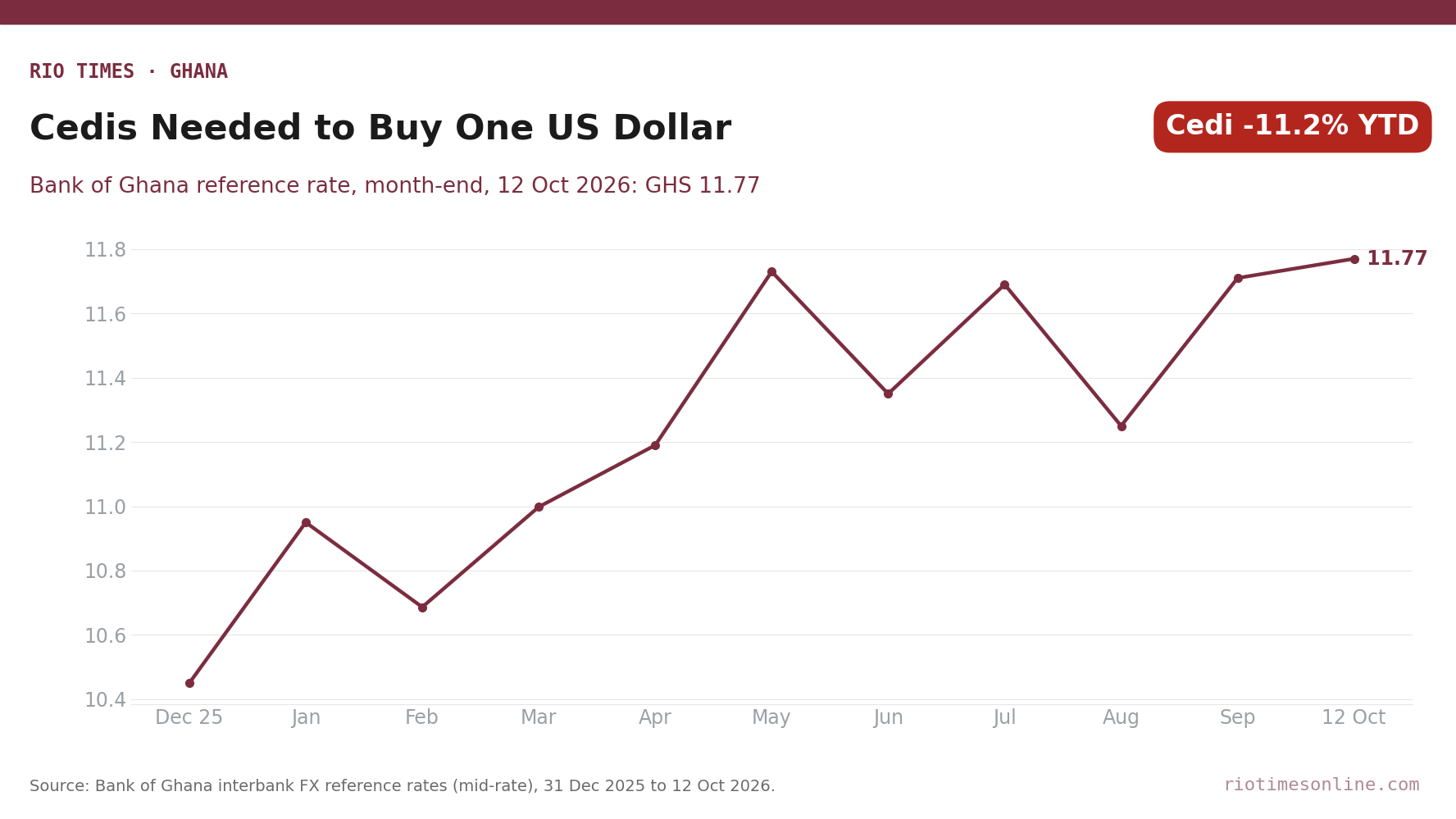
- —What happened The Bank of Ghana reference rate stood at GHS 11.77 per dollar on Monday 12 October, leaving the cedi 11.2% weaker than on 31 December.
- —The numbers Cedi down 1.42% against the dollar on the interbank market over two weeks; GoldBod has sold US$255 million to banks since early October.
- —What it means for US readers A dollar buys about 12.6% more cedis than in January, while US goods sold in Ghana become dearer for local buyers.
- —Still open Whether GoldBod’s planned US$1 billion of October dollar sales can steady the cedi before the festive import peak.
The Ghana cedi has lost 11.2% against the US dollar since 1 January, according to Bank of Ghana reference rates. The central bank set GHS 11.77 per dollar on Monday 12 October, against GHS 10.45 per dollar on 31 December.
For Americans, the slide makes US goods dearer in Ghana and stretches every dollar further for visitors and investors. Accra business desks link the fall to pre-Christmas import demand and higher energy costs, which keep companies chasing dollars.
How Far the Cedi Has Fallen
The weakness follows a very different 2025, when the cedi rose about 41% against the dollar. Bank of Ghana data show GHS 14.70 per dollar at the end of 2024 and GHS 10.45 per dollar a year later.
This year the path has been uneven, with the reference rate peaking at GHS 11.85 per dollar on Friday 5 June. The cedi then recovered to GHS 11.25 per dollar at the end of August before weakening again in September.
Over the past two weeks the cedi lost 1.42% against the dollar on the interbank market, Joy Business and Citi Newsroom reported. Bank of Ghana rates confirm it, from GHS 11.62 per dollar on 25 September to GHS 11.79 per dollar on 9 October.
The cedi also fell 1.29% against the British pound over the period but gained 0.35% against the euro. At forex bureaus, where households and small traders buy currency, buyers paid an average of GHS 12.10 per dollar.
Why the Dollar Is in Demand
Importers typically step up dollar purchases in the final quarter to stock goods for Christmas, which local analysts call seasonal demand. Higher energy costs add to the bill, because fuel imports must be paid for in foreign currency.
Databank Research, part of the Accra investment group Databank, expects the rate to hold between GHS 11.60 and GHS 12.10 per dollar. It sees GHS 12.00 per dollar as a likely near-term cap, but says risks lean towards further depreciation.
“Sustained appreciation will depend on whether spot inflows can soften seasonal import demand without compromising the BoG’s reserve-accumulation target,” Databank Research said. In plain terms, the cedi can only firm if dollar inflows grow without draining the central bank’s reserves.
GoldBod Steps Up Dollar Sales
The Ghana Gold Board, known as GoldBod, is the state agency that buys and exports gold from small-scale miners. It has sold US$255 million to commercial banks through its GoFX platform since the start of October, Joy Business reported.
The sales came in two rounds, US$125 million on Tuesday 6 October and US$130 million on Thursday 8 October. The Thursday sale was priced at GHS 11.77 per dollar, close to the central bank’s reference rate that day.
GoldBod plans to sell US$1 billion to banks in October and pass US$500 million to the Bank of Ghana for reserves. The central bank told lenders last month it did not expect to run its own foreign exchange intermediation programme in October.
The Bank of Ghana said it remained ready to intervene when needed to keep the market orderly while preserving exchange rate flexibility. That mix of gold-backed supply and a watchful central bank is the main buffer the market is relying on this month.
What It Means for US Readers
For US visitors and remote workers paid in dollars, each dollar now buys about 12.6% more cedis than in January. For US firms selling machinery, vehicles or food into Ghana, the same shift makes their goods dearer for local buyers.
Investors holding Ghana’s dollar bonds watch the cedi because a weaker currency raises the local cost of servicing foreign debt. Ghana restructured much of that debt after its 2022 default, so currency stability matters for its recovery.
Gold export earnings have driven recent growth, as set out in Ghana Grows 6% as Gold Lifts Exports, Reserves Dip. Lenders have so far absorbed the swings, as Ghana Bank Assets Hit US$42 Billion as Bad Loans Ease showed.
What Is Not Known
It is not clear how much of GoldBod’s planned US$1 billion has been allocated since Thursday 8 October. GoldBod sells on Tuesdays and Thursdays, so another round could come as early as Tuesday 13 October.
The Bank of Ghana has not publicly explained why it stepped back from October intermediation, Joy Business reported. Nor is it known whether energy import bills will ease before the December holiday peak in demand.
Frequently Asked Questions
How much has the Ghana cedi fallen in 2026?
Bank of Ghana reference rates show the Ghana cedi down 11.2% against the US dollar between 31 December 2025 and Monday 12 October 2026. The rate moved from GHS 10.45 to GHS 11.77 per dollar.
Why is the cedi weakening against the dollar?
Local reports point to seasonal import demand ahead of Christmas and higher energy costs. Both push companies to buy more dollars than the market currently supplies.
What is GoldBod doing to support the cedi?
The Ghana Gold Board has sold US$255 million to commercial banks since early October through its GoFX platform. It plans US$1 billion of sales to banks this month and US$500 million for central bank reserves.
Is Ghana cheaper for US visitors now?
A dollar buys about 12.6% more cedis than at the start of 2026, based on Bank of Ghana rates. Local prices can still rise if importers pass on higher costs.
What could stabilise the Ghana cedi?
Analysts at Databank Research expect GoldBod sales and central bank action to give short-term support. A lasting recovery depends on dollar inflows keeping pace with import demand without draining reserves.
Sources: Bank of Ghana, historical interbank FX reference rates (accessed 13 October 2026); Citi Newsroom, Cedi loses over 11% against dollar as import demand, energy costs bite (13 October 2026); Joy Business, Cedi extends depreciation against dollar (12 October 2026); Joy Business, GoldBod pumps US$255m into banks as festive dollar demand rises (12 October 2026).
This article was produced by The Rio Times’ automated newsroom system. How we use AI · Report an error · Editorial responsibility: Matthias Camenzind, Editor-in-Chief
Part of our ongoing coverage
Africa: The New Scramble — the great-power contest over the continent.