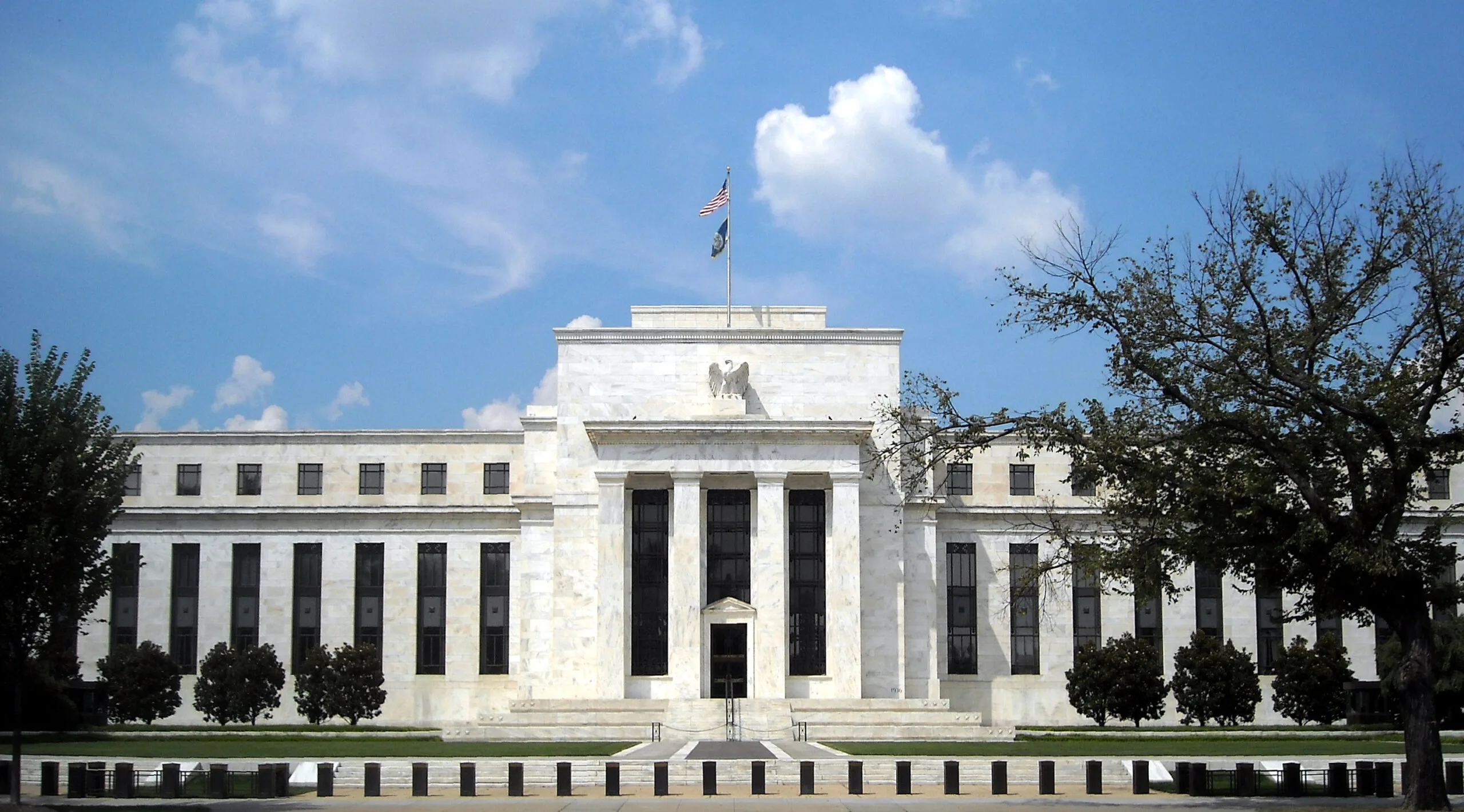
Prediction Markets: United States
Key Facts
- Prediction markets. Polymarket, a crypto-based prediction market, prices a January Federal Reserve hike at 57.5% (12:25 p.m. ET, 13 November).
- Move. That is up about 39 points in seven days; our snapshot showed about 18% on 10 November.
- Context. Fed Governor Christopher Waller backed a December hike on 10 November; core prices, excluding food and energy, rose 0.3%.
- Next. The Fed meets 8 and 9 December and 26 and 27 January; October meeting minutes are due about 18 November.
- Volume. About US$224,000 traded in 24 hours on this event; US$3.2 million in total.
Traders now price a Federal Reserve rate rise in January at 57.5%, up about 39 points in a week. A rise in both December and January would keep US borrowing costs and the dollar higher for longer.Traders on Polymarket price a quarter-point Federal Reserve rate rise at the January meeting at 57.5%, read at 12:25 p.m. Eastern Time (ET) on Friday 13 November 2026.
Seven days ago, on 6 November, it stood near 18.5%, a gain of about 39 points per Polymarket’s weekly change; our own snapshot showed about 18% on 10 November. The Federal Reserve (the Fed) is the US central bank, and its main rate steers mortgages, car loans and savings yields.
A price of 57.5% is a bet-implied probability, not a forecast by The Rio Times or the Fed.
What Prediction Markets Say
Polymarket’s “Fed Decision in January?” market lists five outcomes. Prices are the implied probability of each, read on 13 November at 12:25 p.m. ET:
- 25 bps increase (bps means basis points; 25 is a 0.25-point rise): 57.5%, up about 1 point in 24 hours and 39 points in seven days.
- No change: 40.5%, down about 1 point in 24 hours and 33 points in seven days.
- 50+ bps increase (half a point or more): 0.9%.
- 25 bps decrease and 50+ bps decrease: about 0.5% each.
About US$224,000 changed hands on the event in the last 24 hours and about US$3.2 million since it opened, per Polymarket data. That is enough trading to read, but far less than the December market, where about US$3.9 million traded in a day.
The market resolves on the change in the upper bound of the Fed’s target range after the January 2027 meeting; a move not shown is “rounded up to the nearest 25” basis points. A price cannot tell us how firmly the 12 voters on the Federal Open Market Committee, the Fed’s rate-setting panel, have made up their minds this far ahead.
Kalshi, an exchange regulated in the US by the CFTC (the Commodity Futures Trading Commission), lists contracts on whether the Fed’s upper rate limit will sit above set levels after its 27 January meeting. Those contracts trade thinly and ask a different question from Polymarket’s change-based market, so we use Polymarket alone.
Why we show this: prediction markets turn real-money bets into a live probability that moves within minutes of the news, which is why investors, campaigns and newsrooms in the United States now follow them closely. We show them next to polls and official results, never instead of them.
Why the Odds Moved
No single trigger was reported for the January move, which went from about 18% on 10 November to about 48% on 11 November in our daily snapshots. Two official steps came just before it.
On Tuesday 10 November, Fed Governor Christopher Waller said in a speech that he would support a 25-basis-point rise at the December meeting even if inflation improved. He added that a 50-basis-point rise “should be considered” in December if October core inflation ran at about 0.3% or higher, and that “more robust action” might be called for if inflation came in substantially higher than he expected.
Hours later, the Bureau of Labor Statistics (BLS), the US statistics agency, reported that core consumer prices, which exclude food and energy, rose 0.3% in October. That was the same monthly pace as in September and August; headline prices rose 0.4% after 0.6% in September.
The Fed itself had held its main rate at 3.75% to 4.00% on 28 October by a 10-2 vote. Governor Lisa Cook and Cleveland Fed President Beth Hammack dissented, both preferring a quarter-point rise.
In the same speech Waller said it is “not necessary, for example, to raise rates at consecutive meetings.” That leaves room for a pause in January, and traders still put about 40% on no change.
Live Market IntelligenceCrypto — Live Market Board
Rio Times · Live Market Intelligence
Crypto — Live Market Board
-3.51%
| Instrument | Last | Change | YoY | Prev. | High | Low | Volume |
|---|---|---|---|---|---|---|---|
| BTC | 68,836 | -3.51% | -30.98% | 71,343 | 71,386 | 68,052 | 43,128,844,288 |
| ETH | 1,935 | -4.04% | -40.13% | 2,017 | 2,017 | 1,909 | 15,186,238,464 |
| SOL | 80.16 | -1.84% | -44.79% | 81.66 | 82.12 | 78.15 | 3,507,085,568 |
| XRP | 1.02 | -1.60% | -56.10% | 1.04 | 1.04 | 1.00 | 2,474,819,328 |
| BNB | 632.88 | -3.53% | -31.81% | 656.05 | 657.28 | 626.16 | 1,401,966,080 |
| ADA | 0.17 | -1.65% | -67.75% | 0.17 | 0.18 | 0.17 | 299,233,344 |
| DOGE | 0.07 | -1.74% | -60.28% | 0.07 | 0.07 | 0.06 | 685,766,272 |
| AVAX | 8.35 | +0.04% | -48.35% | 8.34 | 8.61 | 8.04 | 287,326,816 |
| LINK | 9.93 | -1.97% | -31.90% | 10.13 | 10.19 | 9.67 | 303,888,224 |
| DOT | 0.83 | -0.74% | -71.12% | 0.83 | 0.85 | 0.80 | 70,777,200 |
| LTC | 49.43 | -1.10% | -48.96% | 49.98 | 50.27 | 47.83 | 228,977,840 |
| BCH | 224.37 | -0.21% | -55.98% | 224.84 | 228.01 | 214.74 | 128,518,016 |
| TRX | 0.31 | -0.77% | +6.72% | 0.32 | 0.32 | 0.31 | 433,918,048 |
| XLM | 0.15 | -0.15% | -44.95% | 0.15 | 0.15 | 0.14 | 212,165,760 |
| HBAR | 0.06 | -0.88% | -61.81% | 0.06 | 0.06 | 0.06 | 71,182,456 |
| NEAR | 3.52 | +3.01% | +43.66% | 3.42 | 3.62 | 3.27 | 705,076,096 |
| ATOM | 1.38 | -3.49% | -51.80% | 1.43 | 1.44 | 1.37 | 24,077,874 |
| AAVE | 110.82 | -2.75% | -44.33% | 113.95 | 115.09 | 109.75 | 215,216,000 |
What It Means for US Readers
A January rise would follow a December one and keep borrowing costs high for longer. Variable-rate loans, credit cards and new mortgages tend to follow the Fed’s main rate, and a higher rate usually supports the dollar.
For investors, the January price is a read on how long the tightening lasts, not only whether it starts. The Fed publishes minutes, the written record of its October meeting, about three weeks after it, which points to 18 November.
The next inflation report is due on 10 December, a day after the Fed’s December decision.
What It Means for Latin America and Africa
Many governments and companies in Latin America and Africa borrow in dollars. When US rates stay high and the dollar firm, repaying those loans costs more in local currency.
The effect depends on what the Fed actually decides. Two rises in a row would be a stronger signal than one, but the market price today is only a bet on that outcome.
What Is Not Known
- Whether Waller’s speech and the inflation report explain the January move; no source reported a single trigger.
- How the Fed will read the next inflation reports; the next is due on 10 December.
- Whether the Fed will rise at consecutive meetings; Waller said it is not necessary.
- A price cannot tell us how many bettors are professionals; the January market is far less traded than the December one.
Sources
Federal Reserve Board, speech by Governor Waller, 10 November 2026; Federal Open Market Committee statement, 28 October 2026; Federal Reserve meeting calendar; Bureau of Labor Statistics, Consumer Price Index, October 2026; Polymarket and Kalshi public market data (read 13 November 2026, 12:25 p.m. ET).
More from The Rio Times: Prediction Markets hub, Latin America odds, Africa odds, December hike odds, our earlier January report.
Frequently Asked Questions
What are traders betting on?
They are betting on what the Federal Reserve will do to its main interest rate at its January 2027 meeting. On Polymarket, a quarter-point increase trades at 57.5% and no change at 40.5%.
Why did the January price jump so much?
No single trigger was reported for the move itself. It came after Fed Governor Waller said on 10 November he would back a December hike, and a US inflation report showed core prices up 0.3% that day.
Is a 57.5% price a forecast that the Fed will hike?
No. It is a market price, not a forecast by The Rio Times or the Fed. About 40% of the money sits on no change, and prices can reverse within hours.
When does the Fed meet next?
It meets on 8 and 9 December 2026 and again on 26 and 27 January 2027. Minutes of the October meeting are due about 18 November.
Why does this matter in Latin America and Africa?
Higher US rates can strengthen the dollar and raise the cost of dollar loans, which many emerging economies carry. Whether that happens depends on what the Fed actually does.
This article was produced by The Rio Times’ automated AI newsroom. Editorial responsibility: Matthias Camenzind, Publisher and Editor-in-Chief. The Rio Times also runs Ask Rio Times, which answers from 100,000+ of our own articles, the daily Latin America Power Map, and prediction-market odds on elections and markets.. How we use AI · Report an error