Europe Intelligence Brief — Friday, November 13, 2026
Executive Summary
Europe Intelligence Brief for November 13: who speaks for Europe in Ukraine talks, hoax bomb threats, and Merz’s EU budget ultimatum to Brussels.
Europe wakes on Friday asking who should speak for it at the table, and uneasy that so much else is uncertain. The mood is of a continent that wants a voice while it is still deciding who should use it.
Washington talks of a deal, Berlin talks of vetoes, and Dublin asks who should speak for Europe. Meanwhile schools, airlines and newsrooms keep opening emails that say something may explode.
The through-line is that Europe wants influence at the very moment it is least sure how to organise it. Everything else this morning, from hoaxes to budget letters, is a test of that.
Key Facts
Ukraine. Italy’s Meloni asked who speaks for Europe in Ukraine talks; EU leaders open the debate in Dublin.
Threats. Hoax bomb-threat emails reached 271 Italian schools on 2 November, and 18 flights were threatened on 3 November.
Budget. Merz ties the 2028–34 EU budget to Ukraine funding; a special summit follows on 26–27 November.
Britain. The UK economy grew 0.7 percent in the third quarter, the same pace forecast.
Serbia. The Student List won 140 of 250 seats in the final results; parliament opens on 17 November.
Dublin: A Seat Offered, A Spokesman Missing
Europe gathers in Dublin for two days of summits, and the question in every corridor is who should speak for it in Ukraine talks. Giorgia Meloni, Italy’s prime minister, asked who can speak for the bloc and what that person may agree on its behalf, and António Costa, president of the European Council (the body of EU leaders), agreed to put the question to leaders in Dublin.
Meloni said Italy would reject any commitment made without an agreed EU mandate, and she ruled out seeking the role for herself or a separate Italian seat. She proposed opening the discussion in Dublin, consulting Britain, Norway and other allies, and deciding formally at the December summit.
The idea is not new. In June, Ireland’s Taoiseach (prime minister) Micheál Martin said Costa should represent the Union in any talks, but leaders gave him no formal mandate.
Across Europe: Fear Arrives By Email
The summit opens in the shadow of a strange kind of week. On 2 November a hoax email reached 271 Italian schools and one Rome school was evacuated, and on 3 November 18 flights across Europe were threatened.
The sender of the threats has not been identified. France separately accused Iran’s Revolutionary Guards, Iran’s elite military force, of hacking supermarket refrigeration systems and summoned Iran’s ambassador, though no link to the threats has been shown.
The mood this produces is not panic but a low, constant hum of unease. Ireland put about 5,000 police officers on the streets for the summit, the largest security operation in its history, which tells citizens how seriously governments now take small things.
Brussels: The Bill Behind The Seat
A seat at the talks is not free, and Berlin has said so in writing. Chancellor Merz wrote to Costa, the European Council president, on 9 November that Germany will not back the EU’s 2028–34 budget unless all member states agree to fund Ukraine, which faces a gap of €70bn (US$77bn) in 2027. Slovakia’s prime minister, Robert Fico, called the letter blackmail.
Costa replied that he would hold a broad Ukraine discussion in Dublin and that the issue will return at a special European Council on 26 and 27 November. He asked the European Commission to bring a financing proposal before then.
London: A New Face At An Old Table
Britain brings a new prime minister and a steady economy to the week. Andy Burnham took office on 20 July, and the UK economy grew 0.7 percent in the third quarter, the same pace forecast.
At home the mood is steady rather than cheerful. The Office for National Statistics, Britain’s official statistics agency, said on 12 November that the economy grew 0.7 percent in the third quarter, as forecast. Inflation for October is the next test, due on 18 November at 2:00 a.m. ET with a forecast of 3.7 percent, against 3.5 percent.
Belgrade: A Majority Still Waiting For A Name
Serbia’s Student List, the movement that grew out of the protests, won 140 of 250 seats in the 25 October election, according to the final results announced on 5 November. Parliament opens on Tuesday 17 November, which starts a 90-day clock to form a government.
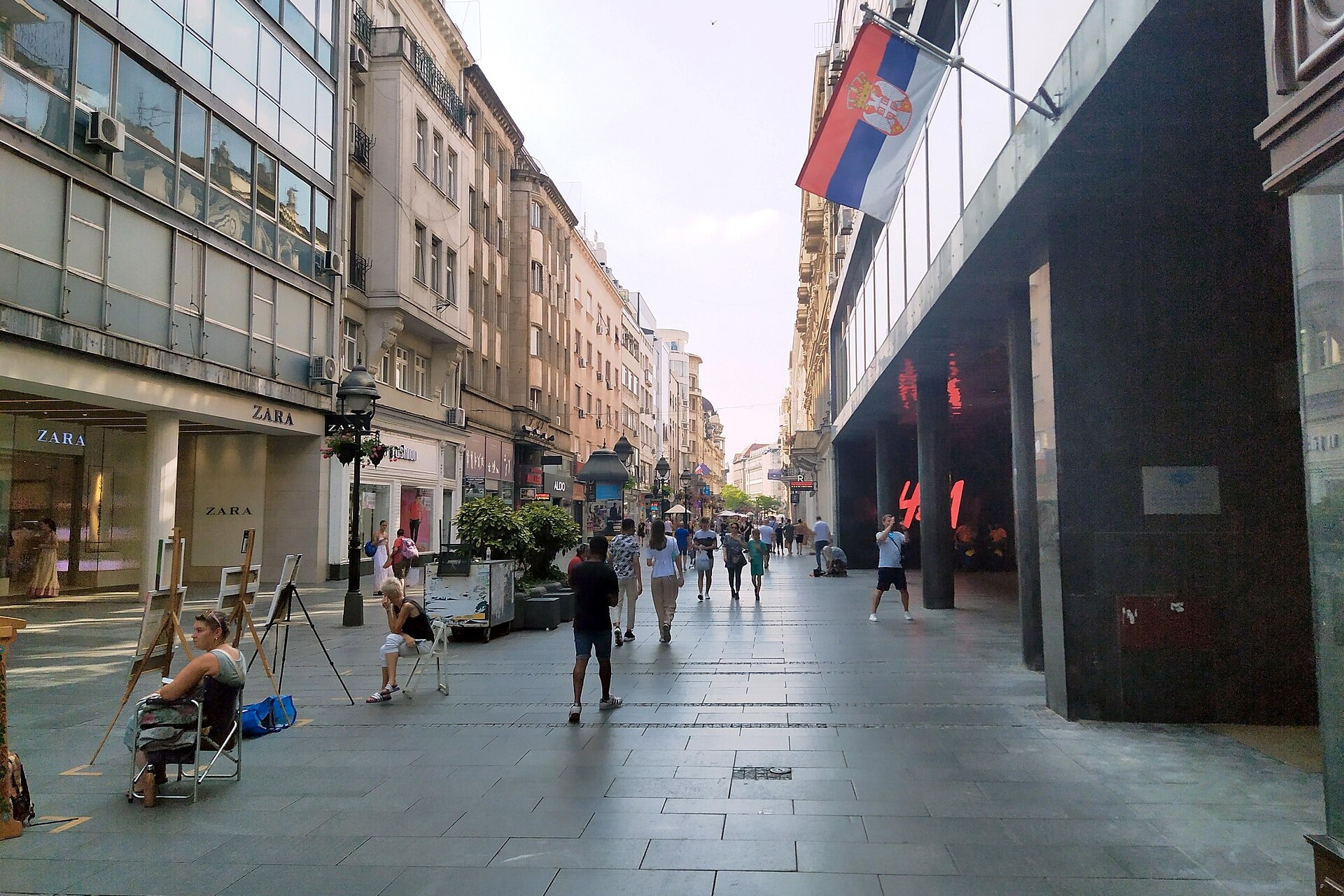
The movement had not publicly named a candidate for prime minister as of 13 November. A crowd that won in the streets must now decide who speaks for it indoors, which is the same question Europe is asking in Dublin.
What Prediction Markets Say
On Polymarket, a platform where users bet real money on outcomes, traders priced a Russia-Ukraine ceasefire by 31 December 2026 at 7.3 percent on 13 November at 6:39 a.m. ET. The same market gives 24.5 percent by 31 March 2027 and 50.5 percent by 31 December 2027, and about US$4.3m has been traded on it.
Why we show this: prediction markets turn real-money bets into a live probability that moves within minutes of the news, which is why investors, campaigns and newsrooms in the United States now follow them closely. We show them next to polls and official results, never instead of them.
What This Means From Latin America
A Europe that spends its week on bomb hoaxes, budget letters and who should speak for it moves slowly on other files, including the EU–Mercosur trade agreement with Brazil, Argentina, Uruguay and Paraguay. In our reading, exporters of beef, soy and sugar should plan for delay rather than quick ratification.
A Ukraine ceasefire would move commodity prices, easing the grain and fertiliser premiums that weigh on farmers in Brazil and Argentina. Traders on Polymarket see that outcome as unlikely before the year ends.
What We Are Watching
- Friday 13 November: informal EU leaders’ meeting in Dublin — Leaders hold a broad Ukraine debate, and the question is whether anyone is named to speak for Europe.
- December, date to be confirmed: EU leaders’ formal decision on who speaks for Europe — Meloni proposed deciding at the December summit, so any name will come then.
- Tuesday 17 November, 4:00 a.m. ET: Serbia’s parliament opens — The first session starts a 90-day clock, and the Student List’s choice of prime minister will follow.
- Tuesday 17 November, 2:00 a.m. ET: UK unemployment for September — The previous reading was 4.7 percent, so the figure shows whether the quiet growth reaches jobs.
- Wednesday 18 November, 2:00 a.m. ET: UK inflation for October — The forecast is 3.7 percent after 3.5 percent, which tells households whether growth brings relief.
- Thursday 26 and Friday 27 November: special European Council in Brussels — Ukraine’s 2027 funding gap of €70bn (US$77bn) returns, and Merz’s budget linkage faces its test.
Background: the EU 2028–34 budget holdouts explained.
Background: the EU–Mercosur trade agreement explained.
Frequently Asked Questions
Who should speak for Europe in Ukraine talks?
Italy’s Meloni asked who can speak for the EU and what that person can agree, and Costa agreed to put it to leaders in Dublin. Leaders gave no formal mandate in June, and Meloni proposed a decision at the December summit.
What is Merz demanding on the EU budget?
Merz wrote on 9 November that Germany will not back the 2028–34 budget unless all member states agree to fund Ukraine. Kyiv faces a gap of €70bn (US$77bn) in 2027.
What are the bomb-threat emails across Europe?
A hoax email reached 271 Italian schools on 2 November, and 18 flights were threatened on 3 November. The sender has not been identified.
When does Serbia’s new parliament meet?
Parliament opens on Tuesday 17 November at 10:00 local time. It then has up to 90 days to elect a government.
This article was produced by The Rio Times’ automated AI newsroom. Editorial responsibility: Matthias Camenzind, Publisher and Editor-in-Chief. The Rio Times also runs Ask Rio Times, which answers from 100,000+ of our own articles, the daily Latin America Power Map, and prediction-market odds on elections and markets.. How we use AI · Report an error
LatAm Markets: Live Signals → — real-time movers, turnover leaders and FX across Latin America.
Read More from The Rio Times