
Ecuador votes on Sunday 29 November 2026 for mayors, prefects (regional governors) and local councils, and the official campaign opens this Thursday.Ecuador’s local elections are three weeks away, and the dates that matter for voters and visitors are now fixed.
The country uses the US dollar as its currency, so every fine in this guide is already in US$.The vote was moved forward from 14 February 2027 because of a forecast flood risk linked to El Niño, a warm Pacific current.
Ecuador’s National Electoral Council, known as the CNE, runs the process.
- Vote: Sunday 29 November 2026, on Ecuador time, which matches US Eastern Standard Time.
- Campaign: Thursday 12 to Thursday 26 November, then electoral silence from Friday 27 November.
- Who votes: more than 13.8 million people on the electoral roll.
- Fine for not voting: US$48.20 for citizens aged 18 to 65, unless excused.
- As of 9 November 2026, 12:00 GMT
The Calendar Voters Need
The official campaign runs from Thursday 12 November to Thursday 26 November 2026. During those 15 days the CNE organises televised debates for prefecture and mayoral races.
Electoral silence runs from Friday 27 November to Sunday 29 November. In that period, campaigning is banned, and the CNE lists a fine of half a basic monthly wage (US$241) for political proselytism during silence.
Some people vote before the main day. Prisoners who have not been convicted vote on Thursday 26 November, and the CNE’s home-voting programme for people with disabilities runs on Friday 27 November.
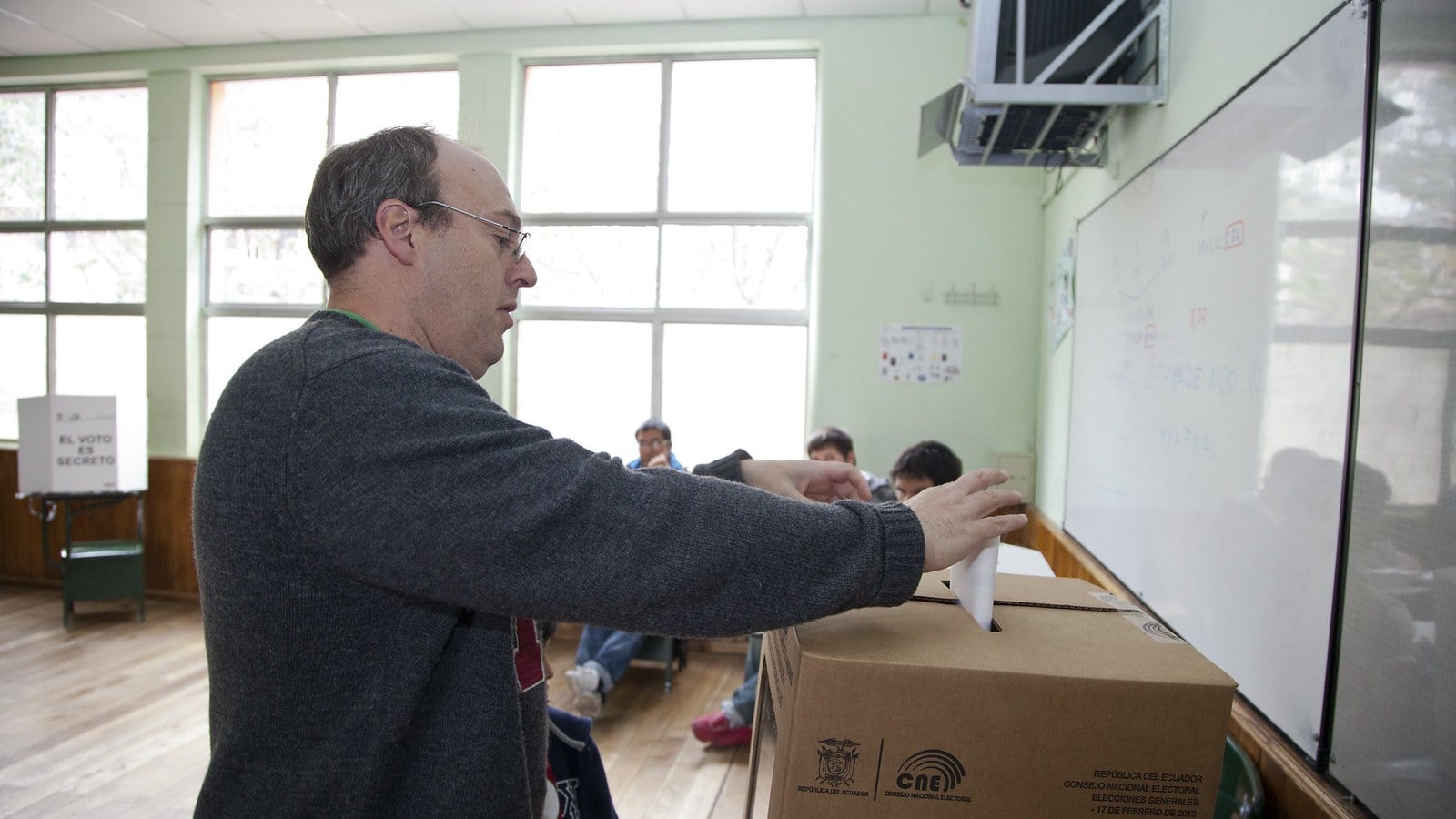
Voting takes place on Sunday 29 November. Counting at the polling tables starts once the doors close.
What Happens After the Votes Are Counted
Provincial electoral boards and a special board for voters abroad meet in the days after the vote to tally the results. A national public hearing is also held for the citizen-participation council count.
Final proclamation of winners and the issue of credentials follow in early 2027. The exact dates are set by the National Electoral Council’s calendar.
Parties can file appeals with the CNE and with the Electoral Disputes Tribunal, the special court for election cases. Council seat allocation is one area where such challenges are expected.
The elected officials take office on Friday 14 May 2027. That date matters for investors in Ecuadorian cities, because new mayors then inherit local budgets and contracts.
Which Offices Are on the Ballot
Voters choose 23 provincial prefects, who act as regional governors, and their deputy prefects. They also elect 222 mayors, 909 urban councillors and 457 rural councillors.
In addition, voters pick 4,131 principal members of rural parish boards, the smallest level of local government. Parish boards manage village roads, small works and community services.
A separate ballot elects seven members of the Citizen Participation and Social Control Council, known as the CPCCS. This state body appoints several national watchdog officials, so even a local election has national consequences.
The president and the National Assembly are not on the ballot. Local races will still test how much support President Daniel Noboa’s government has in the big cities.
Who Must Vote and What Happens If You Skip
Voting is compulsory for Ecuadorian citizens aged 18 to 65. It is optional for people over 65, for 16 and 17-year-olds, and for foreigners.
The fine for not voting is 10% of the basic wage, which is US$48.20 at the 2026 wage of US$482. Voters can avoid it by justifying their absence to the CNE with evidence, such as illness or travel abroad.
Polling-table members who fail to show up face a fine of US$72.30. Voting while drunk carries a fine of US$241, and carrying a firearm to vote can bring fines of at least US$5,302.
Our guide to voting-weekend rules for expats explains who among foreign residents can vote and what the alcohol ban means.
What We Do Not Know
The CNE timetable we found names no second round, and we could not confirm from the CNE itself how winners are decided in each race. We will update when the electoral authority states this in writing.
The hours of the alcohol ban for 29 November are not yet announced. The preliminary results time is also not confirmed.
What It Means for You
If you are an American travelling to Ecuador in late November, expect closed bars, busy polling places and tight security around 29 November. Check your embassy’s travel alerts before you go.
Ecuadorians in the United States may vote only for the seven CPCCS members, not for mayors. For investors, the results will show how voters in Quito and Guayaquil judge the government before the 2027 budget cycle.
Frequently Asked Questions
When are Ecuador’s local elections?
They are on Sunday 29 November 2026. Polling hours are set by the National Electoral Council.
Is voting mandatory in Ecuador?
Yes, for citizens aged 18 to 65. It is optional for older voters, 16 and 17-year-olds, and foreigners.
How much is the fine for not voting?
It is US$48.20, or 10% of the 2026 basic wage of US$482. You can be excused by showing a valid reason to the CNE.
When do the new mayors take office?
They take office on Friday 14 May 2027. Final proclamation of winners comes in early 2027.
Sources: official statements and public records of Ecuador’s National Electoral Council (cne.gob.ec).
This article was produced by The Rio Times’ automated AI newsroom. Editorial responsibility: Matthias Camenzind, Publisher and Editor-in-Chief. The Rio Times also runs Ask Rio Times, which answers from 100,000+ of our own articles, the daily Latin America Power Map, and prediction-market odds on elections and markets.. How we use AI · Report an error