
Ecuador
Ecuador stops the publication of new election polls at midnight tonight, Thursday 19 November 2026, ten days before voters choose local leaders on Sunday 29 November 2026. Primicias, a Quito online newsroom, reported on Tuesday 17 November 2026 that only pollsters qualified by the Consejo Nacional Electoral (CNE), the authority that runs Ecuador’s elections, may release forecasts until that deadline.
The vote fills the posts of prefect (provincial head), mayor, councillor and parish board member, and also elects the Consejo de Participación Ciudadana y Control Social (CPCCS), a citizen-participation council. For readers abroad, the ban means no new published poll will appear from Friday 20 November.
We follow the race in our Ecuador news section.
Key Facts
- Who. The CNE, Ecuador’s electoral authority, and the pollsters it has qualified to publish forecasts.
- What. New poll publication ends at midnight on Thursday 19 November 2026, ten days before voting.
- Prediction markets. Polymarket, a betting platform, gives Quito mayor Pabel Muñoz a 59% chance (19 November, 2:14 a.m. ET).
- Power Index. Ecuador ranks 8th of 14 in The Rio Times Latin America Power Index, with 37.2 points (November 2026 edition).
- As of. 19 November 2026, 07:15 GMT.
Ecuador closes the window for published polls tonight, leaving voters, media and pollsters under CNE rules until the vote on 29 November.
Why Ecuador Is Voting Early
The CNE moved the vote forward on Friday 27 March 2026, from Sunday 14 February 2027 to Sunday 29 November 2026, Primicias reported that day. The CNE cited a risk report on El Niño weather from the national risk-management secretariat.
That put Ecuador’s local elections, known as seccionales, on the calendar about 11 weeks earlier than planned. Ecuador’s politics has two main camps, President Daniel Noboa’s party Acción Democrática Nacional (ADN) and former president Rafael Correa’s Revolución Ciudadana (RC).
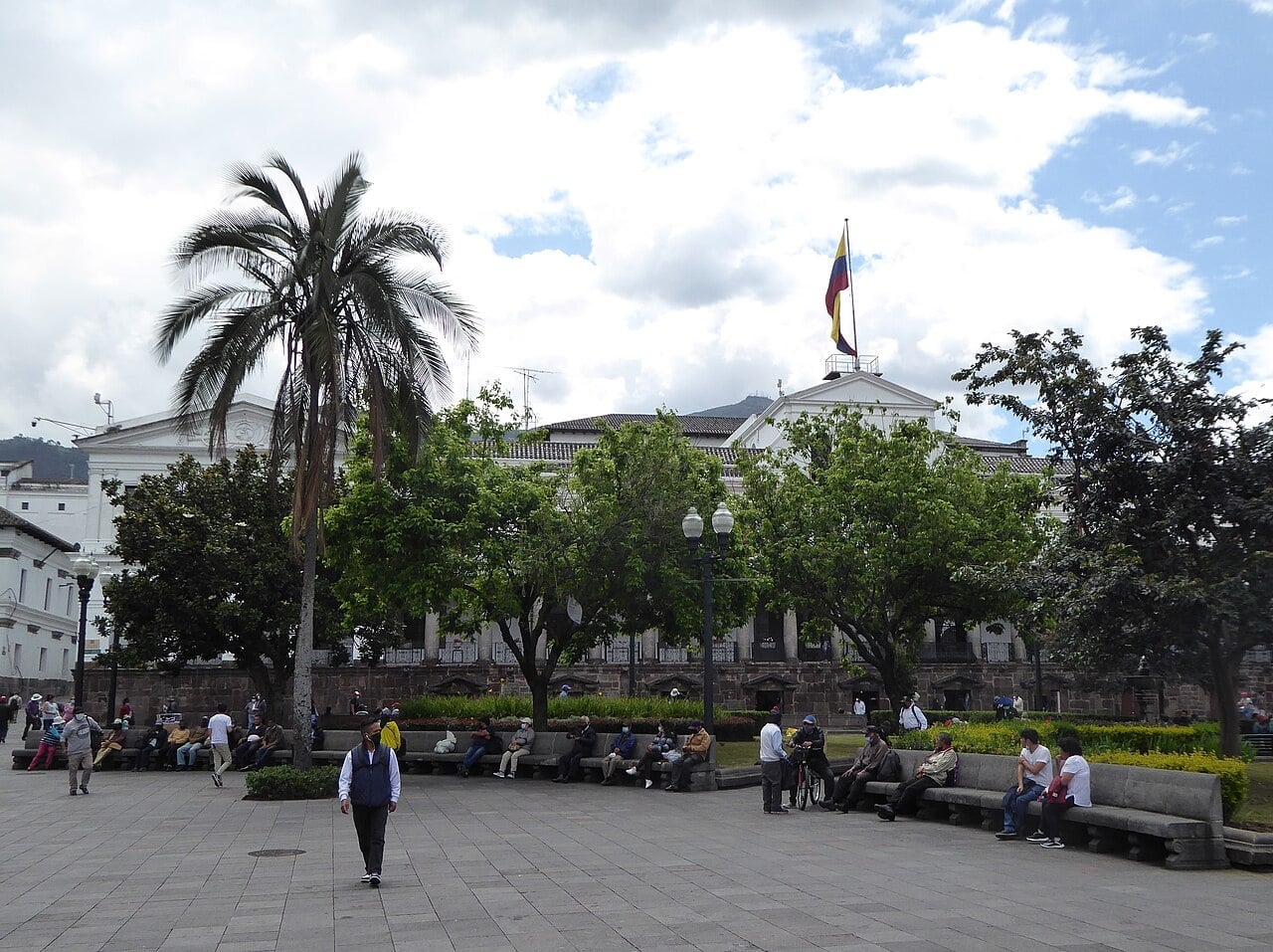
Our explainer on Ecuador’s electoral system sets out how the posts on the ballot work. From Friday 20 November, no new poll from a qualified pollster can be published.
We did not confirm whether the ban covers party internal polls, foreign forecasts or prediction markets.
What the Poll Ban Requires
Primicias reported on Tuesday 17 November 2026 that the CNE qualified 10 legal entities and 7 individuals, 17 in total, to publish forecasts, and that six applications were not admitted. El Mercurio, a Cuenca daily, said on Thursday 12 November 2026 that 17 companies and individuals are authorised.
A published poll must name the pollster, the exact fieldwork period, the sample type and size, the questions and the margin of error, Primicias reported on Tuesday 17 November 2026. El Comercio, a Quito daily, confirmed on Wednesday 18 November 2026 that the CNE approved these parameters in 2024 and that they remain in force.
El Comercio also reported on 18 November that the margin of error may not exceed plus or minus 3% for published polls. Pollsters must file a physical and digital report with the CNE on the day they publish a study, according to Primicias on 17 November.
Failing to file can trigger a proceeding for a possible electoral infraction, Primicias reported on 17 November. Pollsters that planned forecasts but did not carry them out must explain why to the CNE by five days before the vote, El Comercio said, which is Tuesday 24 November 2026 by our count.
Exit polls, which survey voters as they leave polling stations, may not be released before 17:00 on election day, El Mercurio reported on Sunday 27 September 2026 about the CNE exit-poll regulation. The CNE warned that it will report unqualified firms that publish forecasts, El Comercio said on 18 November.
Primicias also reported on 17 November on what happens when firms the CNE has not qualified publish forecasts.
Penalties for Pollsters and Media
El Comercio reported on Wednesday 18 November 2026 that the Código de la Democracia, Ecuador’s electoral law, sets fines for pollsters of 50 to 250 basic unified wages (SBU), with a six-month suspension of activities for repeat offences. We could not read the legal text itself, so these penalties rest on El Comercio’s account, which cites articles 282 and 283.
For media that publish poll results in the last ten days, El Comercio reported fines of 25 to 255 SBU. Vistazo, an Ecuadorian magazine, reported on Monday 15 December 2025 that the basic wage for 2026 is US$482, effective Thursday 1 January 2026.
At that wage, our arithmetic puts pollster fines at US$24,100 to US$120,500 and media fines at US$12,050 to US$122,910. Those dollar figures are our own calculation from the two sources.
In Plain English
CNE: Ecuador’s electoral authority, which runs elections and qualifies pollsters.
Seccionales: local elections for prefects, mayors, councillors and parish boards.
SBU: the basic unified wage, US$482 in 2026, used to size fines.
Exit poll: a survey of voters leaving polling stations.
What Prediction Markets Say
Polymarket, a prediction-market platform where users bet real money, priced the Quito mayoral race on 19 November 2026 at 2:14 a.m. ET (07:14 GMT). Its “Quito Mayoral Election Winner” market gave Pabel Muñoz 59.0%, Harold Burbano about 22% to 24% and Jorge Yunda 5.5%, with US$13,217 traded.
These prices are bets, not polls. After tonight a market price is not a published poll, and with only US$13,217 traded a few bets can move it.
Why we show this: prediction markets turn real-money bets into a live probability that moves within minutes of the news, which is why investors, campaigns and newsrooms in the United States now follow them closely. We show them next to polls and official results, never instead of them.
Why It Matters
Ecuador has 13,827,643 registered voters for 29 November, of whom 13,331,335 are in Ecuador and 496,308 abroad, Primicias reported on Thursday 2 July 2026. For the last ten days those voters will have no new published poll and must rely on the campaign and the CNE rules.
The ban applies to the qualified pollsters and to the media that publish their results, and fines reach up to US$122,910 on our calculation from El Comercio’s figures. Voters lose a public read of the race just as it closes.
What to Watch
Tuesday 24 November 2026 is the deadline for pollsters that planned forecasts but did not publish to explain why to the CNE, El Comercio reported on 18 November. Our guide to the local elections in three provinces shows where the voting takes place.
Sunday 29 November 2026 is the vote. El Mercurio reported on 27 September that exit-poll results may not come out before that hour.
What Is Not Known
It is not confirmed whether the ban covers party internal polls, foreign forecasts or prediction markets, and only the CNE can answer. El Comercio reported a different count of 23 qualified pollsters, against 17 in Primicias and El Mercurio, so the CNE’s official list is the one to check.
What It Means for You
If you follow Ecuador from abroad, no new published polls are due after tonight. Prediction-market prices may keep moving, but they remain bets, not polls.
Exit-poll figures can appear only from 17:00 on Sunday 29 November 2026. Until then, the last ten days of the race run without a published poll.
Frequently Asked Questions
Until when can polls be published in Ecuador?
Qualified pollsters may release forecasts only until midnight on Thursday 19 November 2026, ten days before the vote on Sunday 29 November 2026, Primicias reported on 17 November. No new published polls are allowed after that.
Who can publish polls in Ecuador?
Only pollsters qualified by the CNE, the electoral authority. Primicias reported on 17 November that 17 qualify, 10 legal entities and 7 individuals, and that six applications were not admitted.
What are the penalties for breaking the poll rules?
El Comercio reported on 18 November that pollsters face fines of 50 to 250 basic wages (US$24,100 to US$120,500 by our calculation), and media face 25 to 255 wages (US$12,050 to US$122,910).
When do Ecuadorians vote?
On Sunday 29 November 2026, in local elections for prefects, mayors, councillors, parish boards and the CPCCS citizen-participation council.
Sources
Consejo Nacional Electoral (CNE) rules as described by El Comercio, 18 November 2026; Primicias, 17 November 2026, 2 July 2026 and 27 March 2026; El Mercurio, 12 November 2026 and 27 September 2026; Vistazo, 15 December 2025; Polymarket, 19 November 2026
Connected Coverage
Ecuador news · Ecuador Poll Shows Tight Quito Race · Ecuador Local Elections in Three Provinces · Ecuador’s Electoral System Explained
This article was produced by The Rio Times’ automated AI newsroom. Editorial responsibility: Matthias Camenzind, Publisher and Editor-in-Chief. The Rio Times also runs Ask Rio Times, which answers from 100,000+ of our own articles, the daily Latin America Power Map, and prediction-market odds on elections and markets.. How we use AI · Report an error