IBOV 185,500.88 ▼ 0.91% IPSA 11,342.39 ▲ 1.09% IPC MEX 64,216.98 ▲ 0.46% MERVAL 3,084,547 — 0.00% COLCAP 2,588.25 ▼ 0.06% BVL PERÚ 59,184.75 ▼ 0.92% USD/BRL5.15▼ 0.10% USD/MXN17.15▲ 0.05% USD/CLP957.43▲ 0.03% USD/COP3,102▲ 0.34% USD/PEN3.35▼ 0.23% USD/ARS1,508▼ 0.02% USD/UYU40.20▲ 3.11% USD/PYG5,985▲ 4.40% USD/BOB10.92▼ 9.64% USD/DOP58.68▲ 2.95% USD/CRC444.45▲ 1.90% USD/GTQ7.62▲ 3.09% USD/HNL26.85▲ 3.31% USD/NIO36.62▲ 2.77% USD/VES840.10▼ 0.13% USD/PAB1.00— 0.00% USD/BZD2.00— 0.00% USD/JMD 157.28 — 0.00% USD/TTD6.73▲ 2.44% EUR/BRL5.94▲ 0.24% BRENT 88.88 ▼ 0.03% WTI 83.11 ▼ 0.11% IRON ORE 161.91 — — COPPER 6.61 ▲ 0.03% GOLD 4,461 ▲ 1.78% SILVER 65.59 ▲ 1.26% SOY 1,184 ▲ 3.20% CORN 480.50 ▲ 10.02% WHEAT 655.00 ▲ 3.93% COFFEE 317.25 ▼ 5.51% SUGAR 16.43 ▼ 1.79% ORANGE JUICE 138.55 ▼ 0.47% COTTON 85.03 ▲ 2.33% COCOA 5,719 ▲ 3.18% BEEF 223.60 ▼ 3.93% CATTLE 339.10 ▼ 3.16% LITHIUM 75.20 ▲ 1.47% PETR4 41.64 ▼ 0.05% VALE3 72.97 ▲ 0.83% ITUB4 38.60 ▼ 1.03% BBDC4 16.85 ▲ 0.36% ABEV3 14.89 ▼ 0.80% BBAS3 19.37 ▲ 0.47% B3SA3 14.26 ▼ 0.21% WEGE3 47.59 ▲ 0.49% PRIO3 59.14 ▼ 0.19% SUZB3 41.33 ▲ 2.35% RENT3 34.68 ▼ 0.09% AZZA3 15.89 ▼ 2.63% CSAN3 3.22 ▼ 1.83% RAIZ4 0.25 — 0.00% PCAR3 2.75 ▼ 0.36% GMAT3 3.65 ▼ 1.08% PSSA3 48.13 ▼ 0.54% CVCB3 1.33 ▼ 2.92% POSI3 3.36 ▲ 2.44% SLCE3 13.34 ▲ 0.30% NATU3 8.14 ▼ 0.73% IBOV 185,500.88 ▼ 0.91% IPSA 11,342.39 ▲ 1.09% IPC MEX 64,216.98 ▲ 0.46% MERVAL 3,084,547 — 0.00% COLCAP 2,588.25 ▼ 0.06% BVL PERÚ 59,184.75 ▼ 0.92% USD/BRL 5.16 ▲ 0.01% USD/MXN 17.06 ▼ 0.24% USD/CLP 913.98 ▲ 0.04% USD/COP 3,140 ▲ 0.03% USD/PEN 3.36 ▼ 0.66% USD/ARS 1,493 ▲ 0.10% USD/UYU 40.27 ▲ 1.24% USD/PYG 5,939 ▲ 1.68% USD/BOB 11.64 ▼ 0.76% USD/DOP 58.34 ▲ 1.25% USD/CRC 445.92 ▲ 0.89% USD/GTQ 7.62 ▲ 2.21% USD/HNL 26.79 ▲ 1.57% USD/NIO 36.62 ▲ 0.69% USD/VES 762.44 ▼ 0.13% USD/PAB 1.00 — 0.00% USD/BZD 2.00 — 0.00% USD/JMD 157.28 — 0.00% USD/TTD 6.70 ▲ 0.61% EUR/BRL 5.95 ▲ 1.01% BRENT 88.88 ▼ 0.03% WTI 83.11 ▼ 0.11% IRON ORE 161.91 — — COPPER 6.61 ▲ 0.03% GOLD 4,461 ▲ 1.78% SILVER 65.59 ▲ 1.26% SOY 1,184 ▲ 3.20% CORN 480.50 ▲ 10.02% WHEAT 655.00 ▲ 3.93% COFFEE 317.25 ▼ 5.51% SUGAR 16.43 ▼ 1.79% ORANGE JUICE 138.55 ▼ 0.47% COTTON 85.03 ▲ 2.33% COCOA 5,719 ▲ 3.18% BEEF 223.60 ▼ 3.93% CATTLE 339.10 ▼ 3.16% LITHIUM 75.20 ▲ 1.47% PETR4 41.64 ▼ 0.05% VALE3 72.97 ▲ 0.83% ITUB4 38.60 ▼ 1.03% BBDC4 16.85 ▲ 0.36% ABEV3 14.89 ▼ 0.80% BBAS3 19.37 ▲ 0.47% B3SA3 14.26 ▼ 0.21% WEGE3 47.59 ▲ 0.49% PRIO3 59.14 ▼ 0.19% SUZB3 41.33 ▲ 2.35% RENT3 34.68 ▼ 0.09% AZZA3 15.89 ▼ 2.63% CSAN3 3.22 ▼ 1.83% RAIZ4 0.25 — 0.00% PCAR3 2.75 ▼ 0.36% GMAT3 3.65 ▼ 1.08% PSSA3 48.13 ▼ 0.54% CVCB3 1.33 ▼ 2.92% POSI3 3.36 ▲ 2.44% SLCE3 13.34 ▲ 0.30% NATU3 8.14 ▼ 0.73%
since 2009
Tuesday, September 15, 2026

Africa Angola

Debt Challenges for The Gambia and Mozambique’s State Firms

By · November 29, 2023 · 2 min read

Africa Intelligence

One email, every weekday morning. African markets, politics and business — filed from our newsroom in Rio.

Yesterday’s subject line: “The Ebola vaccine doesn't work on this one”

Free. We send a confirmation link first — nothing arrives until you click it. Unsubscribe with one click in any edition. If you stop opening us for 30 days we stop sending by ourselves, as we assume the interest is no longer there. See our privacy policy. We never share your email.

The World Bank has flagged The Gambia’s and Mozambique’s state-owned enterprises (SOEs) as a financial hazard to the nation’s economy.

In a detailed study, they note these entities make up a vast 35% of these countries’ GDP.

Their report, The Business of the State, covers over 76,000 public companies in 91 nations.

It warns of potential economic crises stemming from SOEs’ fiscal issues, like deficits and debts.

In Sub-Saharan Africa, SOEs’ revenues are typically 7% of GDP. Their assets and liabilities are about 34% and 20% of GDP, respectively.

This large economic role sparks debates on the state’s business involvement.

The report examines the state’s dual role in the economy. It notes how state firms, as seen in Angola and Nigeria, sometimes support public needs.

These firms have ensured essential services like electricity are accessible. However, the report also shows cases where state firms exploit their position.
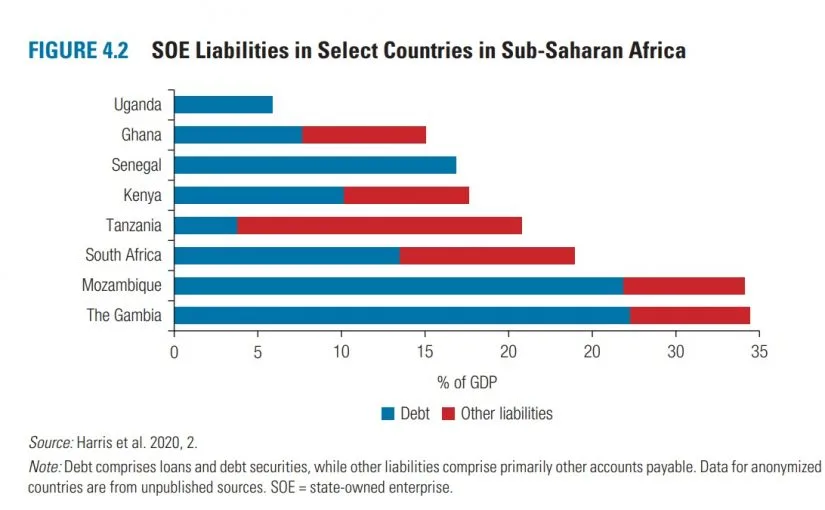
Debt Challenges for The Gambia and Mozambique's State Firms.
Debt Challenges for The Gambia and Mozambique’s State Firms.
One-stop reference
Company Intelligence
Every listed company in Latin America — financials, ownership and structure for 1,450+ companies across 26 exchanges, in one place.
Browse the directory →
RT
Ask Rio Times
17 years of Latin America reporting, on demand.
Open the full Ask Rio Times →

An example is Angola’s cement sector, where state involvement limits competition. This affects private investment and growth.

The Gambia and Mozambique’s experience is a prime example.

The Gambia

Gambia’s state enterprises face substantial financial risks due to high debts, operational inefficiencies, and unstable revenues.

Additional challenges include political interference, lack of transparency, intense market competition, regulatory shifts, and global economic fluctuations.

Addressing these issues to ensure financial stability and bolster national economic health necessitates reforms like enhancing management efficiency and transparency.

Additionally, restructuring debts may be a crucial step in this process.

Mozambique

Following the 2016 ‘hidden debts scandal,’ the country faced a severe financial crisis.

The Fiscal Risks Report by Mozambique’s Risk Management Directorate points out the financial danger from its State Enterprise Sector (SEE).

Specifically, three companies are major concerns for 2024. However, there was an improvement in 2022.

Due to their fragile conditions, LAM, Petromoc, and TMCEL continue to pose financial risks. This situation in The Gambia and Mozambique mirrors global concerns about SOEs.
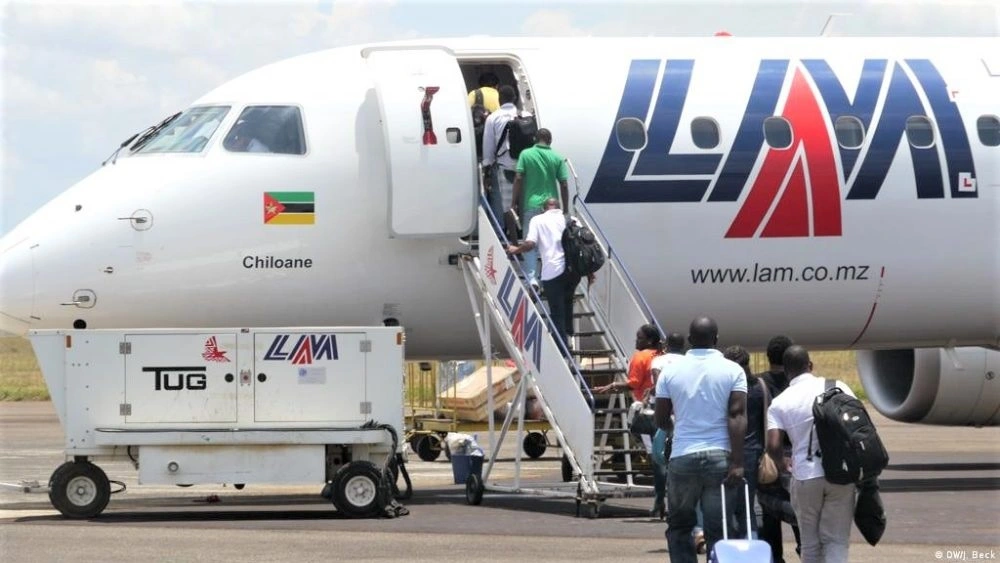
Due to their fragile conditions, LAM, Petromoc, and TMCEL continue to pose financial risks.

Global Concerns About SOEs

Historically, many countries have struggled with balancing state and private sectors. A key challenge is ensuring SOEs don’t undermine fair competition.

Effective SOE management has varied globally, reflecting different economic and political contexts.

In terms of benchmarking, Mozambique’s SOE debt reduction in 2022 is a positive sign. This contrasts with situations in some countries where SOE debts have escalated.

Analysis suggests that proactive management and transparency are crucial for success. The World Bank’s focus on this issue highlights its importance in global economic stability.

Learning from history, it’s clear that balancing SOE roles is vital for sustainable economic growth. This case offers valuable lessons for other countries facing similar challenges.

This article was produced by The Rio Times’ automated newsroom system. How we use AI · Report an error

Part of our ongoing coverage

Africa: The New Scramble — the great-power contest over the continent.

More from Western Africa

Read More from The Rio Times

The Rio Times · Power Map
See who really holds power in Latin America
Click to open the Power Map

Rotate for Best Experience

This report is optimized for landscape viewing. Rotate your phone for the full experience.