
NIGERIA · FOREIGN PLAYERS
Key Facts
- —The country Africa’s most populous nation, about 237.5 million people in 2025.
- —Biggest lender World Bank: US$20.7 billion of US$54.5 billion owed abroad, June 2026.
- —China Two Chinese state banks were owed US$5.5 billion in June 2026.
- —What happened UK and US funds sent about 80% of early-2026 capital inflows.
- —Diaspora Remittances reached US$22.8 billion in 2025, over five times FDI.
- —Prediction markets Polymarket gives Bola Tinubu a 73% chance of winning the January 2027 election (9 October, 6:09 a.m. ET).
Lenders, fund managers, oil companies, Washington and Beijing all have a stake in Africa’s most populous country, and each wants something different.
Nigeria foreign relations in 2026 run mostly on money: who lends to Abuja, who invests and who sends cash home. The biggest single creditor is the World Bank, and Nigerians abroad send home more than five times what foreign firms invest directly.
This guide maps the main foreign actors as of October 2026, what each brings and what each wants in return. Daily coverage is in the Rio Times Nigeria section.
Why Nigeria Matters to Outsiders
Nigeria had about 237.5 million people in 2025, World Bank data show, roughly 70% of the US population. Its economy was worth US$290.8 billion that year, less than a tenth of California’s output.
The dollar figure was US$487.4 billion in 2023. It fell mainly because the naira, the national currency, lost much of its value after reforms began that year.
The Central Bank of Nigeria (CBN) set its official central rate at ₦1,331.60 per US$ on 8 October 2026. That is the exchange-rate basis used throughout this guide.
Two numbers frame the foreign relationship. Nigeria owed foreign creditors US$54.5 billion on 30 June 2026.
The CBN held gross reserves of US$55.1 billion on 7 October 2026. Reserves are the dollars that pay for imports and debt service.
Having them roughly match the external debt is a buffer. But reserves can fall far faster than debt is repaid.
Who runs the domestic side of the economy is covered in a separate pillar, Who Runs Nigeria’s Economy. This guide looks outward.
Nigeria Foreign Debt by Creditor in 2026
The Debt Management Office (DMO), the federal agency that tracks public borrowing, splits the US$54.5 billion into three groups. Its figures for 30 June 2026 are the latest it has published.
- Multilateral lenders: US$24.8 billion, or 45.4%, led by the World Bank.
- Commercial creditors: US$23.2 billion, or 42.5%, mostly Eurobonds sold on international markets.
- Bilateral lenders, meaning other governments: US$6.6 billion, or 12.1%, mostly China.
The World Bank Group is the largest single creditor. Its International Development Association (IDA), the arm that lends cheaply to poorer countries, is owed US$19.1 billion.
Add US$1.6 billion from its market-rate arm, the IBRD, and the bank holds about 38% of the external debt. Its loans usually carry policy conditions, which is how it shapes reform.
The World Bank listed 39 active projects in Nigeria as of October 2026. The newest large one, approved on 29 June 2026, is a US$1.25 billion operation to speed up investment and jobs.
Eurobonds are the second pillar. These are dollar bonds sold abroad, and investors held US$18.5 billion of them at the end of June 2026.
They trade on international markets, so their prices react quickly to Nigerian news. The DMO publishes their closing prices and yields every trading day.
The International Monetary Fund (IMF), the crisis lender for governments, is owed nothing. Its records show no outstanding Nigerian loans as of 30 September 2026.
Nigeria drew a pandemic emergency loan of SDR 2.45 billion (about US$3.4 billion) in April 2020 and has since repaid it. The IMF still reviews the economy and advises the government.
The African Development Bank Group, based in Abidjan, Ivory Coast, is owed about US$3.25 billion across three windows. The Islamic Development Bank holds US$406 million and IFAD, the UN farm-lending fund, US$315 million.
China, the Gulf and Europe
China is the largest government lender. The Export-Import Bank of China is owed US$4.9 billion and China Development Bank US$574 million, together about 10% of the total.
Chinese state firms are investors as well as lenders. The deep-sea port at Lekki, east of Lagos, is a joint venture led by China Harbour Engineering Company and Singapore’s Tolaram.
Lagos State and the federal ports authority also hold stakes. For Beijing, Nigeria means work for its companies and access to Africa’s most populous market.
Trade is growing too, as a Rio Times report on Nigerian exports to China sets out.
The Gulf is a quieter creditor. First Abu Dhabi Bank, from the United Arab Emirates, is owed US$3.4 billion, including a US$1.5 billion total return swap.
A total return swap is a derivative contract that works much like a secured loan. Together, the two deals make the Abu Dhabi bank a bigger creditor than the African Development Bank Group.
Cairo-based Afreximbank, the African trade-finance bank, holds US$836 million of syndicated loans. Smaller commercial creditors include Italy’s UniCredit, owed US$316 million, and Deutsche Bank, owed US$52 million.
European and Asian governments lend far less than China. France’s development agency AFD is owed US$906 million, Japan’s JICA US$127 million and Germany’s KfW US$78 million.
Foreign Investors, Fast Money Versus Factories
Foreign investors brought US$10.37 billion into Nigeria in the first quarter of 2026, the National Bureau of Statistics (NBS) reported. That was 83.8% more than a year earlier, according to Voice of Nigeria, the state broadcaster.
Almost all of it, US$9.86 billion or 95.1%, was portfolio money: bonds, treasury bills and shares that can be sold within days. Foreign direct investment (FDI), meaning factories, offices and company stakes, was just US$135 million.
By source, the United Kingdom sent US$5.08 billion (49%) and the United States US$3.18 billion (30.7%). South Africa followed with US$984 million (9.5%).
The UK share partly reflects London’s role as a hub through which global funds route money. Banks took US$7.55 billion of the inflows, and Standard Chartered’s Nigerian unit alone received US$4.41 billion.

Portfolio investors want high interest rates and a currency they can exit at a fair price. When those conditions slip, the money can leave as quickly as it came.
The World Bank’s balance-of-payments measure, which uses a different method, shows net FDI inflows of US$4.0 billion in 2025. That was up from US$1.6 billion in 2024.
The NBS plans to publish second-quarter 2026 figures on 21 October 2026, according to its release calendar.
Oil Majors Move Offshore
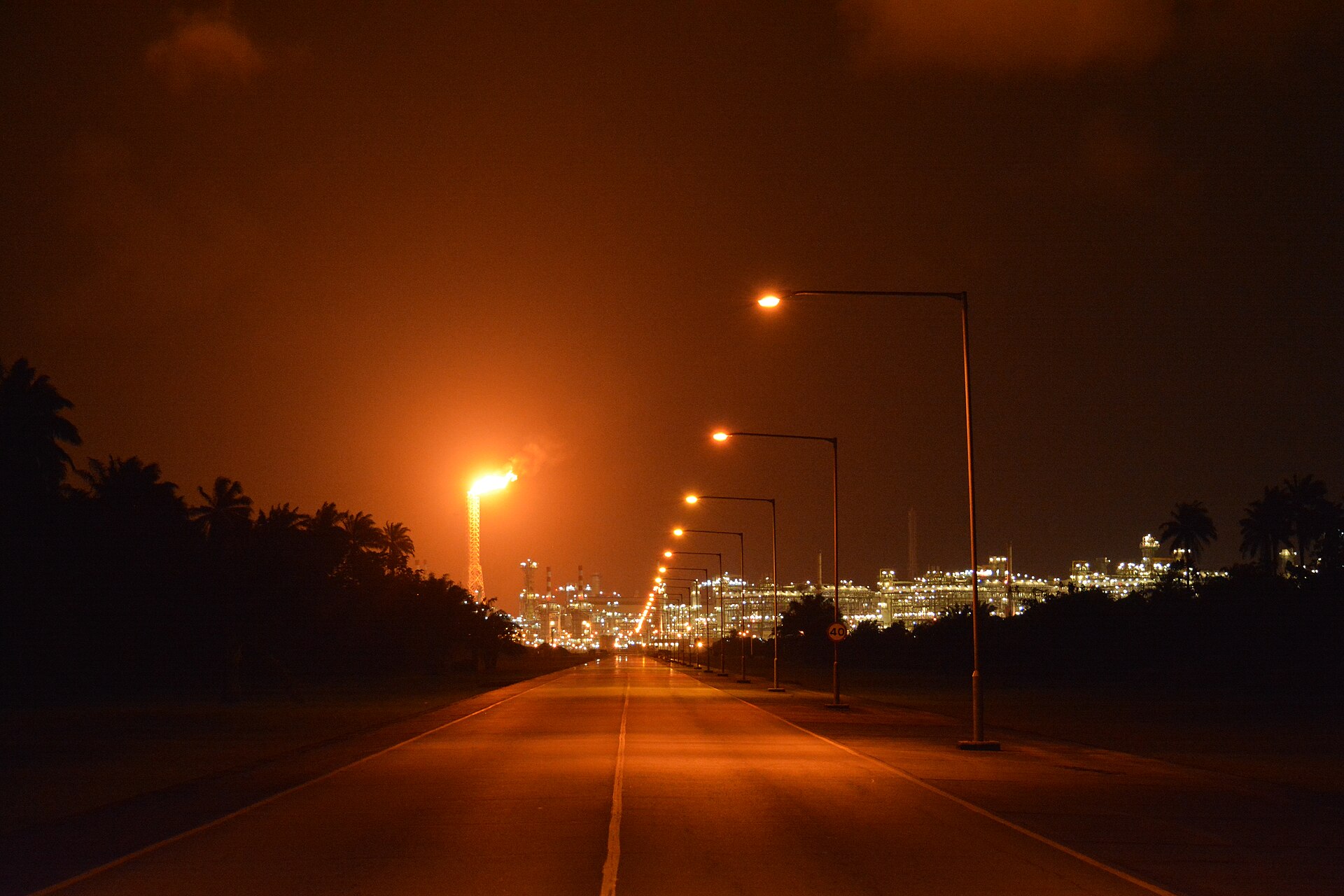
Foreign oil majors built Nigeria’s oil industry over seven decades. Since 2024, several have sold their onshore and shallow-water fields.
Shell completed the sale of its onshore subsidiary, SPDC, to Renaissance on 13 March 2025, after federal approval. ExxonMobil completed the sale of its entire shallow-water business to Seplat Energy on 12 December 2024.
Seplat, listed in Lagos and London, paid ExxonMobil US$672 million in cash at closing. Its largest shareholder at the time was France’s Maurel & Prom, with 20.46%.
The majors are not leaving entirely. Shell still operates the deepwater Bonga field with NNPC Limited, the state oil company, as a Rio Times report on Bonga explains.
Deepwater fields sit far offshore, away from the pipeline theft that has long troubled onshore production. Abuja is courting new upstream money through its latest oil licensing round.
Outside oil, foreign firms run some well-known consumer brands. MTN Nigeria, a mobile network, is part of South Africa’s MTN Group.
From Brazil, meatpacker JBS signed a memorandum in November 2024 for a US$2.5 billion plan with six plants, ThisDay reported, citing JBS. Its progress and the debate around it are covered in a separate Rio Times report.
Washington, Security and the Embassies
Security ties with the United States changed sharply in late 2025. In late October, President Donald Trump redesignated Nigeria a Country of Particular Concern over religious freedom.
That label can lead to US sanctions. Abuja denied that Christians face a genocide, as some US politicians had alleged, but chose to cooperate.
On 27 November 2025, the presidency named its members of a joint working group with Washington. National Security Adviser Nuhu Ribadu leads the Nigerian side.
On 25 December 2025, US Africa Command (AFRICOM) struck Islamic State camps in Sokoto State, in the north-west. It said the strikes were carried out in coordination with Nigerian authorities.
Washington also restricted visas. A presidential proclamation partly suspended new US immigrant, tourist and student visas for Nigerians from 1 January 2026.
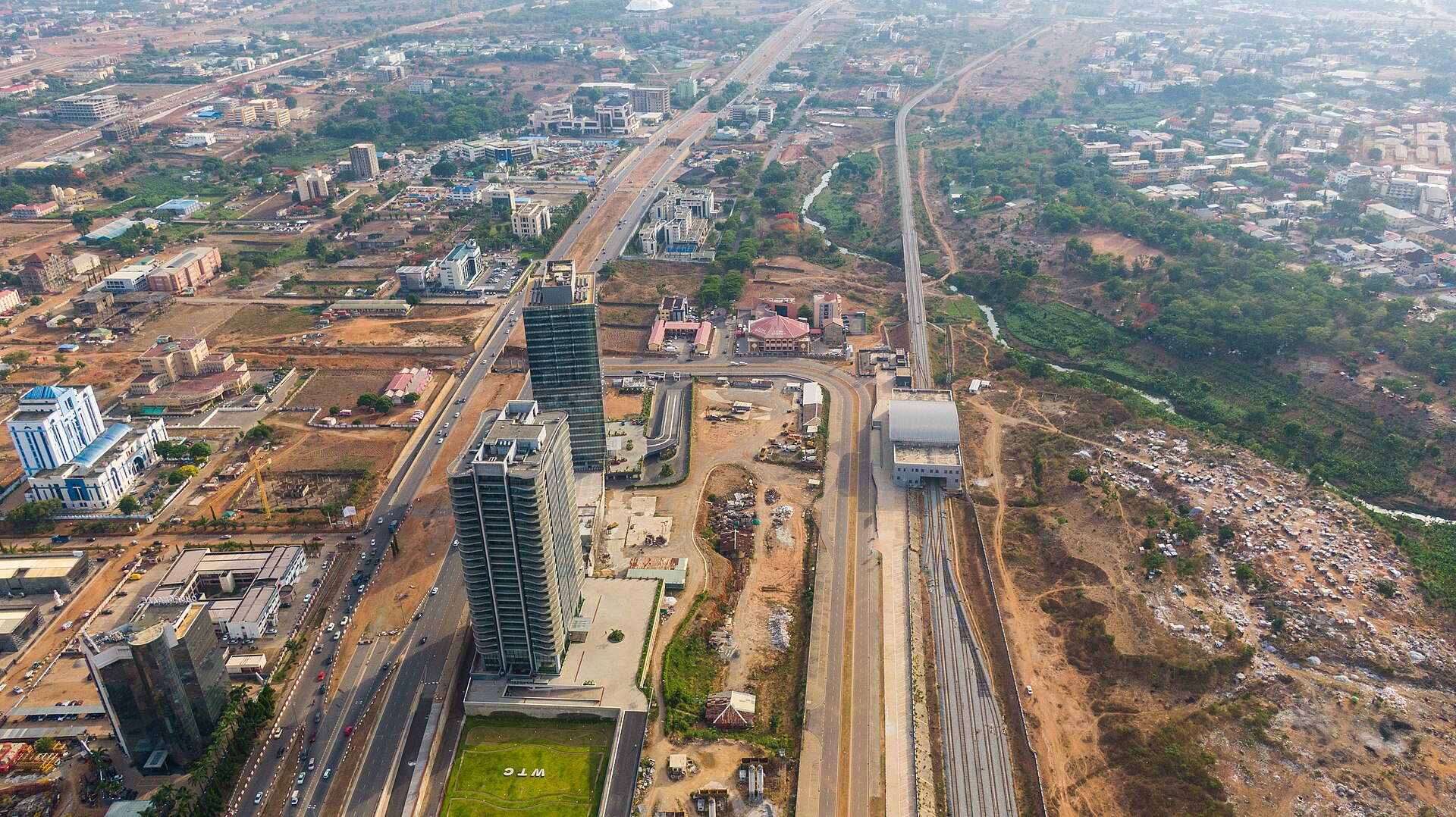
Most large powers keep embassies in Abuja, the capital, and many also run consulates in Lagos, the commercial hub. The wider diplomatic map is in Nigeria Geopolitics Explained.
The religious-freedom talks are followed in a Rio Times report on the US working group. Trade ties are modest by comparison.
US goods exports to Nigeria were US$6.78 billion in 2025 and imports US$5.02 billion, Census Bureau data show. In 2008, the US imported US$38.1 billion of Nigerian goods, mostly crude oil.
The Diaspora and the Donors
Nigerians abroad send home more than foreign companies invest. Personal remittances reached US$22.8 billion in 2025, World Bank data show, about 7.8% of GDP.
That is more than five times the World Bank’s FDI figure for the same year. Unlike loans, the money does not have to be repaid, and much of it pays for school fees, rent and small businesses.
Many senders live in the United States and the United Kingdom. That makes US visa and immigration policy an economic issue for Nigerian households.
Classic aid is smaller than lending. Much of what donors provide now comes as cheap loans, such as World Bank IDA credits, rather than grants.
One active World Bank project, approved in August 2025, supports people displaced by conflict and the communities that host them. UN agencies and international NGOs run food, health and protection programmes, especially in the north-east.
What It Means for US Readers
US investors are already exposed. Funds from the United States sent US$3.18 billion to Nigeria in the first quarter of 2026, almost a third of all inflows.
Nigerian Eurobonds often sit in emerging-market bond funds sold to US savers. Nigerian politics can therefore move US portfolios.
For travellers and families, the visa proclamation is the bigger change. Check the State Department’s current travel advisory before any trip.
The January 2027 election matters too, because a new president could change currency and subsidy policy. The players are profiled in Nigeria Politics Explained.
What Prediction Markets Say
On Polymarket, bettors gave President Bola Tinubu a 73% chance of winning at 6:09 a.m. ET on Friday, 9 October 2026. Tinubu, in office since May 2023, leads the ruling All Progressives Congress (APC).
Peter Obi, the Nigeria Democratic Congress candidate and a former Anambra governor, stood at 23.5%. About US$129,700 had been bet on the market in total.
The vote for president and the National Assembly is set for Saturday, 16 January 2027, according to the electoral commission, INEC. The market offers no contract on some candidates, including Atiku Abubakar.
Why we show this: prediction markets turn real-money bets into a live probability that moves within minutes of the news, which is why investors, campaigns and newsrooms in the United States now follow them closely. We show them next to polls and official results, never instead of them.
What Is Not Known
- Second-quarter 2026 capital-importation data, due from the NBS on 21 October 2026.
- External debt for 30 September 2026, which the DMO had not yet published.
- How much of the UK figure is British money and how much is global funds routed through London.
- The full terms of the First Abu Dhabi Bank swap, which could not be confirmed from a primary source.
- How far the JBS livestock plan has advanced since 2024.
- Total US government aid to Nigeria after Washington’s 2025 overhaul of foreign assistance, and total foreign NGO spending.
- Whether the working group with Washington will lead to the religious-freedom designation being lifted.
Frequently Asked Questions
Who is Nigeria’s biggest foreign creditor?
The World Bank Group, owed about US$20.7 billion on 30 June 2026, mostly through its IDA arm. That is roughly 38% of Nigeria’s US$54.5 billion external debt.
How much does Nigeria owe China?
Chinese state banks were owed about US$5.5 billion on 30 June 2026, DMO data show. That is roughly a tenth of Nigeria’s external debt.
Does Nigeria have an IMF loan?
No. IMF records show no outstanding loans to Nigeria as of 30 September 2026, after it repaid a 2020 pandemic emergency loan.
Which countries invest most in Nigeria?
In NBS data for early 2026, the United Kingdom (49%), the United States (30.7%) and South Africa (9.5%) led. Most of that money went into bonds and bills, not factories.
How much do Nigerians abroad send home?
Personal remittances reached about US$22.8 billion in 2025, according to the World Bank. That is more than five times net foreign direct investment that year.
Has the US carried out military action in Nigeria?
Yes. US Africa Command said it struck Islamic State camps in Sokoto State on 25 December 2025, in coordination with Nigerian authorities.
Are Western oil companies leaving Nigeria?
They are leaving onshore and shallow-water fields, not the country. Shell and ExxonMobil sold those assets in 2024 and 2025, but Shell still runs the deepwater Bonga field.
Sources: Debt Management Office, external debt stock as at 30 June 2026; Central Bank of Nigeria, official exchange rates; Central Bank of Nigeria, external reserves; IMF, Nigeria financial position in the Fund; World Bank, Nigeria data (population, GDP, remittances, FDI); World Bank, active projects in Nigeria; National Bureau of Statistics, release calendar; Voice of Nigeria, NBS capital importation Q1 2026; Shell, completion of SPDC sale; Maurel & Prom, Seplat completion of MPNU acquisition; Lekki Port, ownership; State House, US-Nigeria working group; US Africa Command, Sokoto strike; US House Resolution 860 on the Nigeria designation; Federal Register, Proclamation 10998; US Census Bureau, trade with Nigeria; Independent National Electoral Commission; ThisDay, JBS investment plan; Polymarket market data via its public API (all accessed 9 October 2026).
This article was produced by The Rio Times’ automated newsroom system. How we use AI · Report an error · Editorial responsibility: Matthias Camenzind, Editor-in-Chief
Part of our ongoing coverage
Africa: The New Scramble — the great-power contest over the continent.